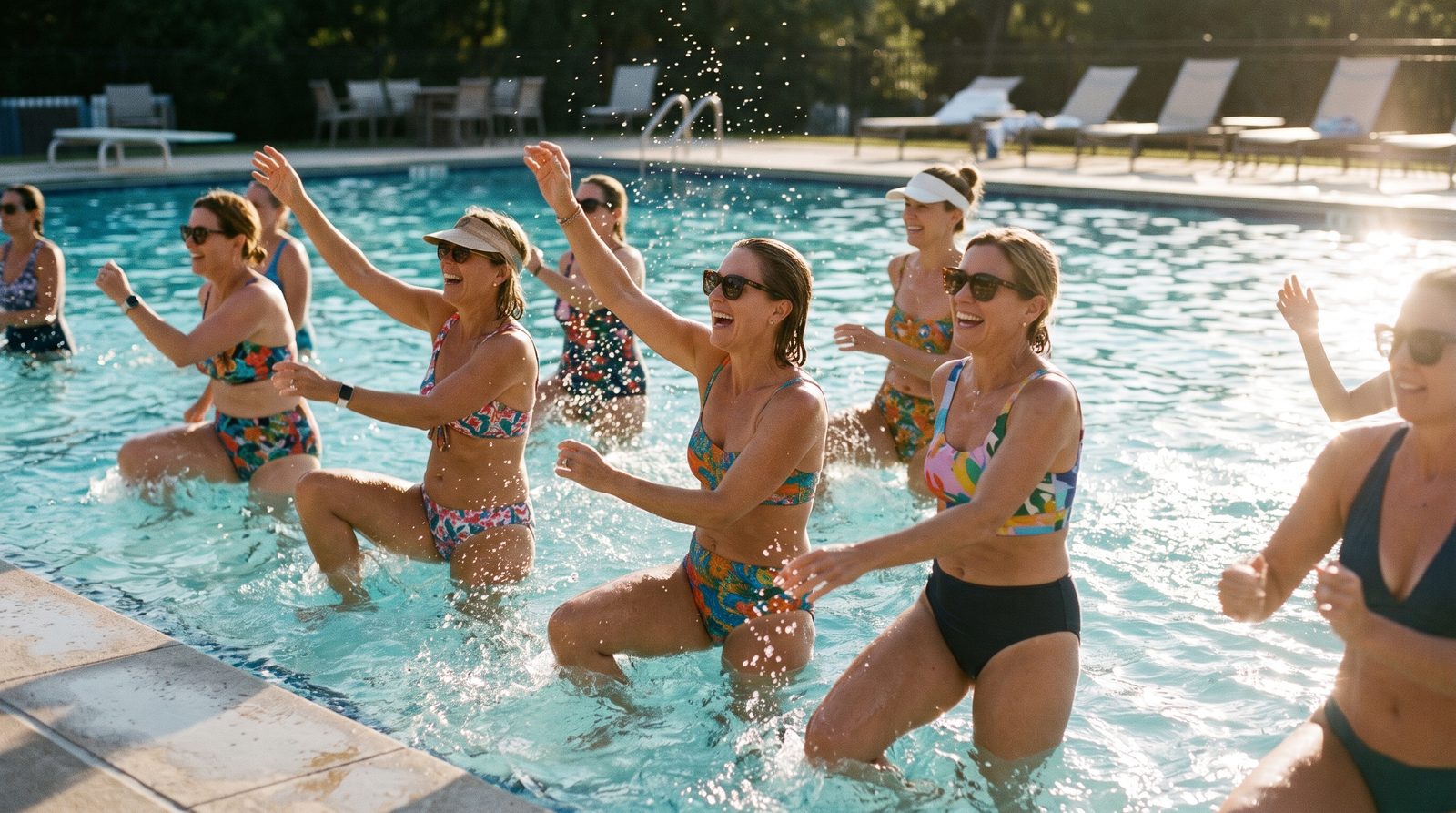
Swimwear for water aerobics needs three things a lounging bikini does not: a strap system that survives 45 minutes of arm work, a leg line that does not ride up when you lift a knee, and fabric that can be rinsed five times a week without going thin. In our experience the most reliable starting point is a high-neck or square-neck one-piece with 3 cm straps and a fully lined front.
A class usually runs 45–60 minutes in water at 28–30°C, which is warm enough to soften elastane over a season. Swim three times a week and a fitness suit sees roughly 150 sessions a year — more wear than a holiday suit gets in five summers. That is the number to keep in mind when you choose between a €40 suit and a €90 one.
What swimwear for water aerobics has to do
Think about the movements before the look. Aqua classes combine overhead arm raises, breaststroke arms, knee lifts, jumping jacks and 20–30 seconds of treading water, all at a pace that keeps the suit under load. Anything that relies on friction or a knot will move, and anything that moves will need adjusting every few minutes.
The suit should feel snug but not tight when dry, because it loosens by roughly 5% in water. If the straps leave marks on your shoulders after five minutes in the changing room, they will be painful after 45 minutes of movement, and that is the single most common reason people stop going to class.
- Arms overhead: check the strap does not lift more than 2 cm off the shoulder
- Knee lift: the leg opening should stay flat against the thigh
- Jump: nothing should shift at the bust by more than 1 cm
- Tread water: the front panel should not balloon away from the body
One-piece or bikini for the pool?
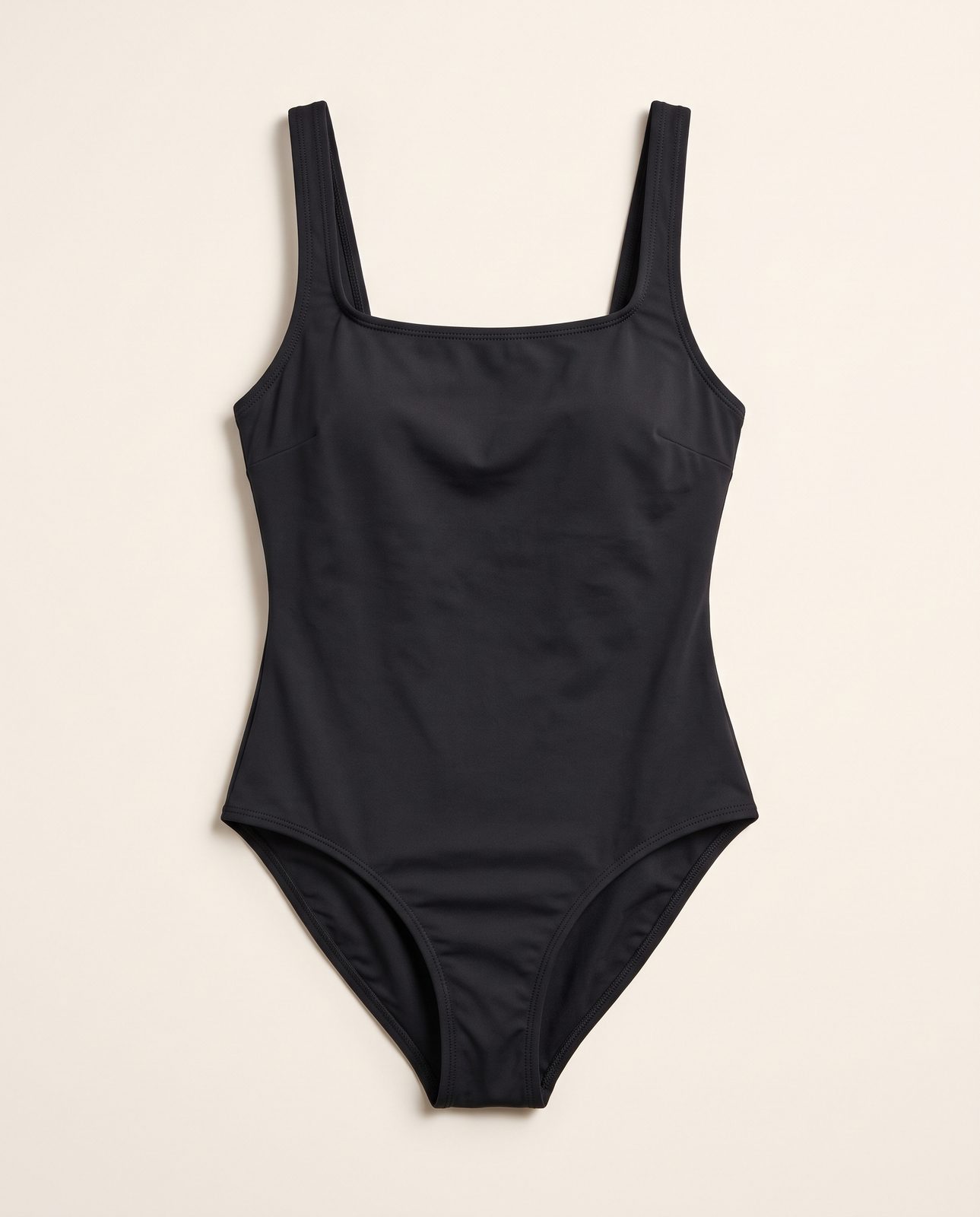
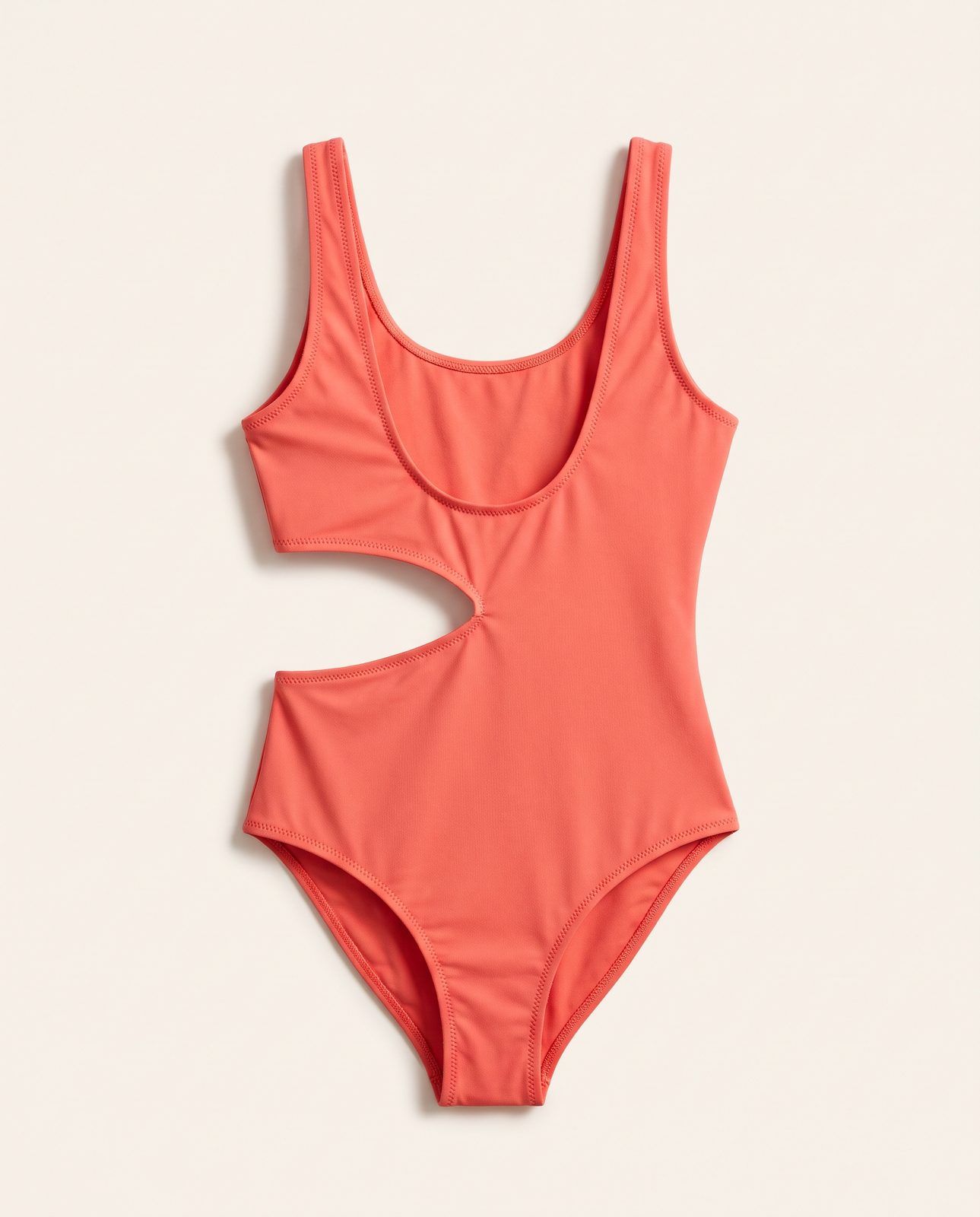
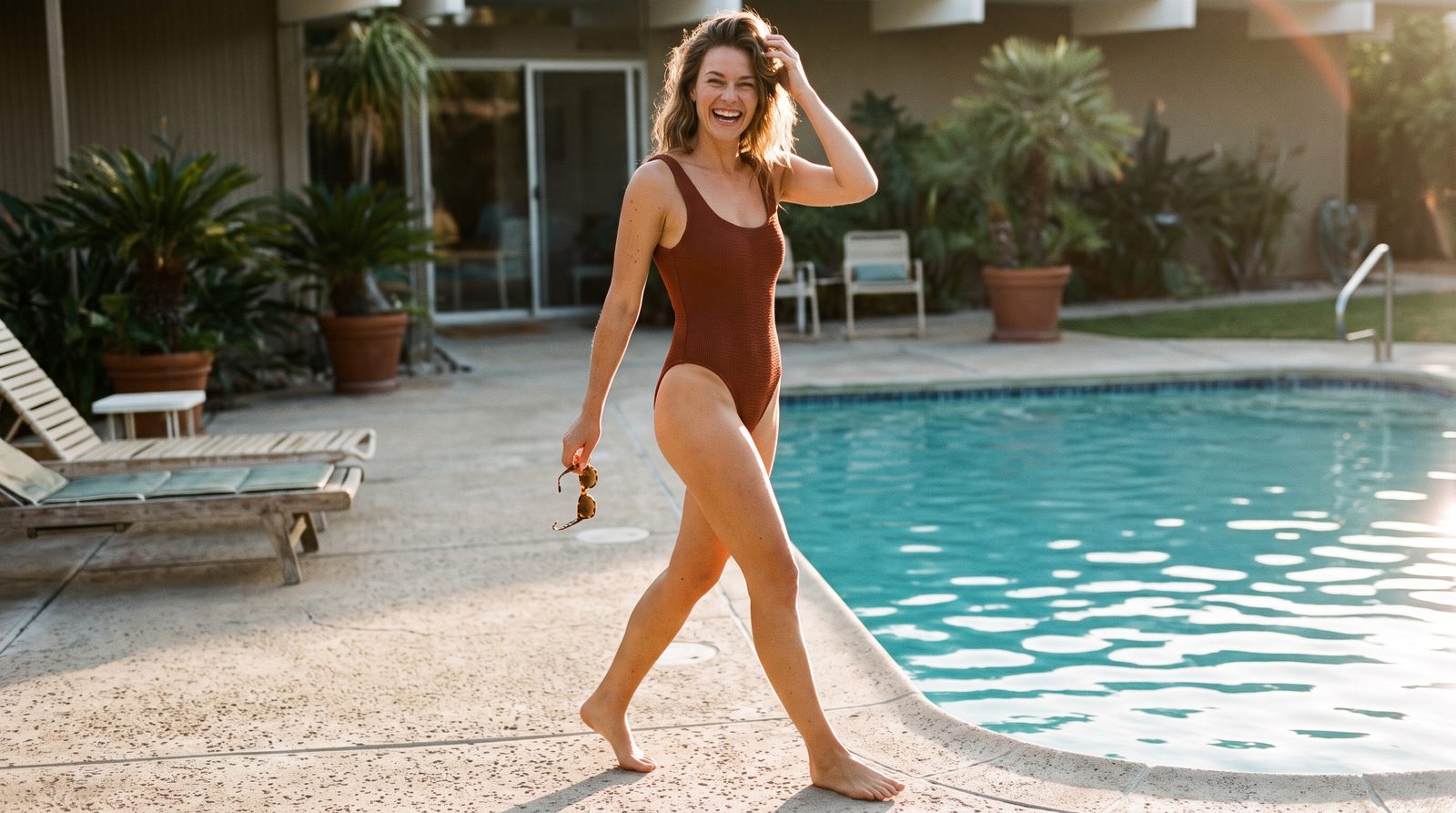
A one-piece is the safer default. Our black square-neck one-piece (€89) has 3 cm straps and a lined front that stays put through breaststroke arms, and the square neckline keeps the bust covered when you lean forward to stretch. The coral cutout one-piece works too, as long as the cutouts sit high on the waist rather than across the ribs where you bend.
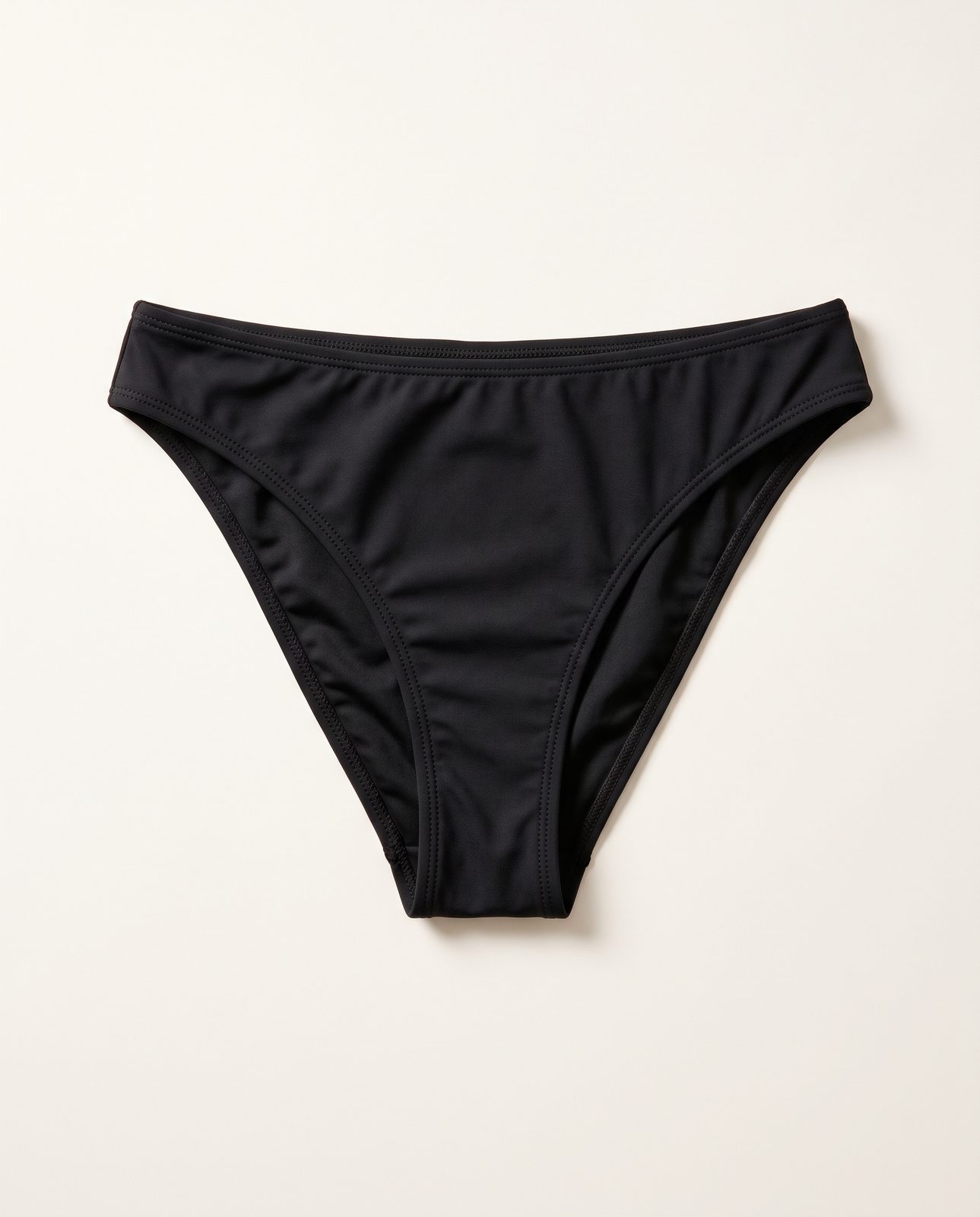
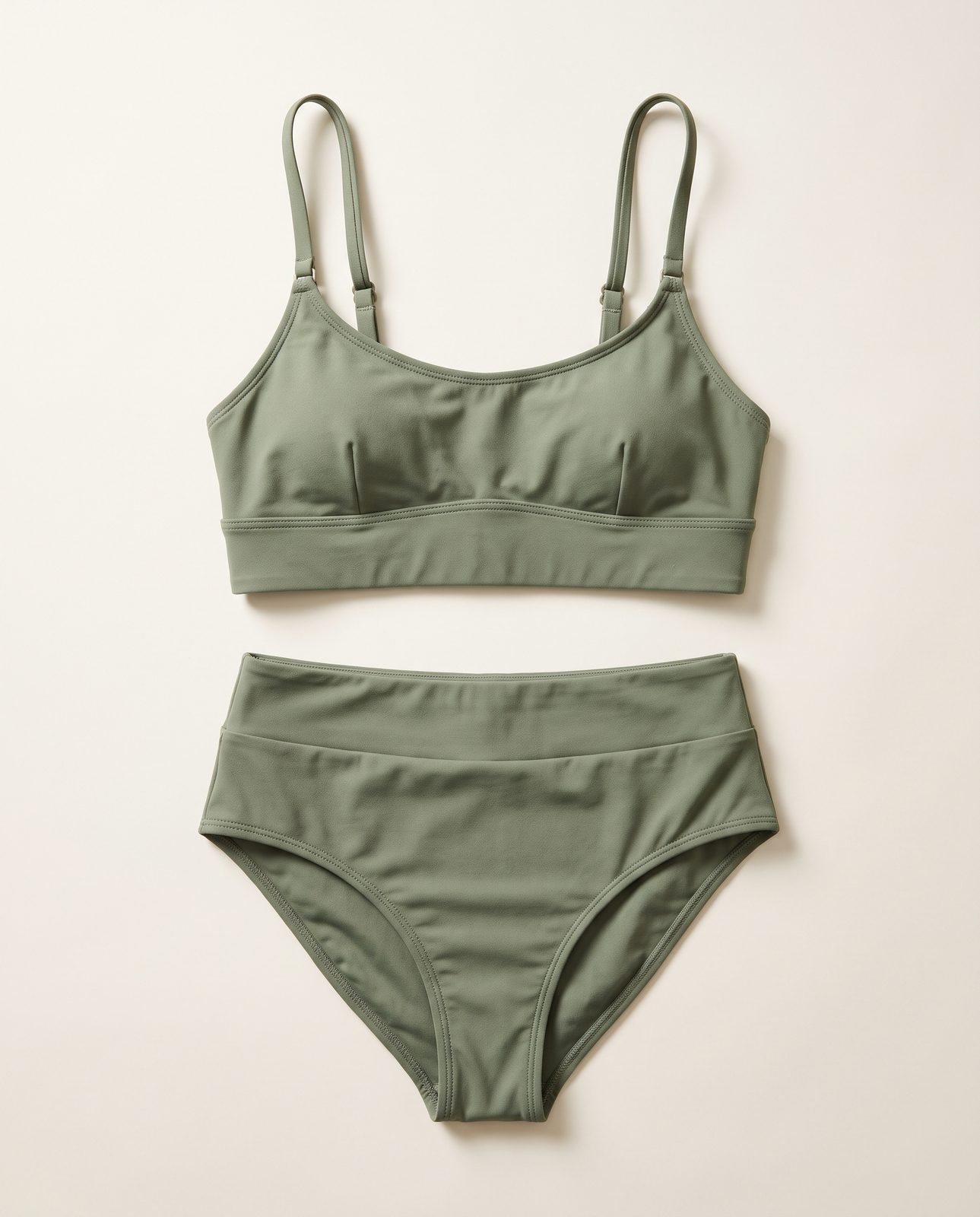
A two-piece can work if the top is a proper bra-style or a high-neck crop and the bottoms are high-waisted with at least 6 cm of side coverage. Bandeau tops and tie-side bottoms are the two styles we would leave in the drawer: both rely on tension that water and movement undo within ten minutes.
Straps, necklines and clasps that stay closed
Wide, fixed straps distribute load better than thin adjustable ones, and a cross-back or racerback stops straps sliding outward as you raise your arms. Halter ties look elegant and fail fastest: a wet double knot can work loose in a 45-minute class and there is no way to retie it mid-set without stopping.
Check the hardware before you buy. Plastic adjusters on thin straps slip under load, and metal rings at the shoulder can corrode in chlorinated water within a season. Flat-locked seams under the arm are worth looking for too, because raised seams rub when you do 40 arm circles in a row.
Fabric: why chlorine resistance matters more here
Most swim fabric is a nylon and elastane blend, typically 78% nylon and 22% elastane. It feels lovely and recovers well, but chlorine attacks it faster than salt water does, and a suit worn three times a week in a heated pool will start to feel slack at the seat by month eight. Polyester-blend swim fabric (often labelled PBT) is slightly less soft but noticeably more chlorine-tolerant.
Whichever you choose, the routine matters more than the label: rinse in cool water within 30 minutes of class, wash by hand once a week with 5 ml of mild detergent, and never leave the suit in a sealed bag in a warm car. Rotating two suits gives each one 24 hours to recover its shape, which roughly doubles the life of both.

The fit checks to do before your first class
Take your bust, waist and hip measurements and compare them with the size chart rather than your dress size, because swim sizing runs differently between brands. The hip measurement, taken at the fullest point about 20 cm below the waist, is the one most people skip and the one that decides whether the leg line stays flat when you move.
Then move. Squat, raise both arms, twist your torso and sit down on the changing-room bench. A suit that passes all four will handle a class; one that gapes at the leg or lifts at the shoulder when you sit will not. Keep the hygiene sticker on until you have done this, because most retailers will not accept a return once it is removed.
- Hip: measure the fullest point, roughly 20 cm below the waist
- Torso: under 58 cm is short, over 64 cm is long
- Straps: 3 cm wide, fixed, and no more than 2 cm of lift when tested
- Leg: at least 6 cm of side coverage on a two-piece bottom
What to wear over it, and what to leave at home
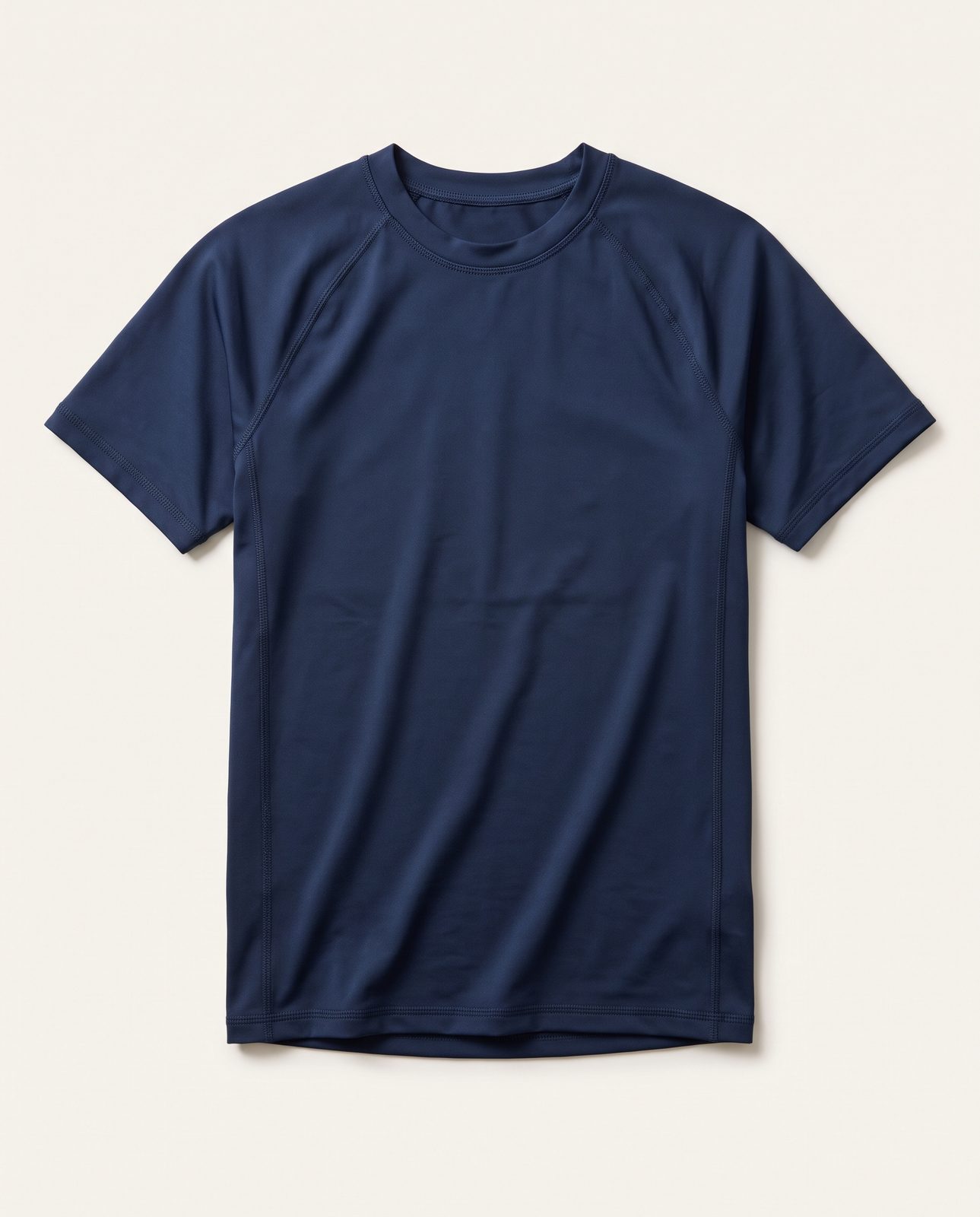
A swim tee or a terry shirt dress makes the walk from the changing room to the pool comfortable without soaking up much water, and both dry in under an hour on a hook. Pool shoes with a textured rubber sole are worth the €15 if your class is in a leisure centre with wet tiles; bare feet on wet tile is how most people end up missing a month of classes.
Leave the jewellery in the locker. Chlorine dulls plated metals quickly, and a necklace that swings during jumping jacks is a distraction you do not need. A swim cap is optional unless the pool requires one, and goggles are worth having if your class includes any front crawl lengths between sets.
Frequently asked questions
Can you wear a bikini to water aerobics?
Yes, if the top is a supportive bra-style or high-neck crop and the bottoms are high-waisted with 6 cm or more of side coverage. Avoid bandeau tops and tie-side bottoms, which come loose once you start moving.
How often should I replace a swimsuit used for aqua classes?
Expect 8–12 months from a suit worn three times a week in a chlorinated pool, or longer if you rotate two suits and rinse after every session. Replace it when the seat stays baggy after washing or the fabric looks shiny and thin.
Does chlorine ruin swimwear faster than sea water?
Yes, generally. Chlorine keeps reacting with elastane while the suit is damp, whereas salt water mostly rinses out. A cool rinse within 30 minutes of leaving the pool is the single most effective habit.
Is a swim skirt suitable for water aerobics?
It can be, provided the skirt is attached to fitted briefs rather than a loose separate layer that floats up during leg work. Check that the skirt sits flat when you lift a knee before you commit to a class in it.