Swimwear for a small bust usually fails at the cup edge. The fabric stands 1–2 cm away from the body, the triangle slides sideways when you swim, or the bandeau gapes at the top. None of that means you need a bigger size; it usually means the cup is too shallow and the band is too loose.
An A or B cup is easy to fit well, and it does not need heavy padding to look right. Here is what we change first, from band tension to seam direction, and where a 1 cm foam cup genuinely helps.
Why cups gape on a small bust
A cup is a volume, not a width. A 34B and a 38A hold similar volume, but the 38A is wider and shallower, so on a narrower ribcage it stands away at the top edge. That is why sizing down in the band often fixes gaping better than sizing down in the cup.
Test it with a simple check: fasten the top, then slide one finger under the side of the cup. If the fabric lifts away easily, the cup is too shallow for your shape. A seamed or gathered cup follows the body's curve, while a single moulded shell keeps its own shape and loses contact.
Bandeau and strapless: what to expect
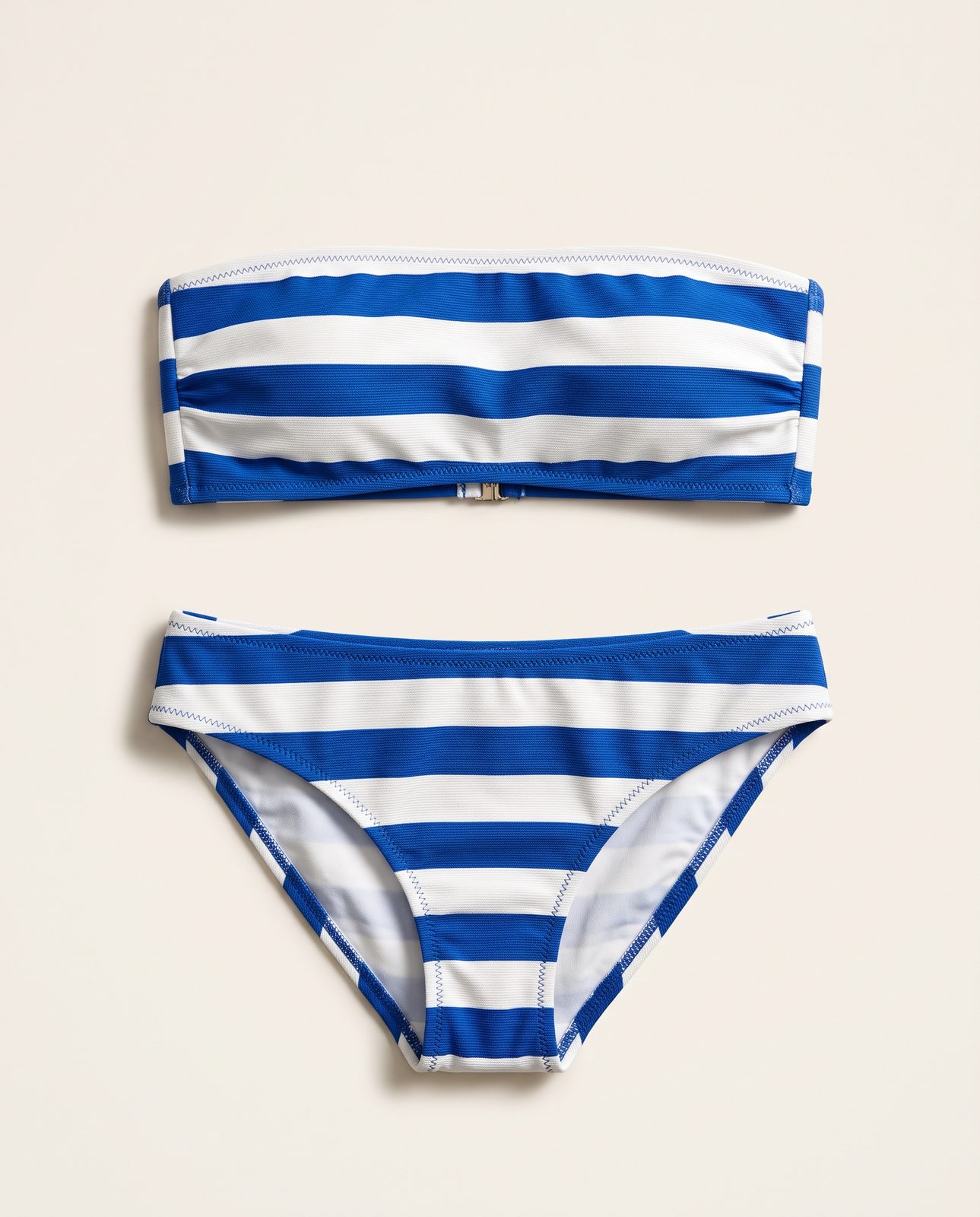
A bandeau can work on a small bust, but only if the band grips. Look for a silicone strip 8–10 mm wide along the top edge and a band that measures 4–6 cm deep. Anything shallower will roll down after 20 minutes, especially once sun cream is involved.
Try the jump test in the changing room: five small jumps, arms down. If the top moves more than 1 cm, take the next size down or choose a style with a removable strap. A bandeau with a tie at the centre also lets you tighten the top edge without compressing the ribcage.
Padding and removable cups, honestly
A 1 cm removable foam cup smooths the line under a thin white suit, which is its real job. A 3 cm push-up insert changes shape, and it needs a pocket to stay in place; loose inserts fold in half during the first swim and dry as a lump. Check that any pad is sewn into a pocket or held by a 6 cm opening at the side.
Take the pads out before washing and dry them flat, or they will hold water for hours and smell of chlorine by August. If you prefer no padding at all, choose a suit with a double-lined front so the seam and any ring detail do not show through.
If the pads are sewn in rather than removable, check how they are fixed. A pad stitched along the side seam stays flat; a pad that floats inside a loose lining will migrate to the centre after two washes and leave a visible lump under a pale suit.
Texture, seams and gathers that add shape
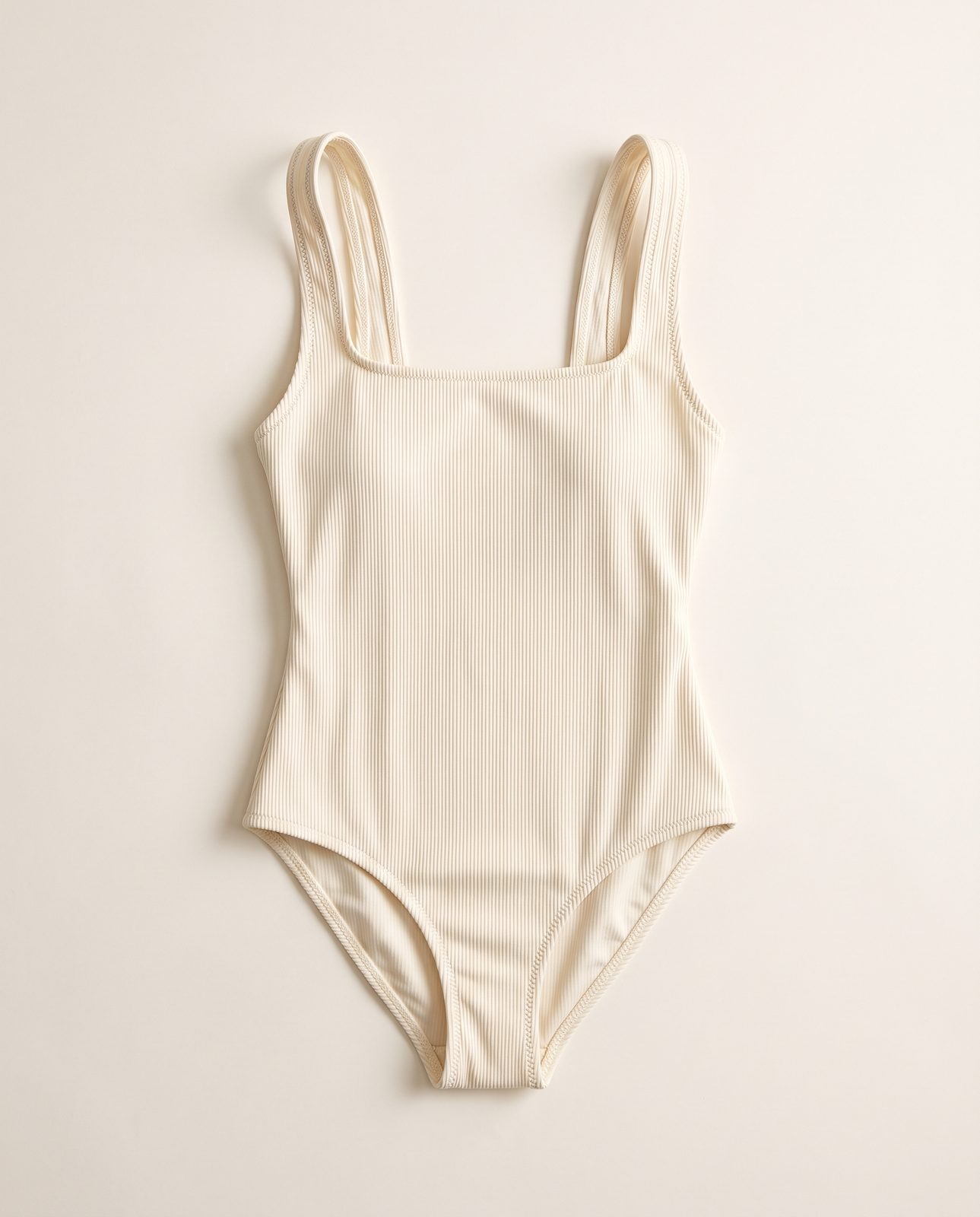
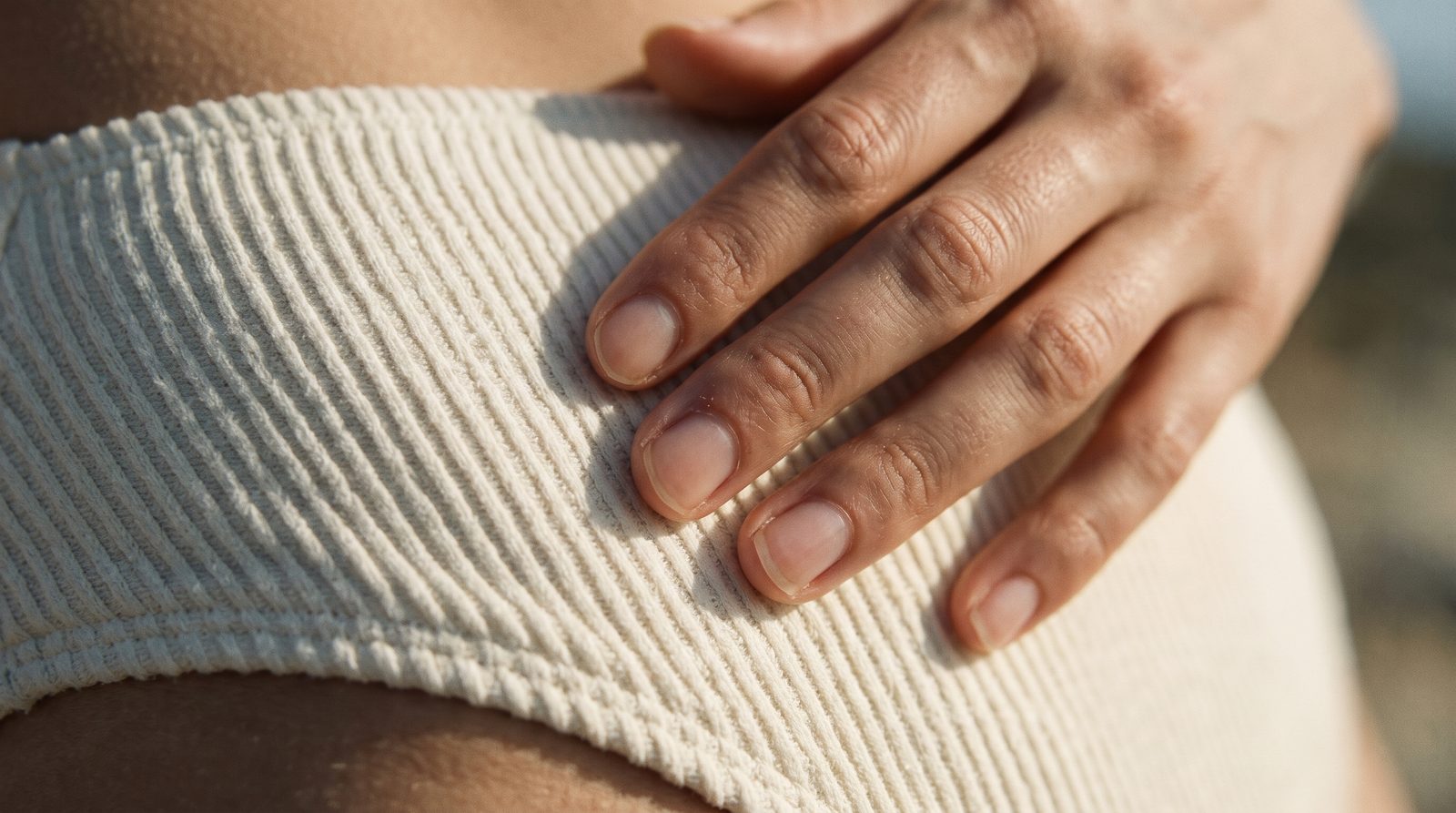
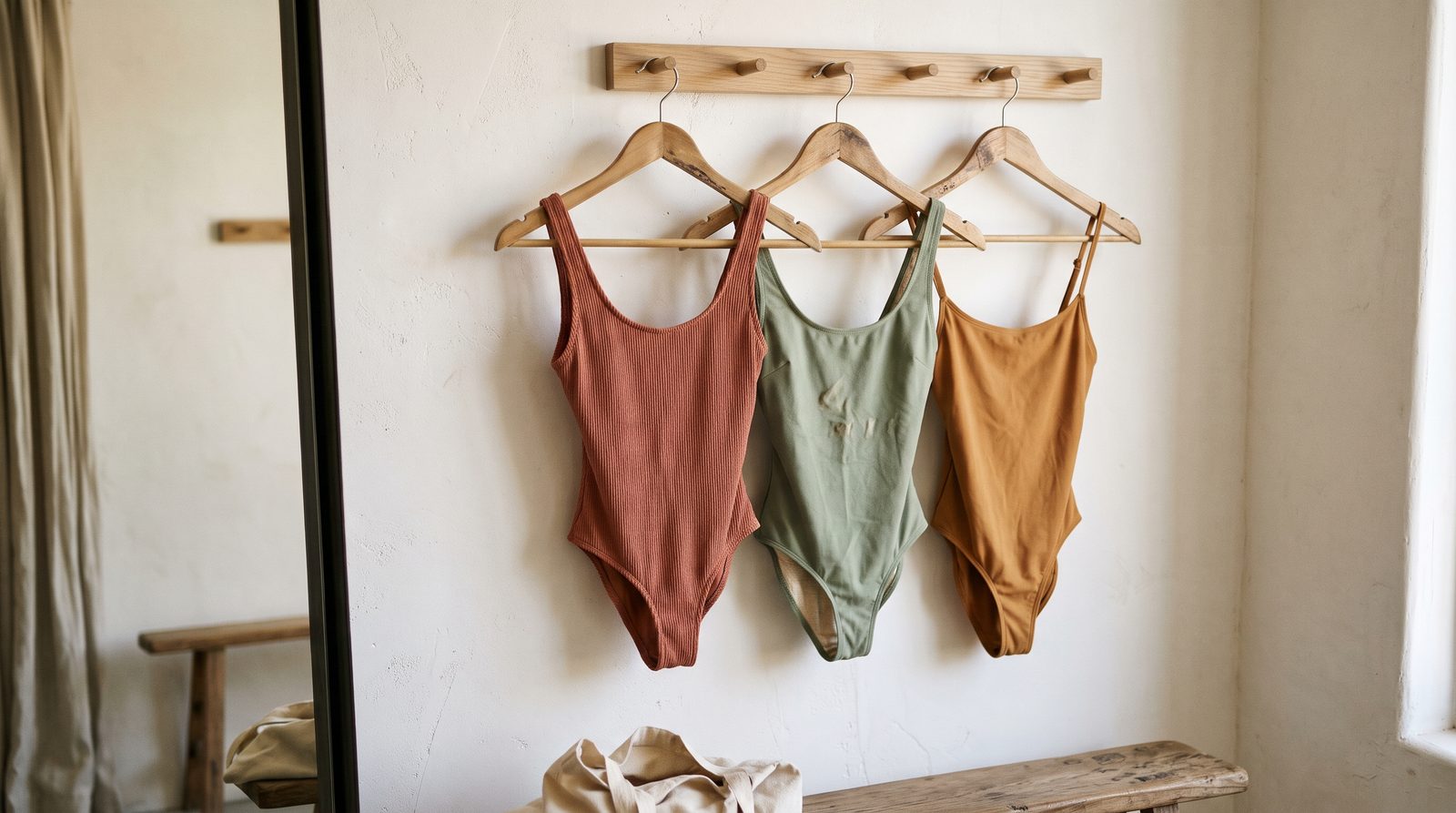
Rib knit is the most useful texture for a small bust. Vertical ribs 3–4 mm wide catch light and shadow, so the bust reads as fuller without any foam. Gathers at the side seam and a curved seam under the bust do the same on smooth fabric.
Colour helps too. A light top with a darker bottom draws the eye upward, and a print concentrated at the bust adds visual volume. What rarely helps is a straight horizontal seam across the apex with no shaping, which flattens rather than lifts.
Necklines that stay close to the body
High necks and halter necks hold the fabric against the chest because the tension runs upward rather than sideways. A square neck with a 3 cm underband is the most reliable everyday option. A deep V works if the two front panels overlap by at least 4 cm at the centre, which keeps the edges flat.
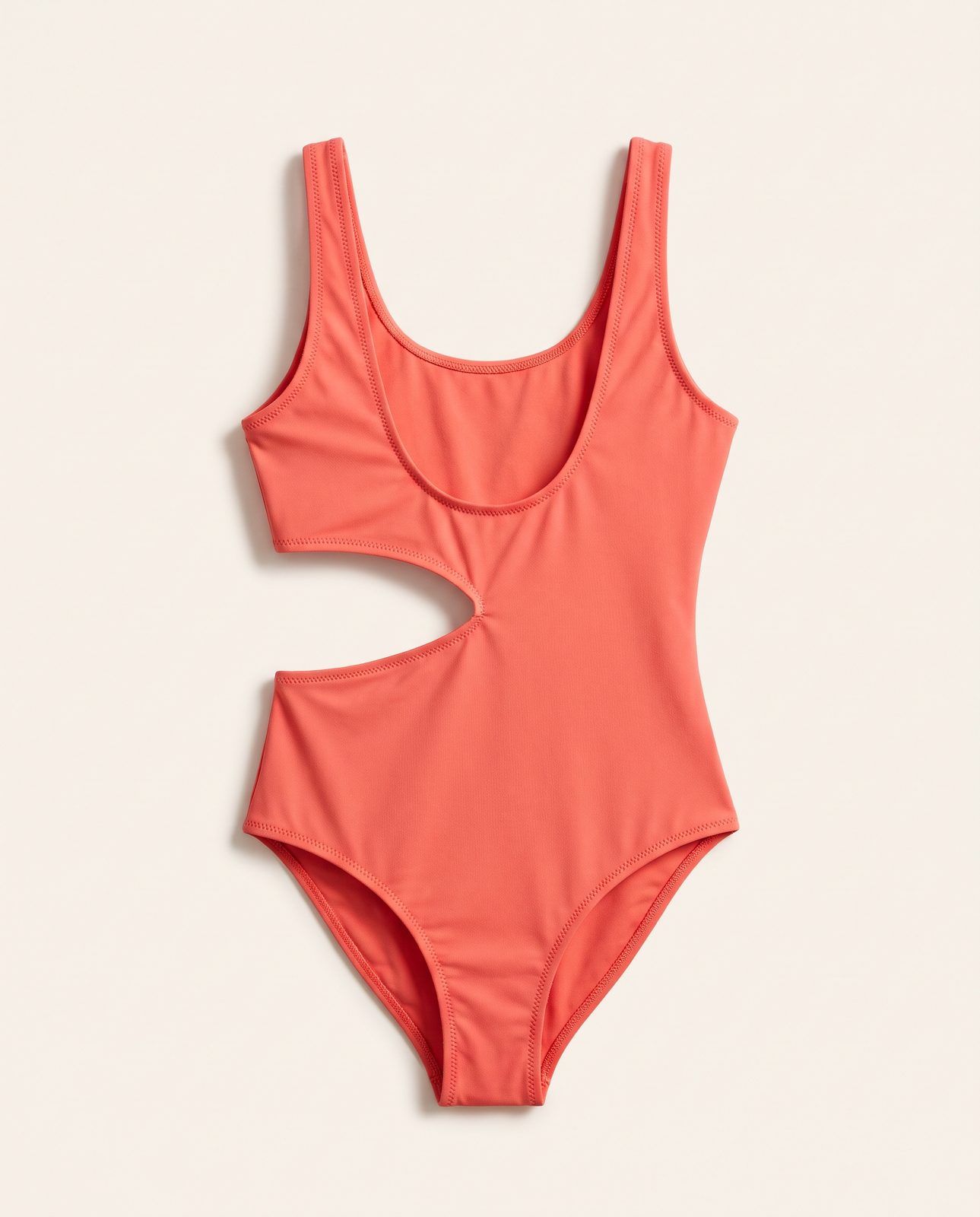
Avoid a wide scoop with thin straps: there is nothing to tension the top edge, so it gapes when you lean forward. If you love the shape, look for a scoop with a hidden elastic of 6–8 mm sewn into the neckline, which pulls it back against the skin.
Also check where the strap joins the cup. A strap attached at the outer edge pulls the cup sideways and opens the top; one attached 3–4 cm in from the edge holds the whole panel. This single detail explains why two tops that look the same on a hanger fit completely differently.
The two-minute fit check
Fasten the top, lift both arms and lean forward. The neckline should stay within 1 cm of your chest, and the cup edge should not curl outward. Then twist your torso left and right; a top that shifts sideways needs a firmer band, not a bigger cup.
Finally, wet the suit in the sink if the shop allows it. Swim fabric relaxes by around 3% in water, and a top that felt perfect dry can gape once it is soaked. Two minutes at the tap saves a return in July.
Frequently asked questions
Should I size down for a small bust?
Usually in the band, not the cup. A firmer band pulls the fabric against the ribcage and stops gaping, while sizing down in the cup can flatten the shape you already have.
Are push-up bikinis necessary for a small bust?
No. A well-cut cup with a seam or gather gives shape without inserts, and it dries faster. Padding is a styling choice, not a requirement.
Which bikini top is best for an A cup?
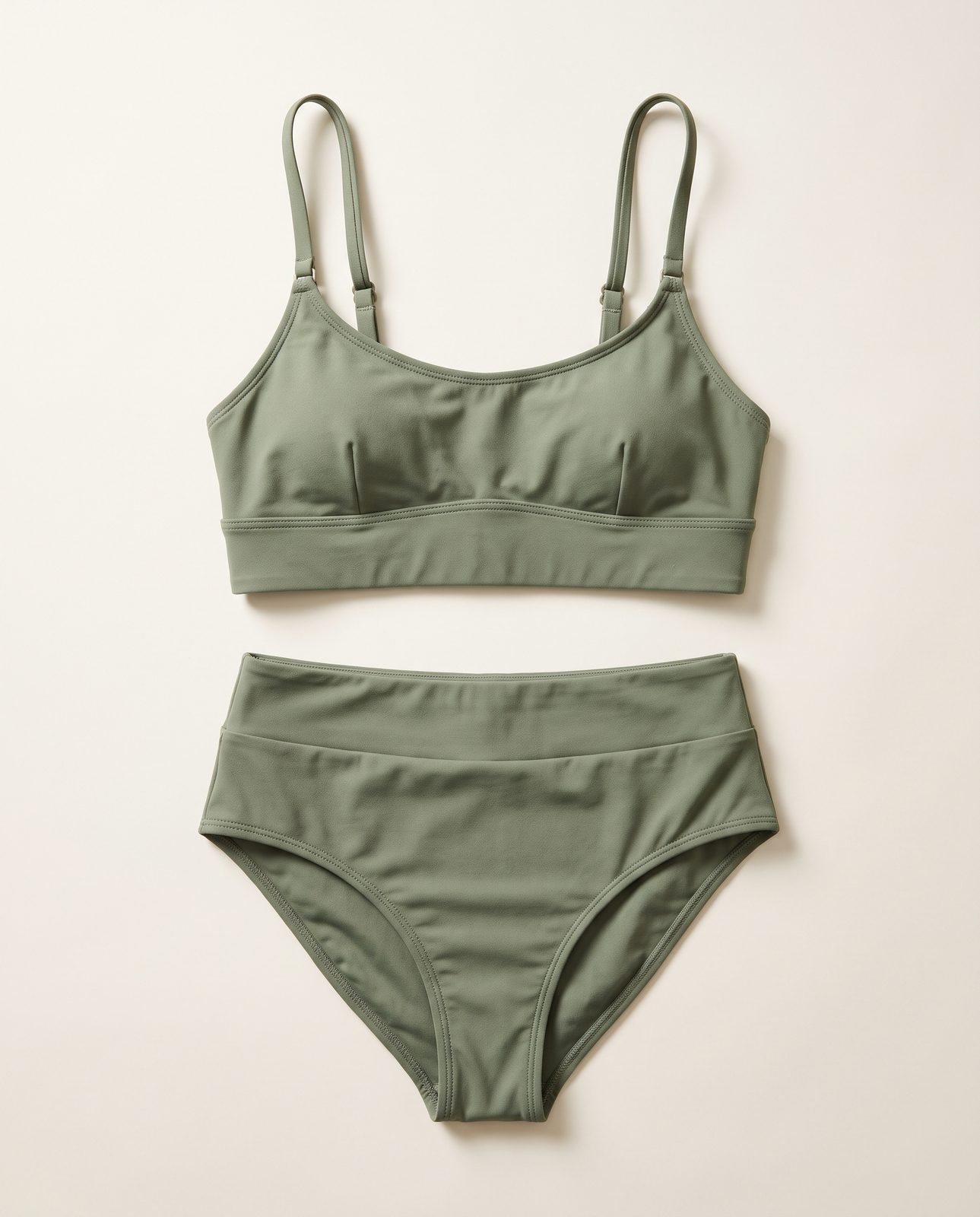
A high-neck or square-neck top with a firm underband holds closest to the body. Triangle tops can work if they are sized correctly and the band is not a thin string.
Do bandeaus stay up on a small bust?
Only with a wide silicone strip and a band of at least 4 cm. Test with five jumps before buying, and consider a style with removable straps for swimming.