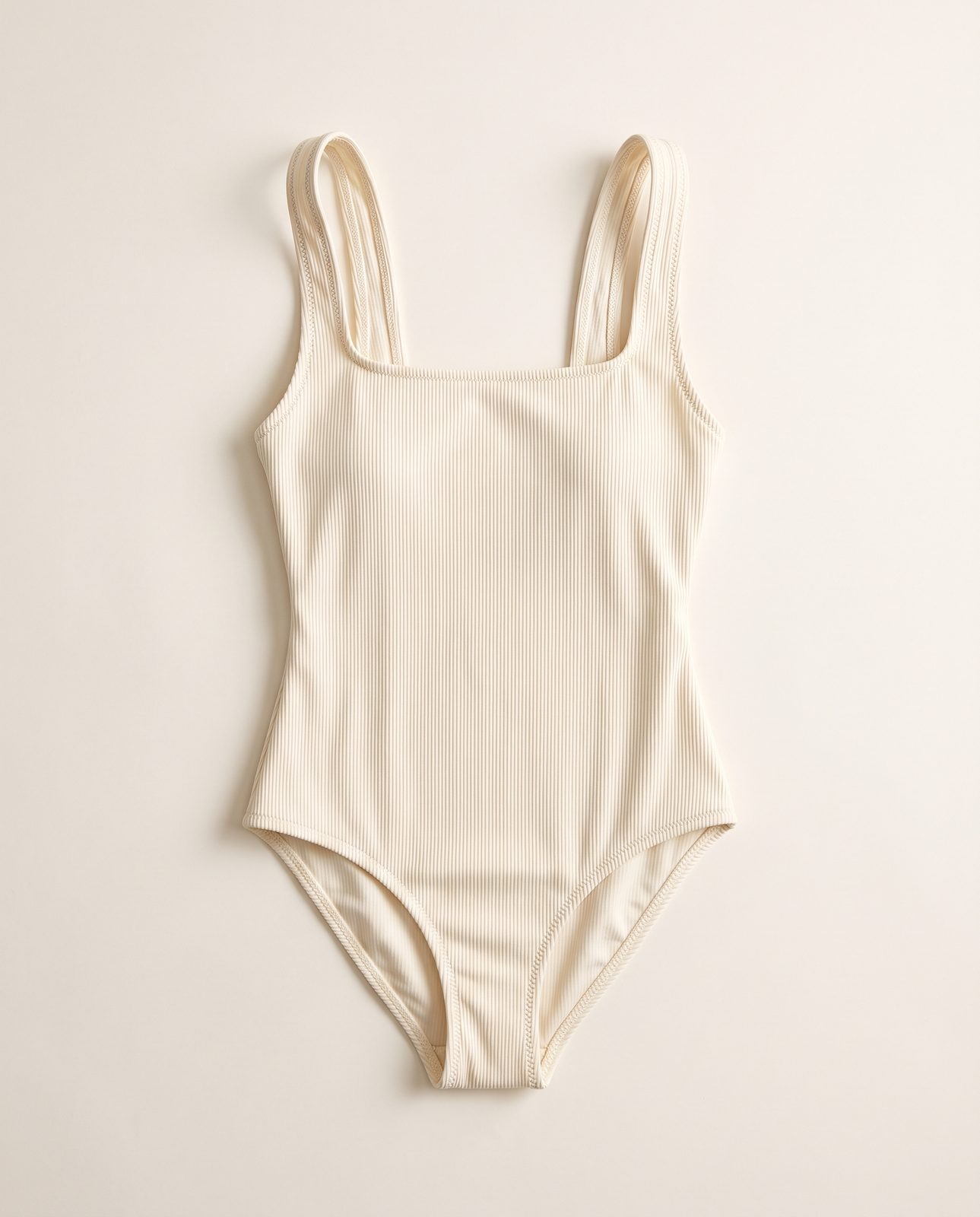
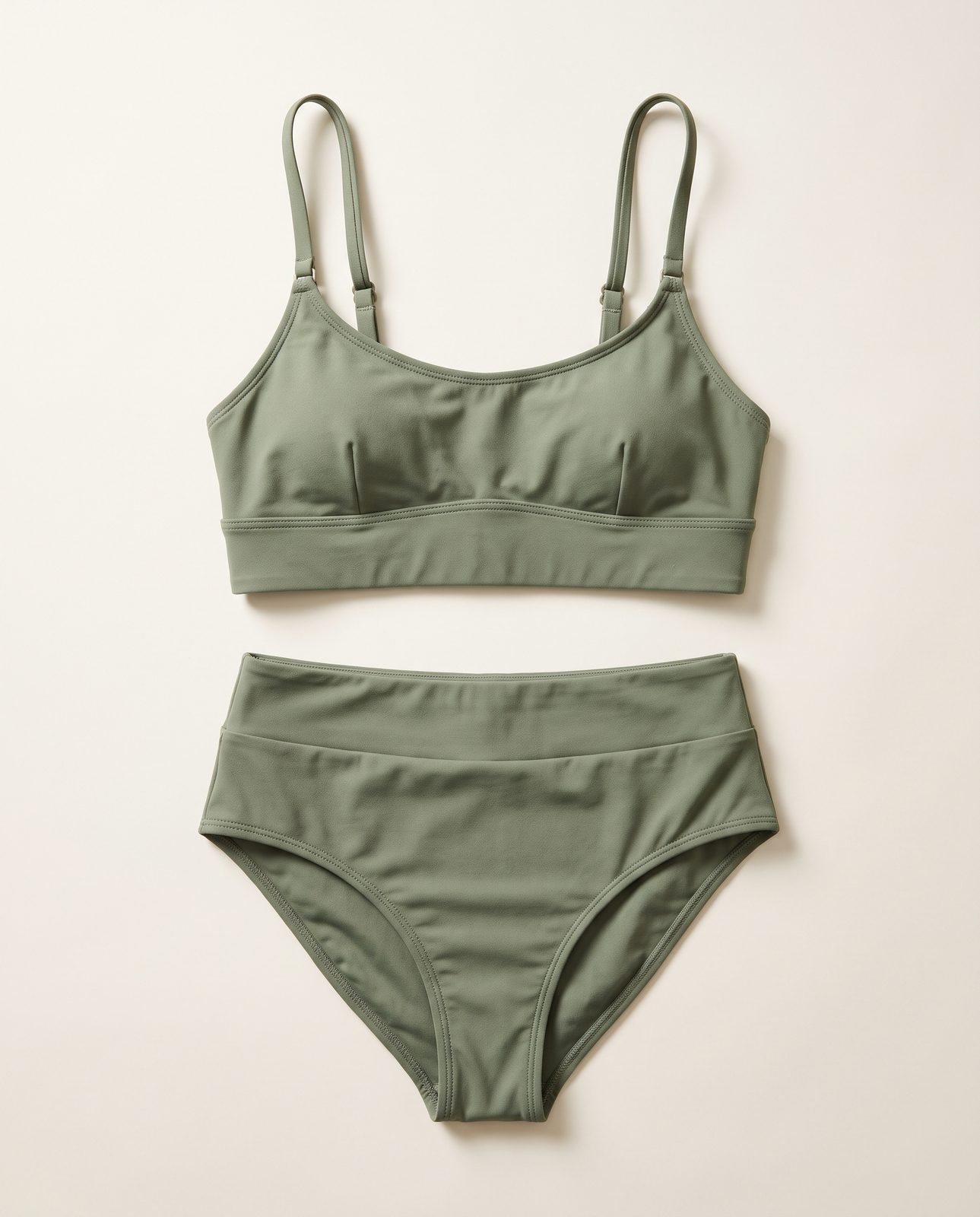
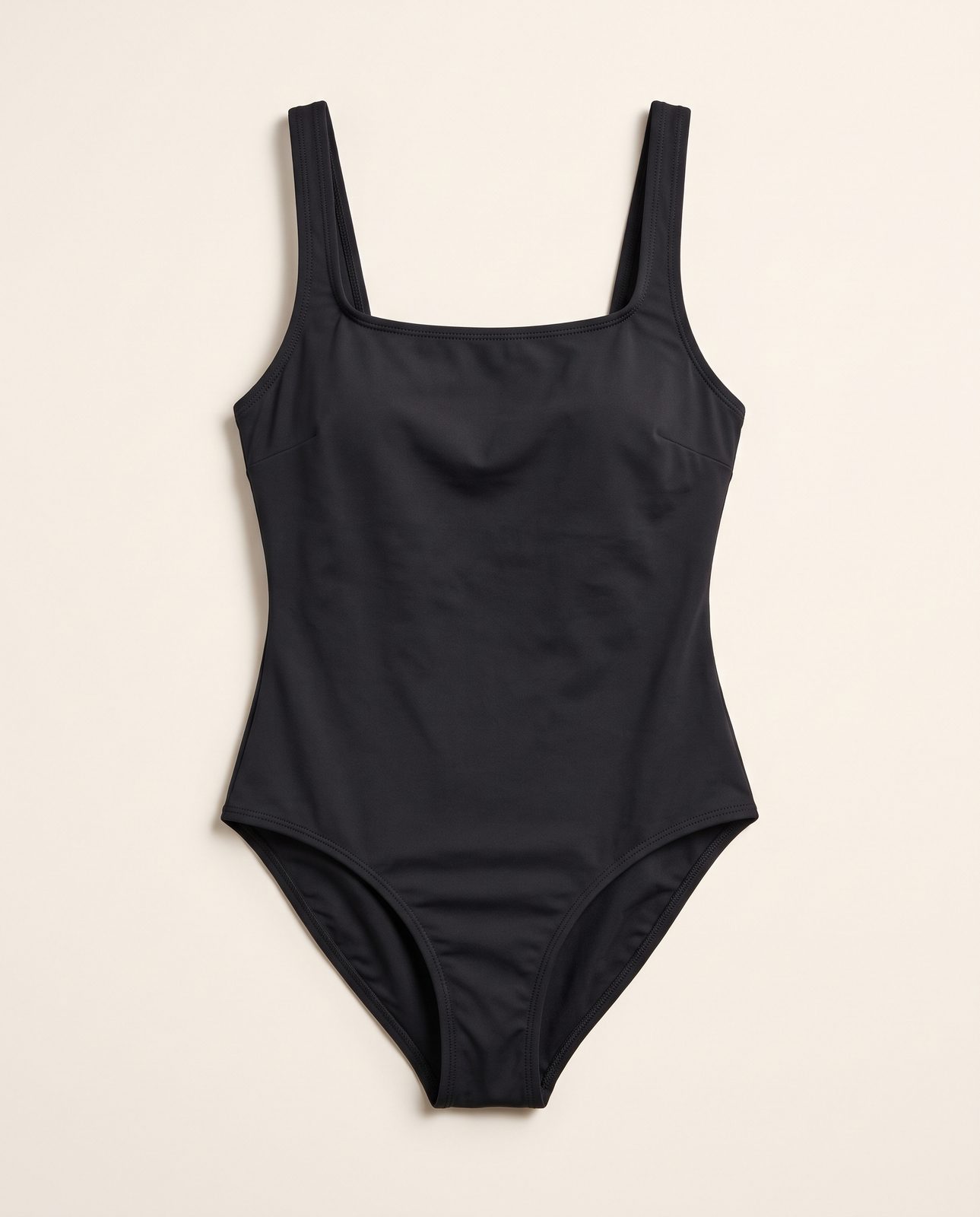
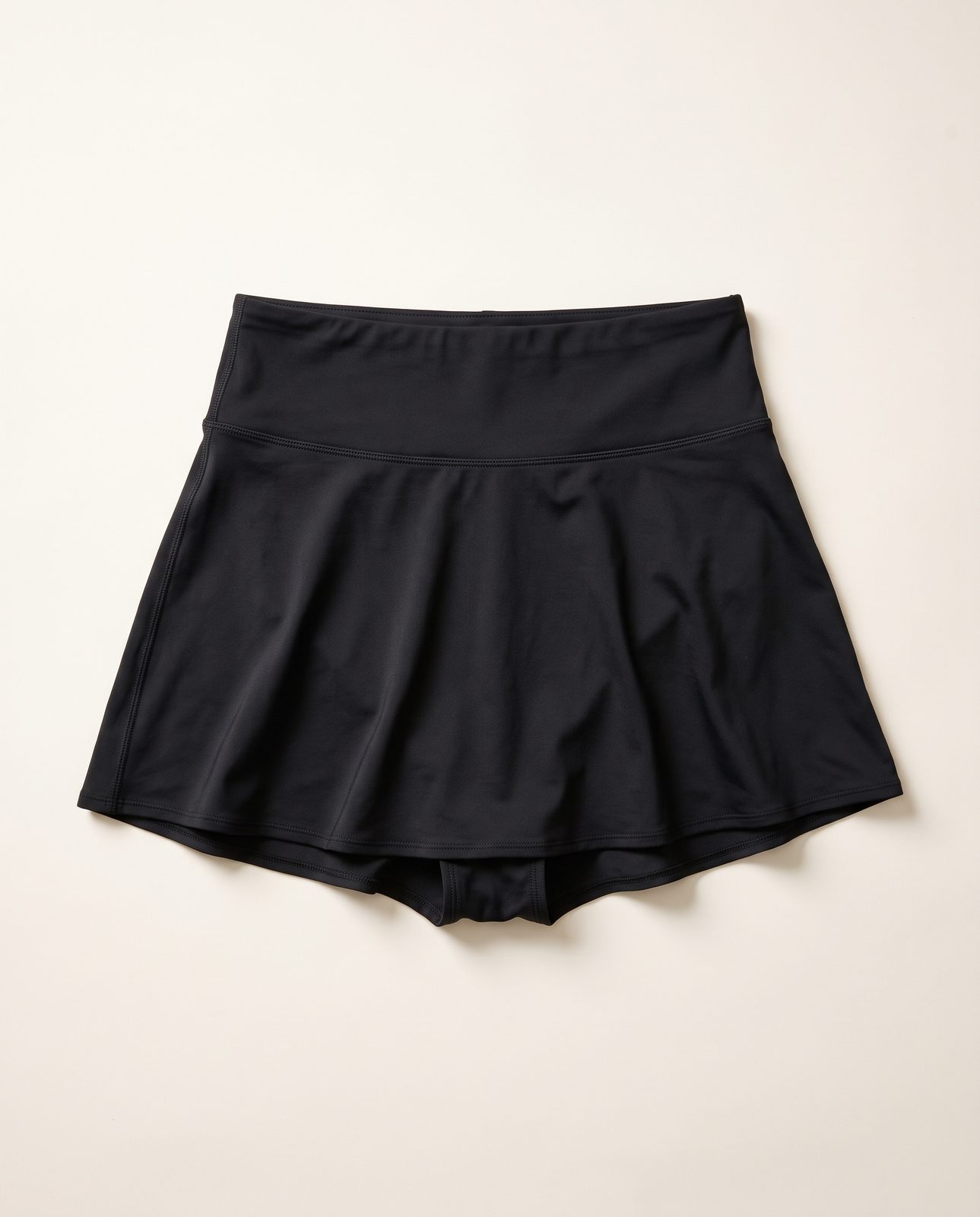
Most women end up with the wrong swimsuit size at least once, and it is rarely their fault. Swim fabric stretches 40–60% in one direction, so a size 12 bikini from one label can fit like a 14 from another. This swimsuit size guide for women starts with a tape measure and three numbers, not a guess.
Set aside five minutes, measure over underwear with a soft tape, and write the figures down in centimetres. Every suit we sell is graded on bust, waist and hip, with a separate note on torso length for one-pieces.
Swimsuit size guide: how to measure in four steps
Stand with your feet together and keep the tape level with the floor. It should sit flat against the skin, snug enough not to slide and loose enough for one finger to fit underneath. Measure twice, because bodies shift by 1–2 cm over a day, and trust the second reading.
Bust goes around the fullest part, tape under the arms and across the shoulder blades. Waist sits at the narrowest point, roughly 2–3 cm above the navel. Hips are measured 20 cm below the waist at the fullest part of the seat. For one-pieces, add torso: from one shoulder, down over the bust, through the legs and back up to the same shoulder.
- Bust: fullest point, arms down, breathe out normally
- Waist: narrowest point, no holding your breath
- Hips: 20 cm below the waist, feet together
- Torso: shoulder over bust to shoulder, for one-pieces only
What the numbers mean: UK, US and EU sizes
We grade on body measurements rather than dress labels. XS fits bust 80–84 cm, waist 62–66 cm and hips 88–92 cm. S is 85–89 / 67–71 / 93–97, M is 90–94 / 72–76 / 98–102, L is 95–99 / 77–81 / 103–107, and XL is 100–106 / 82–88 / 108–114. In practice that lands near UK 8–10 for S, UK 12 for M and UK 14–16 for L, with US sizes two numbers lower and EU sizes two higher.
Treat any conversion table as a starting point. If you are between sizes, choose by hip for bikini bottoms and by bust for a fitted one-piece, then check the fit note on the product page, where we list the model's height and the size she is wearing.
Why your swimsuit size is not your dress size
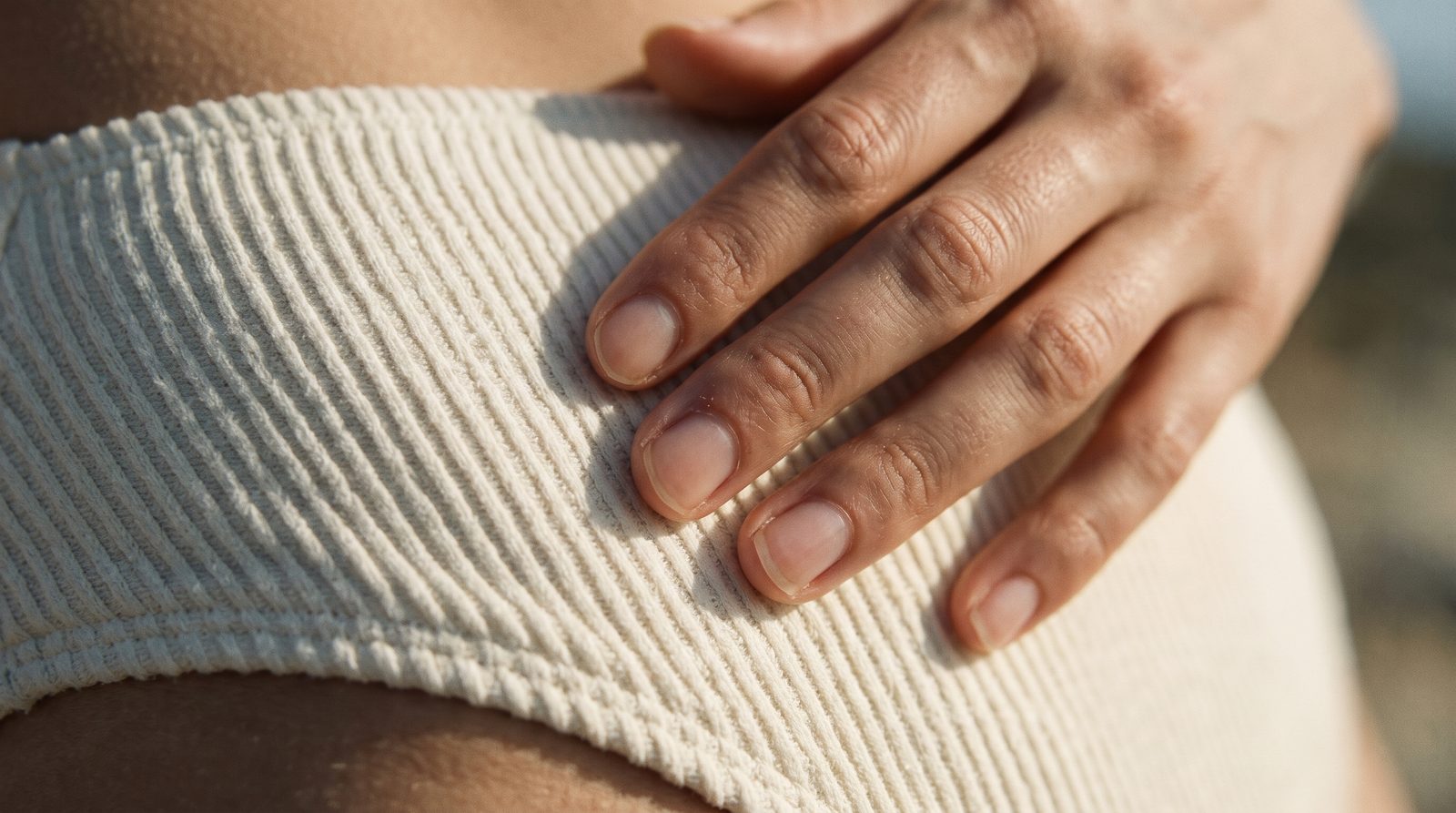
A dress can hang loose and still look right; a swimsuit cannot. Knitted swim fabric is built to recover, so it has to sit closer than woven clothing. Most women go down one size from their dress size in a one-piece, while high-waist bottoms, cut with 3–4 cm more rise than a standard brief, usually match their usual size.
Fit also drifts. Elastane loses around 5% of its stretch after 60–80 hours in a pool at 27 °C, and sun cream speeds that up. Buy for the fit you want in week one, not the fit you hope for in September, and rinse the suit in cool water after every swim.
When you measure matters too. Bust can shift 1–2 cm across a menstrual cycle, and hips by around 1 cm after a long flight or a salty meal. Measure on an ordinary day, and if you are buying for a specific holiday, measure within a week of leaving rather than in the middle of winter.
Torso length: the fit issue nobody mentions
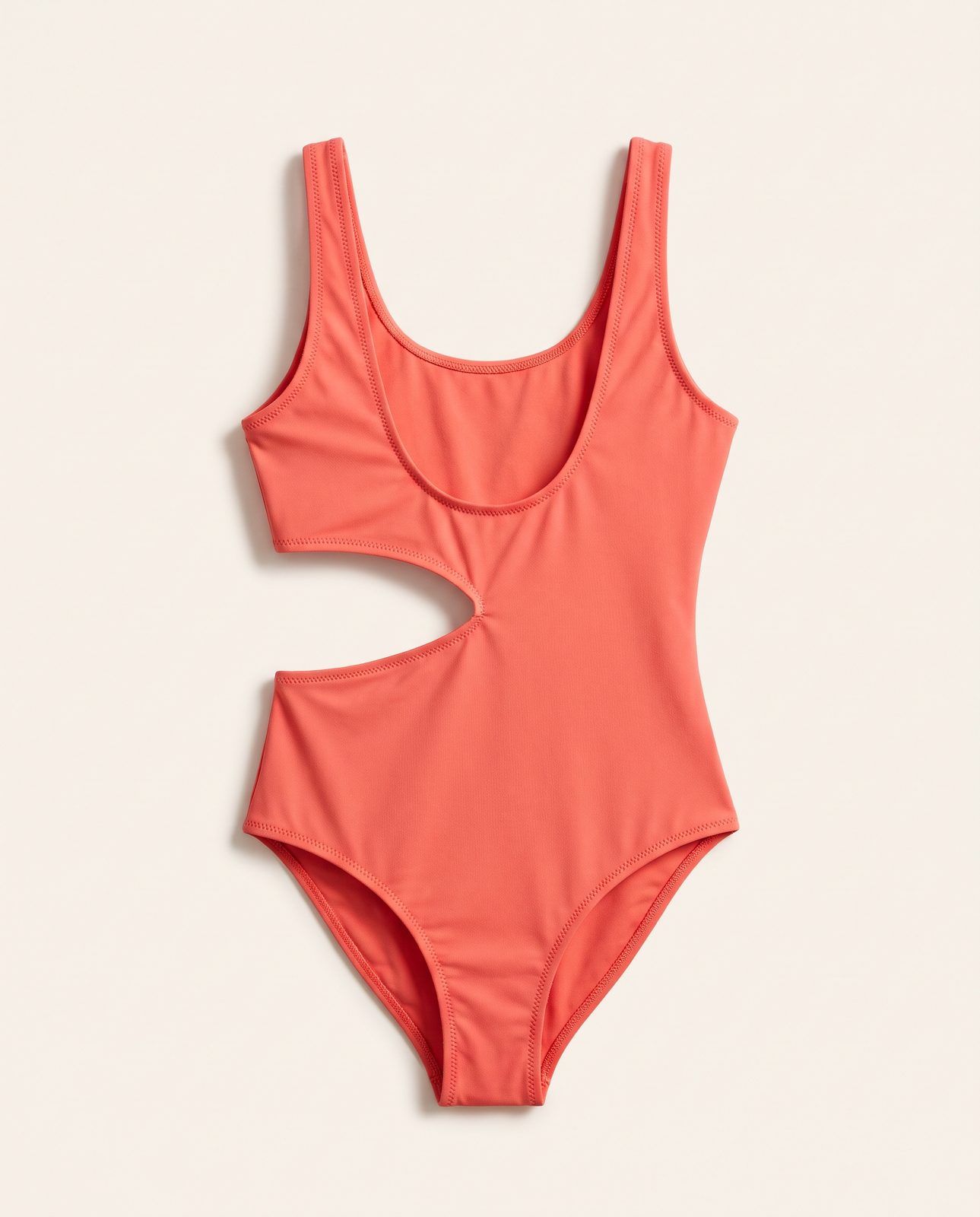
If a one-piece pulls at the shoulders or rides up at the leg, the problem is usually torso length rather than size. A short torso, under about 58 cm, suits a scoop back with adjustable straps. A long torso, over 64 cm, needs a taller cut or cross-back straps, or the shoulders will ache within 20 minutes of swimming.
- Short torso: scoop back, straps you can shorten
- Long torso: tall-cut one-piece or cross-back straps
- Straps digging in after 15 minutes means the suit is short in the torso, not that you need a bigger size
Five fit checks before you buy
Wear the suit for five minutes before deciding. Bend forward, lift both arms, squat and sit down. The back band should stay level, the leg should not gape when you squat, and the straps should hold without pressing. Cup edges that sit away from the body mean the bust is unsupported, not that you need a larger size.
Look from behind too. Fabric that wrinkles vertically down the back is too big, while fabric pulling horizontally across the seat is too small. Size up if straps leave red marks or the leg cuts into the hip; size down if the band lifts when you raise your arms.
Bikini tops and bottoms can be bought in different sizes, so use that. Order the top by bust and the bottom by hip, and if one piece of a set does not fit, our separates are sold individually for exactly this reason. A suit that fits at the shoulder and the seat is worth two that fit only at one.
Frequently asked questions
What size swimsuit should I buy if I am between sizes?
Choose by the measurement that matters for the style: bust for a fitted one-piece, hips for high-waist bottoms. If both readings are borderline, take the larger size unless the style is bandeau, which needs to grip.
Do swimsuits stretch out with wear?
Yes. Chlorine, hot water and sun cream relax elastane, and most suits feel 3–5% looser after 50–60 wears. Rinsing in cool water straight after swimming slows this down noticeably.
Is a UK 12 the same as a US 8 in swimwear?
Roughly, but only roughly. US swimwear usually runs two sizes below UK, so a UK 12 sits near a US 8, yet grading varies by 2–3 cm between brands. Check the bust, waist and hip figures rather than the label.
How do I measure torso length for a one-piece?
Run the tape from the top of one shoulder, down over the fullest part of the bust, through the legs and back up to the same shoulder. Keep it snug but not tight, and measure in front of a mirror so the tape stays straight.