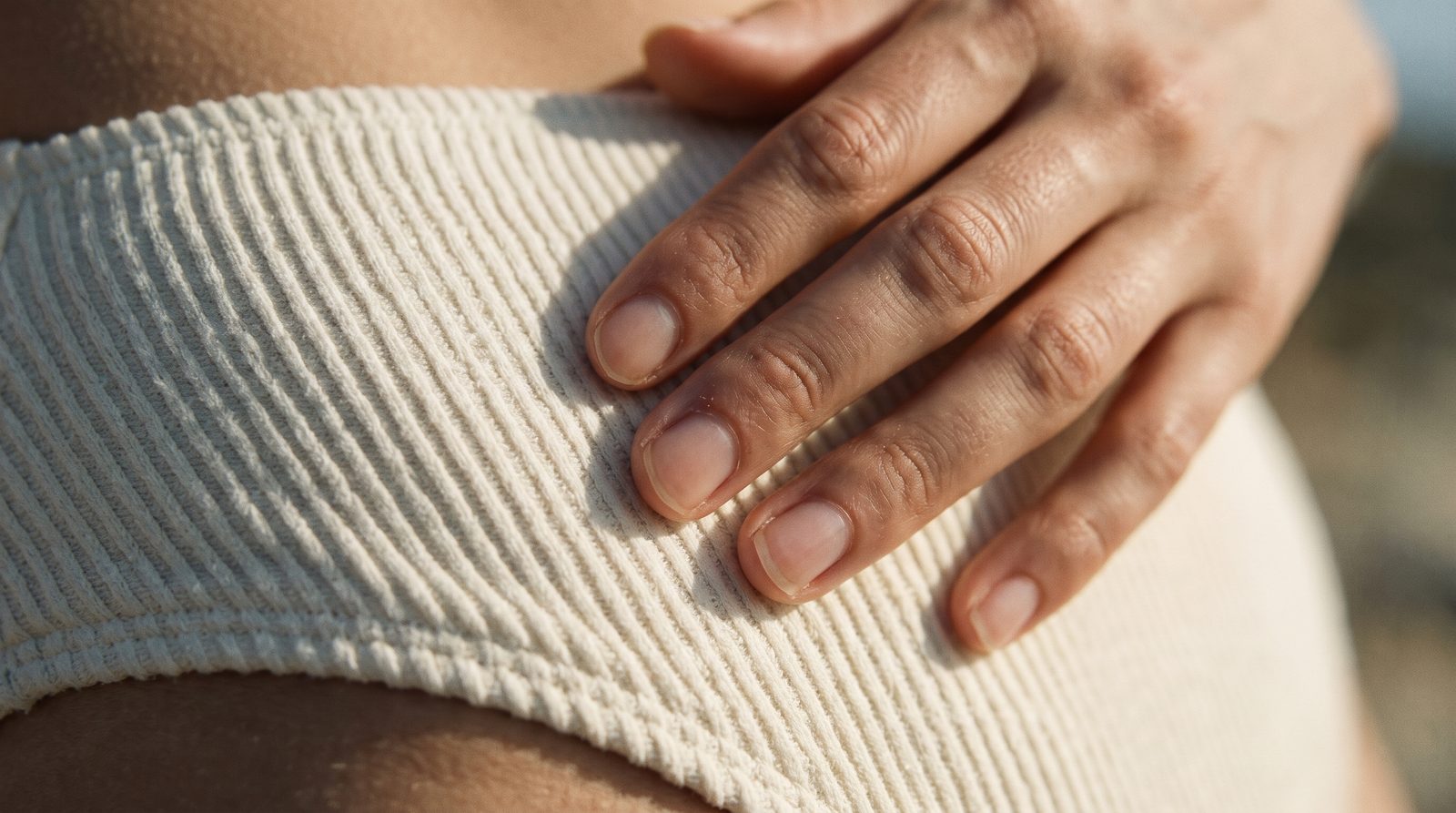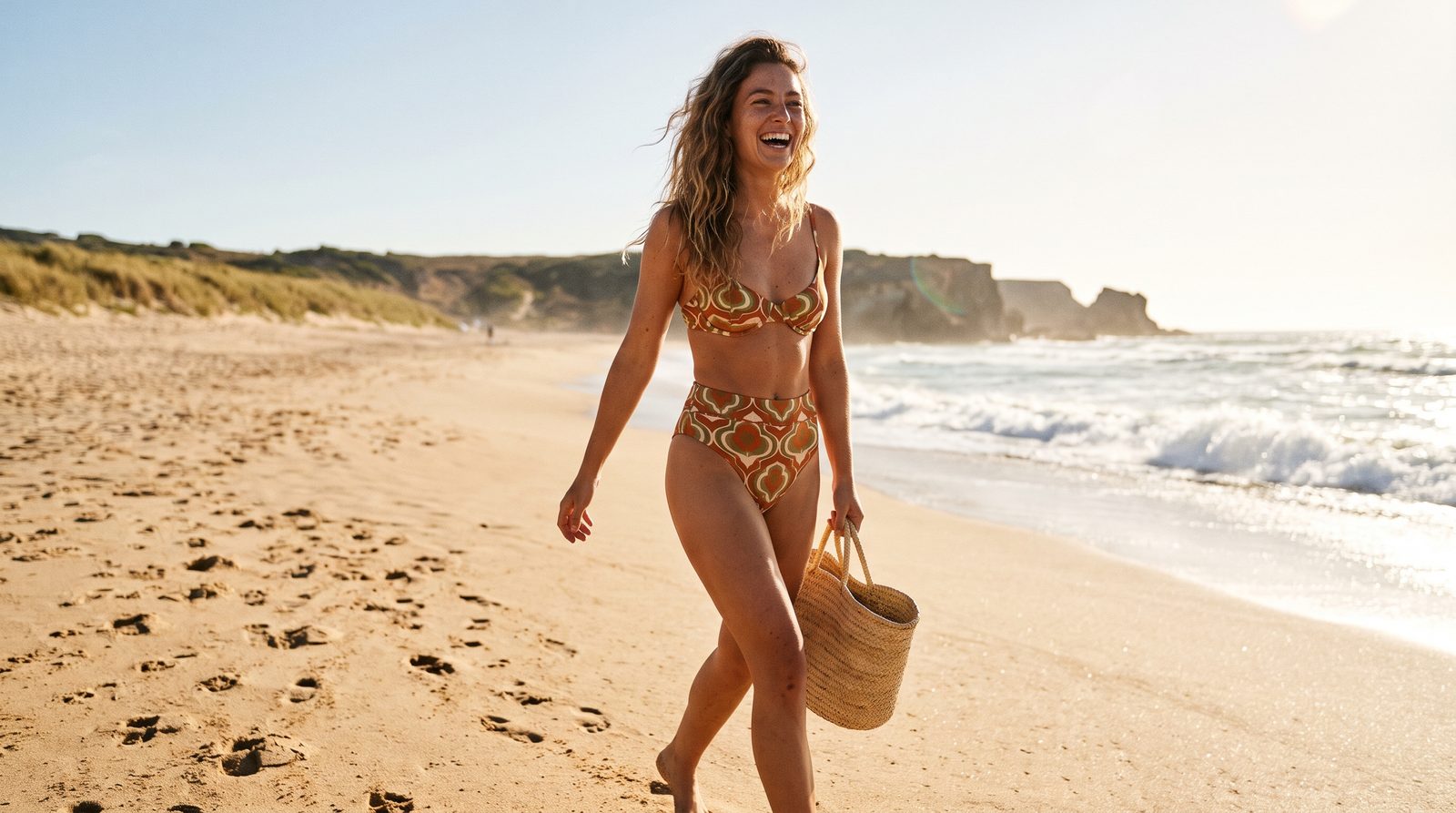
Swimwear for petite women is not simply a smaller size. Under about 160 cm, the problem is usually proportion: a torso 3–4 cm shorter than the pattern assumes, straps set too wide, cups with too much volume, and a high-waist bottom that reaches the ribs. Fit the proportions and the size takes care of itself.
We fit a lot of 152–160 cm customers, and most arrive convinced they need an XS when what they need is a shorter torso and a higher leg. Here is how to tell the difference before you order.
Swimwear for petite women: the numbers to check
Measure the torso as you would for any swimsuit: from the shoulder point, over the bust, through the crotch and back to the shoulder. Halve it. Between 150 and 160 cm tall, that front length is usually 54–58 cm, against 58–62 cm on an average frame.
Then compare it with the flat garment measurement, shoulder seam to crotch. Petite patterns run 56–60 cm. In a regular cut you can often size down once and still have room at the bust, which is why the size chart feels wrong: you are not between sizes, you are between torso lengths.
- Front torso 54–58 cm: look for petite or short-torso patterns.
- Straps set 14–16 cm apart at the back, not 18–20 cm.
- Cup volume: a C cup on a 155 cm frame is not the same as a C on 175 cm.
- Rise of 26–30 cm on a bikini bottom, measured from crotch seam to waistband.
Where petite swimwear goes wrong
Four failures, in the order we see them. The gusset bunches because there is 4 cm of spare fabric; the straps slide off the shoulder because they are anchored too far apart; the cups gape at the top because the pattern assumes a longer, wider chest; and the waistband of a high-waist bottom climbs towards the bra line, which shortens the leg.
None of these is fixed by sizing down twice. A smaller suit will be tight at the hip and still long in the torso. Look for the words “petite”, “short torso” or a stated torso length, and treat a size chart without one as a guess.
Leg line and rise: the two numbers that change everything
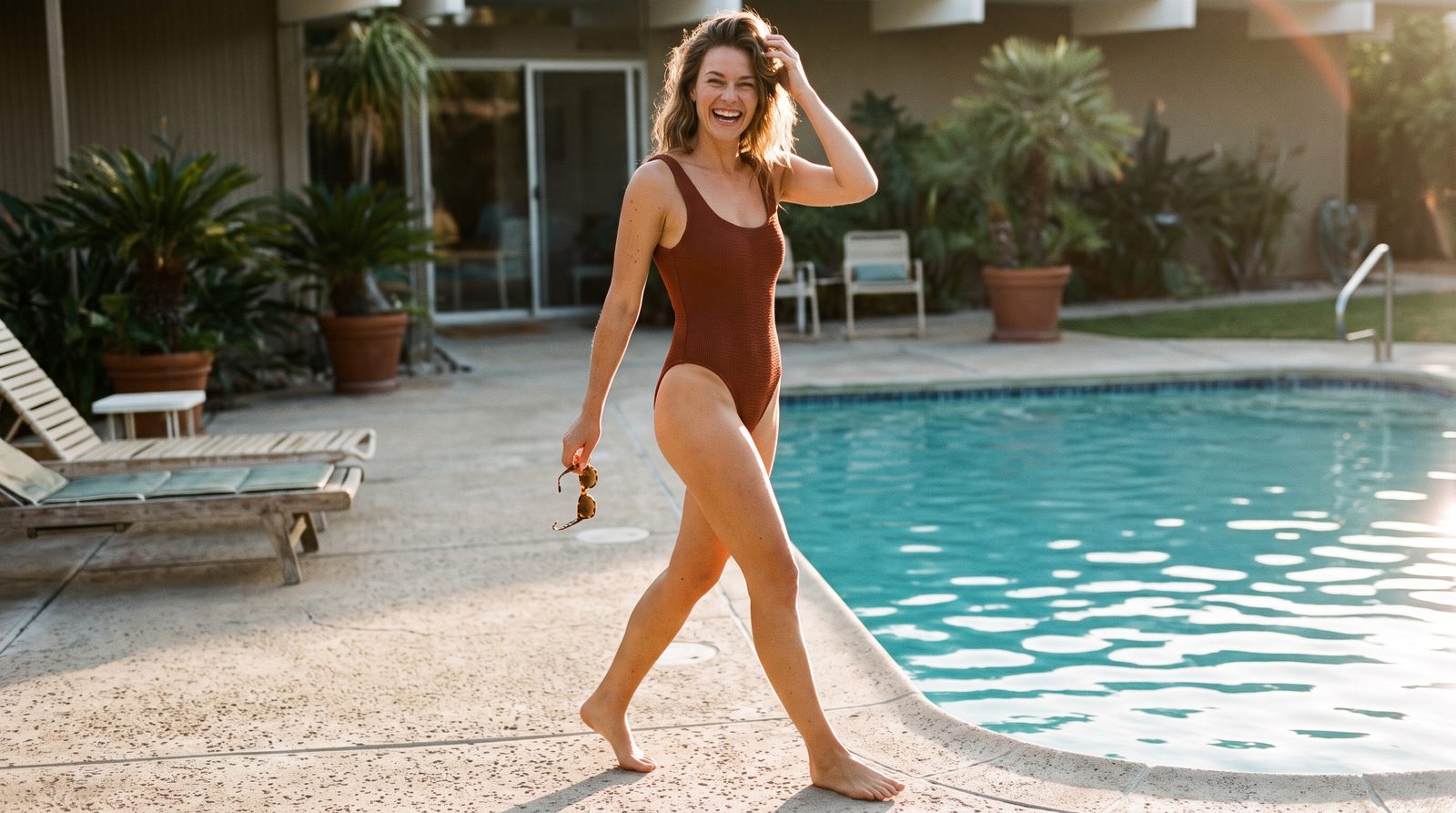
A higher leg opening lengthens the leg visually, and on a short frame it is the single most effective change. Look for a leg opening of 24–26 cm across the front, measured flat at the widest point; a boy-leg of 20 cm or less will make the leg look shorter and wider.
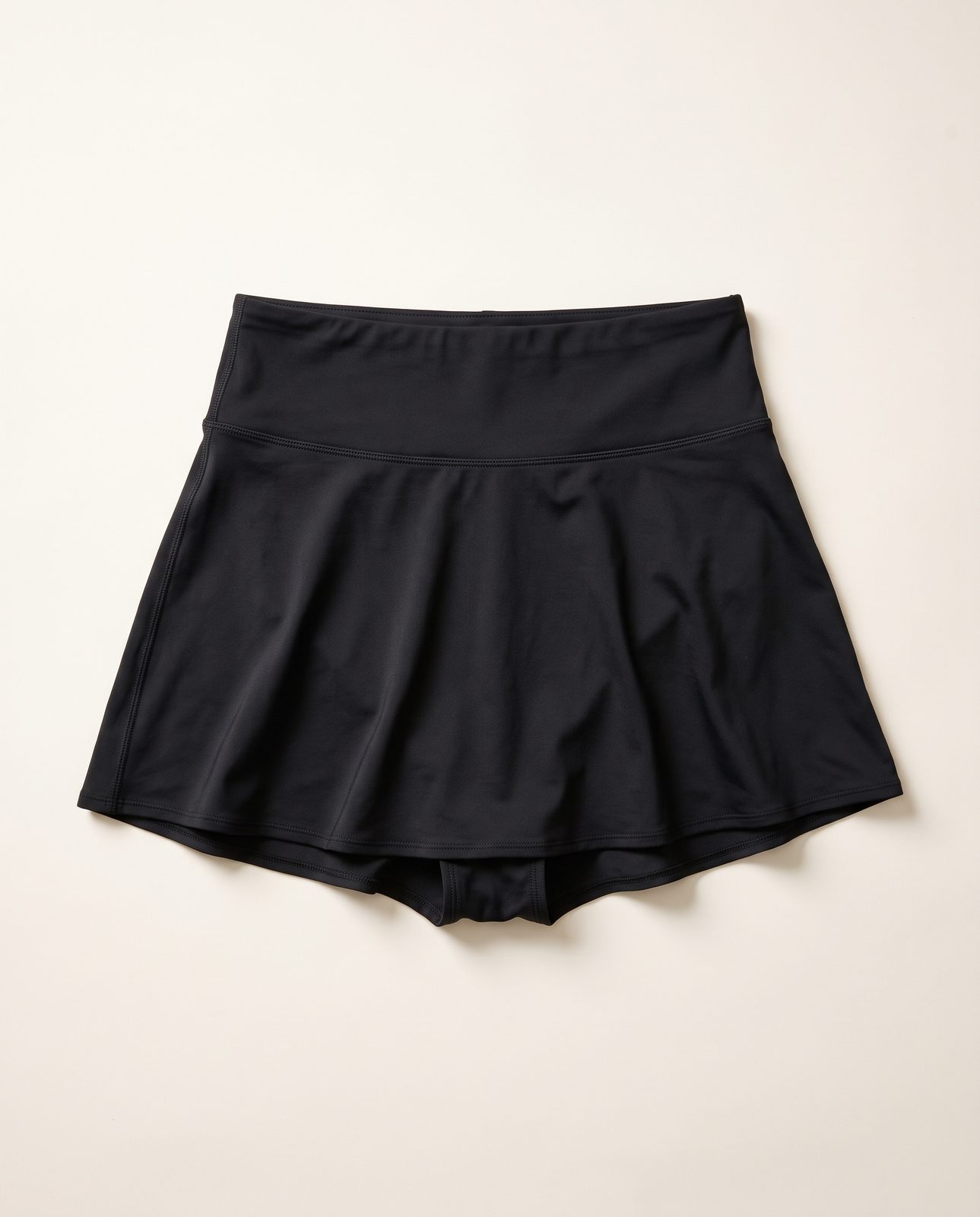
Rise matters just as much. A bottom with a 24–26 cm rise sits on the hip bone; 32 cm and above climbs towards the waist and cuts the body in two. If you like high-waist styles for coverage, choose one cut high enough at the leg to keep a vertical line — our swim skirt bottoms use a higher leg than most skirted styles for exactly this reason.
Prints and panels: keeping a small frame in proportion
Scale is everything. A 12 cm flower on a 155 cm body covers half the torso; the same print on a 178 cm frame reads as a detail. Choose motifs under 5 cm, or a fine stripe of 1–2 cm.
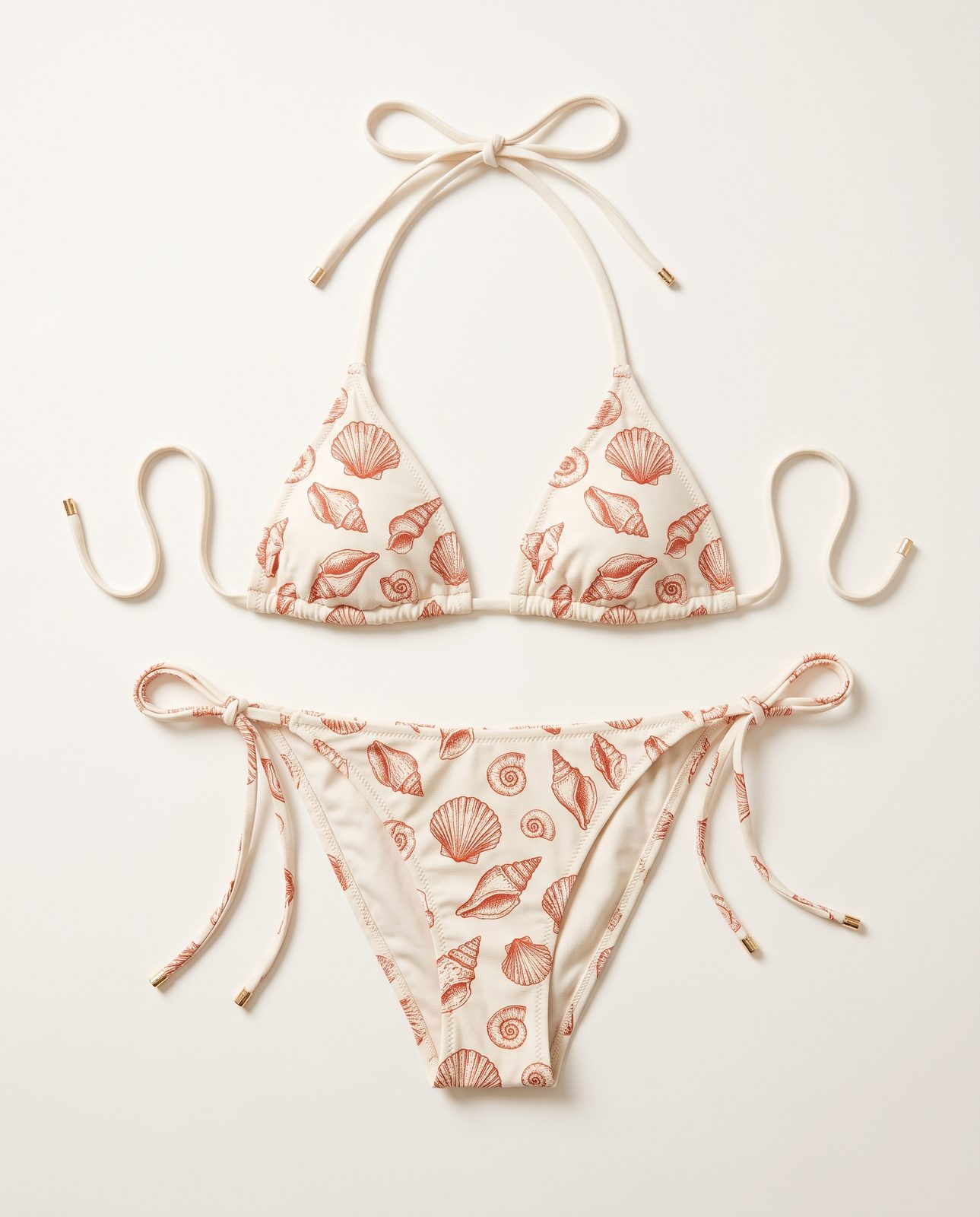
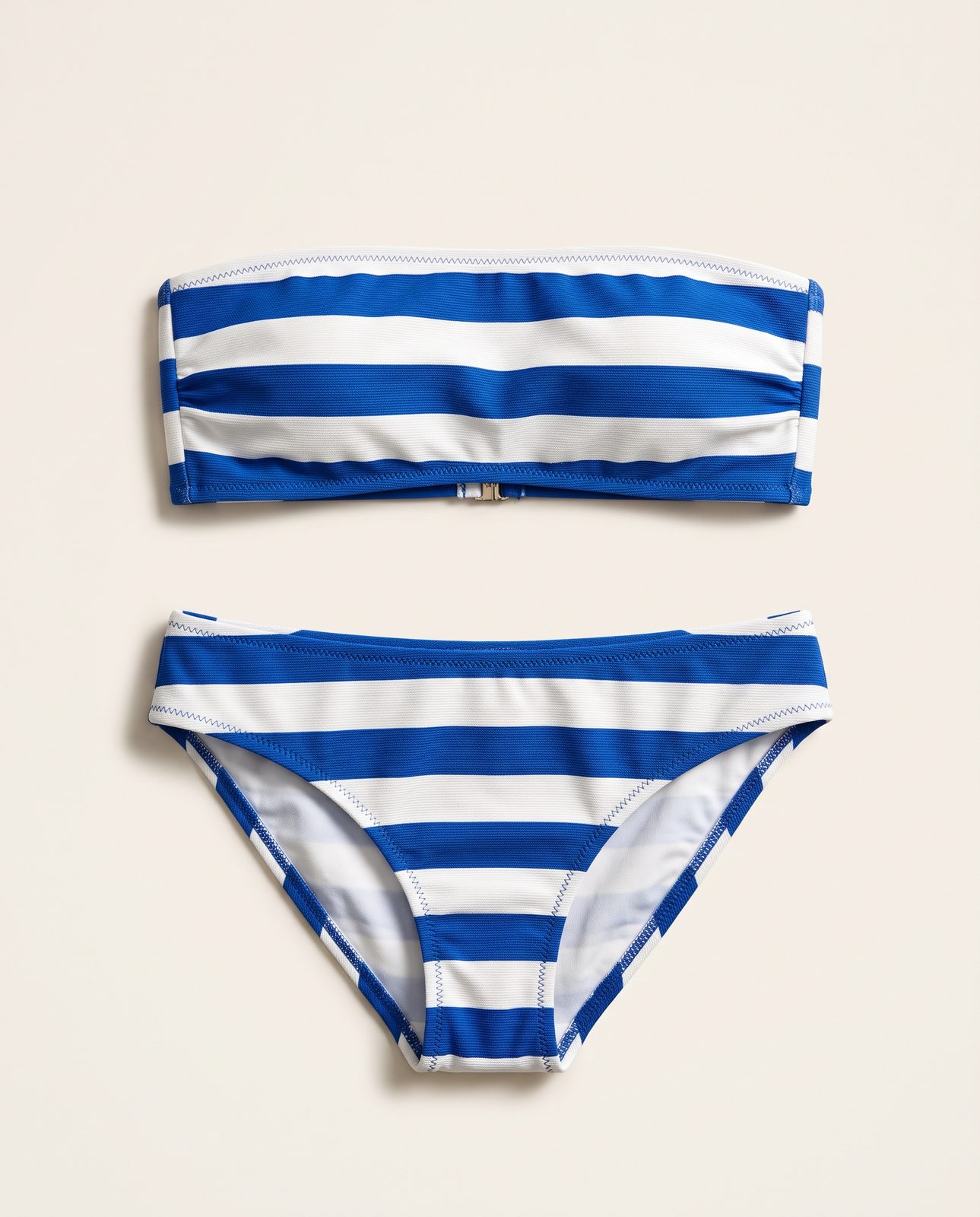
Vertical seams, a twist at the waist and colour-blocking down the centre all pull the eye up and down rather than across. Horizontal bands at the waist widen, and a deep band under the bust shortens the torso further. A print scaled small enough to read as texture, as on the shell-print bikini, is the safer choice than one big motif.
The five-minute try-on test for a petite frame
Take two sizes into the changing room and judge them in this order. It takes five minutes and catches almost every fit problem that only appears once you are wet and forty minutes from a towel.
Look at yourself from across the changing room, which is roughly the distance other people see you from. A seam that bothers you at 30 cm disappears at three metres; a leg line sitting 3 cm too low does not.
- Sit down: if the gusset pulls tight, the torso is too long.
- Raise both arms: straps that leave the shoulder have too little adjustment.
- Bend forward: cups that gape at the top are too big, not too small.
- Walk twenty steps: a bottom that rides up does it in the first ten.
- Check the leg line from three metres back, not from close to the mirror.
Cover-ups and the length trap
A maxi that pools at the ankle adds fabric and takes away height. A 110–120 cm cover-up on a 158 cm frame lands mid-calf, which is the useful length; anything past 130 cm needs a knot at the hip or a belt.
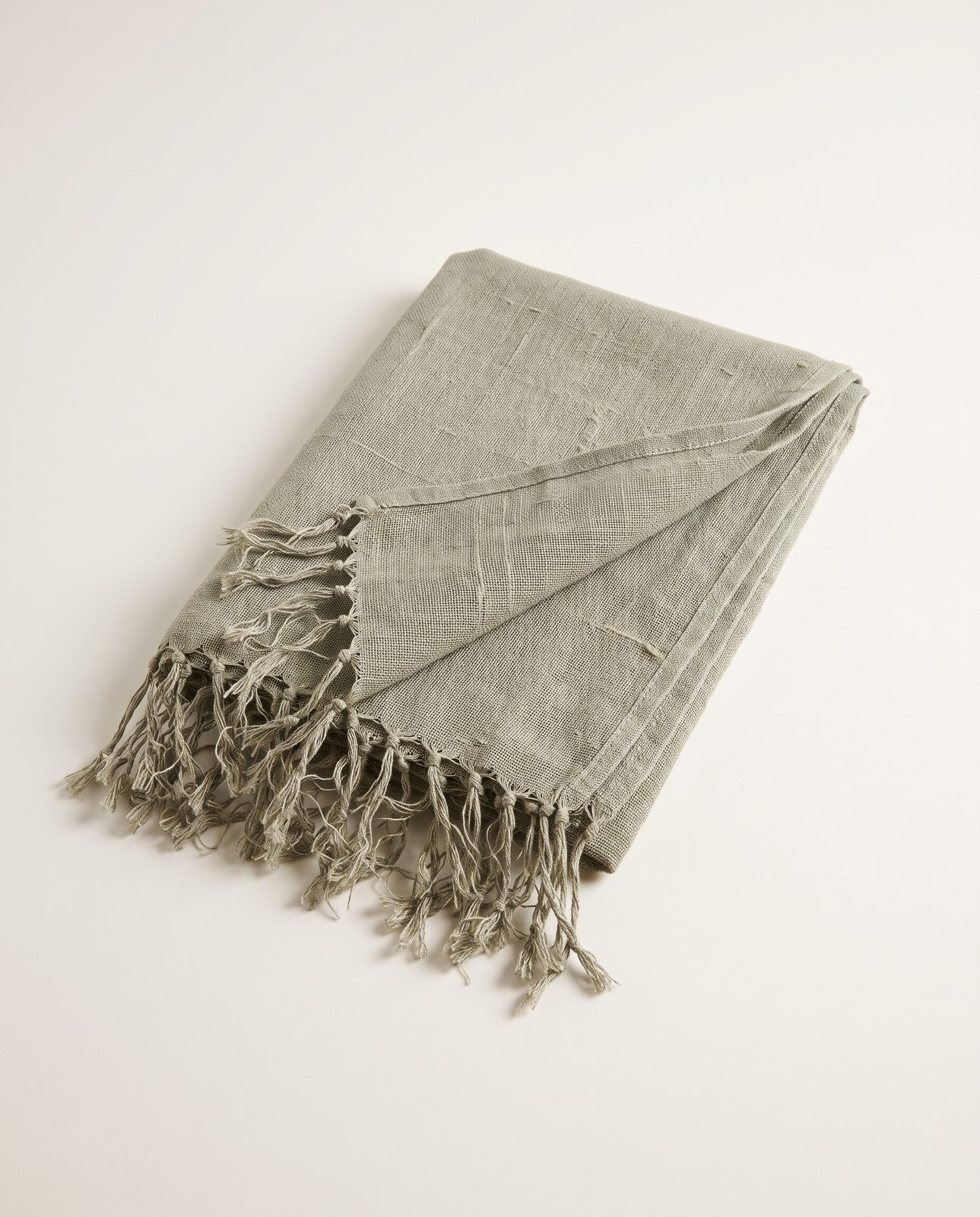
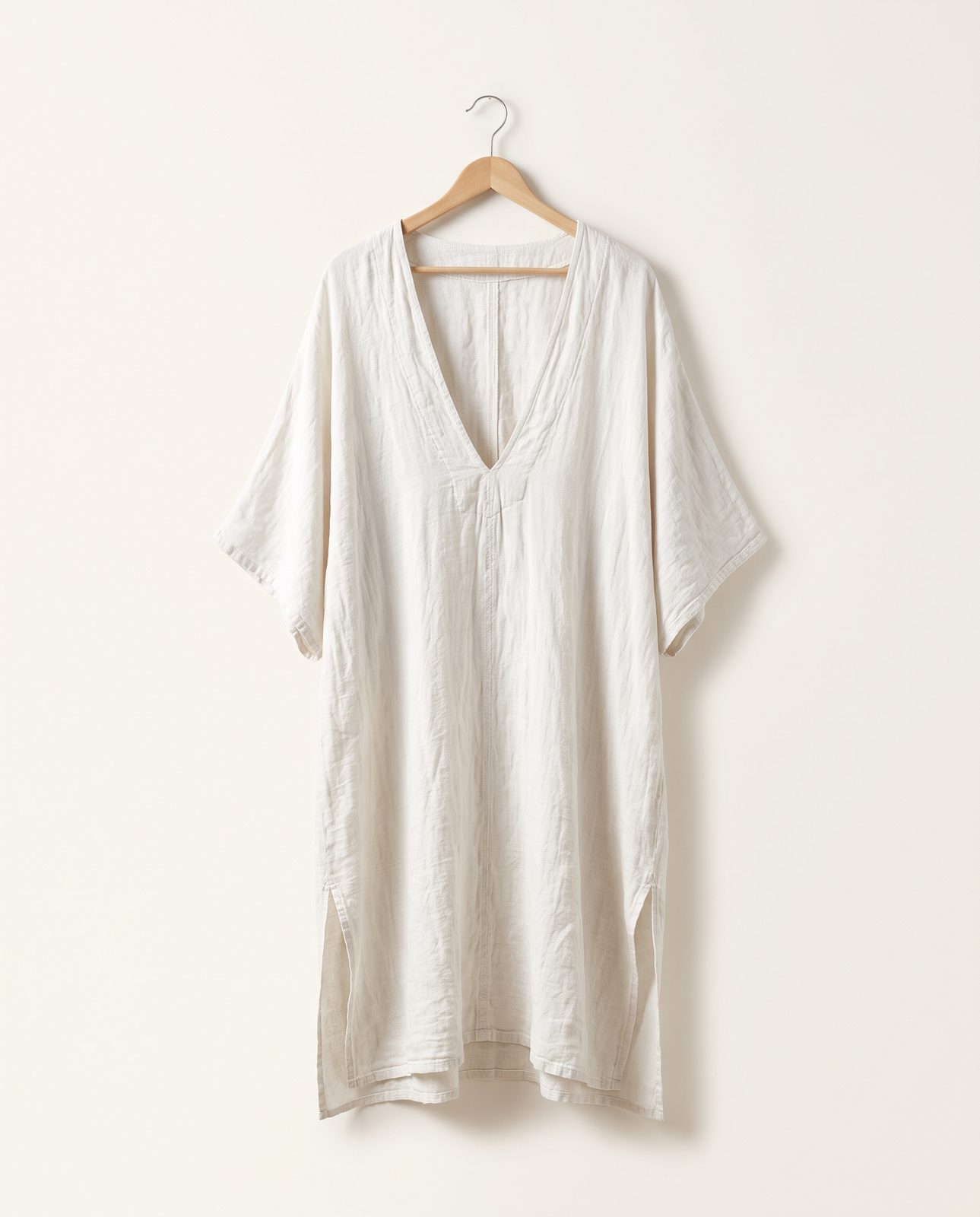
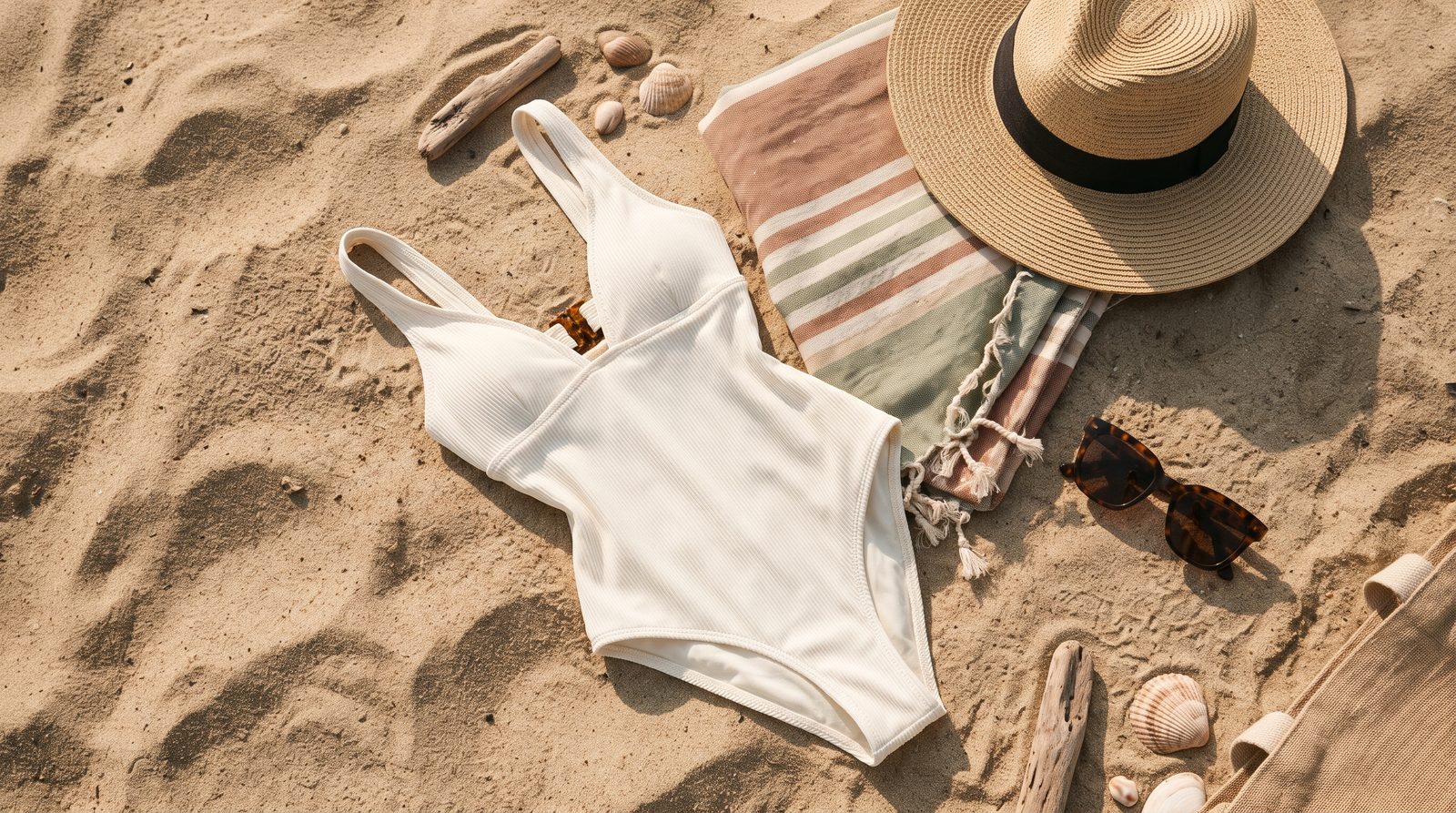
A short sarong tied under the bust or at the hip works better than a floor-length wrap, and a linen shirt worn open over a one-piece adds a vertical line without volume. Our linen cover-up dress is cut to be belted — tie it at the natural waist, not the hip.
Frequently asked questions
What height counts as petite in swimwear?
Most brands cut petite swimwear for 160 cm and under, or for a torso shorter than 58 cm. Height is only a rough guide; torso length is the number that decides whether a one-piece fits.
Should petite women buy a size smaller?
Only if the bust and hip allow it. Sizing down shortens the torso by 1–2 cm at most and tightens the leg, so a petite cut in your usual size is the better starting point.
Can a petite woman wear a high-waist bikini?
Yes, if the rise is 28–30 cm rather than 34 cm, and the leg is cut high. A very high waist combined with a low leg is what shortens the silhouette.
Which swimsuit style flatters a short torso?
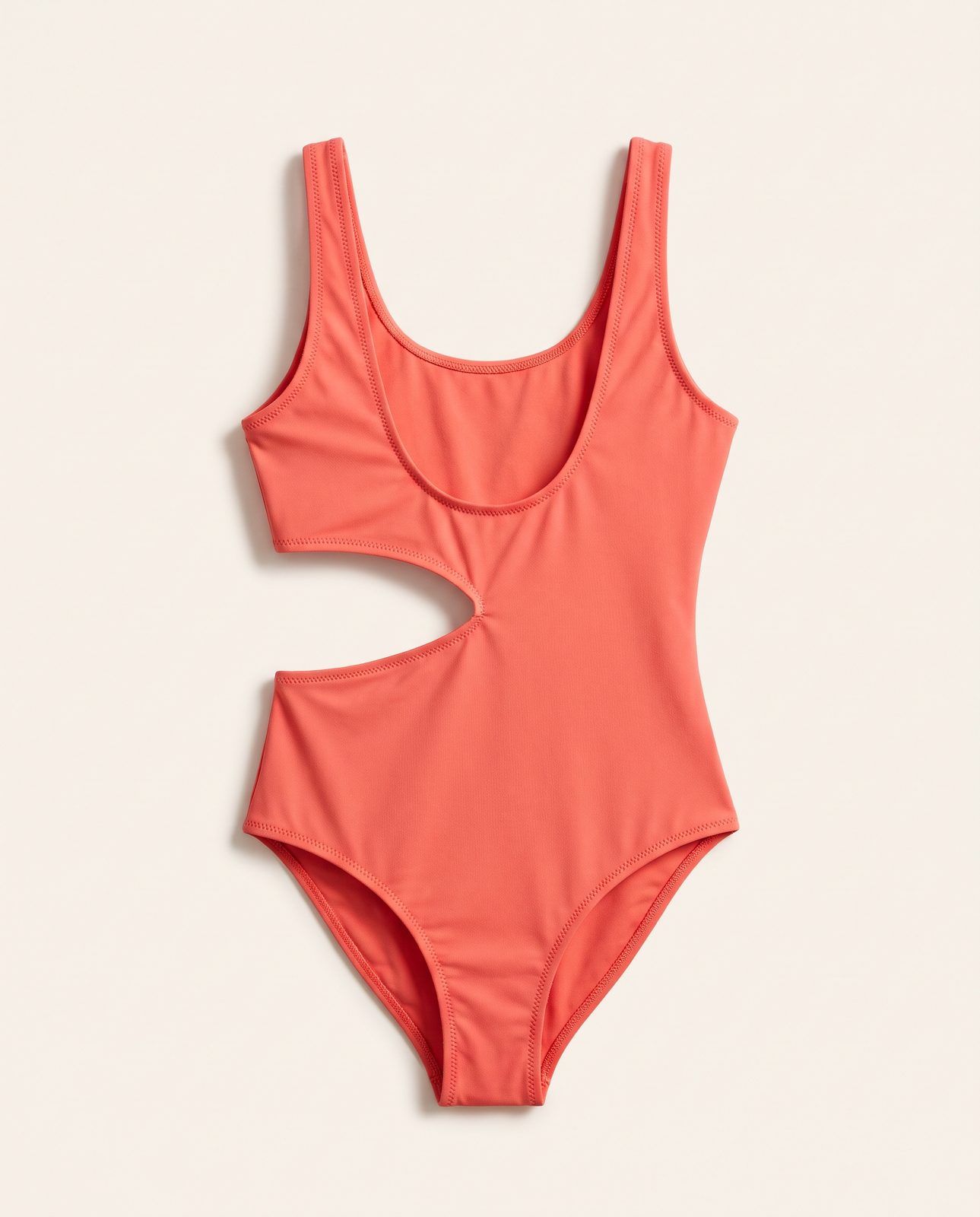
A one-piece with a scoop or square neck, a high leg and a seam or twist at the waist. It keeps one unbroken line from shoulder to hip, which is what a petite frame needs.