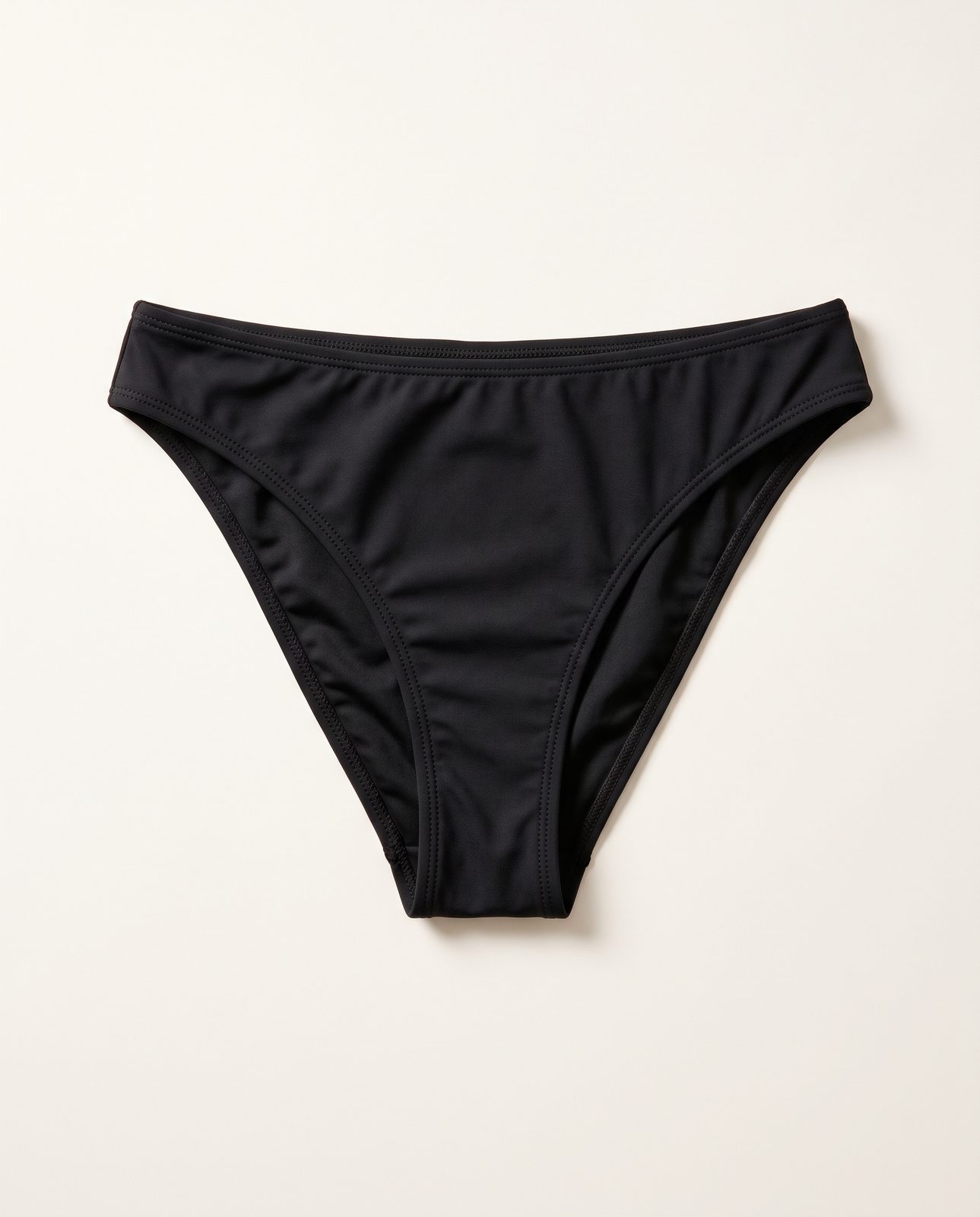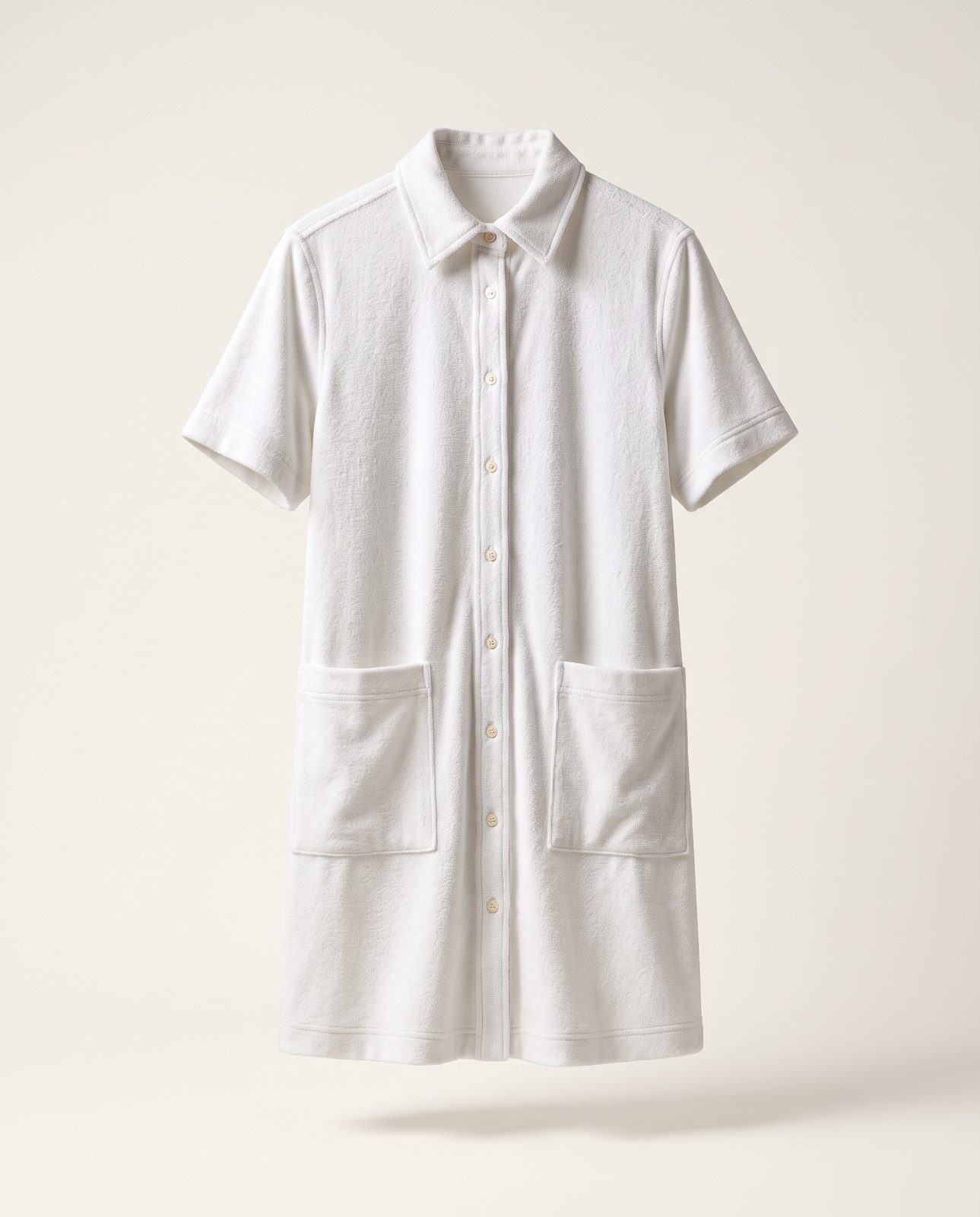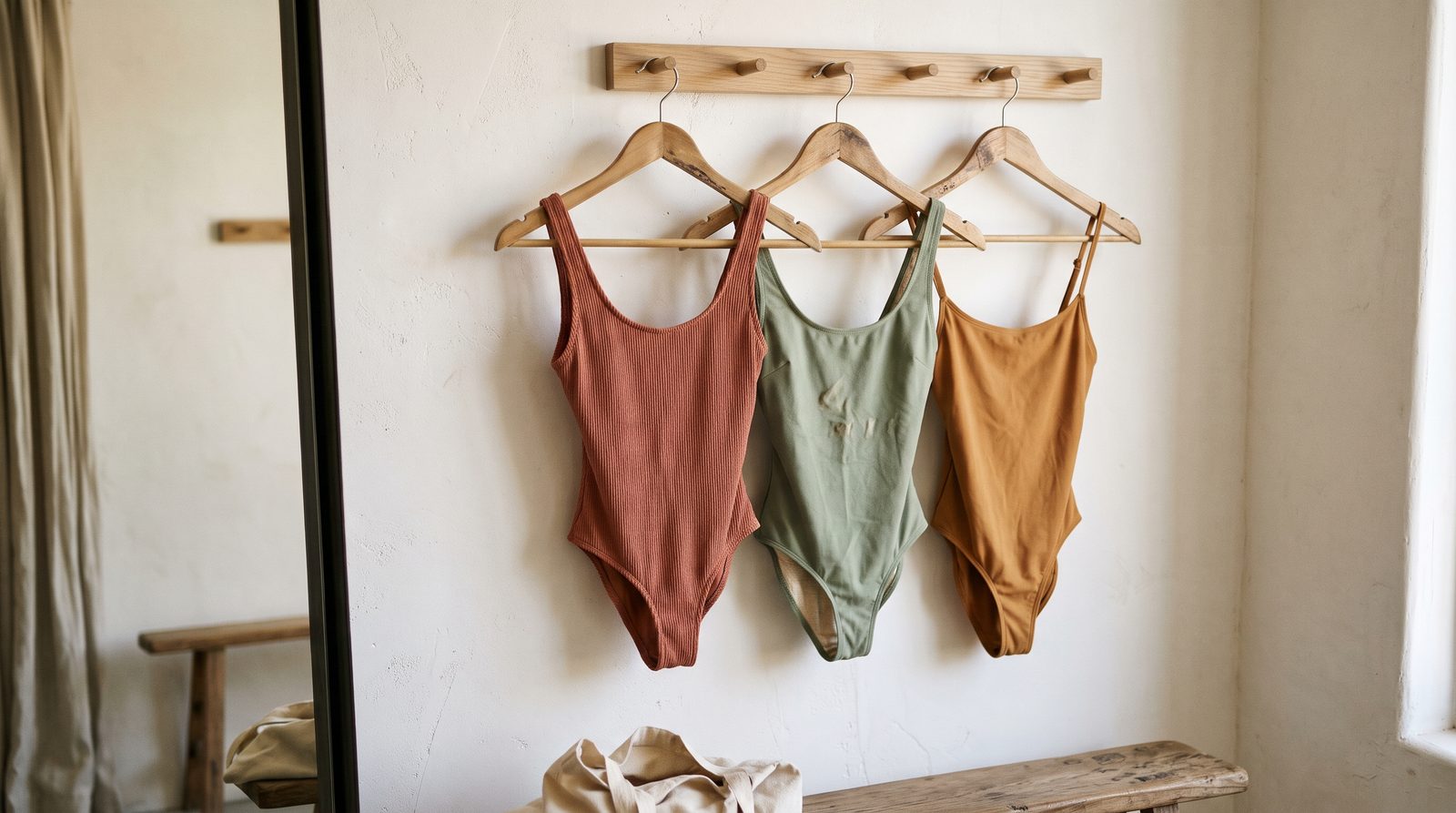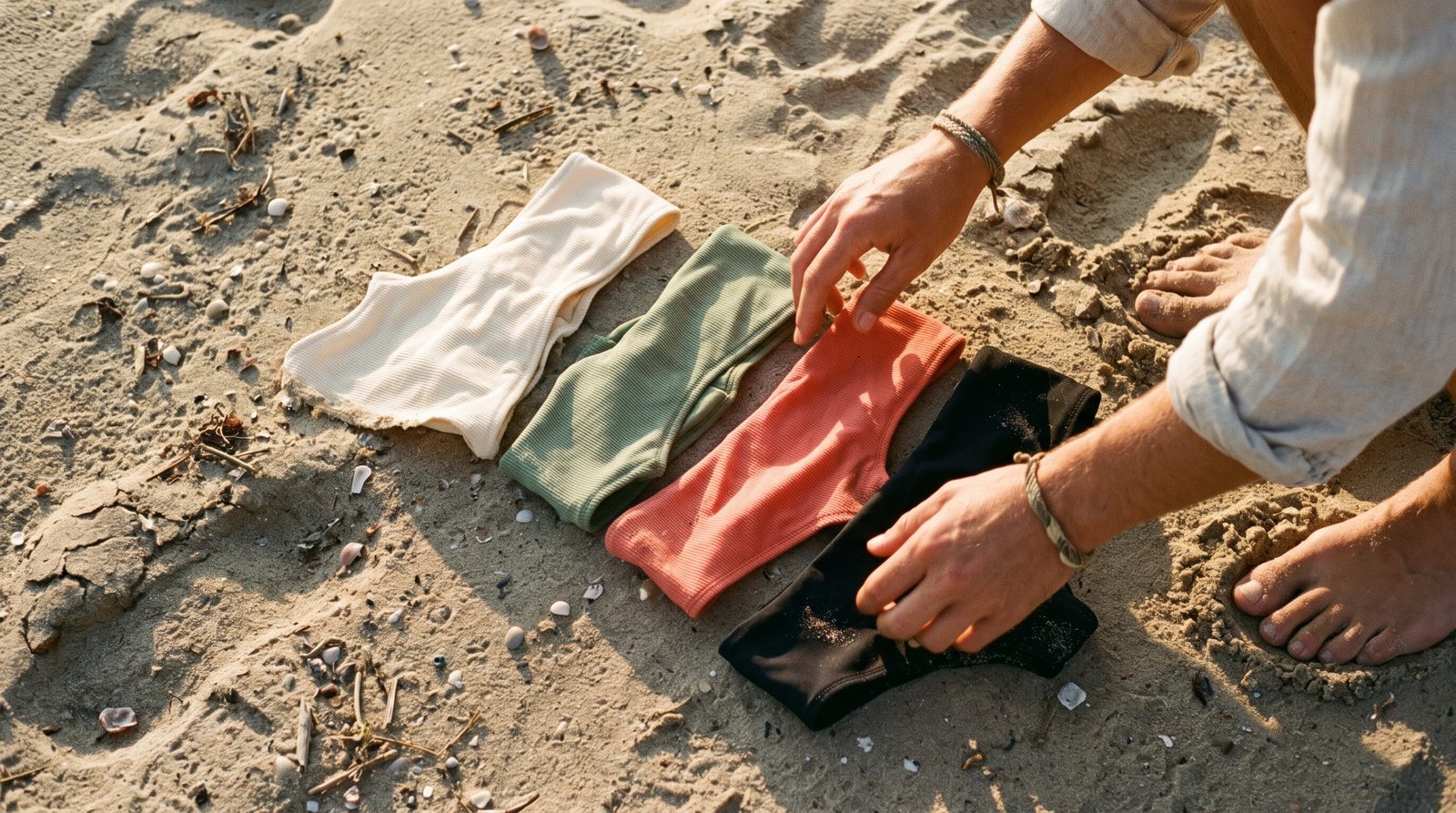
This swimwear shopping checklist exists because most bad swimwear purchases are not bad suits — they are suits that were never properly tried on. Sixteen checks across fit, movement, fabric and aftercare take about eight minutes in a changing room, and they work just as well in a bedroom when the suit arrives by post.
The order matters. Fit first, because there is no point testing the seams of a suit that is the wrong size. Then movement, because a swimsuit is worn in water and under load, not standing still. Fabric and construction last, since those decide how the suit will look in August rather than in the mirror.
Before the changing room: what to bring
Wear the underwear you would normally wear under a swimsuit, and bring a thin t-shirt if you want to check opacity without an audience. Write down your bust, waist and hip measurements in centimetres — not your dress size, and not the size you wore in a different brand, because swim sizing varies by 4–6 cm between labels.
Buying online, order two sizes of the same style rather than two styles. One will fit, the other goes back, and you learn how the brand grades. Keep the hygiene sticker on until the checks are done — most shops refuse a return once it is off.
- Bust, waist and hip in centimetres, measured over underwear
- A note of the size you wear in two brands you already own
- A thin t-shirt for the opacity check
- A phone to photograph the care label before you leave
The swimwear shopping checklist: fit
A swimsuit should fit like a second skin when dry, with no pinching at the seat and no straps pressing into the shoulder. A band under the bust should sit flat against the ribs and stay there when you raise your arms; if it lifts, the straps are doing the work.
The leg line is where most suits go wrong. It should sit flat against the thigh without cutting in when you sit, and it should not gape at the back. A gap of more than 2 cm at the back leg is a sign the torso is too long for you or the elastic has already gone, and neither improves with wear.
- Straps lift no more than 2–3 cm off the shoulder when you raise your arms
- No more than 1 cm of slack when you pinch the seat fabric
- Back leg opening sits flat; a 2 cm gap means it will gape in water
- Bust fully covered when you lean forward, with no spill at the side
Movement checks that catch most problems
Do five things in the changing room: raise both arms overhead, squat as low as you can, twist your torso to each side, sit down on the bench, and bounce lightly on the spot. Each one mimics something the suit will do in water, and between them they surface almost every fit problem before you pay.
If a check makes you want to adjust the suit immediately, that adjustment will become a habit at the pool. A suit that needs pulling up after a squat needs a longer torso; one that rides up when you raise your arms has too little coverage.
Fabric and construction checks
Hold the suit up to the light. If you can see your hand clearly through the front panel, it will be transparent when wet, and white and ivory are the colours where this shows first. A double-lined front is the difference between a €49 suit and a €95 one that still looks opaque after 30 wears.
Stretch a panel 20% wider and let go. Good fabric returns with a slight snap and no ripples. Then look at the seams: flatlock stitching lies flat and does not rub, while overlocked seams stand proud and will chafe under the arm after an hour. Check that the elastic at the leg is enclosed, not exposed, and that any metal hardware is solid rather than hollow.
- Front panel double-lined and opaque against a bright light
- Fabric springs back within a second after a 20% stretch
- Flatlock seams under the arm and at the crotch, not raised overlocking
- Hardware solid, not hollow, and no sharp edges under the strap

Colour, chlorine and the honest aftercare test
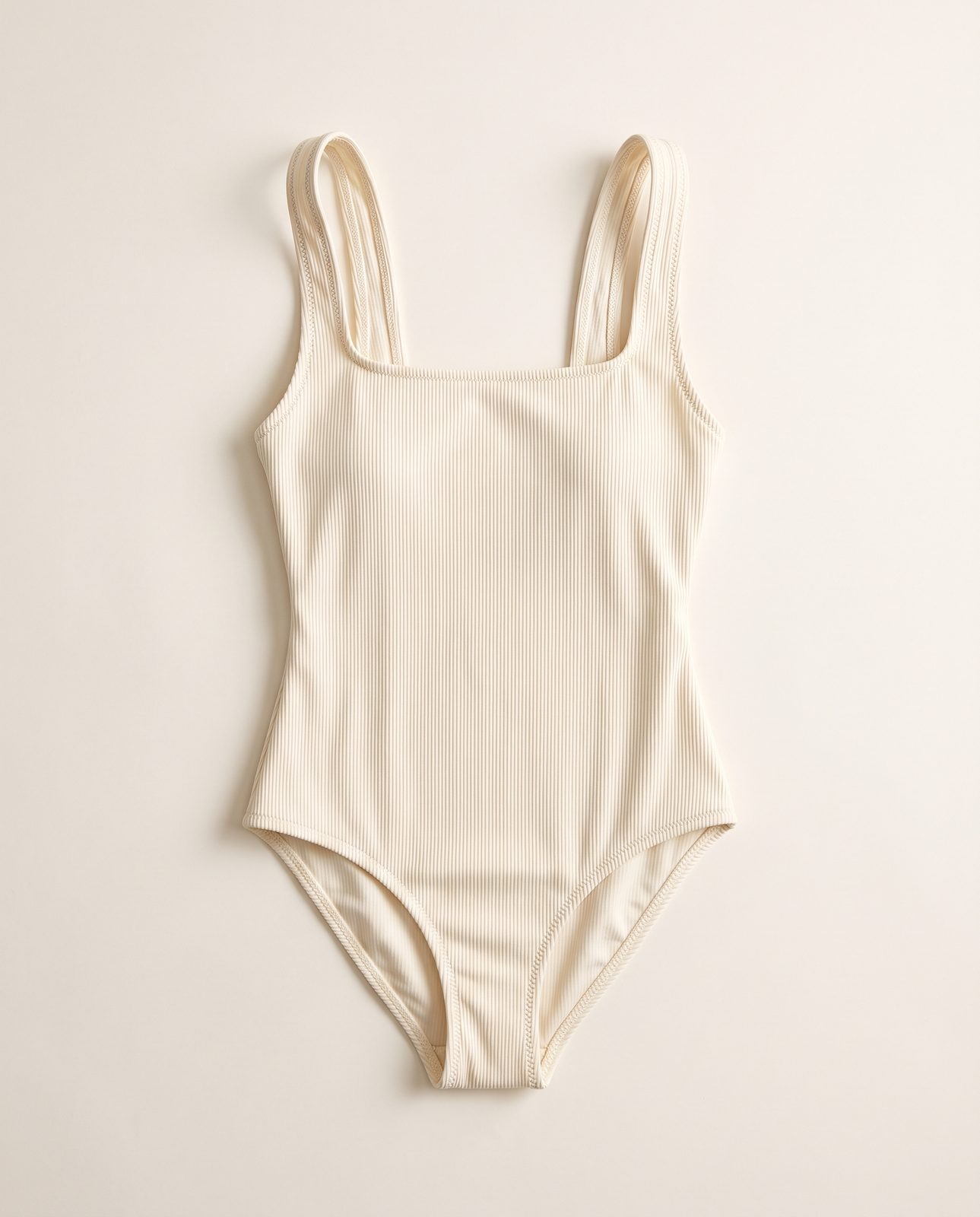
White and ivory suits need one extra thought: sunscreen, chlorine and hard water leave marks that show more on pale fabric. Our ivory ribbed one-piece (€95) is double-lined for this reason, but it still needs a 30-second rinse after every swim and a hand wash every third wear.
Finally, read the care label and decide whether you will actually follow it. A hand-wash-only suit will not survive a weekly 40°C machine cycle, and €90 lasting four months is worse value than €65 lasting two years. If the label does not match your habits, choose another suit.
The 30-minute test at home, and how to return
When the suit arrives, wear it indoors for 30 minutes with the tags on and do the movement checks again. Swimsuits soften slightly with body heat, and a suit that felt firm in a cold changing room can turn out to be comfortable, or the reverse. Do not swim in it, and do not remove the hygiene sticker.
If it fails, start the return inside the window — 14 days in most of the EU, 28–30 with many UK retailers — and photograph the suit before posting it. If it passes, write the size and style on the care label so the next shop is easier.
- 30 minutes indoors, tags on, no swimming
- Repeat the arm, squat, twist and sit checks
- Photograph the suit before returning it
- Record the size that worked on the care label
Frequently asked questions
How do I know if a swimsuit fits properly?
The fabric should sit flat at the seat and leg with no more than 1 cm of pinchable slack, and the straps should lift no more than 2–3 cm when you raise your arms. If you want to adjust it within a minute of putting it on, it is the wrong size or shape.
Should I size up or down in swimwear?
Follow your largest measurement, usually the hip, and size up if you are between sizes on a high-coverage style. Sizing down gives a tight band and gaping legs, which is the least comfortable combination in the water.
How can I tell if a white swimsuit will be see-through?
Hold the front panel against a bright window and look for your hand showing through. If it does, the suit will be transparent when wet; a double-lined front solves it, a nude-coloured underlayer does not.
What should I check on a swimsuit's care label?
Look for a 30°C or cooler wash, no tumble drying and no fabric softener. If the label demands hand washing and you know you will machine wash it weekly, the suit will not last, however good it looks.
Is it worth ordering two sizes online?
Usually yes, if returns are free or cheap. You keep the better fit and learn how that brand's sizing runs, which saves guesswork on future orders.