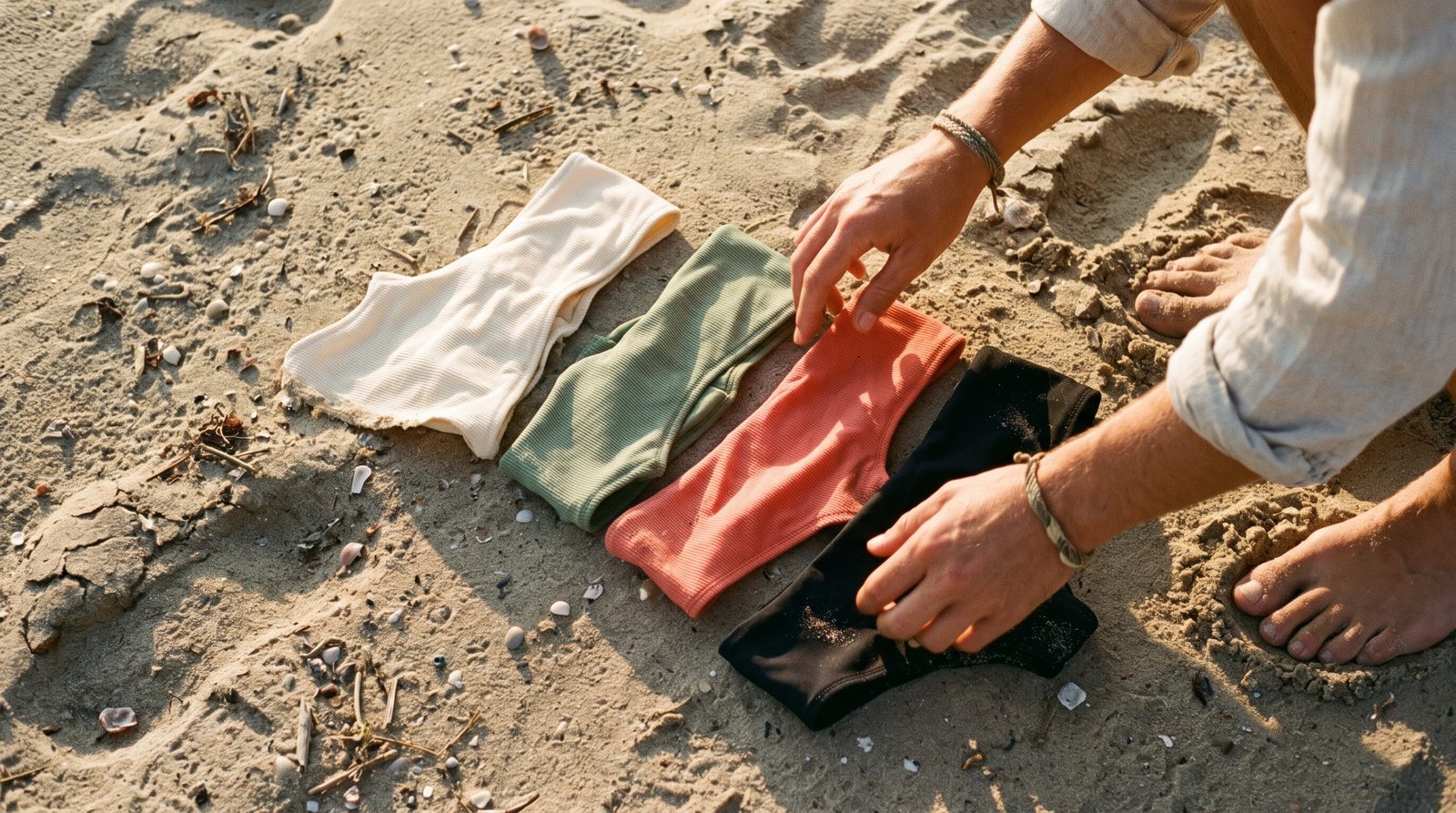
A swimwear colour guide is really a guide to three things: how a shade changes when wet, how it ages in sun and chlorine, and how it sits against your skin. Get those right and you stop buying suits that look lovely on a hanger and disappointing on day two of a holiday.
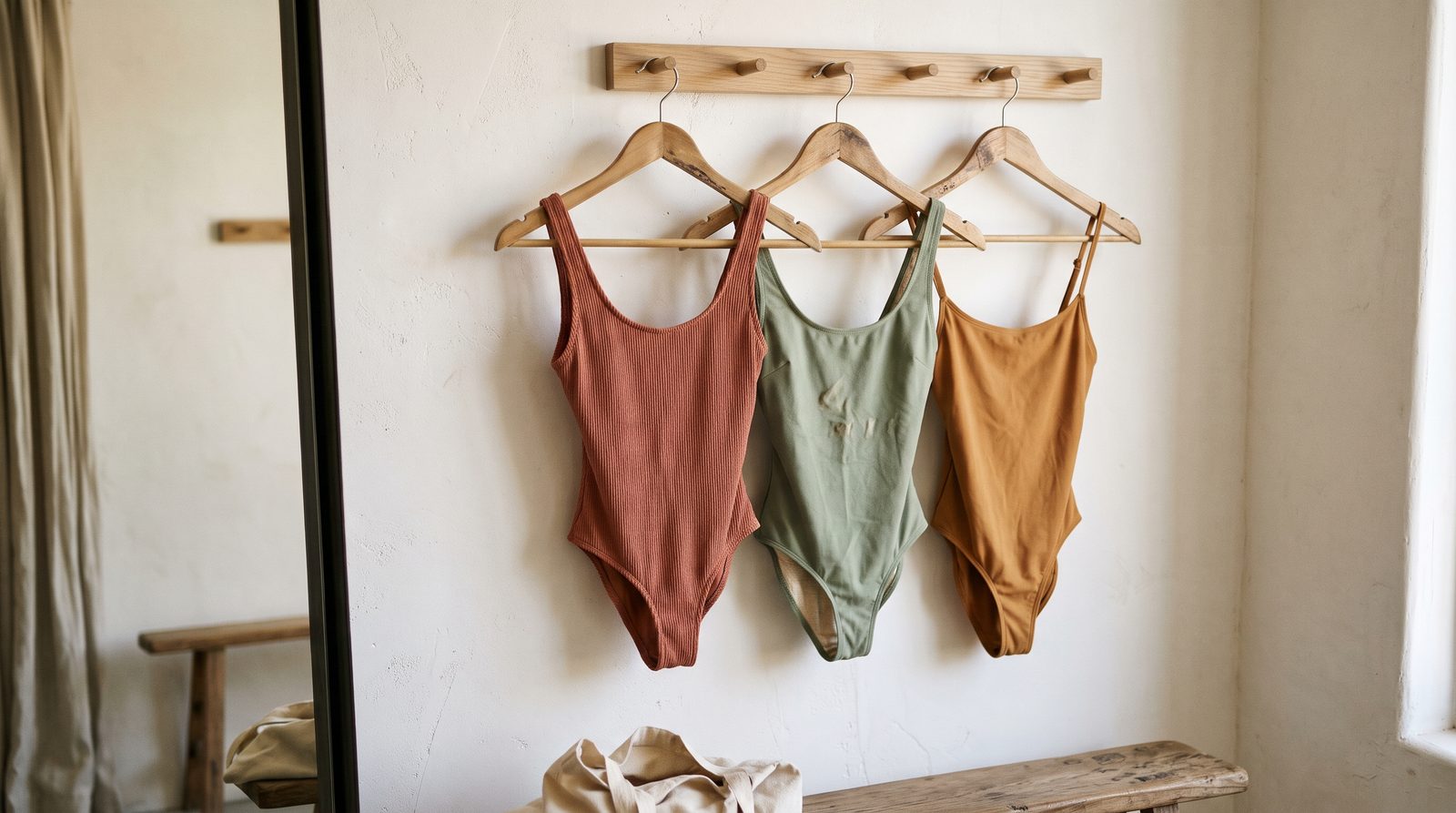
We sell five core shades — ivory, sage, coral, Riviera blue and black — across the same 78–82% recycled polyamide, 18–22% elastane knit. That makes the comparison honest: the fabric is identical, so any difference you see on the beach is the colour doing the work.
Start with what white swimwear actually does
White is the shade people ask about most, and the question is always the same: does it go see-through? Opacity is a lining question, not a colour question. A single-layer white suit at 180 g/m² will show the outline of whatever is underneath in full sun; a double-lined one at 220–240 g/m² will not, and neither will a white suit with a seamless front panel.
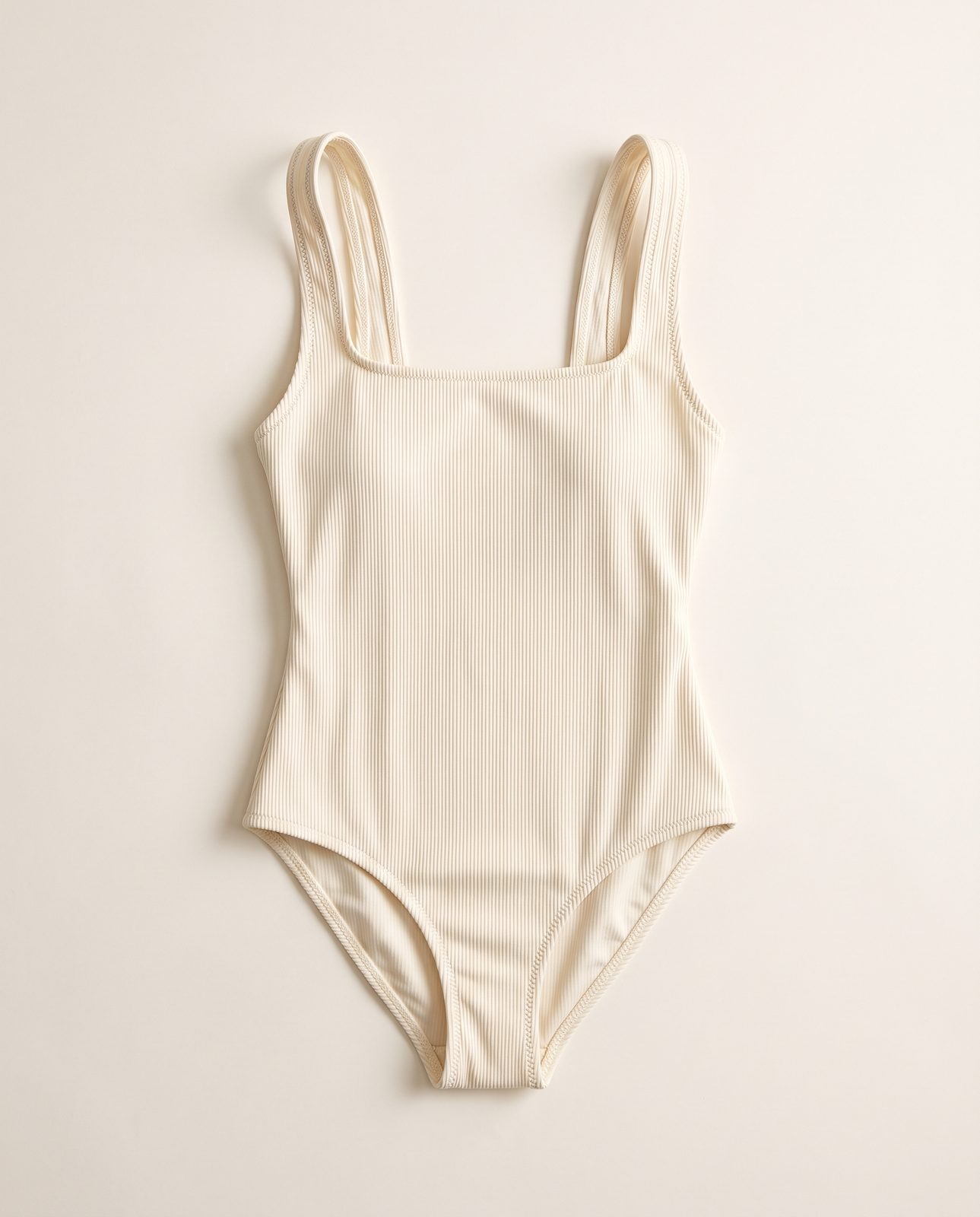
Our ivory ribbed one-piece (€89) is double-lined through the front and seat, which is why it photographs as solid even at midday. Hold any white swimsuit up to a window before you buy: if you can read the shape of your hand through the front panel, that is what the sun will do at the pool. White also reflects most visible light, so it stays noticeably cooler to the touch than black after 20 minutes in direct sun.
How swimwear colour changes when it gets wet
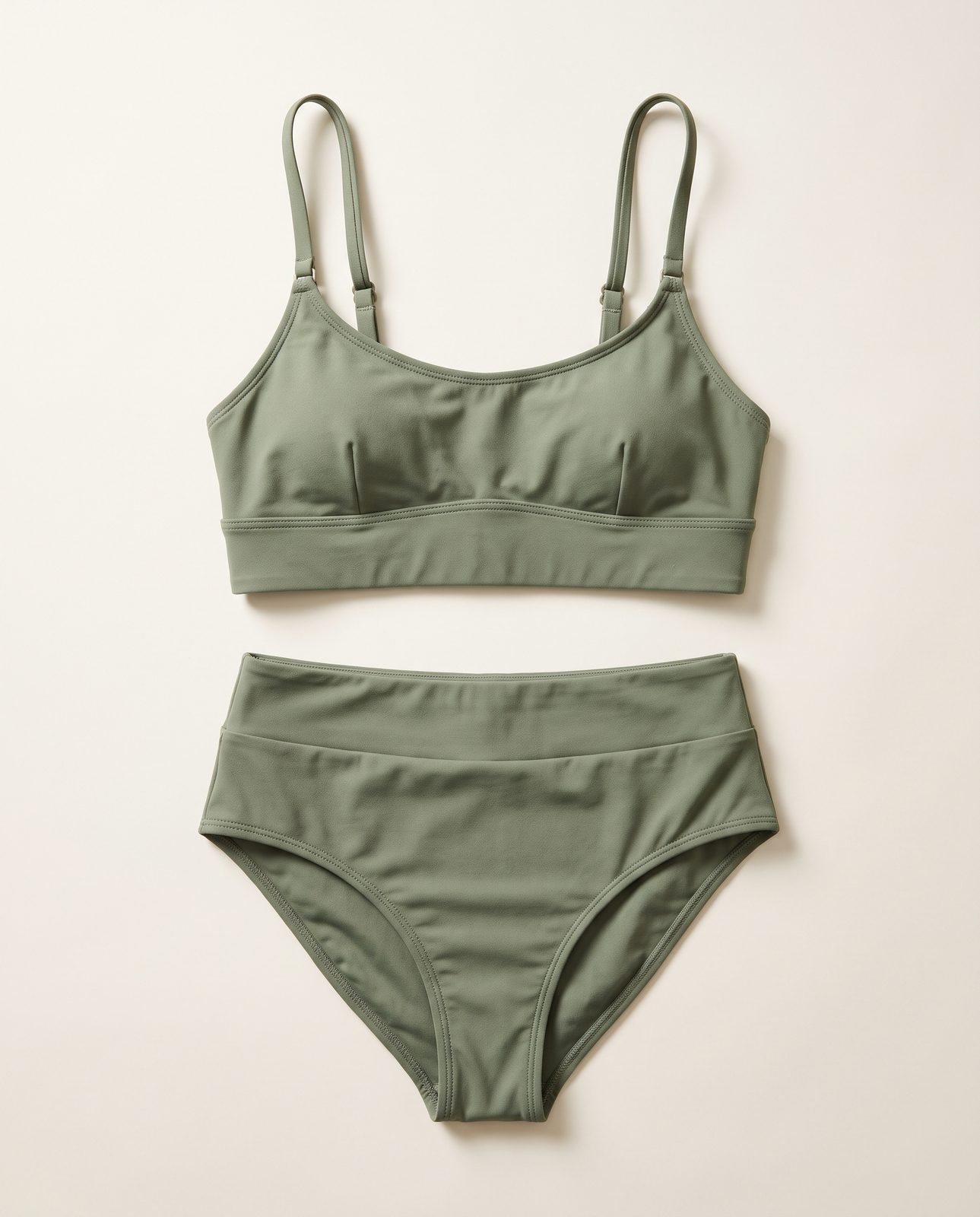
Every swimsuit darkens when wet, because water fills the gaps between fibres and changes how light reflects. Pale shades move one or two steps: ivory reads closer to stone, sage goes two shades deeper and looks closer to olive. Dark shades barely move, which is why black is the most predictable colour to buy online.
The bigger issue is drying. Light colours hide water marks and salt residue; navy, black and chocolate show every dried droplet as a pale ring until the suit is rinsed. Wet fabric also becomes slightly transparent in strong backlight, even when double-lined at the front, so check the seat and side seams in daylight rather than under a bathroom bulb.

Which shades fade fastest in sun and chlorine
UV light breaks the dye bonds in any fabric, and chlorine accelerates the process. In practice, warm saturated colours — coral, tomato red, bright turquoise — lose intensity first, often within 30 to 40 pool swims. Navy, black and deep green hold their depth far longer because the dyes used for them are more light-stable.
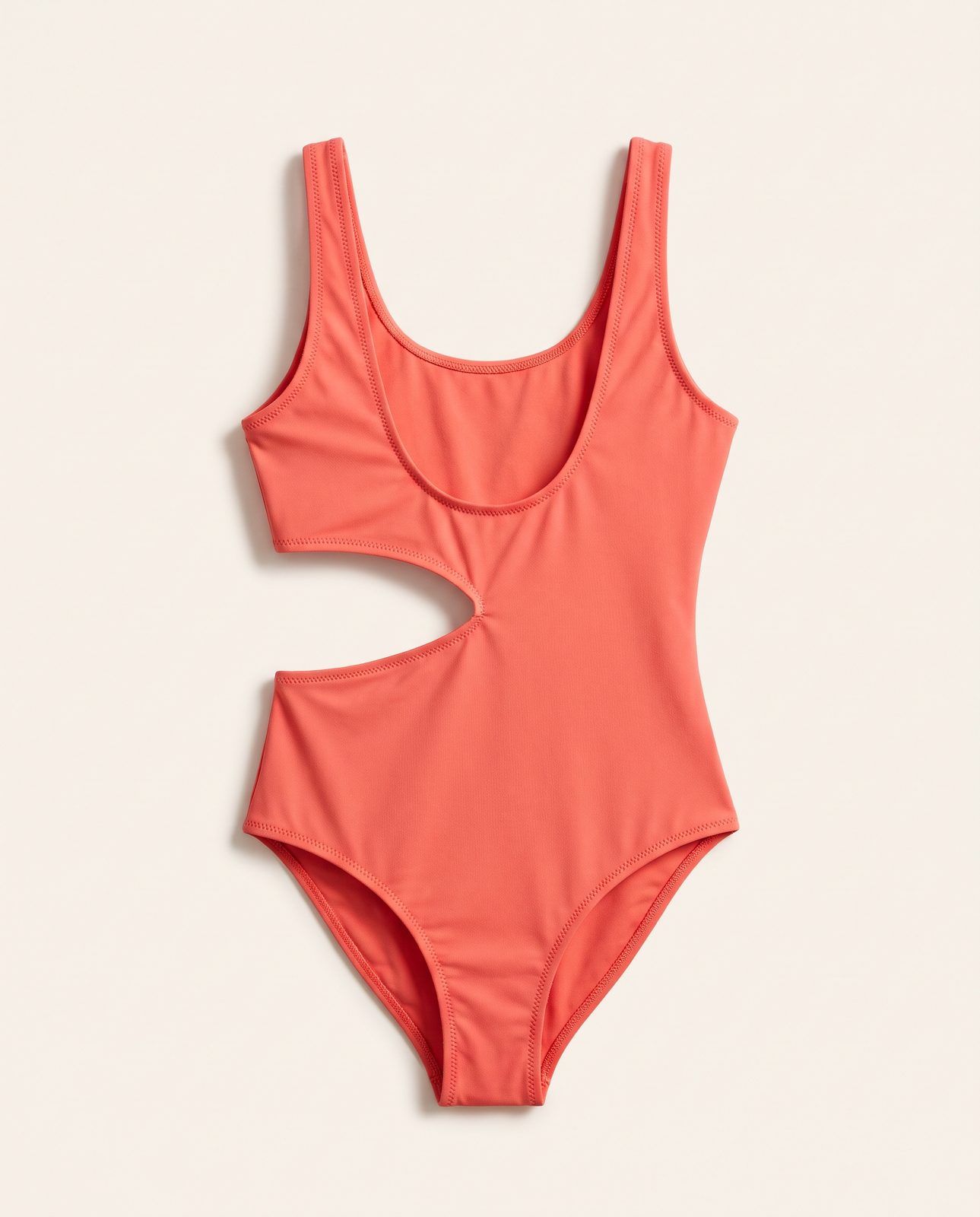
White fails differently. It does not fade so much as yellow, usually from sunscreen, chlorine and hard-water minerals oxidising in the fibres. A two-hour soak in oxygen bleach at 40°C lifts most of it; chlorine bleach turns the yellow permanent and weakens the elastane. Our coral cut-out one-piece (€99) is the shade most likely to soften over a long season, so rinse it within 30 minutes of every swim.
- Reds, corals and turquoise: most prone to fading, rinse after every swim
- Sage, olive and Riviera blue: middle of the range, forgiving of a missed rinse
- Navy, black, chocolate: most light-stable, but show salt and water marks
- Ivory and white: keep their colour but yellow with sunscreen and chlorine
Picking a swimwear colour for your skin, without rules
Ignore the old seasonal-colour charts. The useful test is contrast: how much difference there is between the suit and your skin. High contrast — black or ivory against mid-brown skin, coral against pale skin — makes the swimsuit the focal point. Low contrast — sage on olive skin, sand on a light tan — makes the whole look softer and is easier to wear with a hat and a sarong.
Undertone matters more at the edges. If cool tones tend to suit you, ivory, Riviera blue and black sit easily; if warm tones do, sage, coral, sand and chocolate tend to be kinder. This is a preference, not a science, and the only reliable test is natural light at shoulder height. Tan lines are the other consideration: a pale suit against tanned skin makes the line obvious, a suit close to your tan colour blurs it.
How colour behaves in photographs
Phones expose for the brightest thing in the frame, and on a beach that is usually sand or sea. White and ivory can blow out to a flat shape unless you tap the suit to lock exposure; dark suits turn into silhouettes against bright water unless you lift the shadows.
Colour casts matter too. Green shade from a palm, a blue umbrella or a turquoise pool all push a tint onto pale fabric. Sage is the shade most affected — next to a blue pool it reads grey-green in photos. Coral and Riviera blue hold their identity in almost any light.
Building a palette around two colours
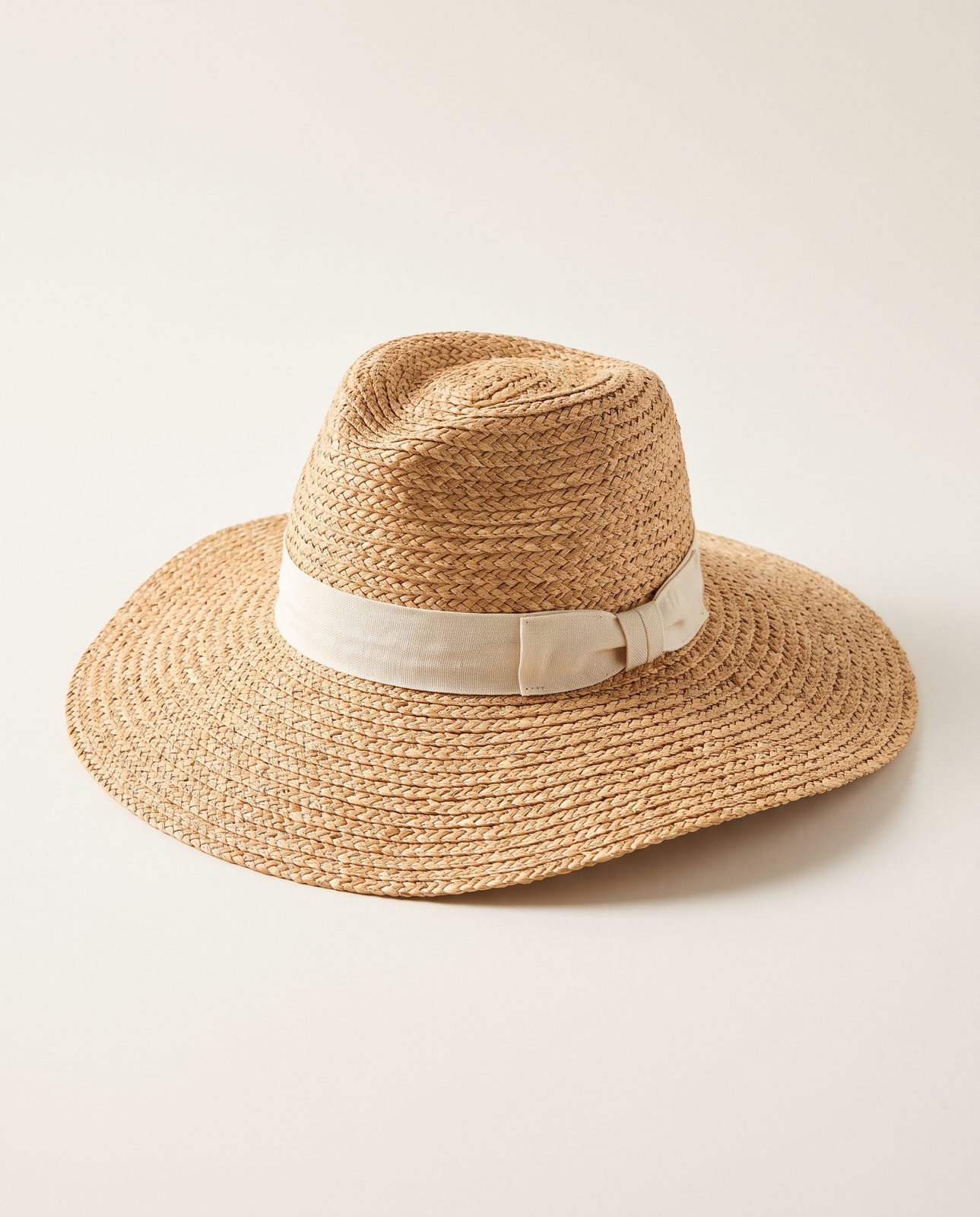
Two suits and two accent colours cover a two-week trip. Take one solid neutral — ivory or black — and one colour that makes you happy, then match the accessories to the neutral so everything works together. A straw hat, a seagrass sarong and leather flip-flops in natural tones will sit with any of the five shades.
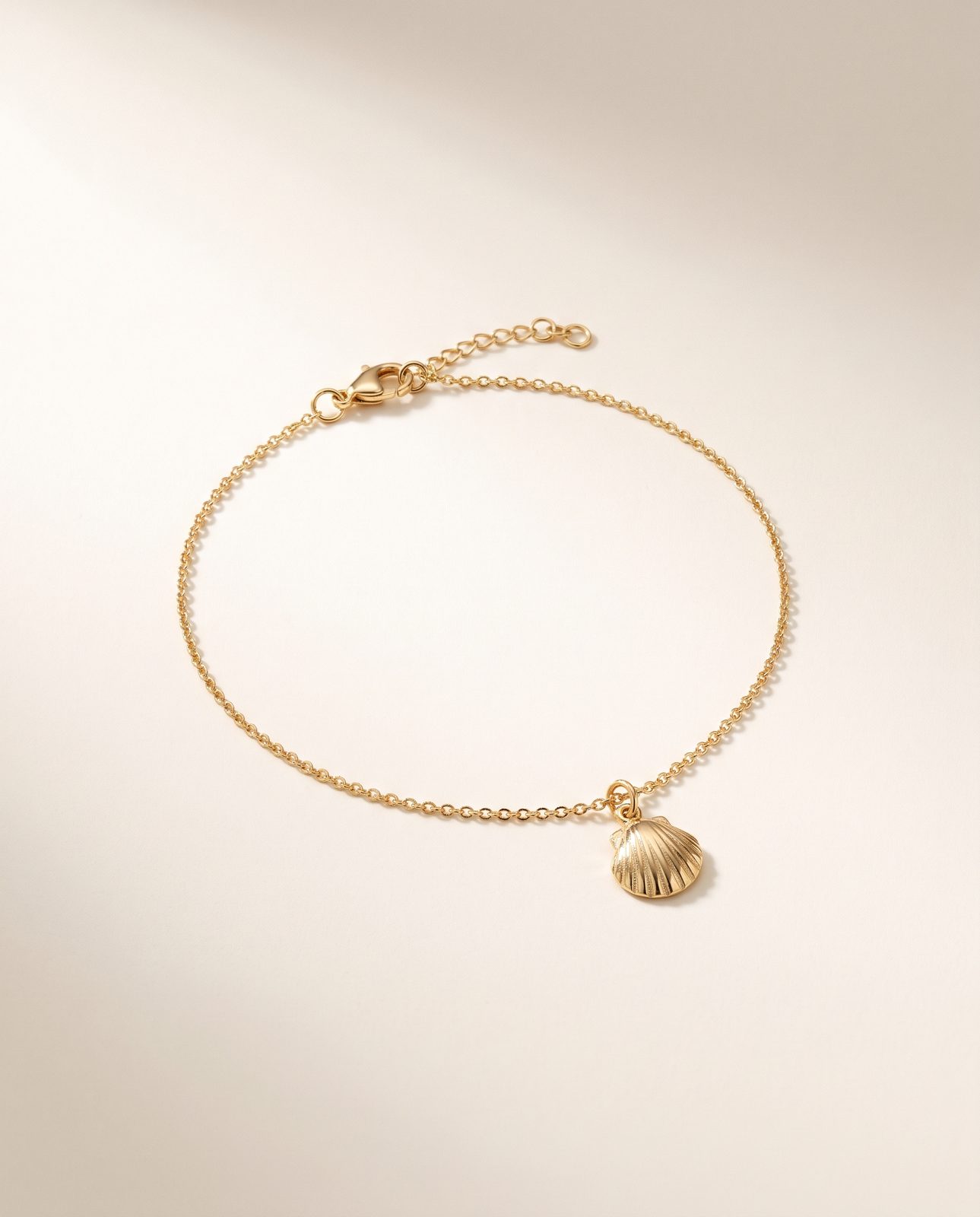
Metals are the exception worth breaking the rule for. Gold jewellery warms ivory, sage and coral; silver looks cleaner against black and Riviera blue. A thin gold ankle chain is enough on a barefoot evening, and it costs less than a second swimsuit. If you are choosing your first suit from us, start with ivory or black and add a colour second.
Frequently asked questions
Does white swimwear go see-through when wet?
Only if it is single-lined or thin. A double-lined white swimsuit at 220 g/m² or more stays opaque in water, including in backlight. Hold the front panel up to a window before buying to check.
Which swimwear colour is most flattering?
The one with a contrast level you like against your skin, not a fixed rule. Black and ivory give strong contrast, sage and sand give a softer look. Try both in daylight rather than under shop lighting.
Does black swimwear get hotter in the sun?
Yes. Black absorbs most visible light, so the fabric warms up faster and stays warm longer than ivory or white. On very hot days a pale suit is more comfortable, especially if you are sitting in direct sun between swims.
Do bright swimwear colours fade in chlorine?
Warmer saturated shades such as coral and red usually fade first, sometimes within 30 to 40 pool swims. Rinsing in cool water within 30 minutes of leaving the pool slows it down considerably.
What colour swimsuit hides sand best?
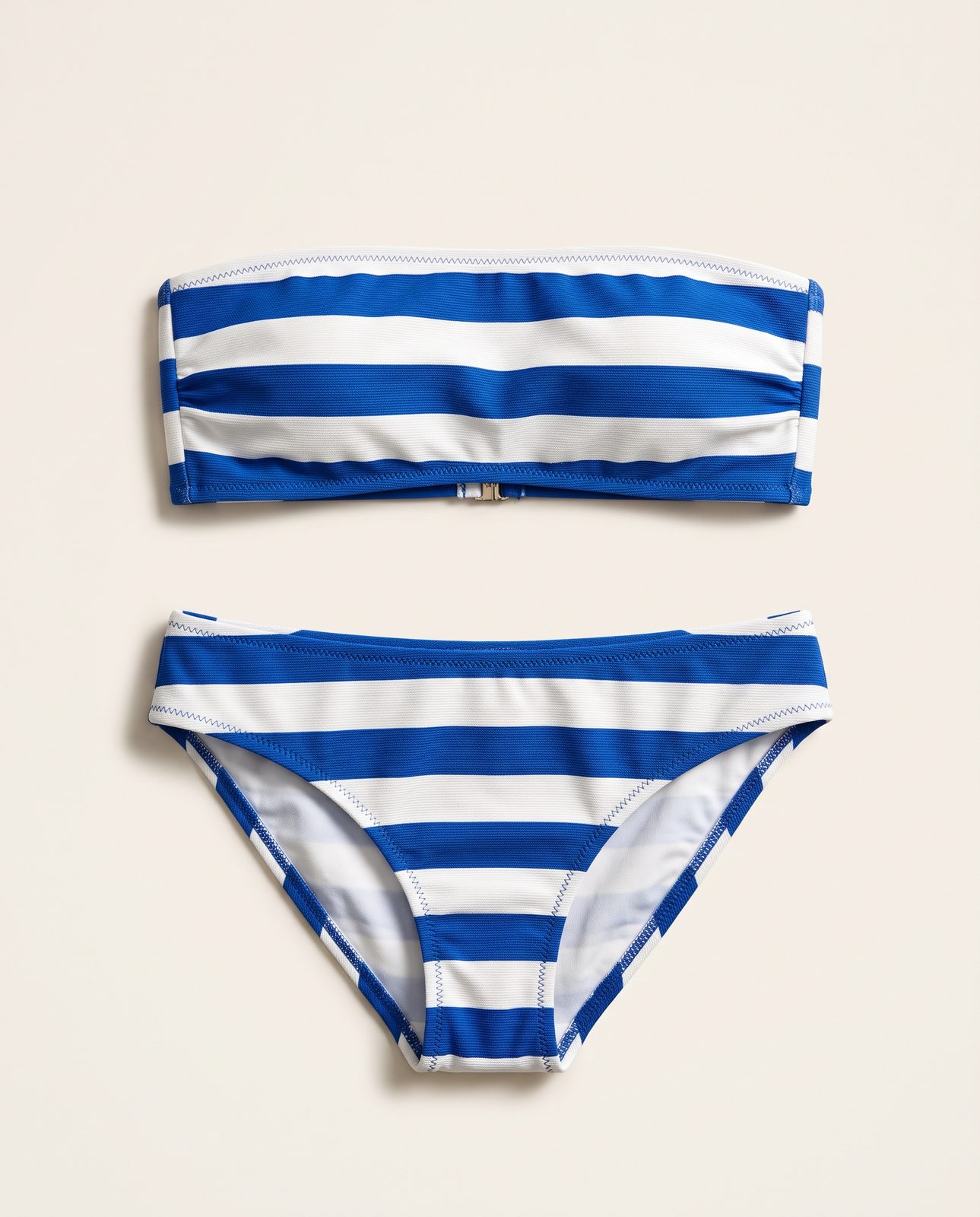
Mid-tones and patterns hide sand better than either extreme. Sage, sand and stripes disguise the fine grains that cling to damp fabric, while black shows every speck and white shows the grey dust.