Swimwear for surfing has one job that pool swimwear never has to do: stay in place while a wave pushes several hundred litres of water past you. A suit that feels secure standing on the beach can be somewhere around your ribs after the first duck dive.
You do not need technical gear for a first lesson. You need a top with adjustable straps, bottoms with real coverage and a fit you have tested before you get in the water. Here is how to check all three, plus what to wear over the top when the water is 14°C.
Why pool swimwear behaves differently in the surf
In a pool, water moves past you at walking speed. In 60 cm of whitewater it moves at 3–5 m/s and changes direction twice a second, which is enough to roll a loose bandeau top down and pull tie-side bottoms sideways. The fabric is not the problem; the attachment is.
Moulded cups are the second failure point. They hold their shape in still water and fold, twist or slip upward in turbulence, and once a cup creases it stays creased. Anything with a halter tie at the neck will pull for the whole session too: a 90-minute lesson involves a lot of paddling, and the tie transmits every stroke straight into the back of your neck.
The top: cross-back straps and a band you can tighten
Look for straps that cross at the back and adjust with sliders, so the load sits across the shoulder blades rather than the neck. A band under the bust should sit flat against the ribs with two fingers of room, not one. If you can pull the band more than 3 cm away from your body, it will move in the water.
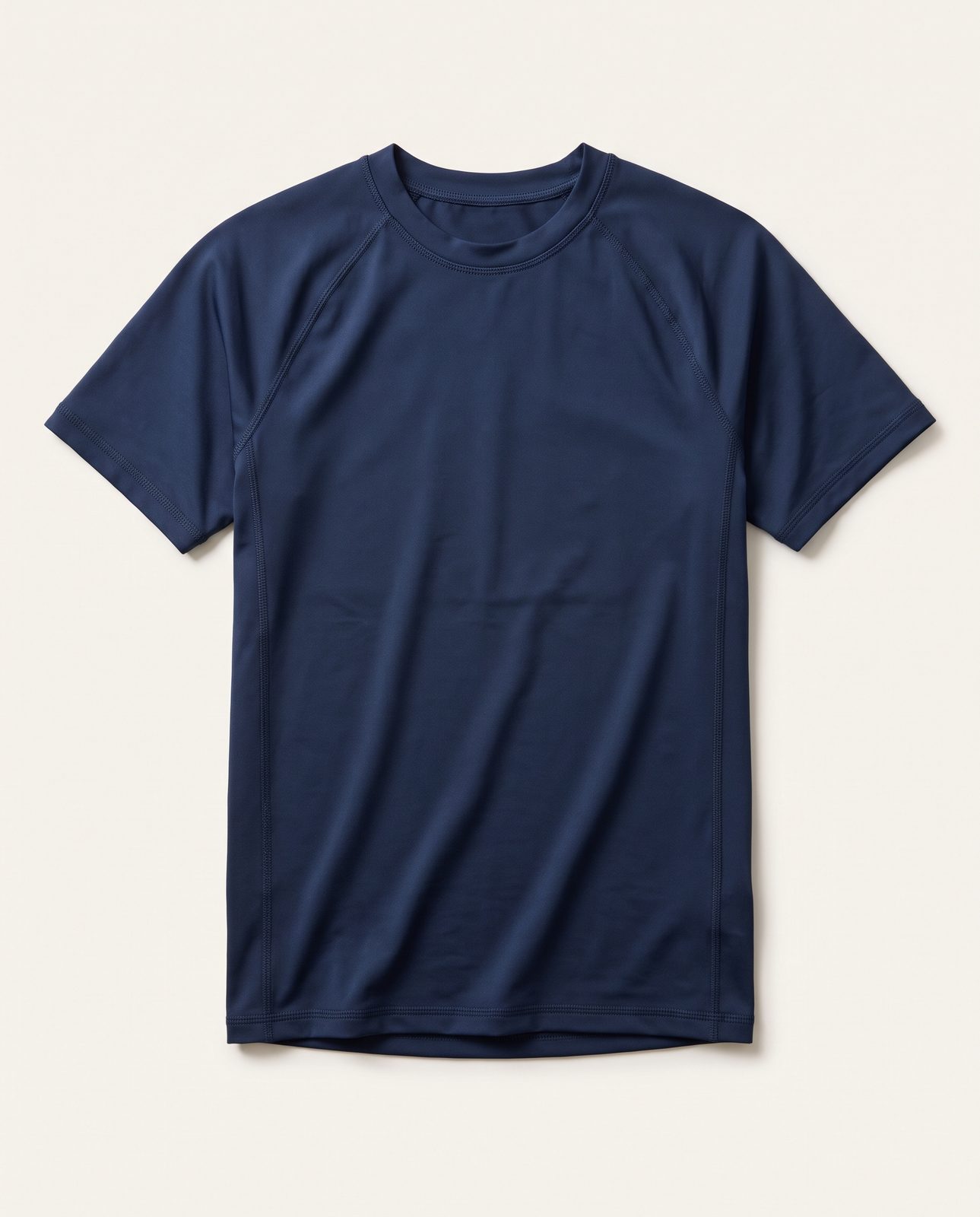
For anything above waist-deep, a swim tee or a fitted long-sleeve rash vest over the swimsuit solves most of the problem. Our swim tee is cut close to the body so it does not balloon when you paddle, and it keeps the sun off the shoulders and upper back. Test the top before you leave the house: raise both arms, twist left and right, then bend forward. Nothing should shift more than a centimetre.
- Cross-back or racer-back straps, adjustable at the shoulder
- Underband flat against the ribs, two fingers of give
- No halter necks and no moulded cups
- Swim tee or rash vest for sessions longer than an hour
- Check the seams at the strap join — that is where it fails first
The bottom: coverage, compression and a real fit test
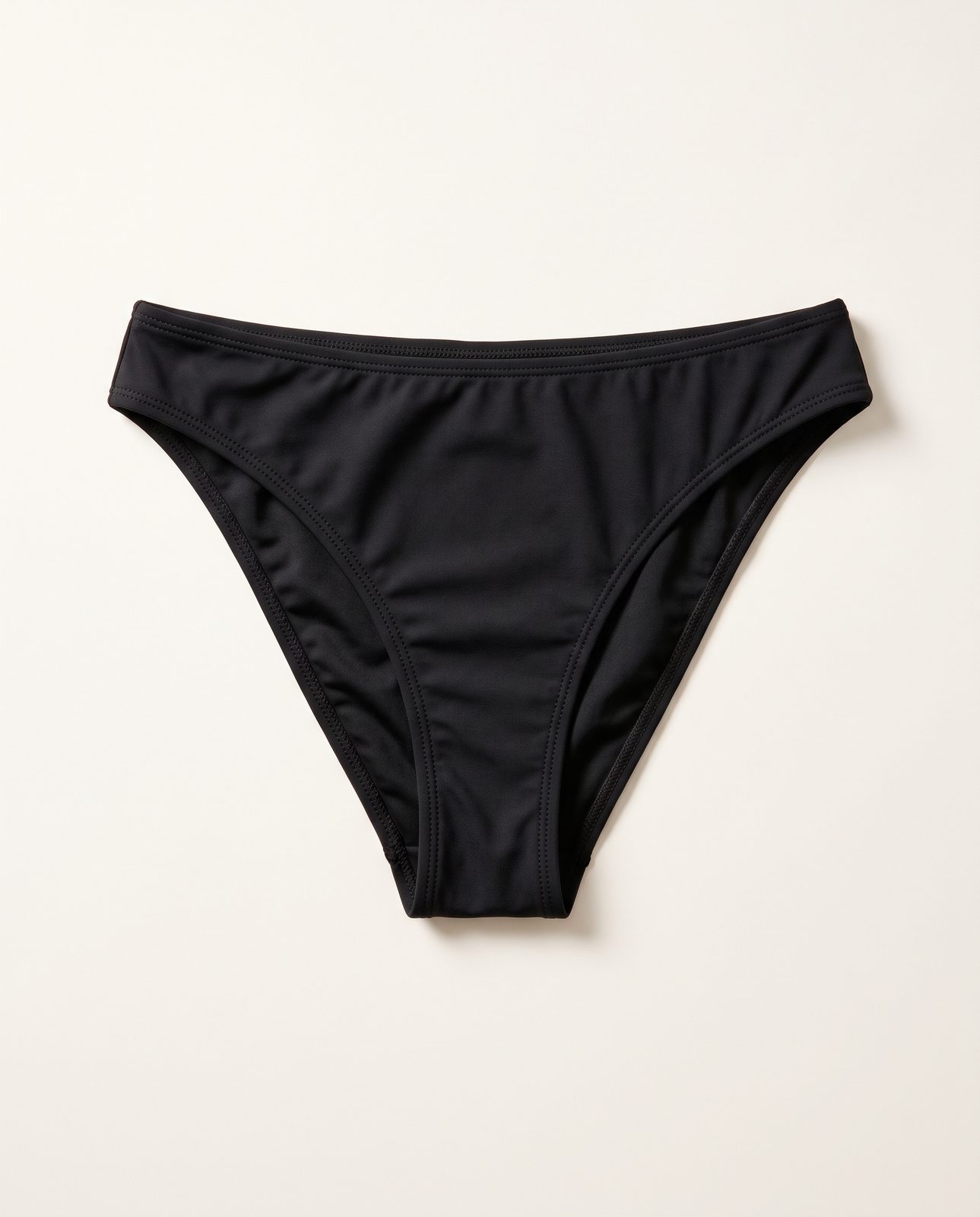
Beginner surfing involves sitting on a board, paddling on your stomach, standing up and falling off, often in the same 60 seconds. Bottoms need to stay on the hips through all four. High-leg cuts stay put if the leg opening is elasticated and sits flat; a high-leg cut with a loose edge will roll.
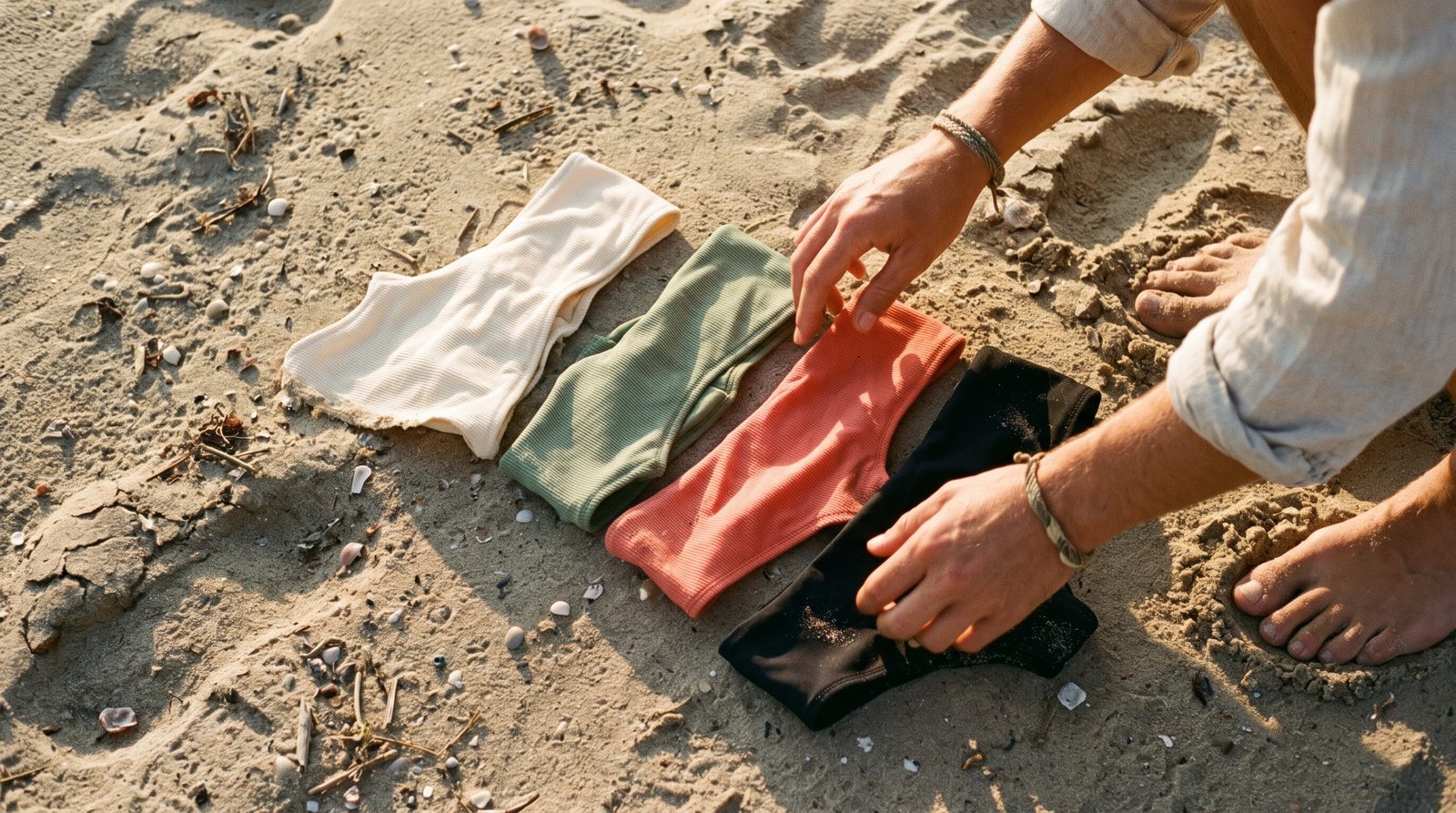
Full-coverage bottoms with a 6–8 cm side are the safest choice for a first season. They do not move when a wave pushes from behind, and they do not need adjusting every time you stand up. Tie-side styles are fine if you double-knot them and tuck the ends, but a single bow will not survive a two-foot shore break. The fit test takes two minutes in the shower: wet the suit fully, do ten star jumps, then bend forward and twist.

One-piece or bikini for a first lesson?
A one-piece is the simpler answer for most beginners. There is nothing to lose, nothing to adjust and no gap at the waist when you paddle. Choose a style with straps that sit on the shoulder rather than a strapless or bandeau cut, and check that the leg opening does not cut in when you squat.
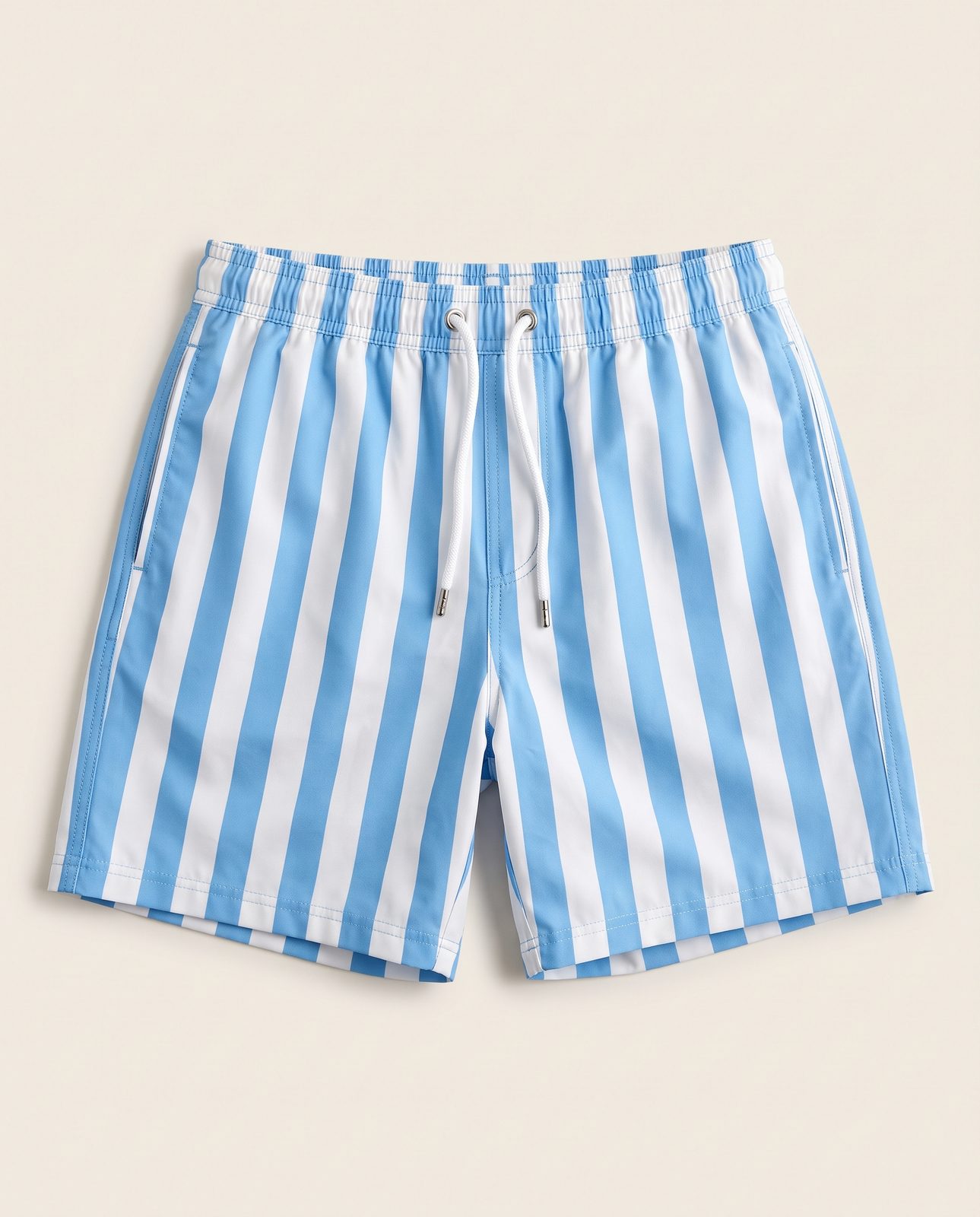
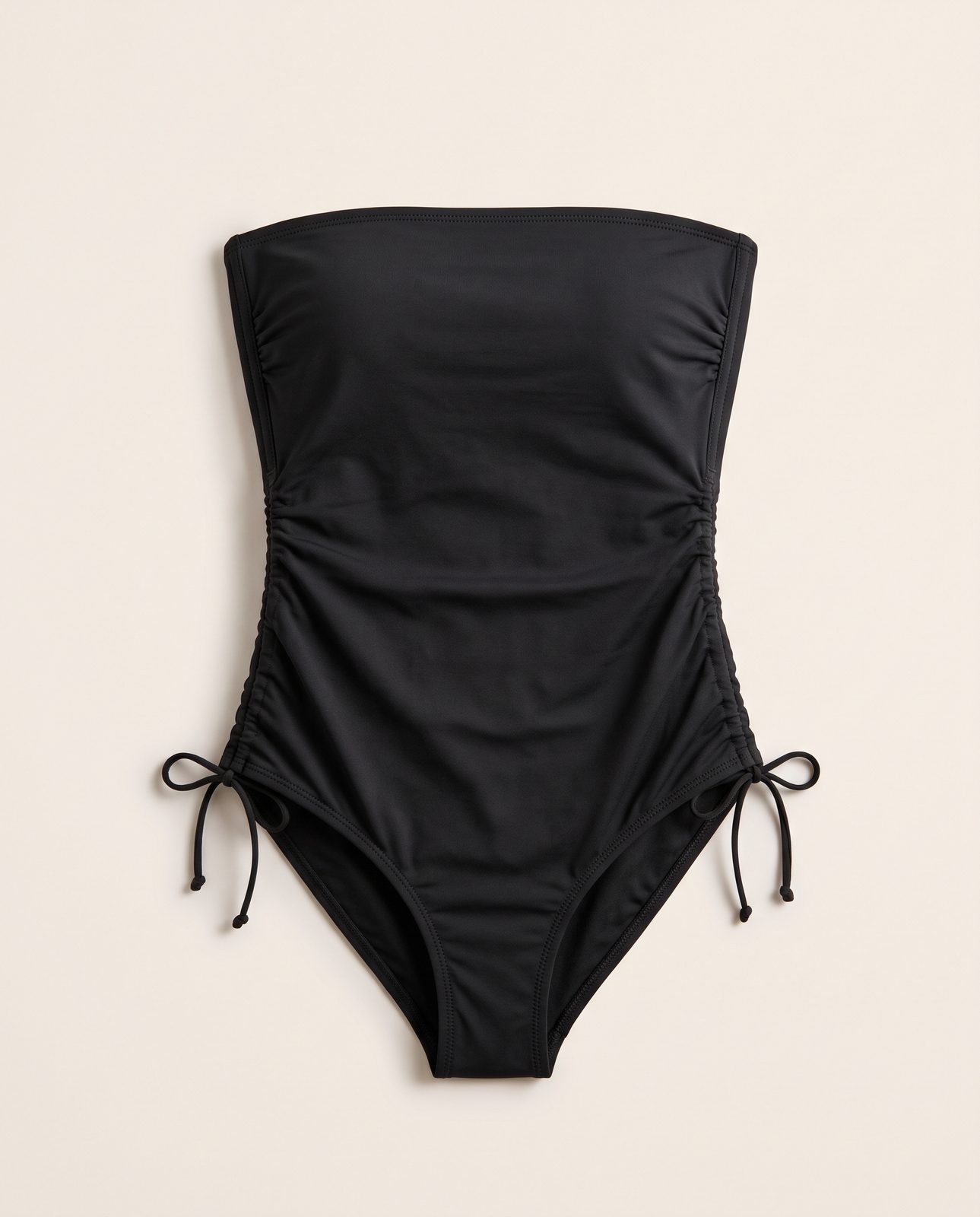
A bikini works if both pieces are secure. Pair a cross-back top with high-coverage bottoms rather than mixing a sporty top with a fashion bottom. Our ruched bandeau one-piece (€95) is a lovely suit for the beach and the hours after a lesson, but a bandeau is the wrong shape for the water itself. Board shorts over swimwear are worth considering in warm water: they protect the thighs from wax and board rash.
Water temperature, neoprene and how long you will last
In the Mediterranean in August the water is 22–26°C and most people surf in swimwear plus a swim tee for two hours without thinking about it. In the UK, Ireland and on the Atlantic coast the summer sea sits at 12–17°C, and a 3/2 mm wetsuit is the difference between a 40-minute session and a 90-minute one.
A first lesson usually provides a wetsuit and a soft-top board. Wear your swimwear underneath, keep it minimal — a one-piece or a secure bikini, no boardshorts with bulky seams under neoprene — and bring a dry change of clothes for afterwards. If you are surfing without a wetsuit in 18–20°C water, a 1–2 mm neoprene top keeps the wind off your core between sets.
Salt, wax and the rinse that saves the suit
Surf wax transfers from the board to your hands, your stomach and your thighs, and from there into the swimsuit. A dark suit will show grey smears within one session. Rinse in cool water within an hour of getting out and work a drop of mild detergent into the waxed area with your fingers; hot water sets wax into the fibres.
Salt crystals left to dry stiffen straps and abrade the elastane where it bends. A 60-second rinse and a flat dry in shade will add months to a suit used weekly in the sea. Chafing is the other thing nobody mentions: a little barrier balm on the neck, under the arms and along the ribcage makes a two-hour lesson much more pleasant.
Frequently asked questions
Can you surf in a normal bikini?
Only if the top is cross-back and adjustable and the bottoms have real coverage. A fashion bikini with tie sides and a halter neck will move within the first duck dive. Run the wet star-jump test before you paddle out.
What should a beginner wear for a first surf lesson?
A one-piece or secure bikini in quick-dry fabric, a swim tee if the lesson is longer than an hour, and a dry change of clothes for afterwards. Most schools supply the wetsuit and board.
Do you need a wetsuit to surf in summer?
In the Mediterranean, usually not — the water is 22–26°C from June to September. In the UK and Atlantic, a 3/2 mm wetsuit makes a 90-minute session comfortable where swimwear alone gives you 40 minutes.
How do you stop bikini bottoms coming off in waves?
Choose full-coverage bottoms with a 6–8 cm side and an elasticated leg, size down if you are between sizes, and double-knot any tie sides. Test them wet with ten star jumps before you get in.
How do you get surf wax out of a swimsuit?
Rinse in cool water, then work a drop of mild detergent into the marked area with your fingers. Hot water and machine washing push wax deeper into the fibres and set the stain.