This swimsuit fabric guide starts with the label, because it tells you more about how the suit will fit in two years than the price tag does. Look for three things: the fibre mix, usually nylon or polyester with 15–22% elastane; the knit, either a warp-knit tricot or a circular rib; and the weight in grams per square metre. Softness, drying time, chlorine resistance and how a white suit behaves when wet all follow from those.
The words on the tag are used loosely, so it helps to know what is a fibre and what is a brand. Lycra is a brand of elastane, not a separate material, and chlorine resistant is a marketing phrase unless it refers to a specific elastane variant or to polyester and PBT, which resist chlorine by chemistry rather than by coating.
Swimsuit fabric guide: start with the percentages
Most women's one-pieces sit at 78–82% polyamide with 18–22% elastane. That range gives a soft hand, enough recovery to hold a seam and a fit that survives a full day at the beach. A 90/10 blend feels lighter and cooler but starts to bag at the seat after 30 or 40 wears.
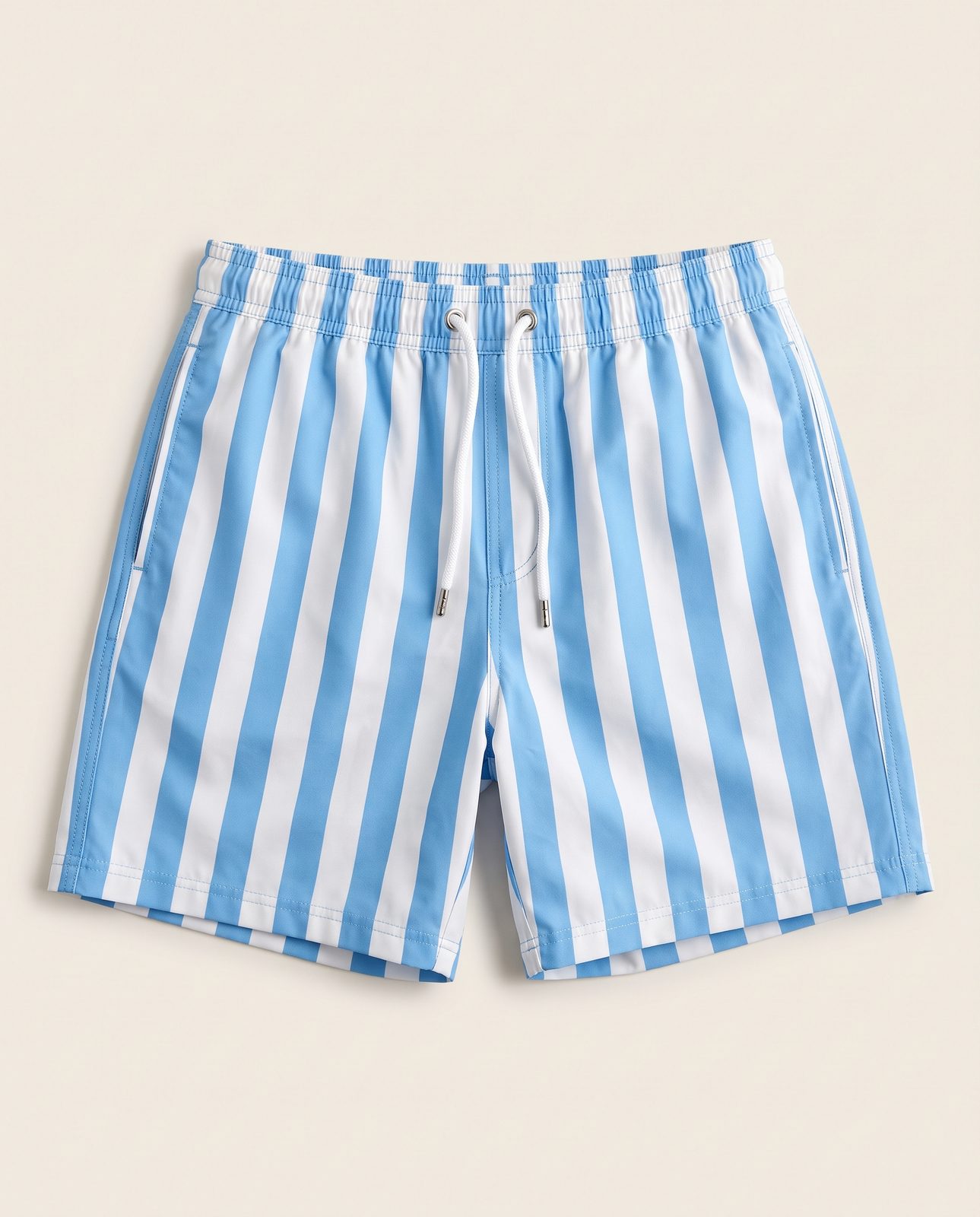
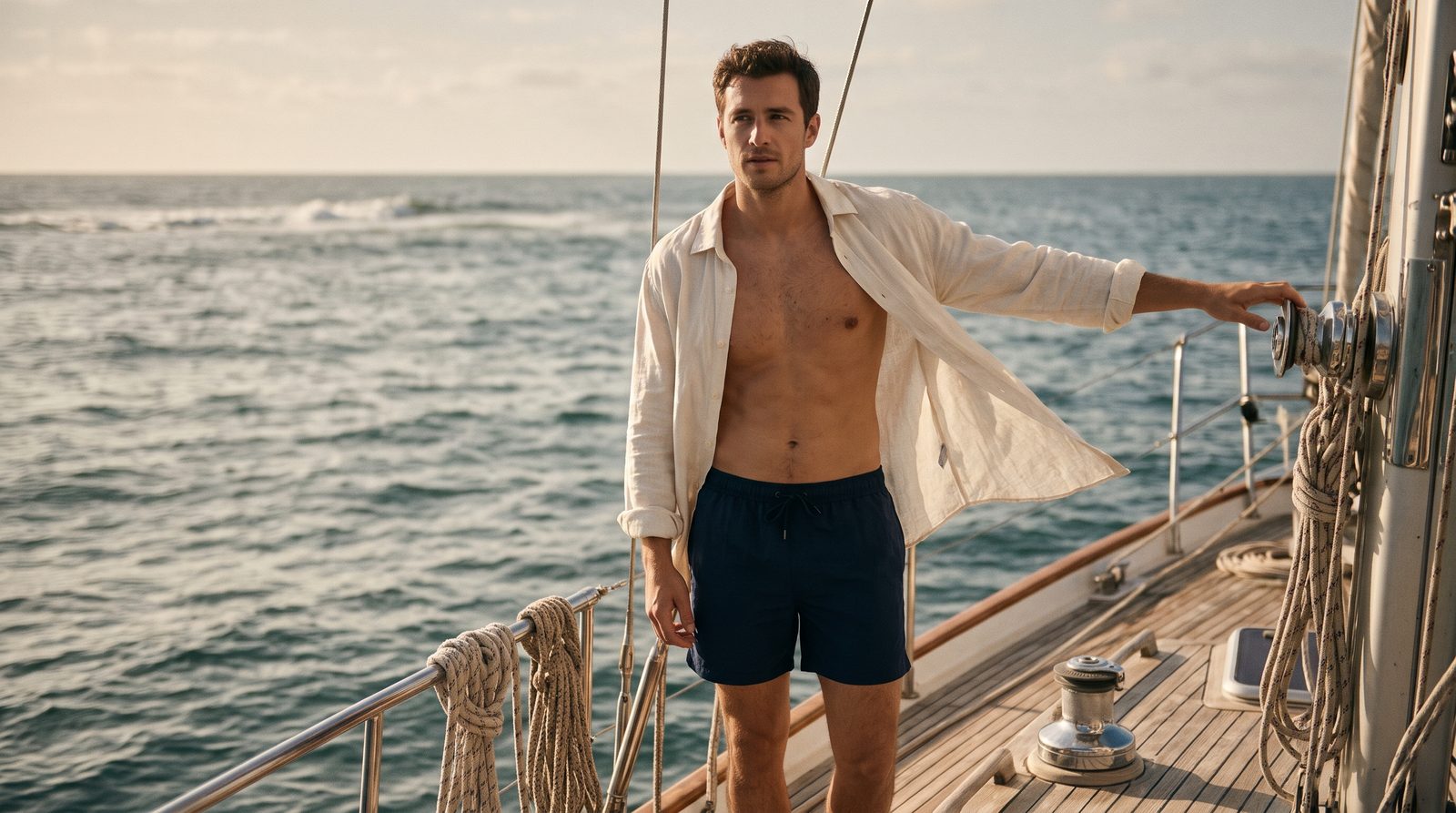
Men's swim shorts are usually a different animal: 100% polyester, or polyester with a small amount of elastane and a mesh brief inside. That is why a good pair of shorts feels crisper than a one-piece and dries in half the time.
Elastane: the 20% that does the work
Elastane can stretch 500–700% and return to its original length, which is the whole reason a knit swimsuit stays on your body in the water. It is also the first component to fail, because chlorine, heat and body oils break down the polyurethane chains that give it memory.
More elastane means a firmer, more supportive fit, not automatically a better suit. A 22% blend in a 230 g/m² knit will outperform a 30% blend in a thin, loosely knitted fabric, because there is simply more material holding the shape.
Nylon, polyester and PBT compared
Nylon, also listed as polyamide, is the softest of the three and takes colour deeply, which is why it is the default for fashion swimwear. It absorbs around 4% of its weight in water, dries in 45–60 minutes in shade and is the least resistant to chlorine.
Polyester absorbs under 1% of its weight, dries in about 30 minutes and holds colour and shape better in chlorinated water. PBT is a polyester variant with good built-in stretch and high chlorine resistance, often used on its own for daily pool swimmers. Recycled nylon such as ECONYL is chemically the same nylon 6, so it behaves identically in sun and chlorine.
- Nylon: softest hand, best drape, deepest colour, weakest against chlorine
- Polyester: crisper, fastest drying, best colour retention in sun
- PBT: chlorine resistant, ideal for swimming three or more times a week
- Recycled nylon: same performance as new nylon, different supply chain
What 190 and 260 g/m² feel like
Weight tells you how the fabric will behave before you even try it on. A 190–210 g/m² knit is light and quick-drying, good for hot climates and packing, but it shows every ridge and tends to cling after 20 minutes in the water. A 220–240 g/m² knit is the standard for a reason: enough body to smooth, still quick to dry.
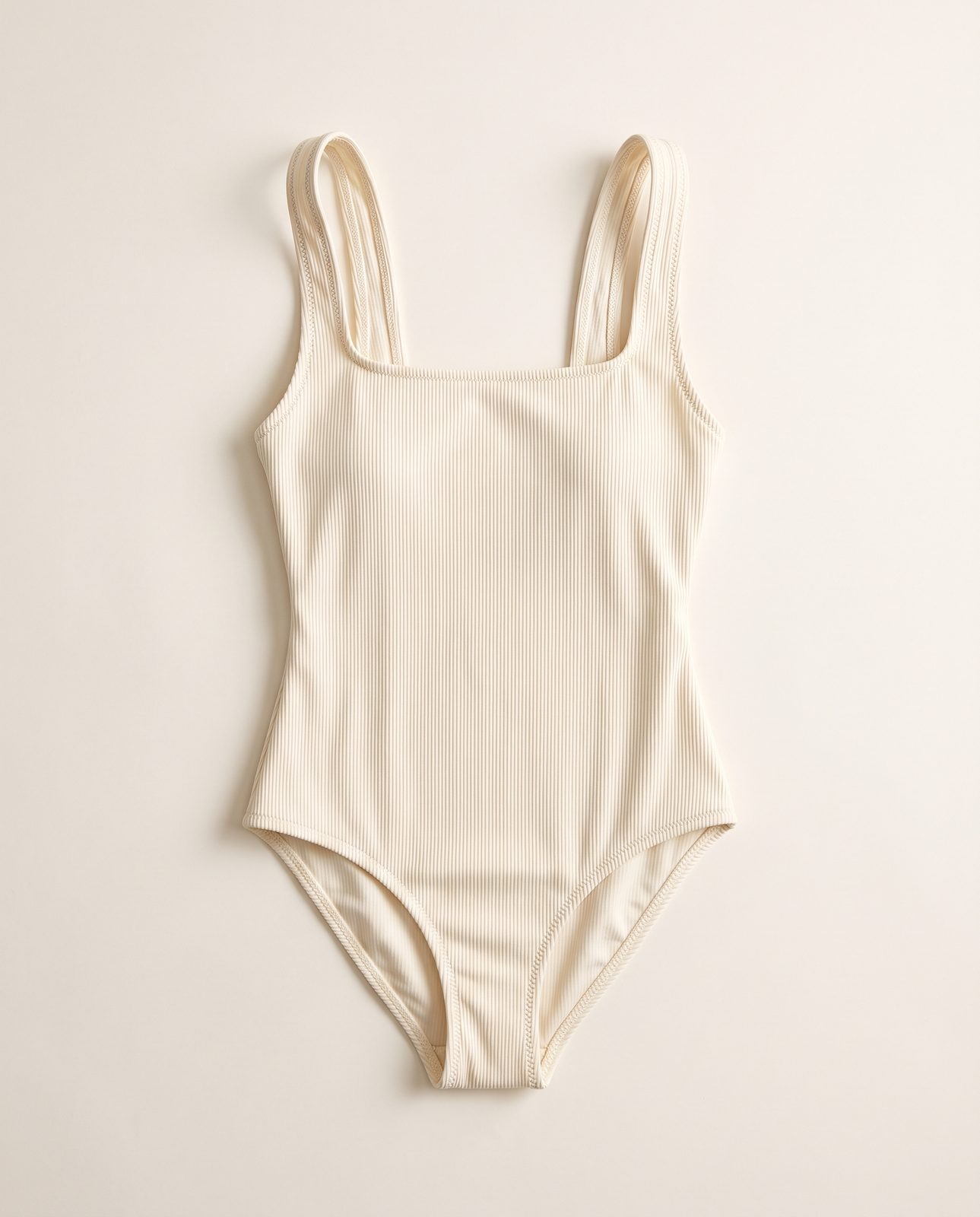
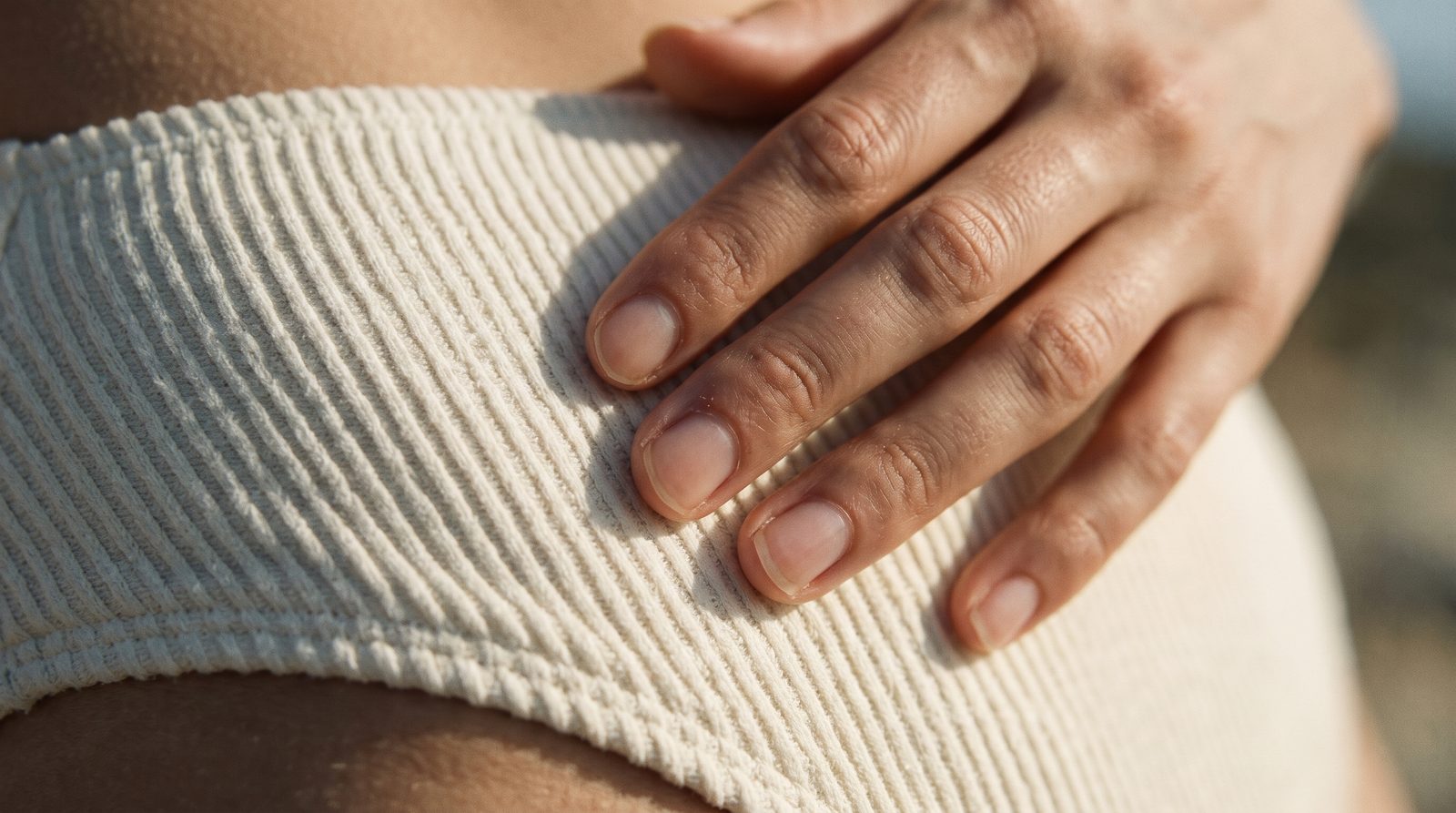
Ribbed and compression knits sit at 250–280 g/m². Our ivory ribbed one-piece is cut from that heavier sort of rib, which is why it holds a square neckline without tape and takes about 60 minutes to dry in shade rather than 45. Weight is also why two suits of the same size can feel completely different on.
Lining matters most on white swimwear
A front lining is usually a thin polyester knit, and on a white suit it is the difference between opaque and revealing. White nylon becomes noticeably more transparent when wet, so look for a second layer or a bonded lining through the front panel, not just a small modesty patch.
Lining also affects fit and drying. A double-lined suit takes 15–20 minutes longer to dry and holds more chlorine, which is worth knowing if you swim daily. On darker colours, a full lining mostly adds structure and stops the suit clinging.
Which fabric for which swimmer
Match the fibre to the frequency. A suit for a two-week holiday can prioritise softness and colour; a suit for three pool sessions a week should prioritise chlorine resistance and recovery. Buying one suit for both usually means replacing it within a year.
If you alternate between the pool and the sea, a polyester-elastane blend is the practical middle ground. If you mostly sunbathe and swim briefly, nylon's softer hand and better drape are worth the shorter life.
- Daily pool swimmer: PBT or polyester with 18–20% elastane
- Holiday and sunbathing: nylon with 20–22% elastane, 220–240 g/m²
- Hot-climate travel: 190–210 g/m², quick-drying, packs small
- White or light colours: double-lined front panel, heavier knit
- Men's shorts: polyester shell with a soft mesh brief
How each fibre handles sun, salt and sunscreen
UV degrades elastane and breaks down the optical brighteners that make white fabric look white, which is why a white suit can turn cream at the shoulders before the rest of it fades. Polyester holds its whiteness longer than nylon under the same conditions.
Sunscreen oils sit on the surface of nylon and are harder to rinse out than they are from polyester, and salt dries into crystals on both. Neither fibre is damaged by a single afternoon, but the combination of salt, oil and sun, repeated over a summer, is what makes a suit look tired by September.
Frequently asked questions
Is 80% nylon and 20% elastane good for a swimsuit?
Yes, it is the standard mix for a soft, supportive one-piece and should give 12–18 months of regular pool use. If you swim daily, a polyester or PBT blend will last longer.
What is the difference between Lycra and elastane?
Lycra is a brand name and elastane is the generic fibre. Both stretch and recover in the same way, though some branded variants are formulated to resist chlorine better.
Does more elastane mean better quality?
Not on its own. An 18–22% blend gives a firm fit, but the knit weight and fibre quality matter just as much, and a thin fabric with 30% elastane can still sag within weeks.
Which swimsuit fabric dries fastest?
Polyester, at around 30 minutes in shade, followed by lightweight nylon at 45–60. Ribbed and double-lined suits hold more water and can take 15–20 minutes longer.
Is recycled nylon as durable as new nylon?
Chemically it is the same nylon 6, so it behaves the same in chlorine, salt and sun. The difference is in how the material is sourced, not in how long the suit lasts.