A straw tote vs canvas tote is not a question of taste so much as a question of transport. Straw wins on looks and sheds dry sand; canvas wins on weight, packed volume and washability. We sell both, so here is the comparison we give customers who cannot decide, using the numbers that change once the bag is actually full.
The short answer: if you fly with hand luggage, take canvas. If you drive to the beach and want the bag to look right in photographs, take straw. The detail behind that split is below.
The short answer, in numbers
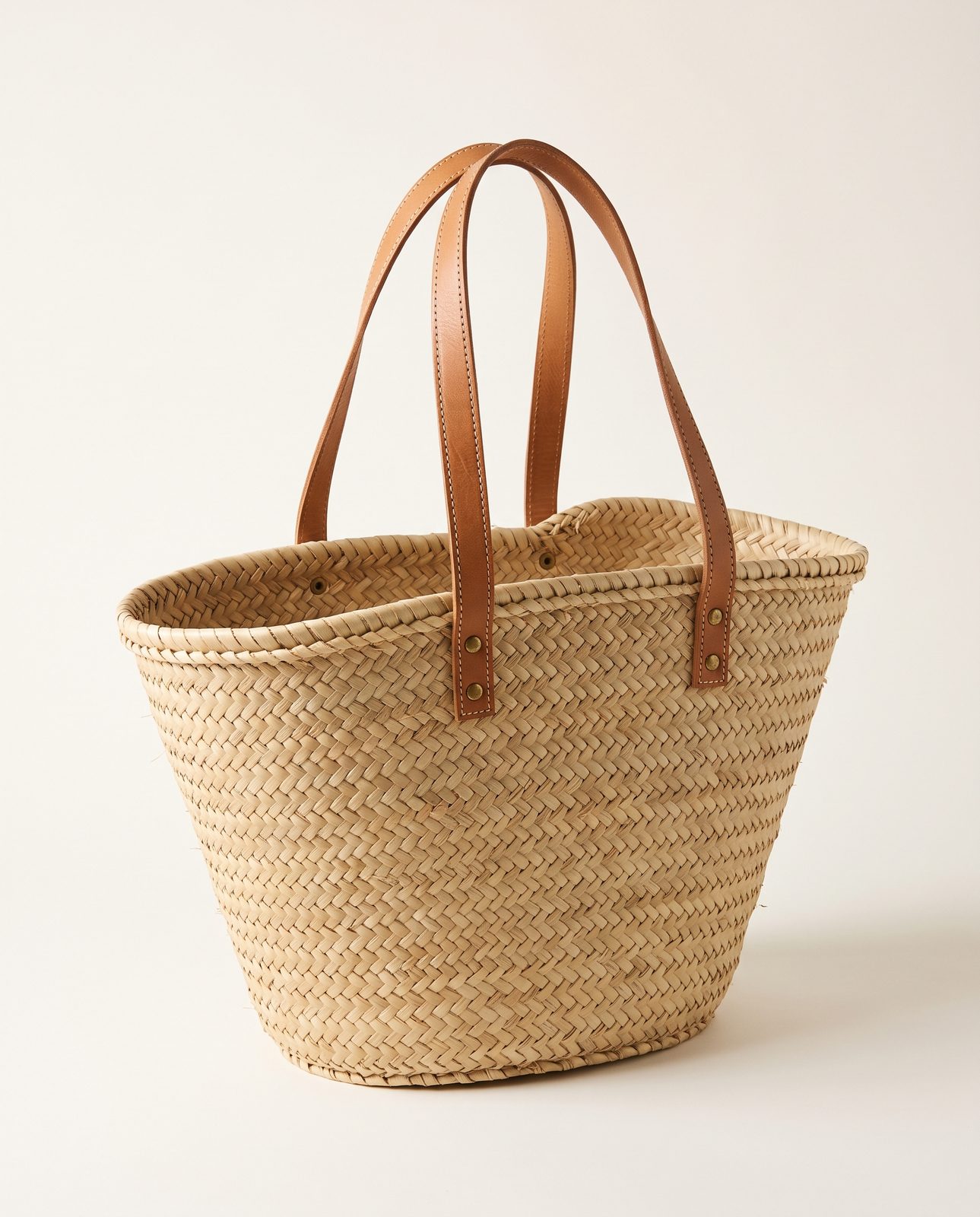
A standard straw beach tote measures about 45 × 35 × 18 cm, holds 28 litres and weighs 900 g empty. A comparable canvas tote measures 42 × 38 × 16 cm, holds 25 litres and weighs 380 g. The straw bag buys 3 extra litres and costs 520 g more before you put anything in it.
Neither number is decisive alone. The weight matters when you walk 1.5 km to a cove; the volume matters when you are packing two towels and a lunch. Decide which of those two days you have more of.
Weight and packed volume after a full day
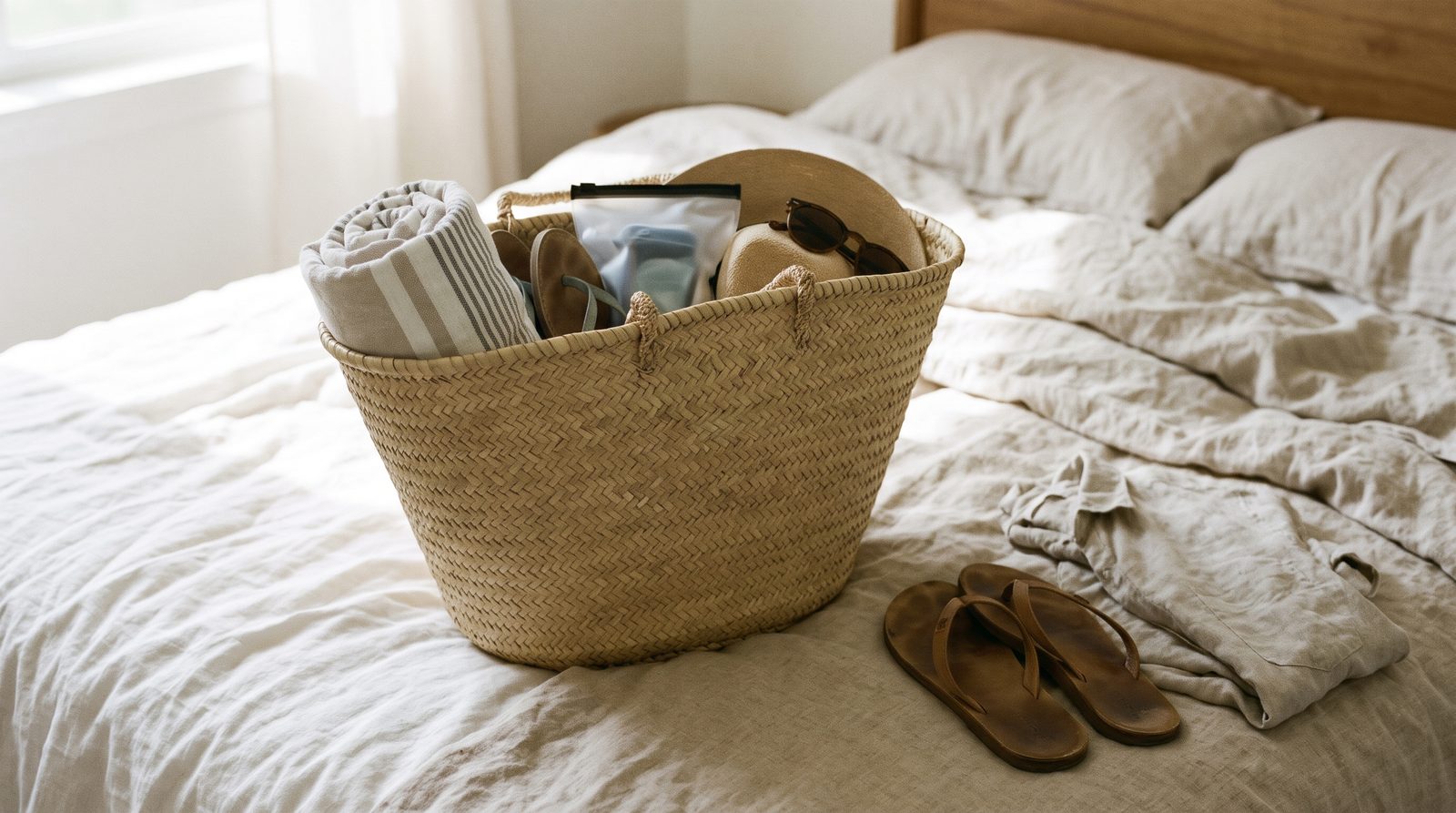
520 g is roughly a full litre of water, or a second swimsuit plus a paperback. Load both bags for a beach day — towel, 500 ml bottle, sunscreen, pouch, hat — and the straw tote sits at 4.1 kg against 3.6 kg for canvas. On a flat promenade you will not notice; on a slope in 32 °C you will.
Volume behaves differently from weight. Canvas is soft, so it compresses to about 3 cm when empty and slides into a case beside shoes. Straw keeps its shape, which protects a camera but also means it takes up its full 28 litres in the boot or the overhead locker.
Sand, salt and drying time
Dry sand falls off tightly woven seagrass almost immediately, which is why straw feels cleaner at the end of the day. Wet sand is the opposite story: it works into the weave and needs a brush. Canvas holds sand on the surface, and a shake followed by a 30 °C wash removes all of it.
Water is where the gap widens. A straw tote left in the shade with a wet towel inside stays damp for around three hours and can gain 300 g; repeated soaking dulls the fibre and softens the base. Canvas dries in 40 minutes in sun, and salt shows as a faint white tide line that rinses out.
Shape, structure and what fits inside
Straw totes hold their shape, so a flat 45 cm base stays flat on sand and a bottle stands upright instead of rolling into a towel. The trade-off is a rigid mouth: a rolled towel has to go in diagonally, and the top will not close over a beach umbrella.
Canvas slumps, which makes it easy to overfill and hard to find anything in. Look for an inner zip pocket and a key clip. One more practical point: unlined straw snags knitted cover-ups and fine necklace chains, so keep small items in a pouch rather than loose.
Cost per summer and repairability
Our straw beach tote sits at the top of our accessory range at €69. A €15 market bag usually fails at the handle join within one season, so the comparison is not €69 against €15 but €69 against €30 over two summers — with the €69 bag still usable in year three.
Canvas starts cheaper and repairs more easily: a strap can be re-stitched by any tailor for €10–15 and the bag carries on. Straw repair is specialist work, and once the base weave separates, most bags are finished. If you keep a bag for five years, canvas wins on cost; if you replace it every summer for the look, straw is the cheaper habit. We count cost per beach day, not cost per bag, because that is the number that decides whether a €69 tote was worth it.
Straw tote vs canvas tote: how to decide
We ask three questions. Do you fly with hand luggage only? Is the walk from car to sand longer than 20 minutes? Will the bag ever hold a wet towel for more than an hour? Two or more yes answers point to canvas; otherwise straw is the more pleasant object to own.
A third option suits people who want both: a canvas tote for the journey and a small straw bag for the beach itself, which is what we do on trips to Menorca. The pair weighs less than one structured straw bag and covers every day of a two-week holiday.
- Fly with cabin baggage only: canvas
- Walk more than 20 minutes to the beach: canvas
- Want the bag in holiday photographs: straw
- Carry a wet towel daily: canvas
- Keep a bag for five summers: canvas, repaired
- Replace the bag yearly for the look: straw
Frequently asked questions
Does a straw tote get ruined by seawater?
Not ruined by a splash, but repeated soaking softens the fibre and can warp the base. Rinse with fresh water, shake out the excess and dry it in shade rather than direct sun, which makes seagrass brittle.
Can you wash a canvas tote in a machine?
Most plain canvas totes take a 30 °C cycle with a mild detergent, provided there is no leather trim. Leather handles need spot cleaning with a damp cloth and a reconditioning balm. Air-dry both, never in a tumble dryer.
Which is lighter to carry all day, straw or canvas?
Canvas, by about 520 g before packing. That is close to a full litre of water, which is noticeable on a long walk in heat. Once both bags are full the difference stays roughly the same.
Is a straw tote big enough for two people?
A 45 cm straw tote at 28 litres holds two towels, a bottle each and a cover-up, but little else. If you also carry lunch, a camera and a book, take a 30-litre canvas bag instead.