Swim trunks are short, light and quick-drying, cut for swimming. Board shorts are longer, heavier and built for surf, with more pockets and a stiffer shell. If you are choosing one pair for a beach holiday in Spain, buy trunks; if you surf, paddle or spend whole days in the water, board shorts earn their weight.
The confusion comes from shops using the words interchangeably. They are different garments with different fabric weights, and the difference shows up the moment you walk out of the sea into a breeze — so here is how we explain it at the counter, with the numbers that matter: grams, centimetres and minutes to dry.
Swim trunks vs board shorts: the short answer
A swim trunk is essentially a short with a swim lining: 13 to 17 cm inseam, a lightweight shell of 110 to 150 gsm, an elastic waist and often a mesh brief inside. It is designed to be worn wet and to stop feeling wet quickly.
A board short is a surf garment: 18 to 22 cm inseam, a denser shell of roughly 200 to 280 gsm, a fixed waist with a lace or velcro closure, and often a neoprene-free stretch panel instead of a liner. It is designed to stay on in a wipeout and to survive sand, wax and sun.
Fabric weight: what changes in the water
Weight is the real dividing line. A 130 gsm trunk feels like nothing when dry and moves with you in the water; when soaked it gains maybe 150 g and stops dripping within a minute of leaving the sea. A 250 gsm board short gains closer to 400 g when wet, clings to the thigh and keeps a cold film against the skin until it dries.
Both are usually polyester or polyamide, often with a small elastane content for stretch. The difference is the weave and the coating: board shorts frequently carry a water-repellent finish that beads water at the surface, which helps in the surf but makes the fabric stiffer and slower to dry in still air. Trunks skip the coating and rely on a thin, open weave.
Length, rise and how they sit on the leg
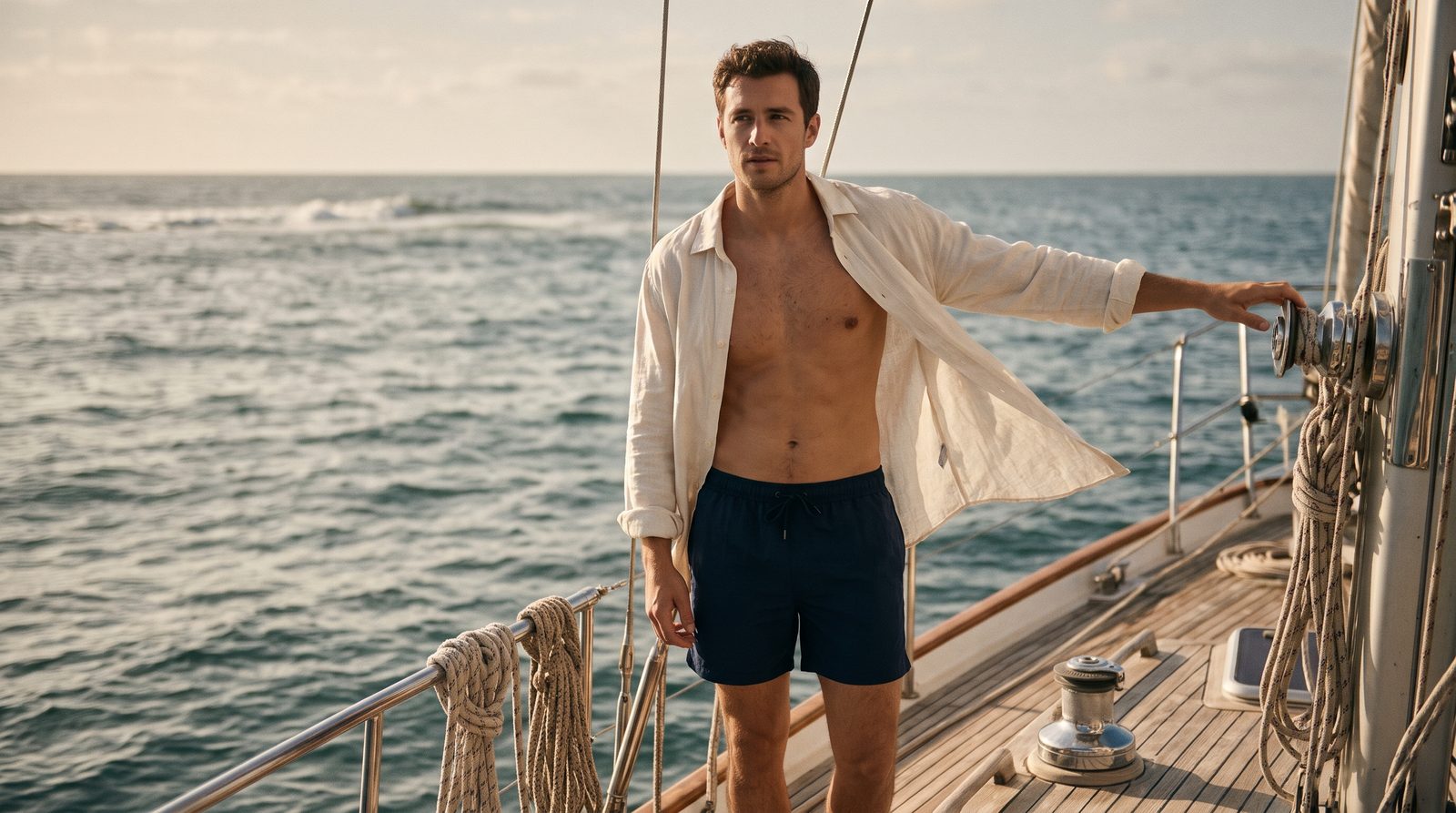
Trunks land mid-thigh, roughly 15 to 20 cm above the knee on a man of 180 cm. That height keeps the hem clear of the water when you wade and stops fabric dragging when you swim. Board shorts reach the knee or just above it, which protects the thigh from a surfboard rail and from sunburn during long sessions.
The longer leg has a cost on land. Below the knee the hem catches the calf when you walk, and the extra fabric makes shorts look heavier with a linen shirt. If you are not surfing, the shorter cut almost always photographs better and is more comfortable in 30 °C heat.
- Trunks: 13 to 17 cm inseam, hem clear of the knee.
- Board shorts: 18 to 22 cm inseam, hem at or near the knee.
- Mid-thigh length is the most versatile for swimming, lunch and a walk back to the hotel.
Waistband, liner and pockets
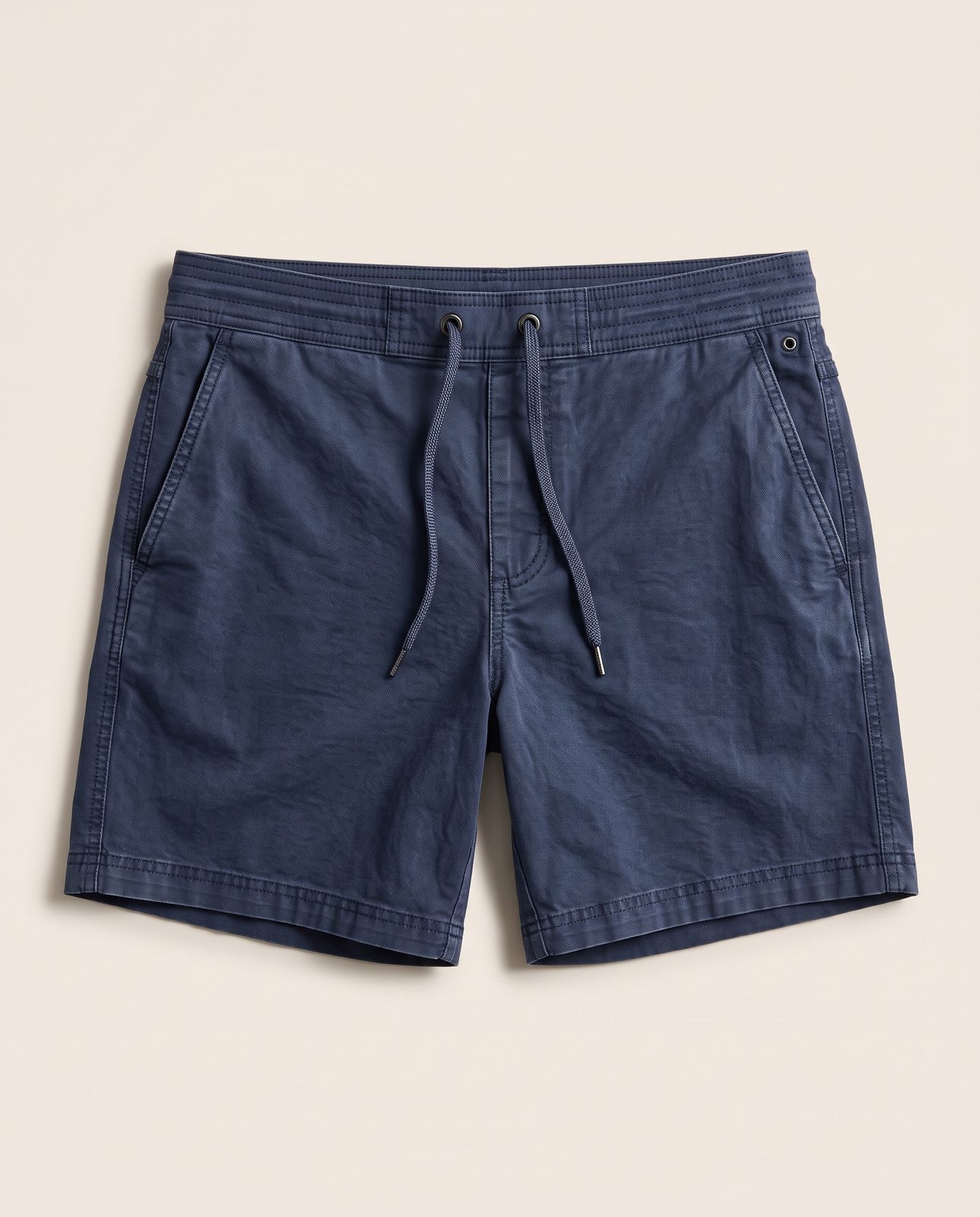
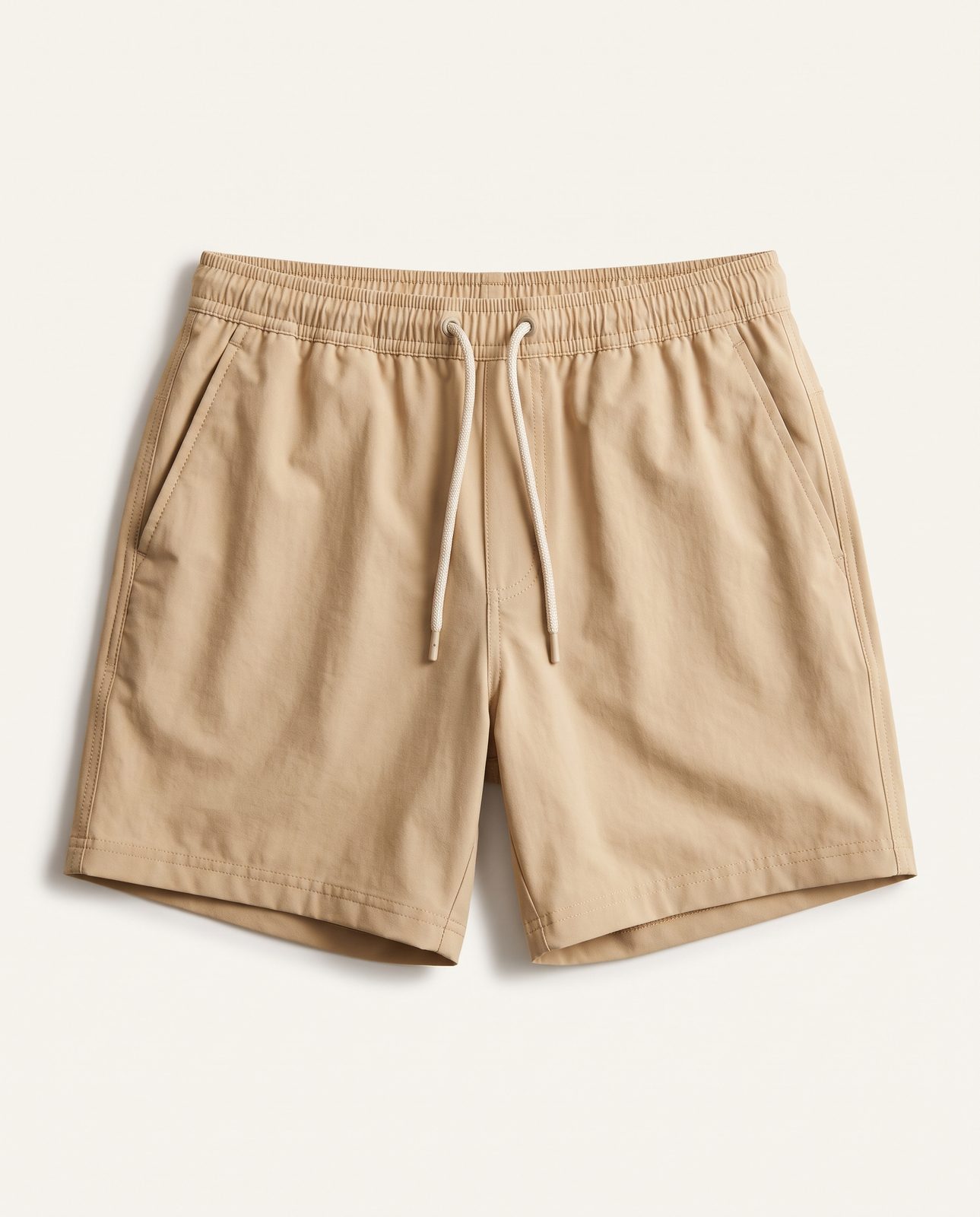
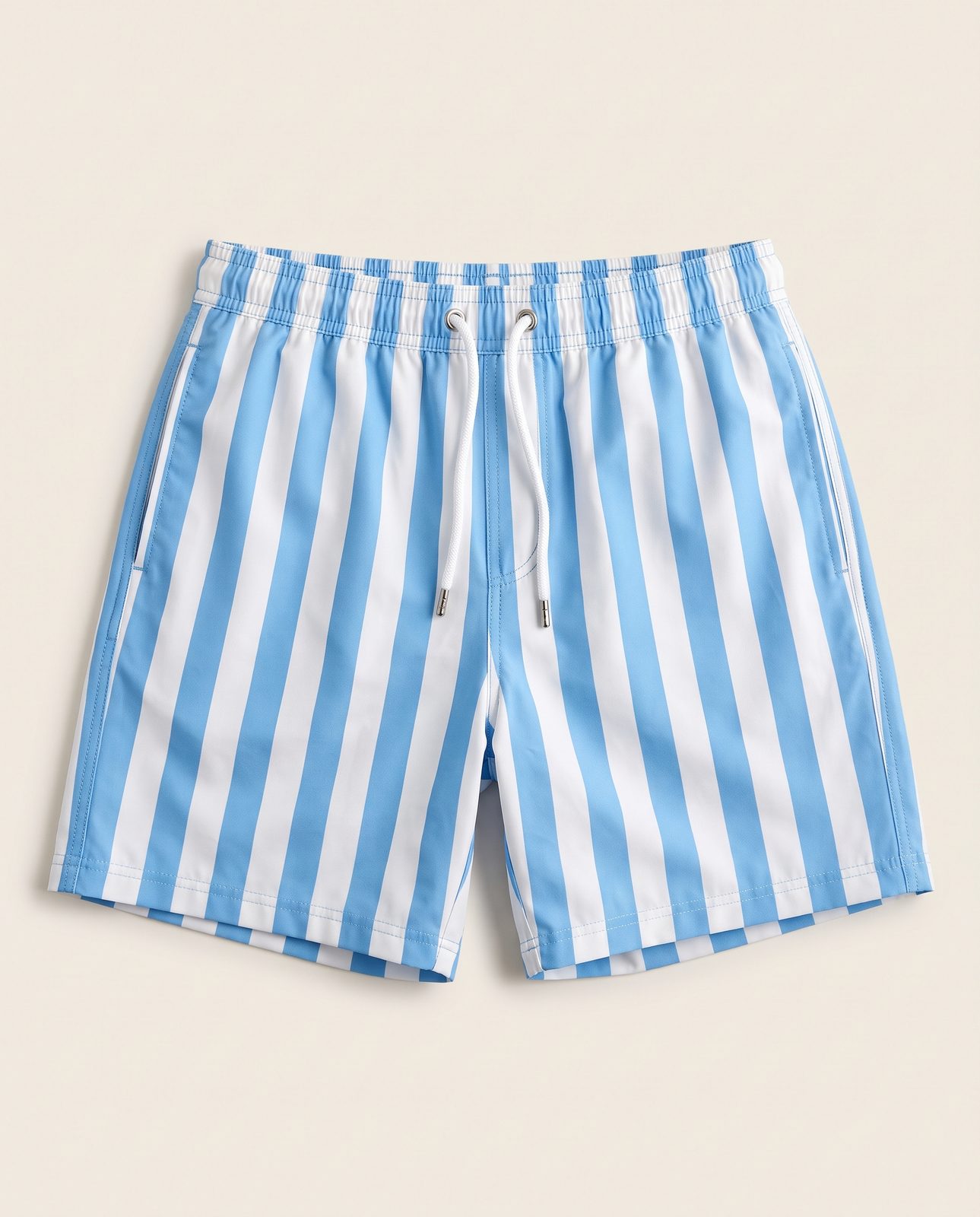
Trunks usually have an elastic waist with a drawcord, sometimes a faux fly, and a soft mesh or compression liner that replaces underwear. The elastic forgives a big lunch and a long flight; the liner means one less thing to pack.
Board shorts use a fixed waist — zip and button, or lace-up — because the short must not move when a wave hits. Many have a neoprene-free stretch gusset rather than a full liner, so you wear them over swim briefs. Pockets are the other giveaway: board shorts carry a back pocket with a drainage eyelet and sometimes a wax comb, while trunks keep pockets minimal so they do not balloon underwater.
For travel, a drainage eyelet matters more than it sounds. Without one, a back pocket holds a cup of water and drips down your leg for the next twenty minutes.
Drying time and packing volume
In direct sun at 28 °C, a trunk dries in 20 to 30 minutes; the same trunk in a shaded bathroom takes about two hours. A board short needs 90 minutes to three hours in sun and can stay damp overnight indoors, which is why surfers hang them on a rail rather than a towel.
Packed flat, a trunk takes about 1.5 litres of space and 180 g; a board short takes roughly double. On a two-week trip with hand luggage, that is the difference between two pairs of trunks and one pair of board shorts.
Which one should you buy?
Buy trunks for a beach holiday, a pool, a boat day or a city break with one swim. Buy board shorts if you surf, bodyboard, kayak or spend six hours a day in and out of the water. If you do both, own one of each and stop there.
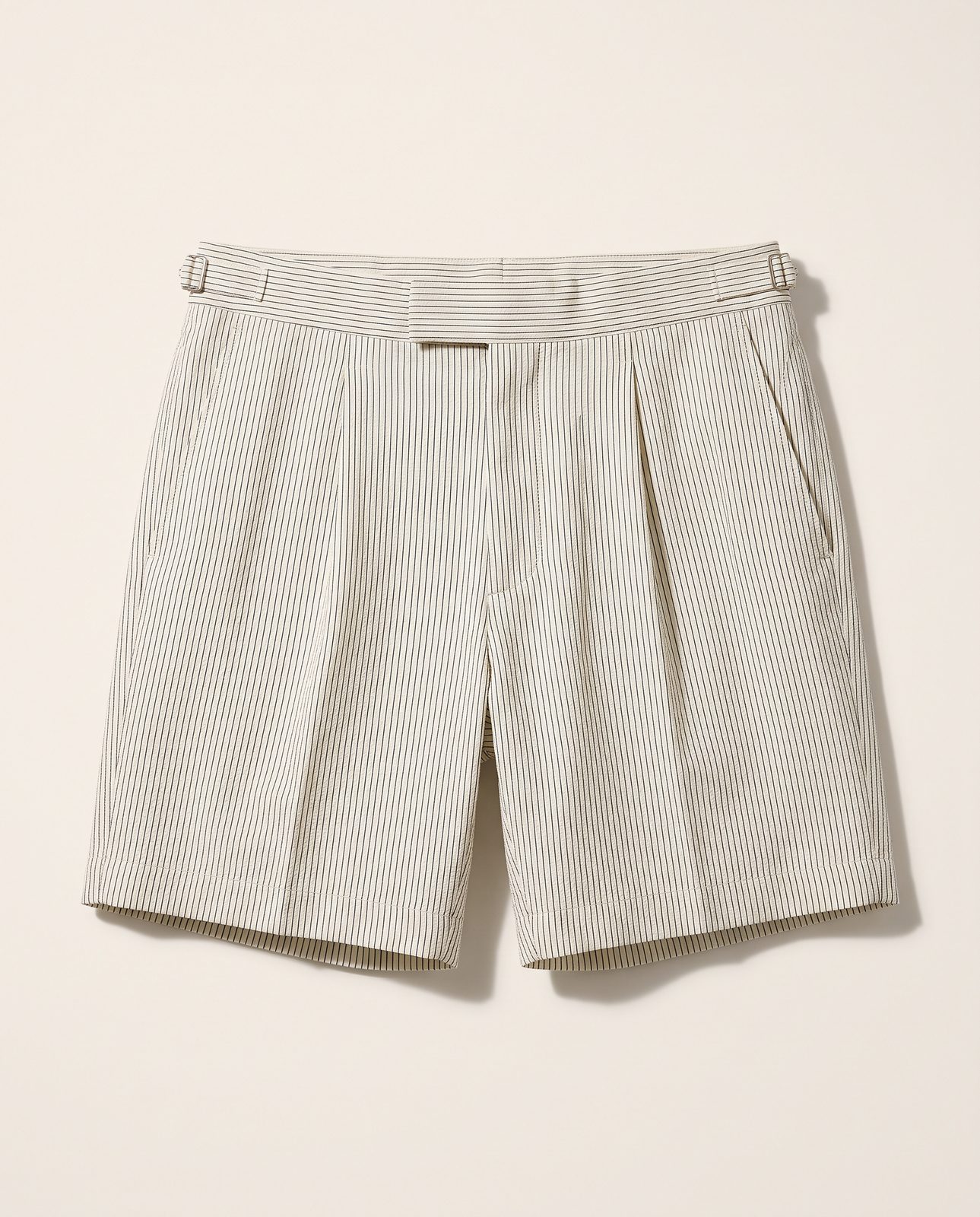
Our own shorts — Mykonos, Hamptons, Capri and St Tropez, all €65 — are cut as trunks, between 5 and 7 inches, because that is what most of our customers actually do: swim, eat, swim again. We do not sell a surf short, and we say so rather than pretend a lighter garment will behave like one.
- Beach holiday, pool, boat: trunks.
- Surf, paddle, long water days: board shorts.
- One pair for everything: mid-length trunks in navy, olive or bone.
Frequently asked questions
Are board shorts and swim trunks the same thing?
No — trunks are shorter and lighter, usually with an elastic waist and a liner. Board shorts are longer, denser and built with a fixed waist for surfing. The words get used loosely, but the garments behave very differently when wet.
Can you swim in board shorts?
Yes, and they are the better choice for surf and open water. They are heavier and slower to dry, so they are less comfortable for a pool or a hot beach where you want to be dry again in half an hour.
Do swim trunks need underwear underneath?
Not if they have a mesh or compression liner, which most trunks do. Without a liner, wear a swim brief rather than cotton underwear, which holds water and stays damp. Check the label before you travel.
How long should board shorts be?
For surfing, a hem at or just above the knee, about 20 cm inseam, keeps the rail from rubbing your thigh. For casual wear, shorter is easier to walk in. Anything below the knee will catch your calf with every step.
Which dries faster, trunks or board shorts?
Trunks, usually in 20 to 30 minutes in sun against 90 minutes or more for a coated board short. The gap widens indoors, where a heavier short may still be damp the next morning.