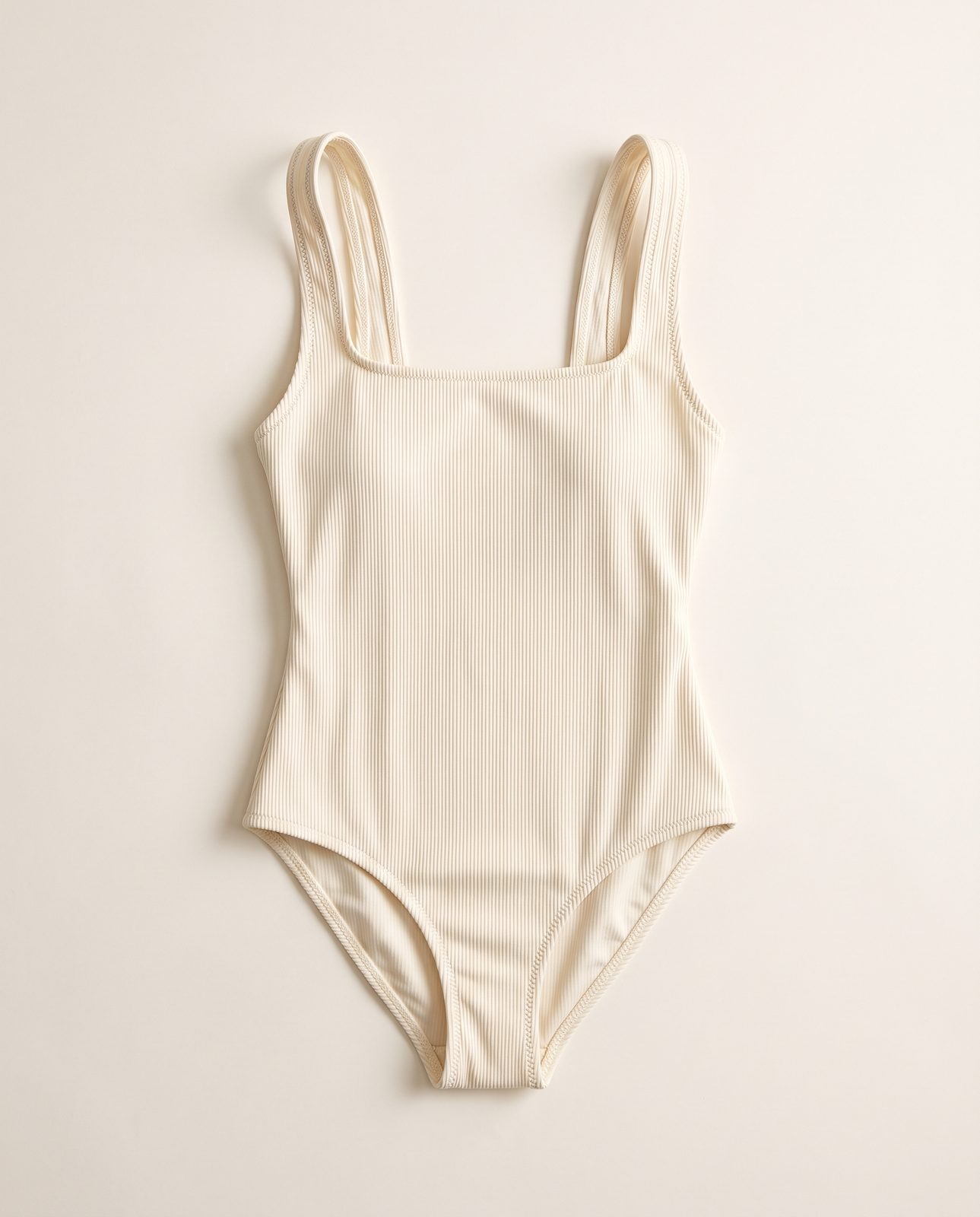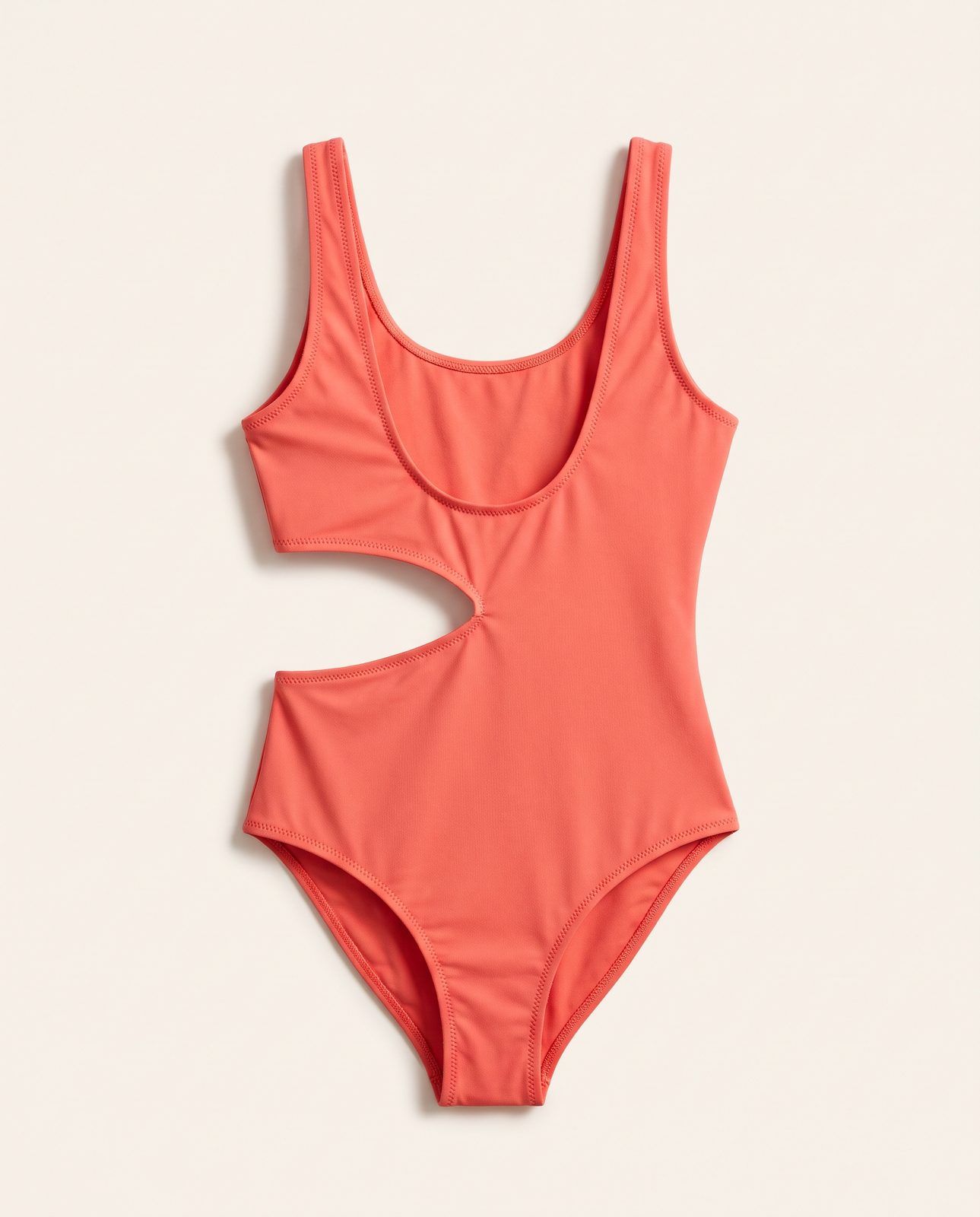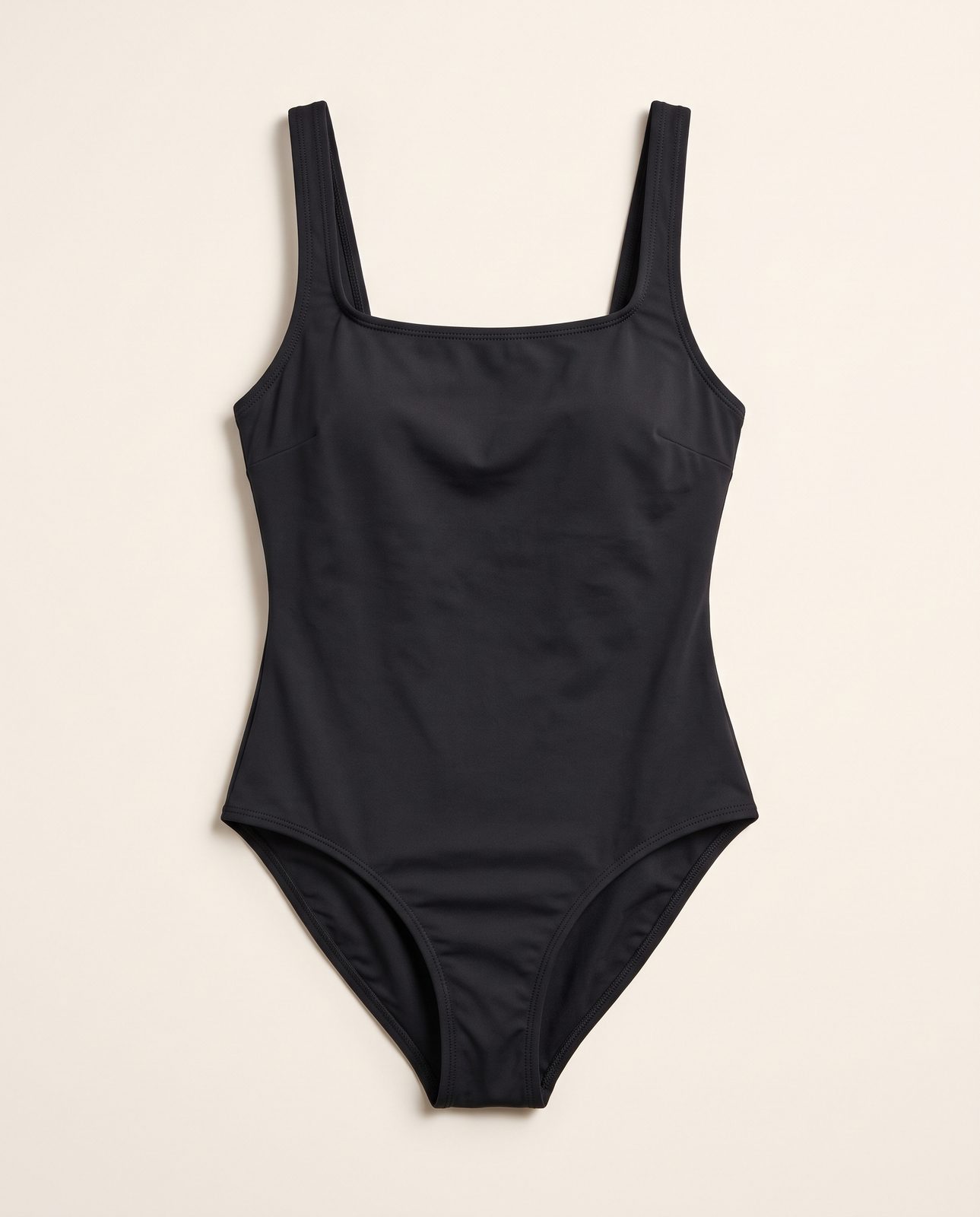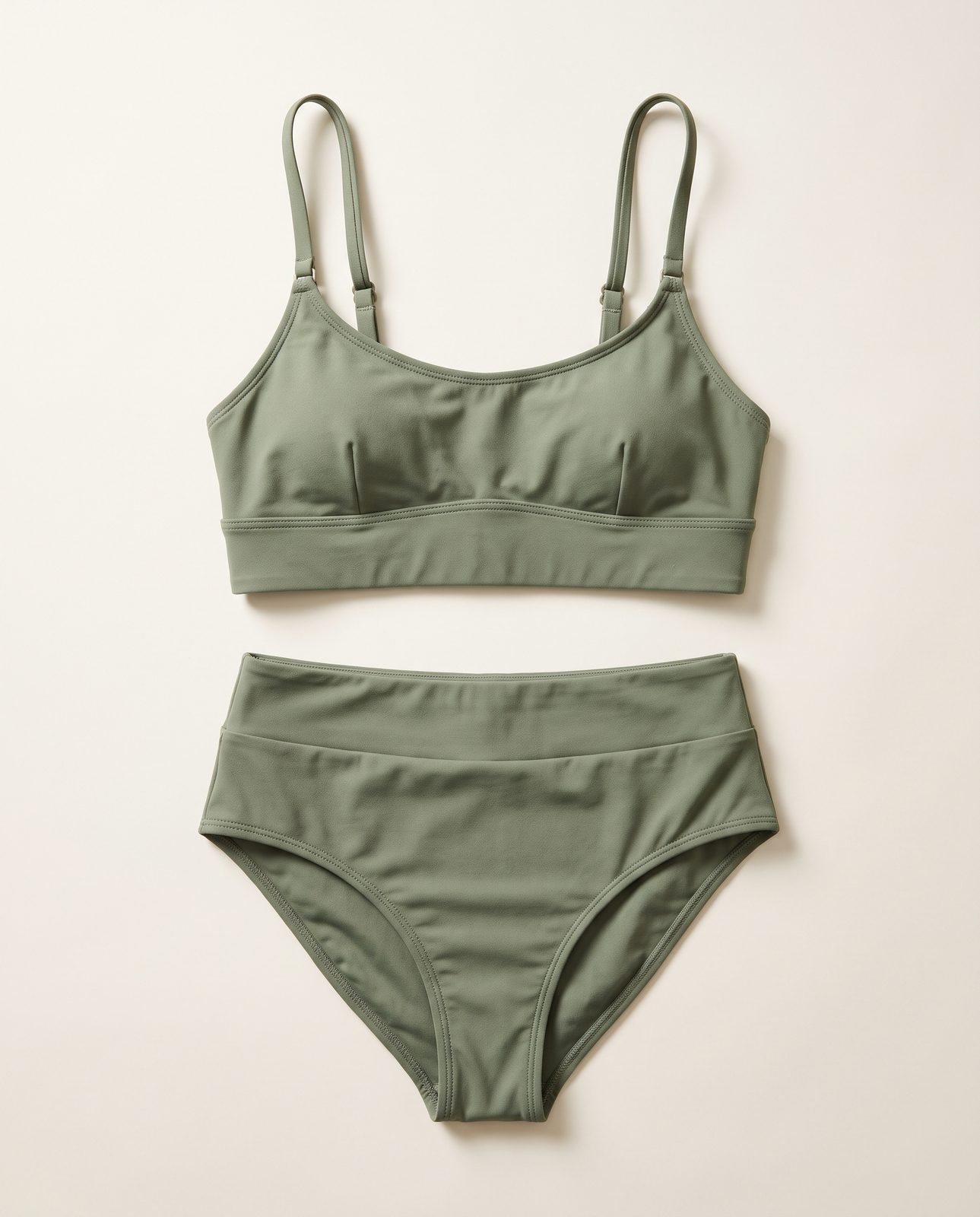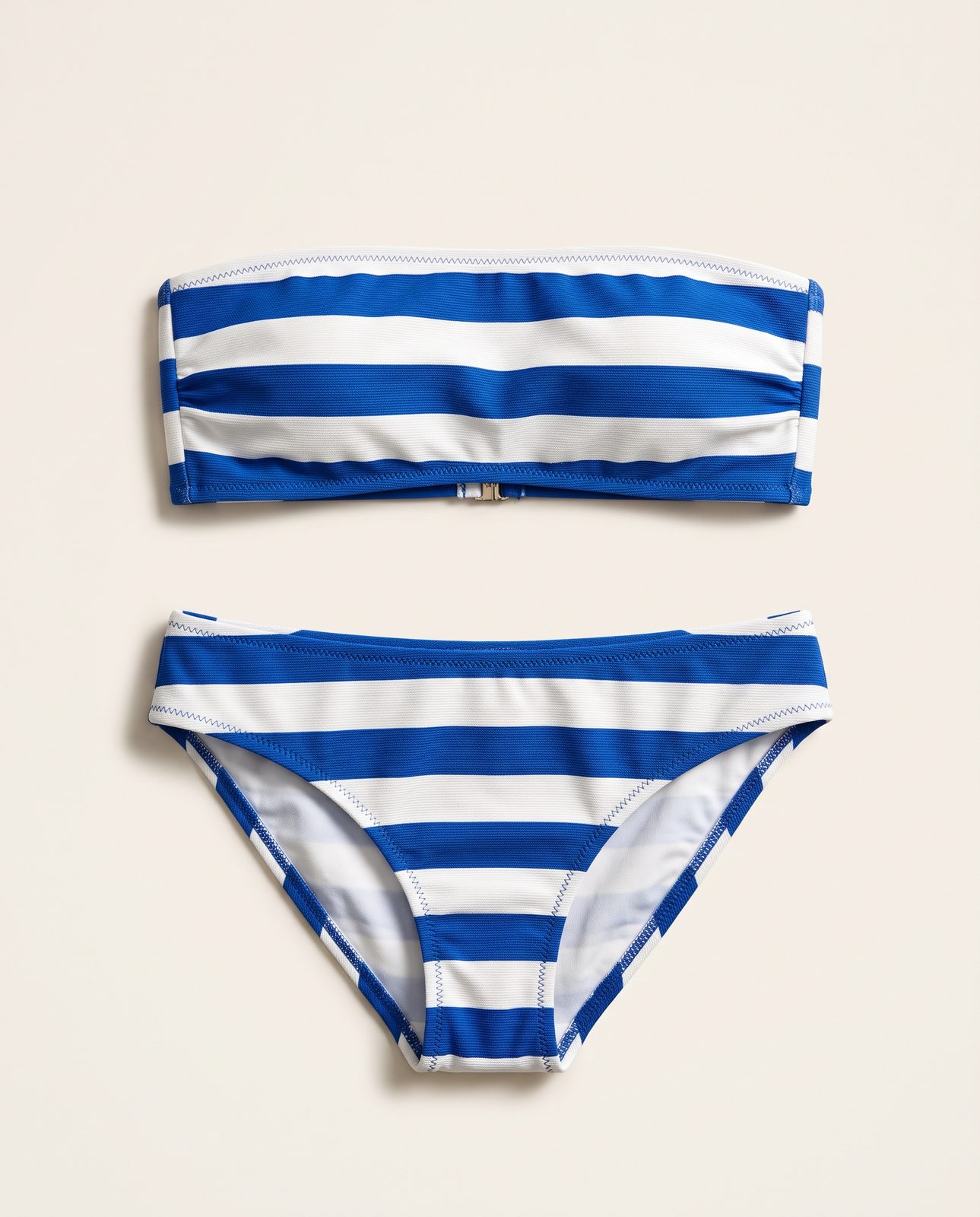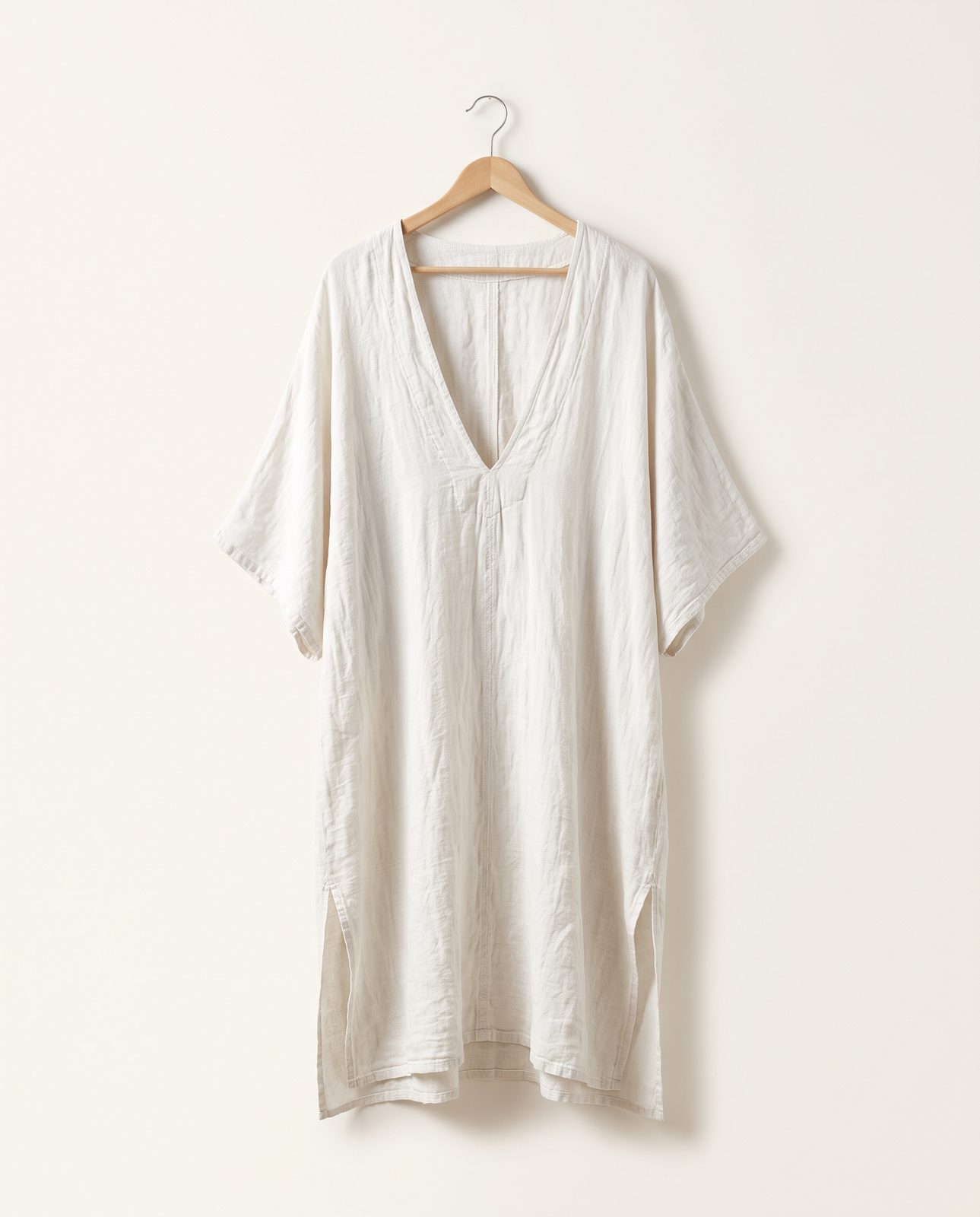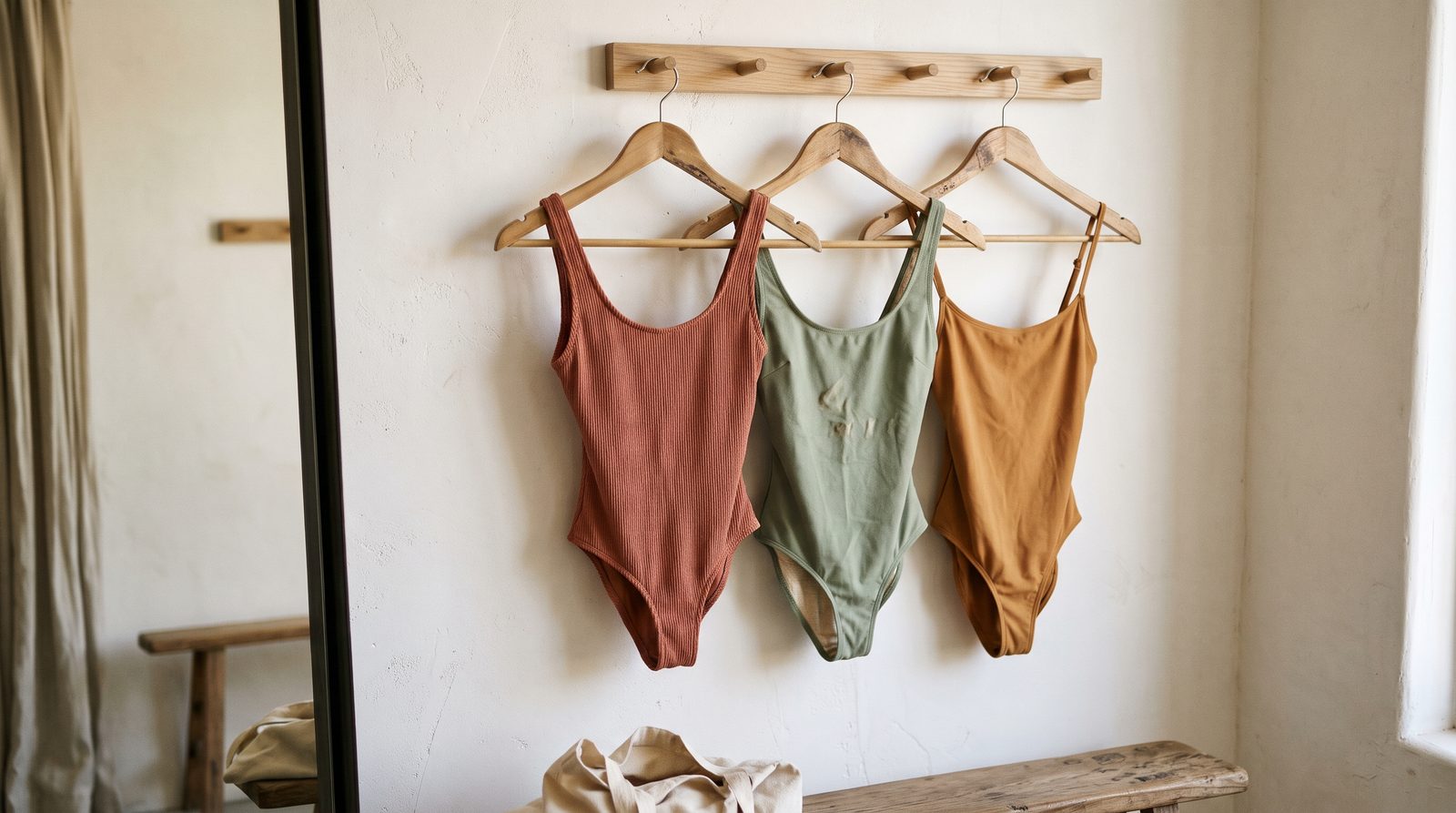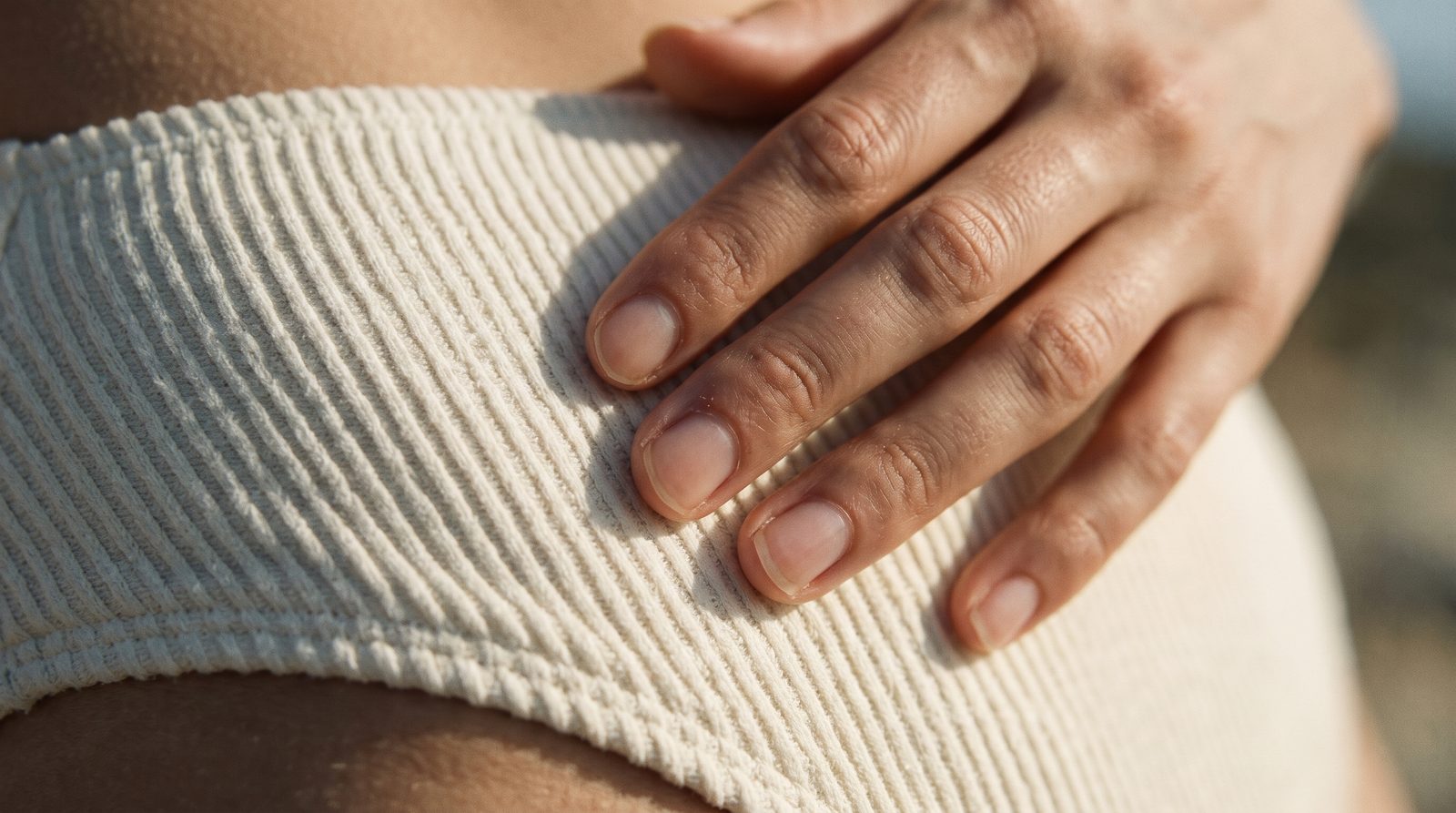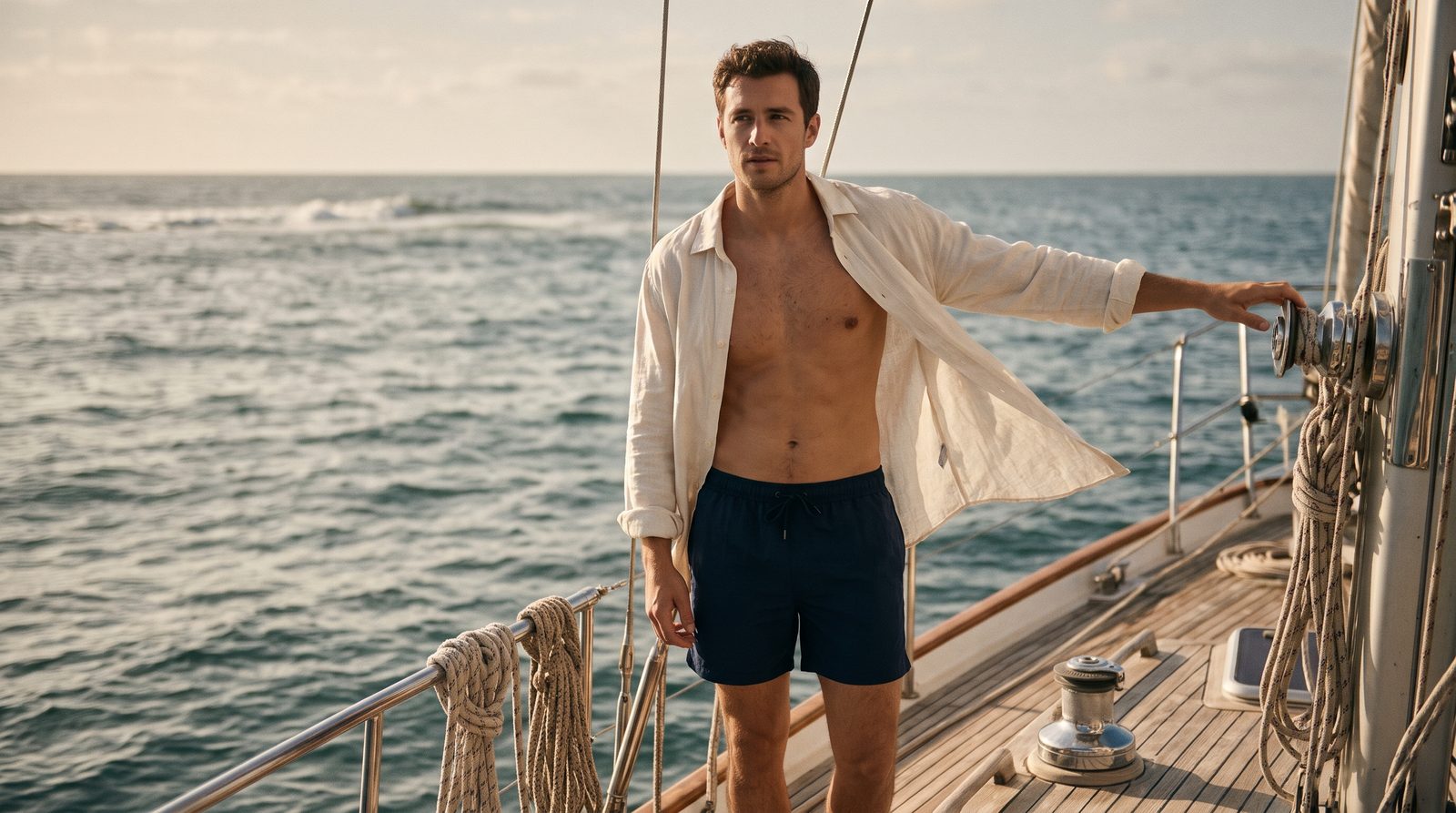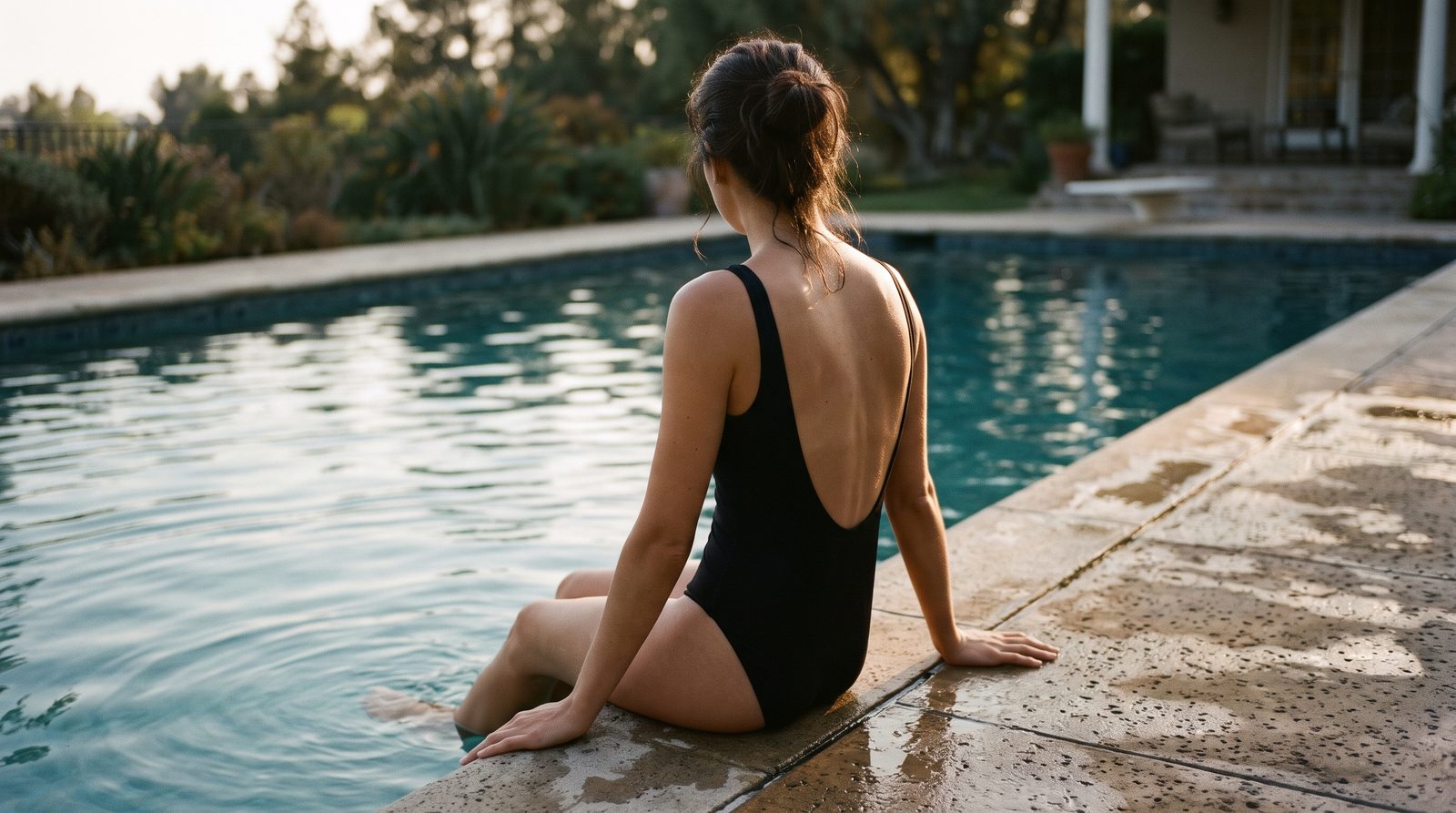
One-piece or bikini is not a personality test. The useful question is what you will do in the suit: swim 1,500 m, lie on sand for three hours, or stand in the shallow end with a drink. Each of those asks something different of the fabric, the straps and the fit.
We sell both, in the same fabrics and the same size grades, so this comparison is not about which is better. It is about the six differences customers actually notice after a summer, from tan lines to how a suit behaves in a chlorinated pool at 27 °C.
Coverage, movement and the swim you have planned
For laps, a one-piece wins on drag. A well-fitted suit in 220 gsm fabric adds very little resistance, while a bikini top that shifts 2 cm per stroke forces you to stop and adjust. If you swim more than 800 m at a time, choose a cross-back one-piece with a shelf or seamed cup.
For sunbathing, a bikini is simpler. Less fabric means fewer strap marks, easier reapplication of SPF 30 and a faster dry. For a day with children, wind or a boat, a one-piece stays where you left it, and a high-neck style removes the need to check yourself every 10 minutes.
Tan lines and sun exposure
A bikini gives you options: straps down for 20 minutes, then up again, and the lines fade faster. A one-piece draws a fixed shape, which is fine if you like it and annoying if you have a wedding in 3 weeks. Neither protects you from the sun; fabric only covers what it covers, and you still need to reapply cream every 2 hours.
Pale suits are worth a thought here. An ivory or white suit reflects light and stays cooler to sit on, but it shows sand and sunscreen marks. Rinse it in cold water the same evening and most marks lift; leave it until Monday and they set.

The practical differences nobody mentions
Sand is the obvious one. A one-piece traps it at the leg opening and holds it there; a bikini lets you shake it out in 5 seconds. Wind is the reverse: a loose triangle top lifts, while a fitted one-piece does not. Bathrooms favour the bikini, especially in a beach bar with a queue.
Changing is easier in two pieces, and so is mixing sizes, which is why our separates are sold individually. If you are between sizes on top and bottom, a bikini solves in one order what a one-piece cannot solve at all.
One-piece vs bikini: sizing behaves differently
A one-piece is graded on torso length as well as bust, waist and hip, so 2 cm of extra torso can turn a good fit into shoulder ache. Bikini bottoms are graded on hip and rise instead: our high-waist style sits 11 cm above the waist, while a standard brief sits at 7 cm.
In practice, most people take their usual size in a bikini and one size down in a one-piece, because knit swim fabric needs to sit closer than woven clothing. Always check the fit note on the product page, where we list the model's height and the size she wears.
One more difference: a one-piece has a fixed proportion between top and bottom, so a long torso and short legs or the reverse can pull the waist seam off centre. If you regularly find waist seams sitting 3 cm too high, separates will fit better. If you find bikini tops riding up all day, the one-piece solves it in one garment.
Chlorine, salt and how long each lasts
Both styles age at the same rate if they are made of the same fabric: around 5% of stretch lost after 60–80 hours in a chlorinated pool. The difference is where it shows. A one-piece fails at the leg and shoulder seams, where the fabric is under constant tension; a bikini fails at the elastic in the top band.
A bikini also gets a second life. If the top stretches, the bottoms still work with another top, and vice versa. Rinse both in cool water within 30 minutes, dry flat in shade, and never leave a wet suit in a bag overnight; 12 hours in a hot car is enough to set a chlorine smell permanently.
Cost, packing and the two-suit rule
Our one-pieces run €85–99 and bikinis €92–95, so price is not the deciding factor. Weight is: a one-piece in size M weighs around 180 g dry, a bikini around 130 g, and a linen cover-up adds 240 g. For a carry-on, two bikinis plus one one-piece covers a week in under 450 g.
If you swim daily and sunbathe at weekends, buy one of each rather than two of either. Alternating suits gives each one 24 hours to recover its stretch, which is the single easiest way to make a swimsuit last a third summer instead of one and a half.
Frequently asked questions
Is a one-piece or bikini better for swimming laps?
A one-piece, because there is nothing to shift mid-stroke and less drag at the hips. Choose a cross-back style with wide straps for anything over 800 m.
Do bikinis or one-pieces last longer?
About the same in fabric life, roughly 60–80 hours of chlorinated swimming before stretch drops 5%. A bikini is more flexible afterwards because each piece can be worn with something else.
Should I size down in a one-piece swimsuit?
Often yes, by one size from your dress size, because the knit needs to sit close to stay put. Check torso length first, since a short torso can make a correctly sized suit feel too small.
Can I mix bikini top and bottom sizes?
Yes, and you should if your bust and hip measurements fall in different sizes. Our bikini tops and bottoms are sold separately so you can order each by its own measurement.