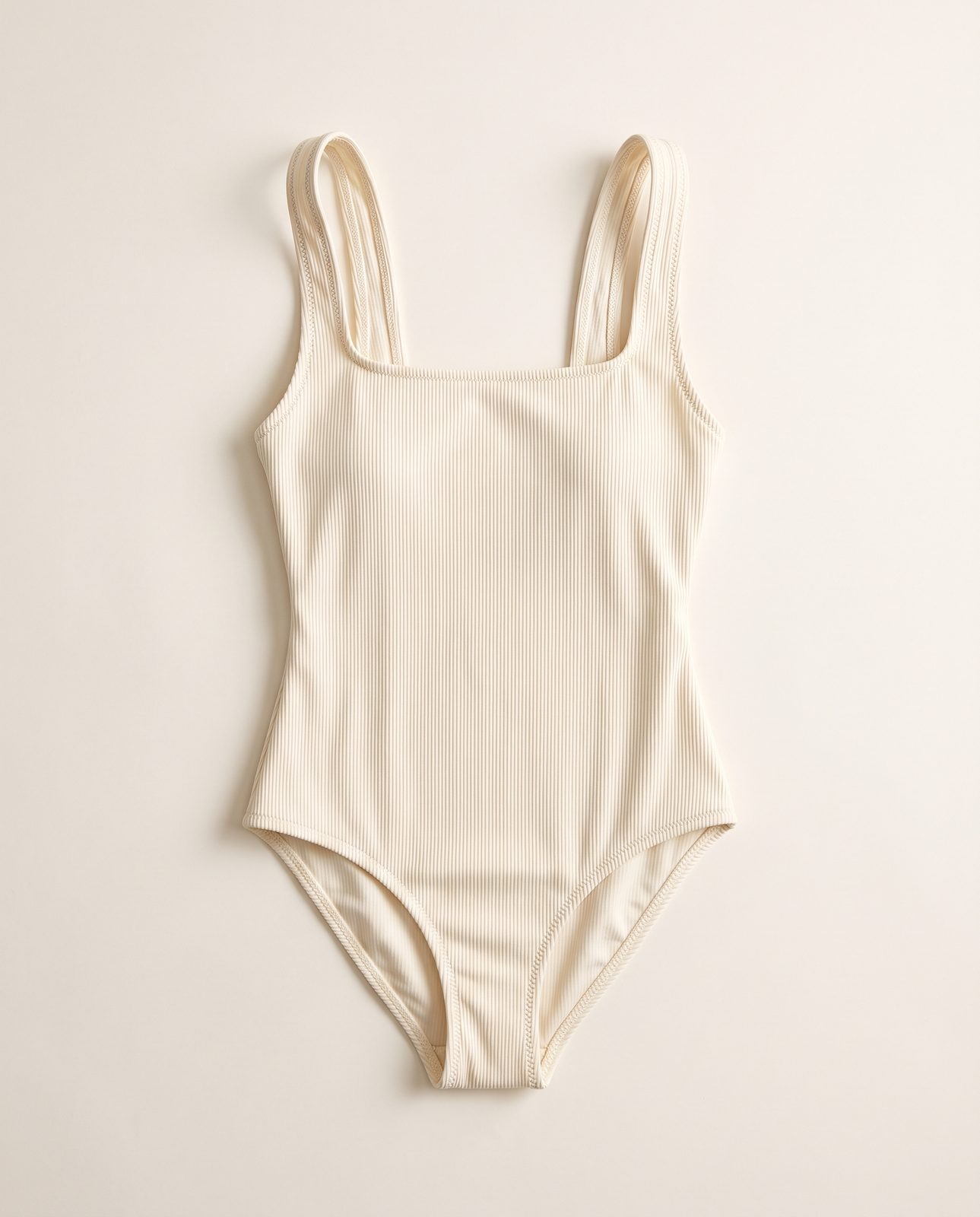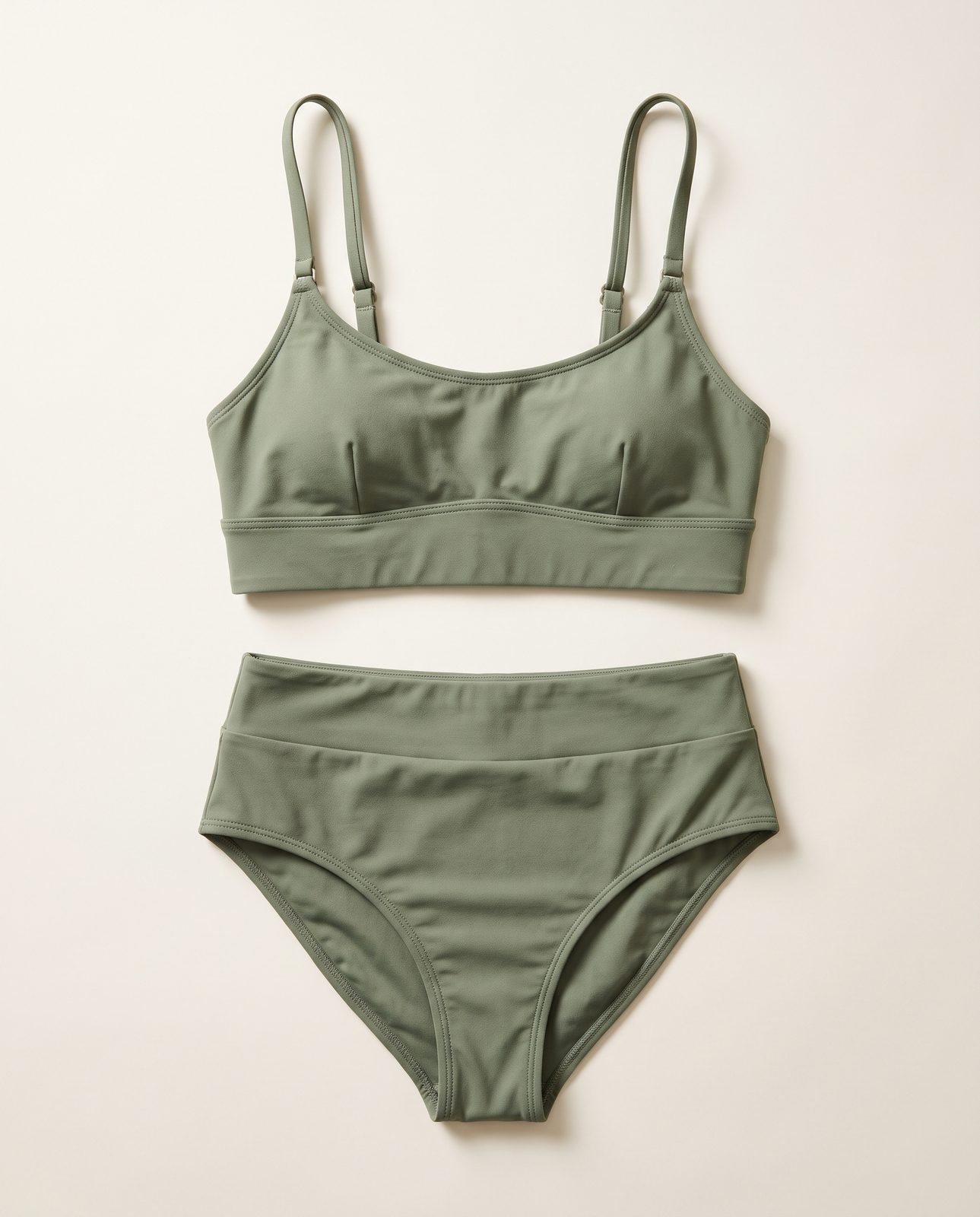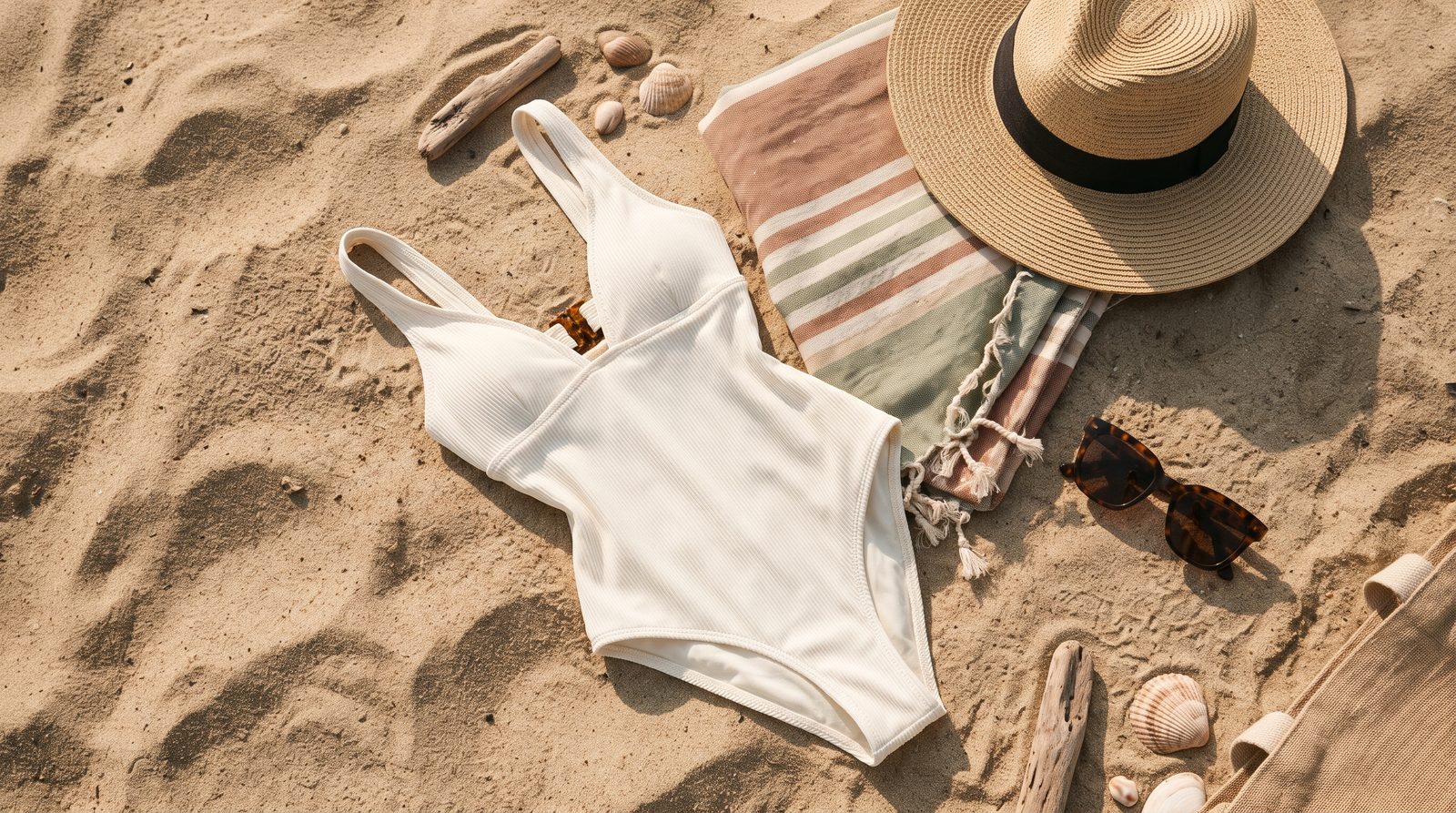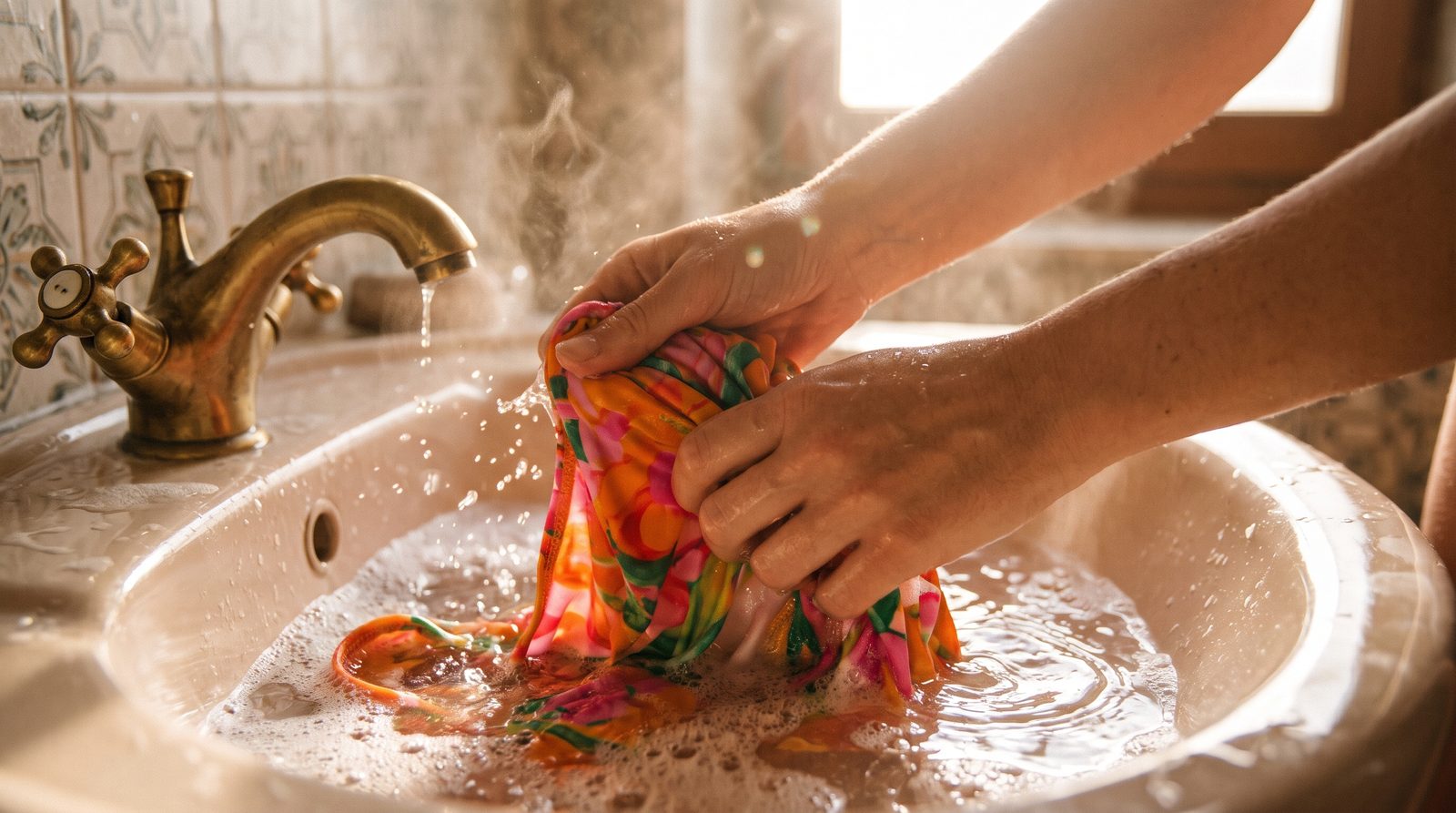
Knowing how to wash swimwear by hand takes five minutes and costs about two cents of detergent. The routine is 5 litres of water at 30°C or below, 5 ml of mild liquid detergent, a ten-minute soak, two rinses, and drying flat in shade. What damages a suit is not the washing but everything around it: hot water, wringing, hanging by the straps, and a fortnight in a drawer before the next wear.
Chlorine, sunscreen and body oils all bond to elastane and polyamide, and the bond sets faster while the fabric is warm. A machine cycle at 40°C with a 1,200 rpm spin will cut the life of a suit roughly in half, mostly through agitation and heat rather than the detergent.
How to wash swimwear by hand, step by step
Fill a basin with 5 litres of cool water — 30°C is comfortable to the wrist and warm enough to lift sunscreen. Add 5 ml of mild liquid detergent, roughly a teaspoon, and agitate before the suit goes in. Turn it inside out, press it under the water a few times, and do not scrub or hold it under a running tap, which stretches the straps.
Leave it for ten minutes, then squeeze the water through the fabric section by section: cups, lining, leg openings, straps. Rinse in clean cool water twice, refilling the basin rather than running the tap. The second rinse should be clear and free of suds; if it still foams, rinse again, because detergent left in the fibre holds chlorine against the skin.
- 5 litres of water at 30°C or below
- 5 ml mild liquid detergent, never powder
- Ten-minute soak, no scrubbing
- Two full rinses until the water runs clear
- Squeeze, never wring
Why hand washing beats the machine
A front-loader's drum turns at 40–60 rpm, then spins at 1,200–1,600 rpm. Even in a mesh bag, that spin forces water through the knit at speed, and elastane filaments break where chlorine has already stressed them. The result is a suit that still looks fine but sags at the seat after one season, or a white suit with a grey bloom along the seams.
Then there is the hardware. Zips, hooks and bra clasps from other garments catch on fine swim fabric, and one pull can lift a thread across the front of a one-piece. Hand washing removes both risks and lets you inspect the seams, cups and strap anchors every week.
Detergent, and what not to put in the water
Use a mild liquid detergent with a neutral pH, the kind sold for delicates or wool. Biological powders contain enzymes that weaken polyamide over repeated washes and are hard to rinse out of padded cups. Fabric softener is worse: it coats the fibre, traps chlorine and reduces stretch recovery.
Never use household bleach on white swimwear. Sodium hypochlorite yellows polyamide and destroys elastane; a white suit treated with bleach goes cream within a month. For genuine whitening, use oxygen bleach — 15 g of sodium percarbonate in 2 litres of water at 40°C for two hours — and only on white, unprinted fabric. Colour suits get the plain wash.
Drying flat, and why the towel matters
Lay the suit on a dry towel, roll the towel from one end with the suit inside, and press down with your palms. The towel takes up most of the water in about 30 seconds. Then unroll, reshape the cups and straps, and lay the suit flat on a drying rack in shade. Indoors at 20°C it dries in three to four hours; in sun, closer to 90 minutes.
Never hang a wet suit by its straps: a soaked one-piece weighs 400–600 g and the straps stretch by a centimetre within a few hours. Never dry it on a radiator, which bakes in creases, and never fold it damp — that is how the sour smell starts.
- Roll in a towel, press, do not twist
- Reshape cups and straps while damp
- Dry flat in shade, 3–4 hours indoors
- Never on a radiator or over a door
- Never folded while damp
Sunscreen, sweat and hard water
Sunscreen is oil-based and does not dissolve in cool water alone. If a suit feels slick after a wash, add 2 ml more detergent and soak for twenty minutes at 35°C. On white fabric, a yellow mark along the neckline and under the arms is usually oxidised sunscreen rather than chlorine; a bicarbonate paste left for ten minutes lifts most of it.
Hard water leaves a grey film that makes white suits look tired. Above 250 mg/L calcium carbonate, add 30 ml of white vinegar to the rinse water; it softens the water without leaving a smell once dry. Do not add vinegar to the wash itself, since it reduces the detergent's effectiveness.
How often, and when to stop washing
Rinse after every wear and hand wash after every two or three, or after any pool session. A suit worn twice a week and washed this way lasts about two seasons before the elastane starts to go; the same suit machine-washed weekly often lasts one. Check the strap anchors and the seat seam each time you wash — once the stitching looks fuzzy, the suit is close to failing.
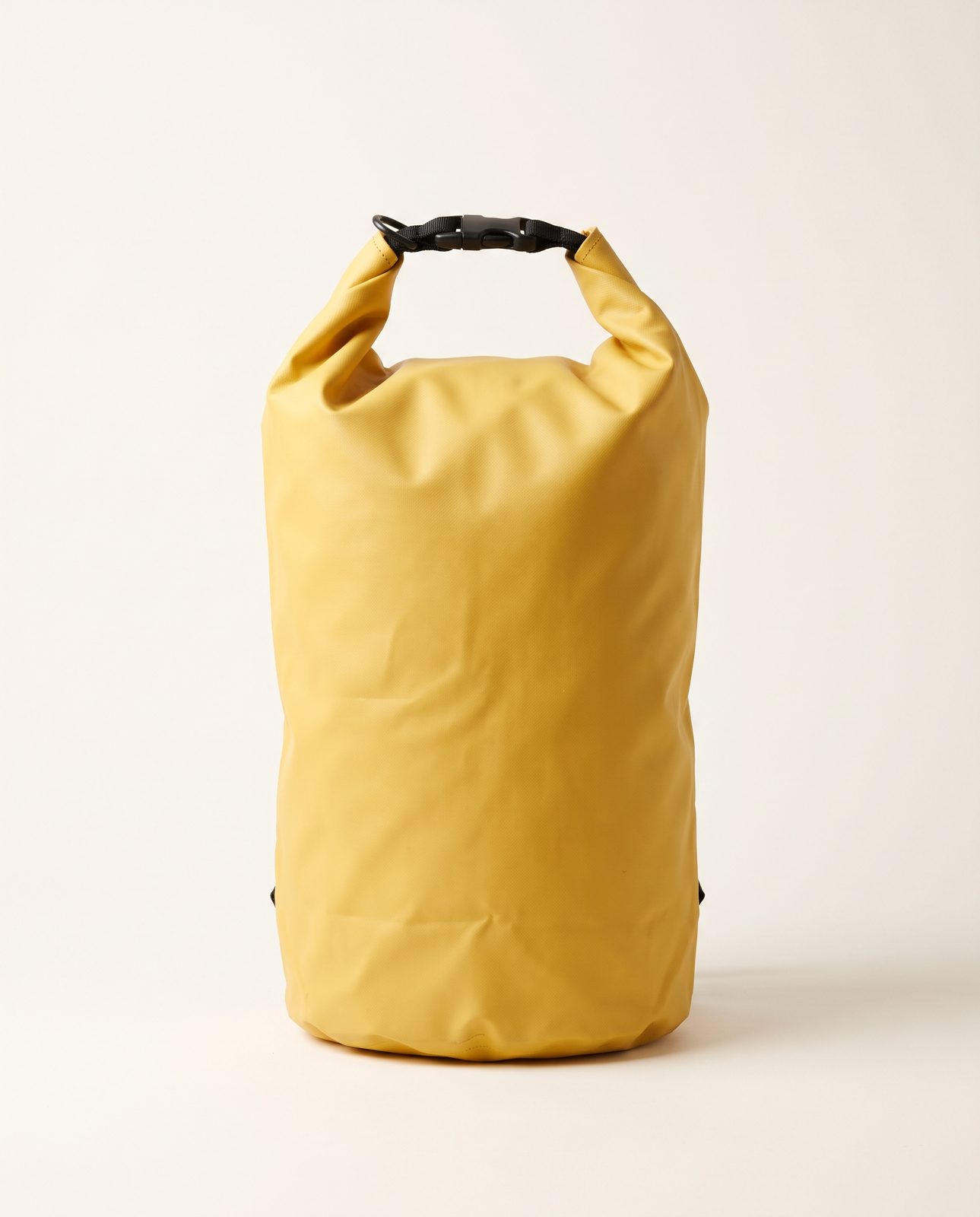
Between trips, store suits flat in a drawer rather than on a hanger. A waterproof dry bag is useful for carrying a damp suit home, but take it out and dry it the same evening: the bag is for the journey, not the storage.
Frequently asked questions
Can I wash swimwear with regular detergent?
A mild, neutral liquid detergent is fine; biological powder and anything with fabric softener is not. Use about 5 ml in 5 litres of cool water and rinse twice. Strong detergent leaves residue that holds chlorine against the fibre.
How do you dry a swimsuit without stretching it?
Roll it in a dry towel, press out the water, reshape the cups and straps, and lay it flat in shade. Never hang it by the straps while wet, since a soaked suit weighs 400–600 g. Indoors it dries in three to four hours.
Is it OK to put a swimsuit in the washing machine?
Occasionally, in a mesh bag on a 30°C delicate cycle with the spin turned down. Doing it weekly will shorten the suit's life, because the spin and agitation break down elastane. Hand washing is gentler and takes about five minutes.
How do I get sunscreen stains out of a white swimsuit?
Soak in 5 litres of 35°C water with 7 ml of detergent for twenty minutes, then apply a bicarbonate paste to the mark for ten minutes before rinsing. Avoid bleach, which yellows polyamide. Repeat once rather than scrubbing.
How long should a swimsuit last?
About two seasons of twice-weekly wear with hand washing. Chlorine, hot water and machine spinning are the main shortenings. Once the straps lose snap or the seat seam looks fuzzy, the elastane is failing and washing will not bring it back.