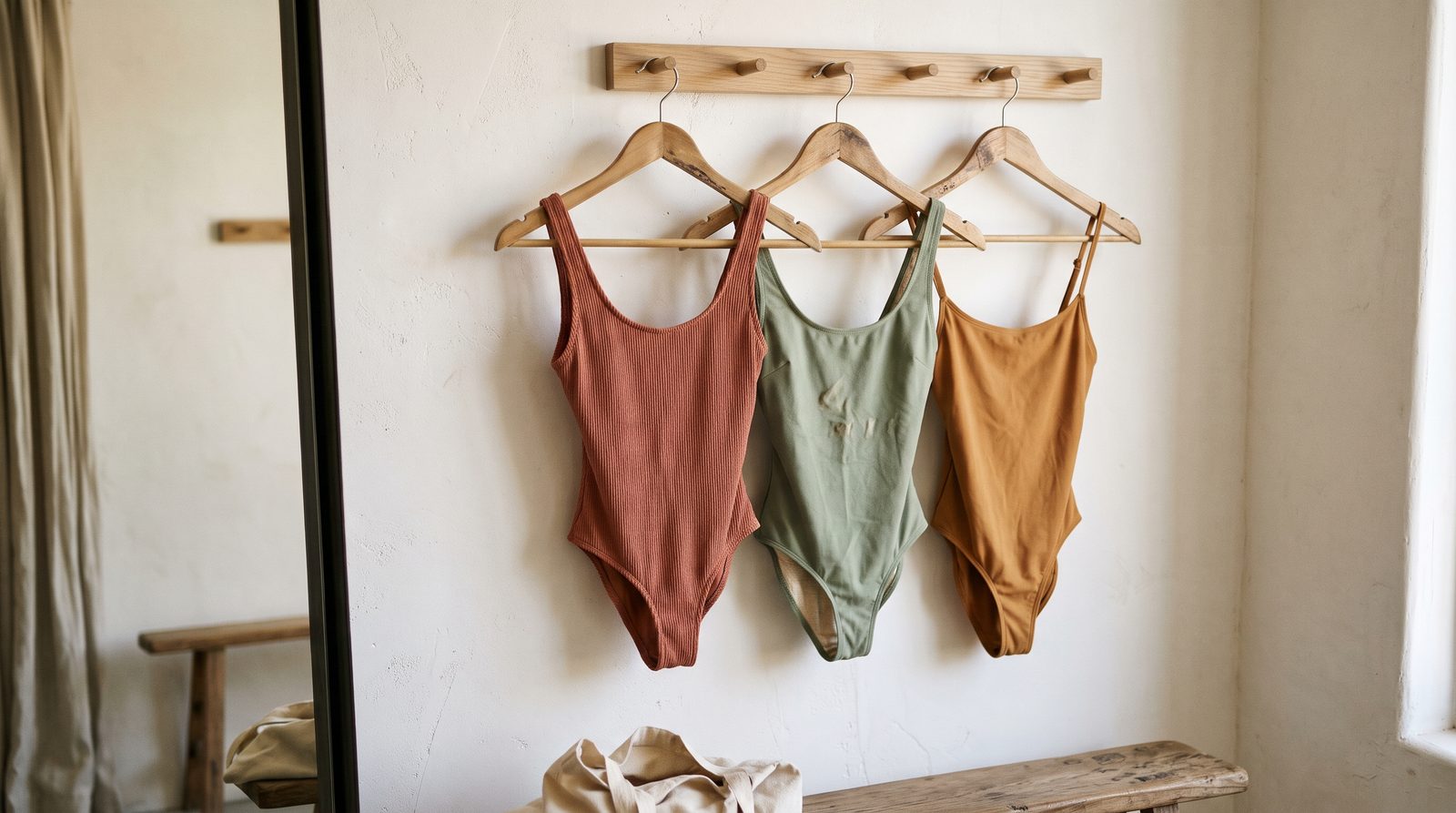
Learning how to stop swimsuit stretching starts with accepting one thing: elastane does not come back. The 15–22% of the fabric that provides all the stretch loses a little recovery with every hot wash, every hour in a tumble dryer and every night spent hanging wet by one strap. You cannot reverse that, but you can slow it down enough to get several seasons instead of one.
The first sign is rarely a hole or a fade. It is a seat that stays baggy when you stand up, leg openings that gape in the water and straps that have quietly grown 2 cm longer than they were in June. Catching it early tells you whether the problem is the suit or the size.
How to stop swimsuit stretching: fit or fatigue?
Put the suit on and stretch a panel of fabric 10% wider than it sits, then let go. If it snaps back within a second, the elastane is still doing its job and the looseness is a sizing issue. If it returns slowly, or stays slightly rippled, the fibre is tired.
A new suit that is loose everywhere was the wrong size from the start. A suit that fits at the bust but sags at the seat after 20 wears has stretched where it carries the most load, which is almost always the seat, the straps and the top edge of a bandeau.
Heat is the biggest single cause
Elastane begins to lose recovery above 40°C. A 40°C wash is already at the limit, a tumble dryer at 60–70°C is well past it, and a radiator, a hot car or a 39°C hot tub will do the same job in less time. Warm water also opens the knit, so the fabric is under load exactly when it is most fragile.
The practical rule is simple: nothing above 30°C ever touches the suit, and the dryer is not an option. If you need it dry in a hurry, roll it in a towel, stand on the towel and then lay the suit flat in front of a fan.
- Wash at 30°C or cooler, never 40°C
- No tumble dryer, no radiator, no hairdryer
- Do not leave a wet suit in a hot car
- Rinse out of a hot tub as soon as you get out
Wash cool and skip the softener
Five millilitres of mild liquid detergent in 5 litres of cool water is enough for one suit. More detergent does not clean better; it leaves residue that stiffens the knit and makes the fibres rub against each other, which is the beginning of pilling and thin patches.
Fabric softener is worse than extra detergent. It leaves a waxy film on the elastane that reduces recovery and traps chlorine and body oils in the lining, so a suit can feel soft and still sag. Rinse twice and press the water out between flat palms instead.
Never hang a wet swimsuit by its straps
A wet one-piece can weigh 500 g, and gravity pulls all of that weight through two narrow straps. Do it ten times and the straps are longer; do it all summer and the whole front panel has dropped. The same applies to drying over a shower rail, where the suit folds at the waist and dries into a crease.
Lay it flat on a rack, reshape the cups and straps while it is damp, and turn it once after an hour. Pegs on the leg openings leave small stretched points that never quite recover, which is why a drying rack beats a washing line for swimwear.
Rotate two suits and let them rest
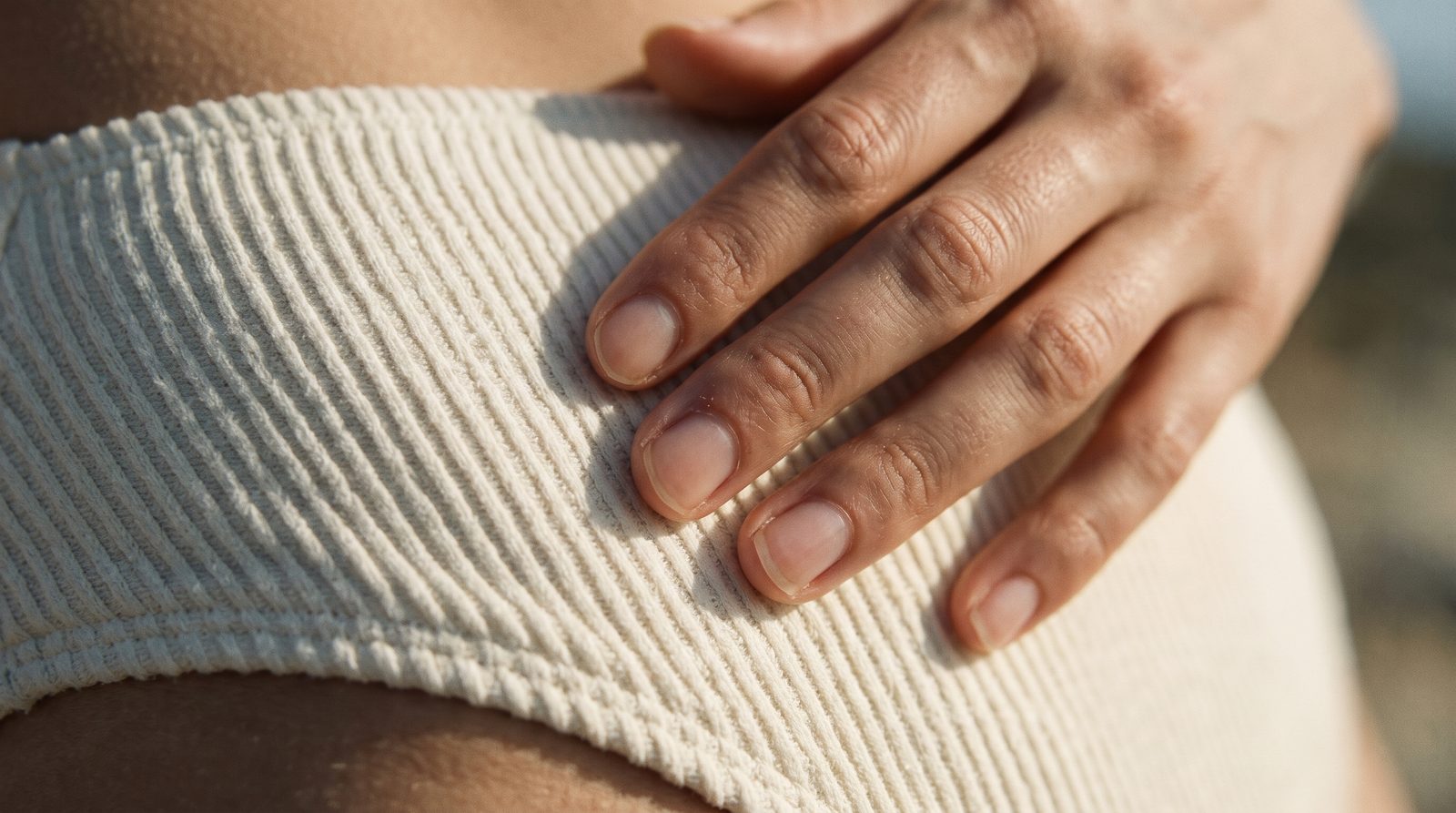
Elastane needs about 24 hours to recover its shape after a day of wear. Wearing the same suit every day means it never gets that rest, so it stays slightly stretched and the next wear stretches it a little further. Two suits worn alternately outlast one worn daily by roughly double, which is cheaper than replacing a suit every summer.
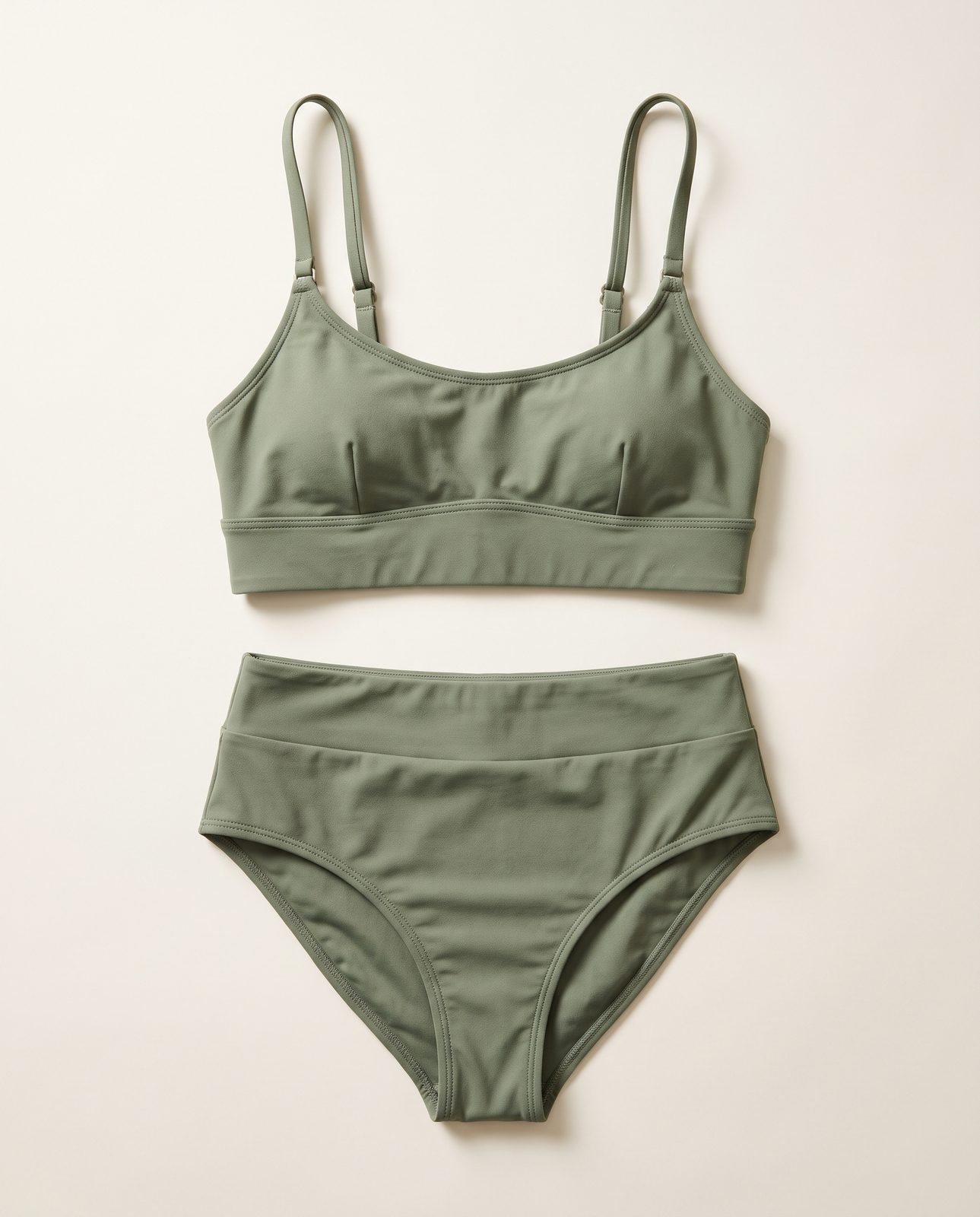
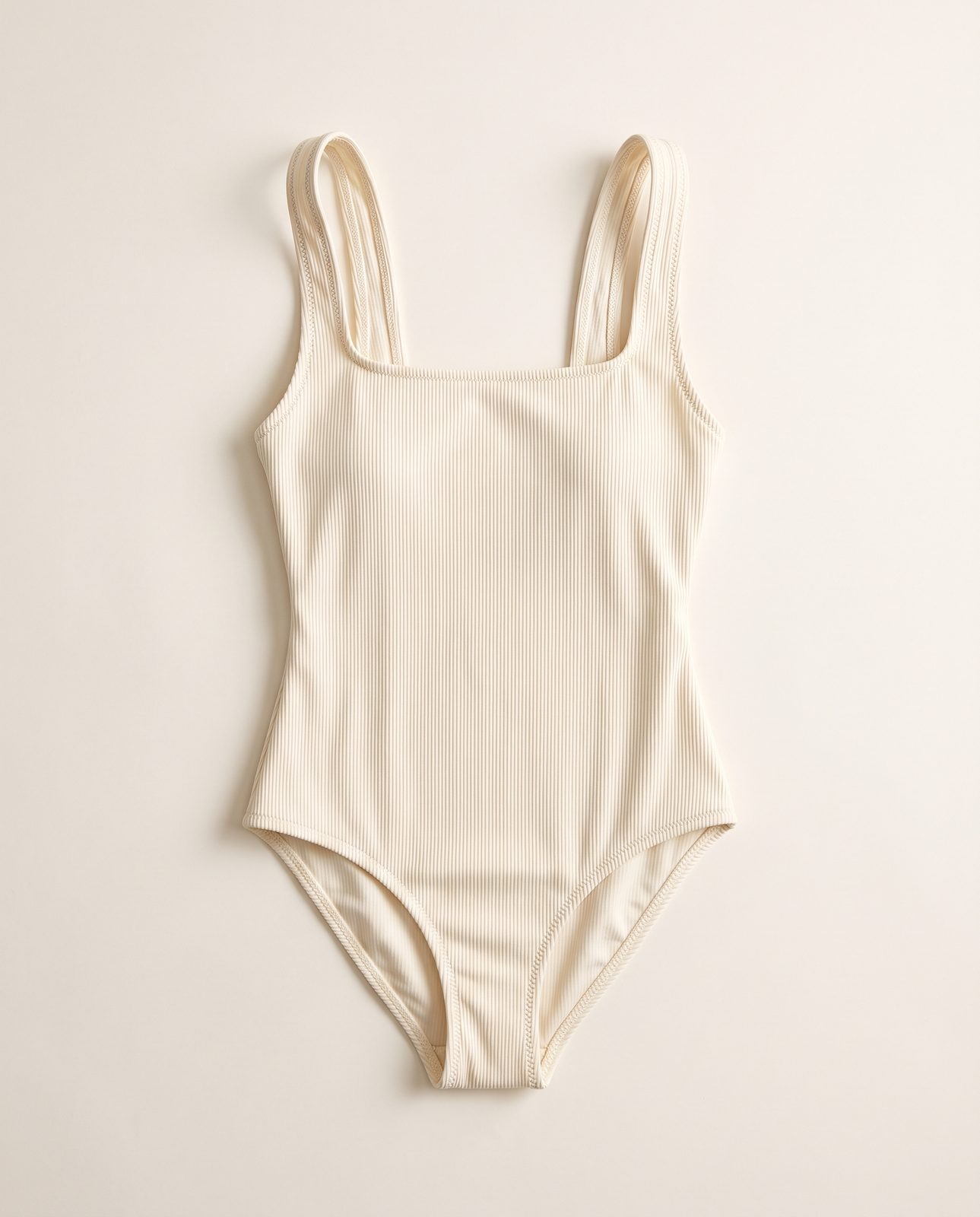
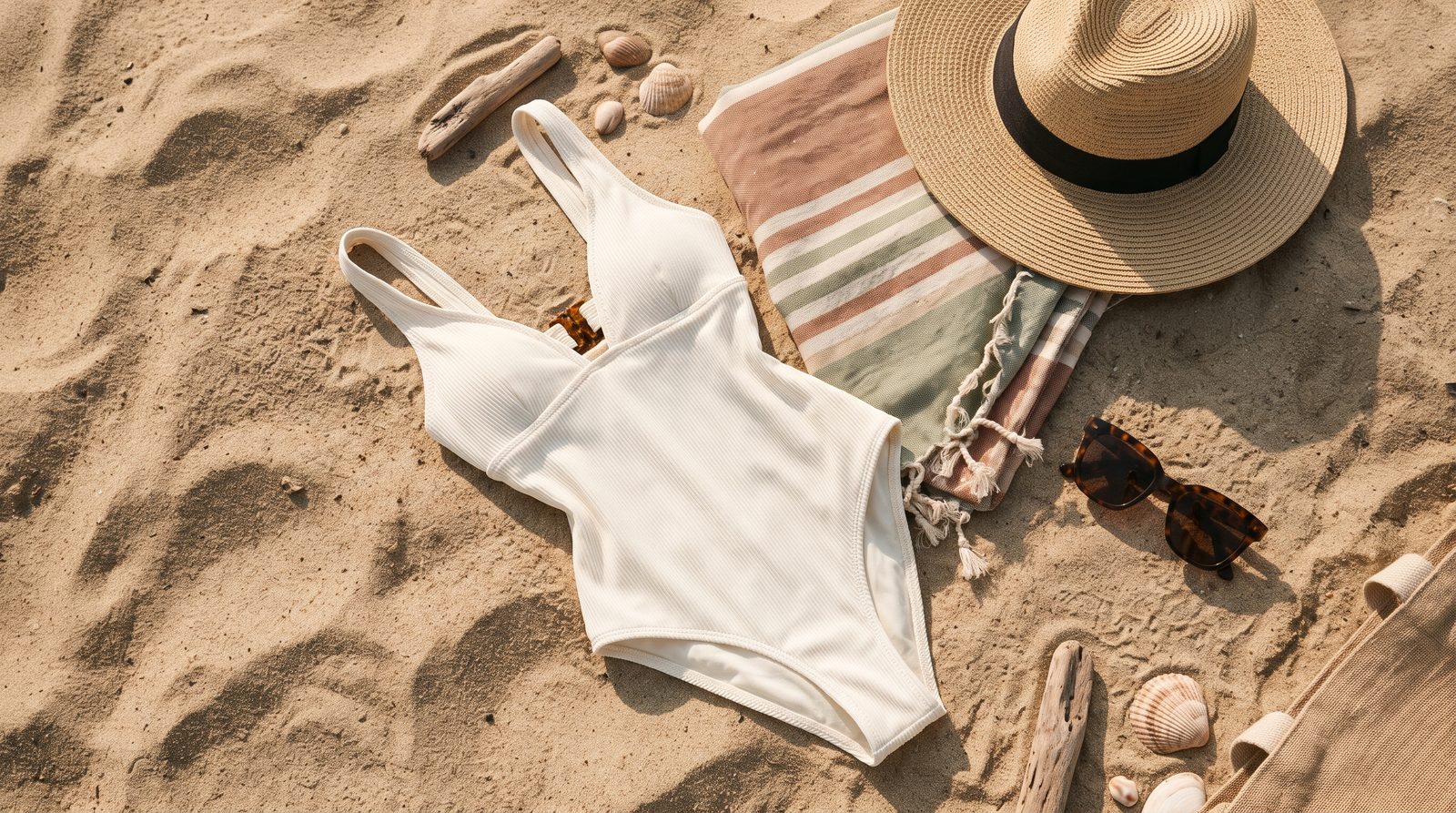
On holiday, rinse both at night and dry them flat side by side. Our sage high-waist bikini and ivory ribbed one-piece dry in under an hour in shade, so a two-suit rotation does not need extra space on the rack.
Buy the size that fits without stretching
A suit that is too small is under tension before you even move, which is why the seams and straps fail first. Measure your bust, waist and hip and compare them with the size chart rather than the number you wear in a dress, because swim sizing runs differently across brands.
The hip measurement is the one people skip. Take it at the fullest point, roughly 20 cm below the waist, and choose a size at least 2 cm larger than your body so the knit holds you rather than grips you. If the straps lift more than 3 cm off the shoulder when you pull them, the torso is too short for you.
- Hip: measure the fullest point, 20 cm below the waist
- Torso: under 58 cm is short, over 64 cm is long
- Straps should lift 2–3 cm, not 5 cm, when tested
- Squat and raise your arms before removing the tags
What you can repair, and when to replace
A tailor can shorten stretched straps by 1–2 cm and take in side seams, which rescues a suit that has loosened evenly. Sewing cannot rebuild a sagging seat, because the fabric itself has lost recovery, and no hot-water soak or dryer trick will bring it back for more than a single wear.
Replace when the suit stays baggy after washing, when the seat looks shiny and thin, or when you can see the lining through the outer fabric. With cool washing, flat drying and a two-suit rotation, expect 12–18 months from a suit worn three times a week.
Frequently asked questions
Can you shrink a stretched swimsuit?
Hot water or a dryer may tighten it for one wear, but the heat damages the elastane further and the sag returns worse. There is no reliable way to restore stretched elastane at home.
Does cold water shrink swimwear?
No. Cold water only slows the damage and is the safe temperature for washing, not a repair. A suit that has already lost recovery will stay loose in cold water too.
How long should a swimsuit last?
About 12–18 months with three swims a week and proper care, or four or five seasons for a holiday-only suit. Chlorine, heat and daily wear shorten that quickly.
Why do my straps keep stretching?
Usually because the wet suit is hung by them, or because the suit is too small at the bust and the straps take the load. Dry it flat and check the fit across the bust and torso.
Should I size up to prevent stretching?
Only if the suit is tight at the bust or hip when new. Sizing up otherwise gives you a loose seat and gaps at the leg, which look like stretch even when the fabric is fine.