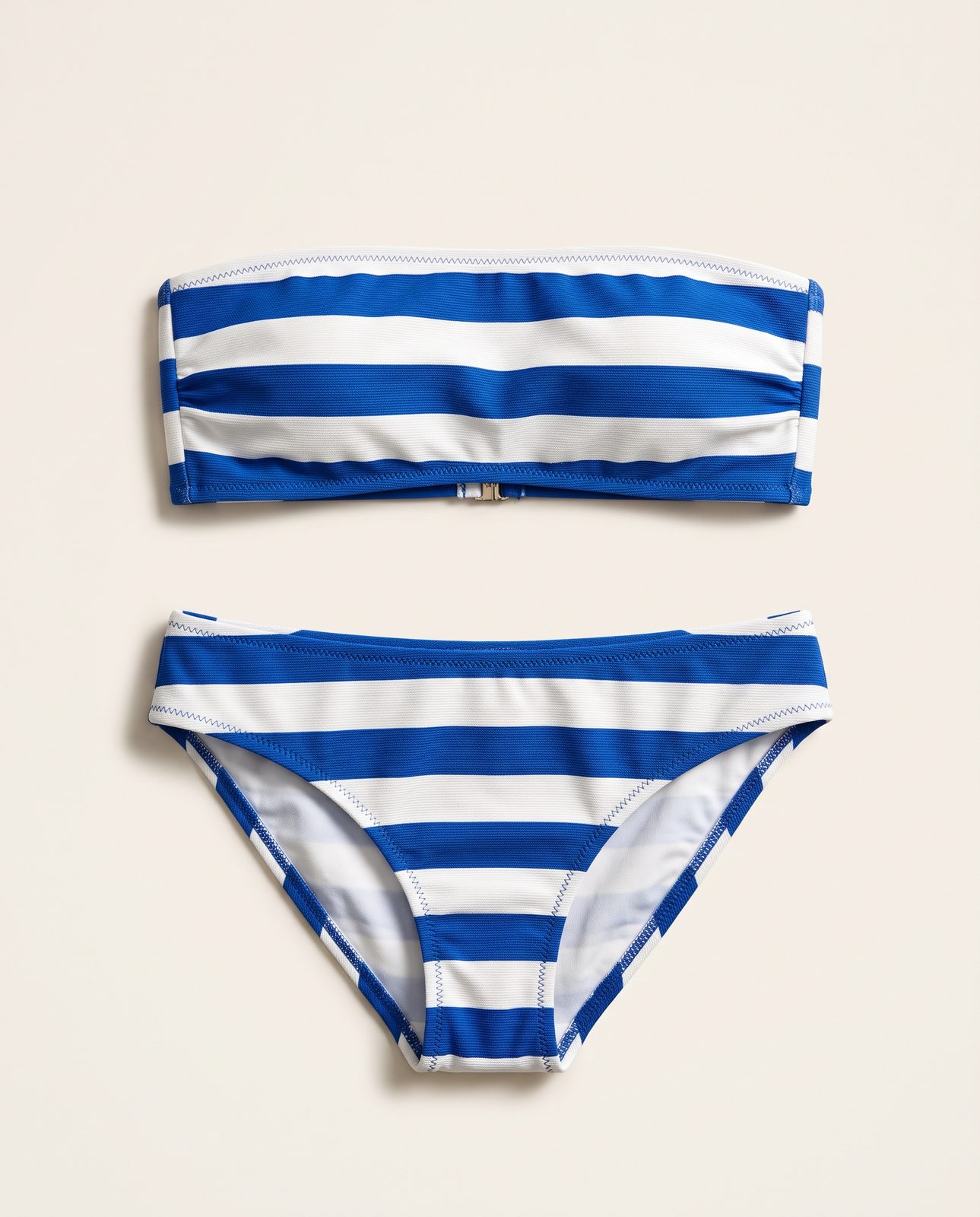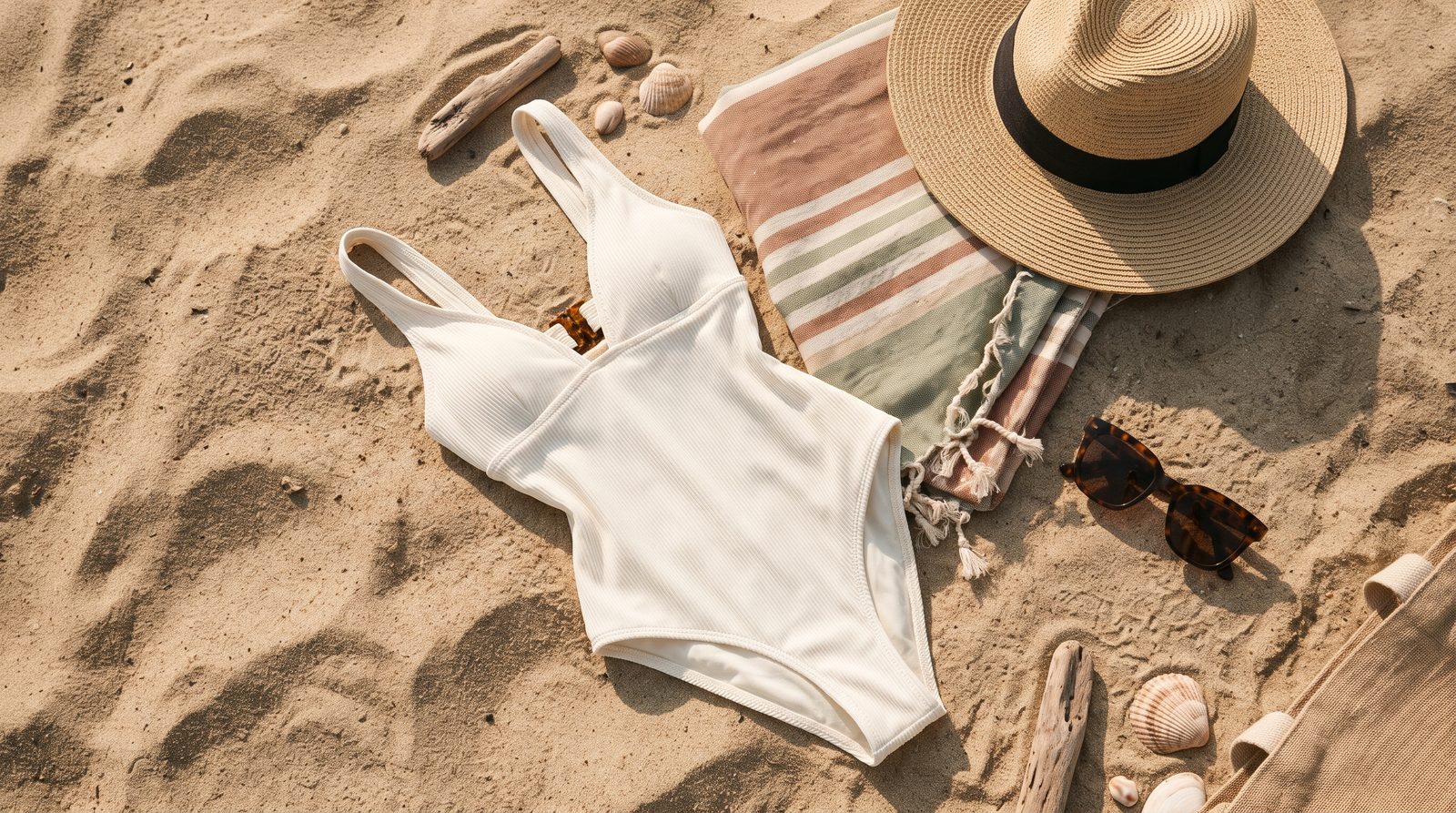
Knowing how to remove chlorine from a swimsuit is mostly about speed. A 60-second rinse in cool water at the pool, a five-minute hand wash at home and a weekly neutralising soak keep the smell out and the elastane intact. Leave the suit damp in a bag overnight and the damage starts immediately.
The sharp pool smell is not chlorine itself but chloramines, formed when chlorine reacts with sweat, sunscreen and skin oils. They cling to the lining and the padded cups, which is why a suit can smell clean when dry and strongly of pool the moment it gets wet again.
Why chlorine is harder on fabric than salt water
Salt water rinses off and, at worst, dries into crystals that abrade the knit. Chlorine is an oxidiser: it attacks the polyurethane chains in elastane and dulls polyamide, and it keeps working as long as the fabric is damp. Thirty minutes in a pool at 1.5 mg/L free chlorine does more long-term damage than an hour in the sea.
Warm water makes it worse. A spa or hydrotherapy pool often runs at 38–40°C with 3–5 mg/L chlorine, so half an hour there can age a suit like a month of normal swimming. If you use a hot tub regularly, keep an older suit for it and save the good one for the beach.
Remove chlorine from a swimsuit before you dress
Use the pool shower on the cool setting and hold the suit under running water for a full minute. Turn it inside out and flush the lining, the leg openings and the straps, since those hold chlorinated water against the fibres the longest.
Squeeze rather than wring, then carry the suit home in a breathable bag or a rolled towel. A sealed plastic bag in a warm car is the worst option: it keeps chlorine, heat and moisture in one place for hours.
Wash out the residue, not just the smell
A rinse removes most surface chlorine; a wash removes what has soaked into the knit. Use 5 ml of mild liquid detergent in 5 litres of cool water, soak for five minutes, then rinse twice. Skip fabric softener, which coats the fibres and traps the chloramine smell.
If the suit has padded cups, work the water through them gently and rinse until the water runs clear. Padding holds much more chlorine than the outer fabric and is usually the reason a suit still smells after a proper wash.
- 5 litres of water at 30°C or below
- 5 ml mild detergent, no bleach and no softener
- Five-minute soak with gentle squeezing, never scrubbing
- Two cool rinses, then press and roll in a towel
Add a weekly neutraliser if you swim often
If you swim three or more times a week, add a neutralising soak. Pool and spa shops sell chlorine neutralisers based on sodium thiosulfate; the usual dose is a teaspoon in 5 litres of cool water for ten minutes, but follow the label. Half a teaspoon of ascorbic acid in the same volume is a gentler alternative for delicate suits.
This does not repair damaged fabric; it stops the reaction earlier. A suit that already smells of chlorine when damp still has residue in the lining, so repeat the soak and rinse twice more before drying.
Never use chlorine bleach on white swimwear
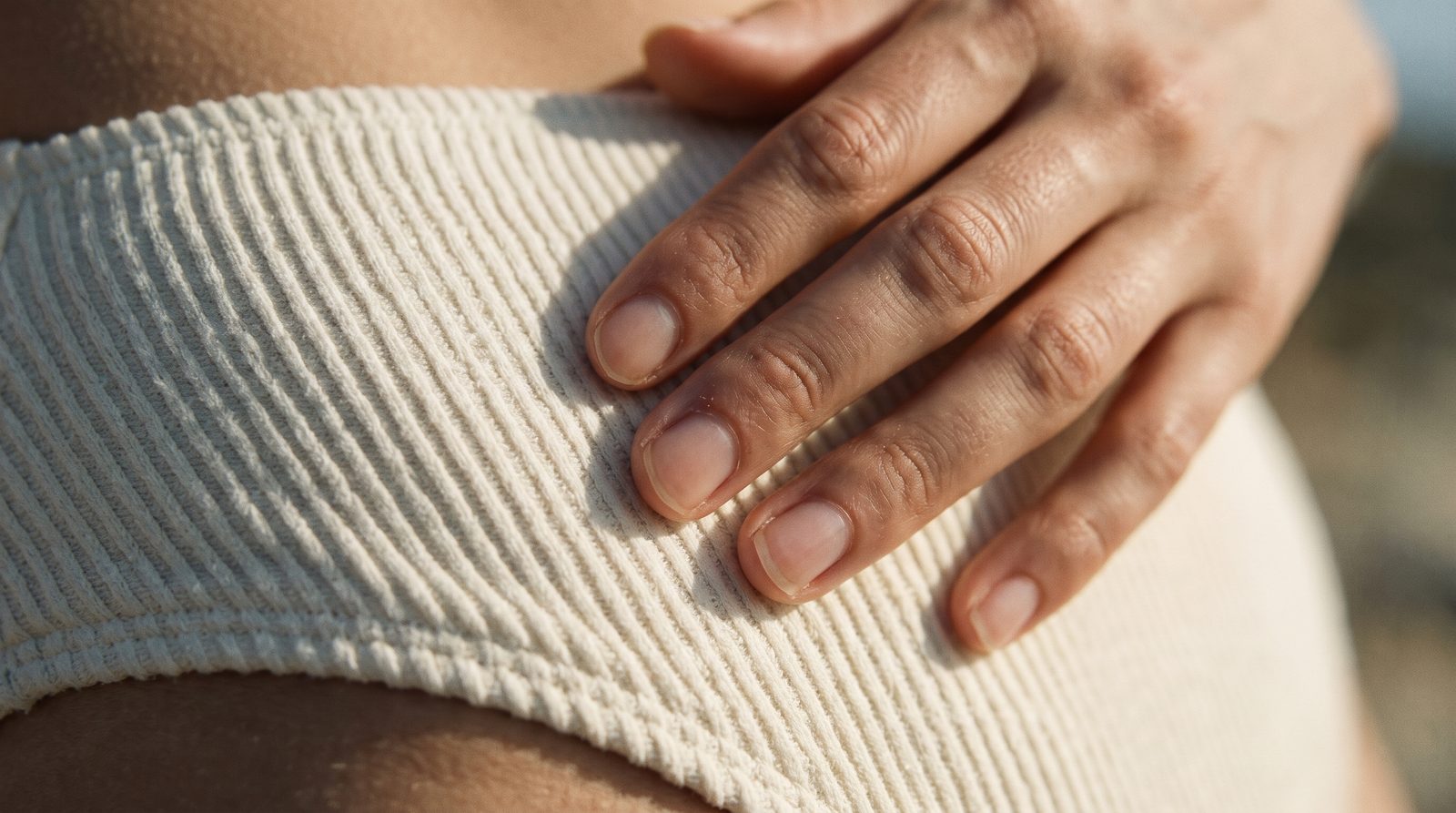
Household bleach yellows polyamide, destroys elastane and reacts with sunscreen residue to create the exact orange marks people are trying to remove. For a white suit, use an oxygen bleach based on sodium percarbonate: 15 g in 2 litres of water at 40°C for two hours, then wash normally.
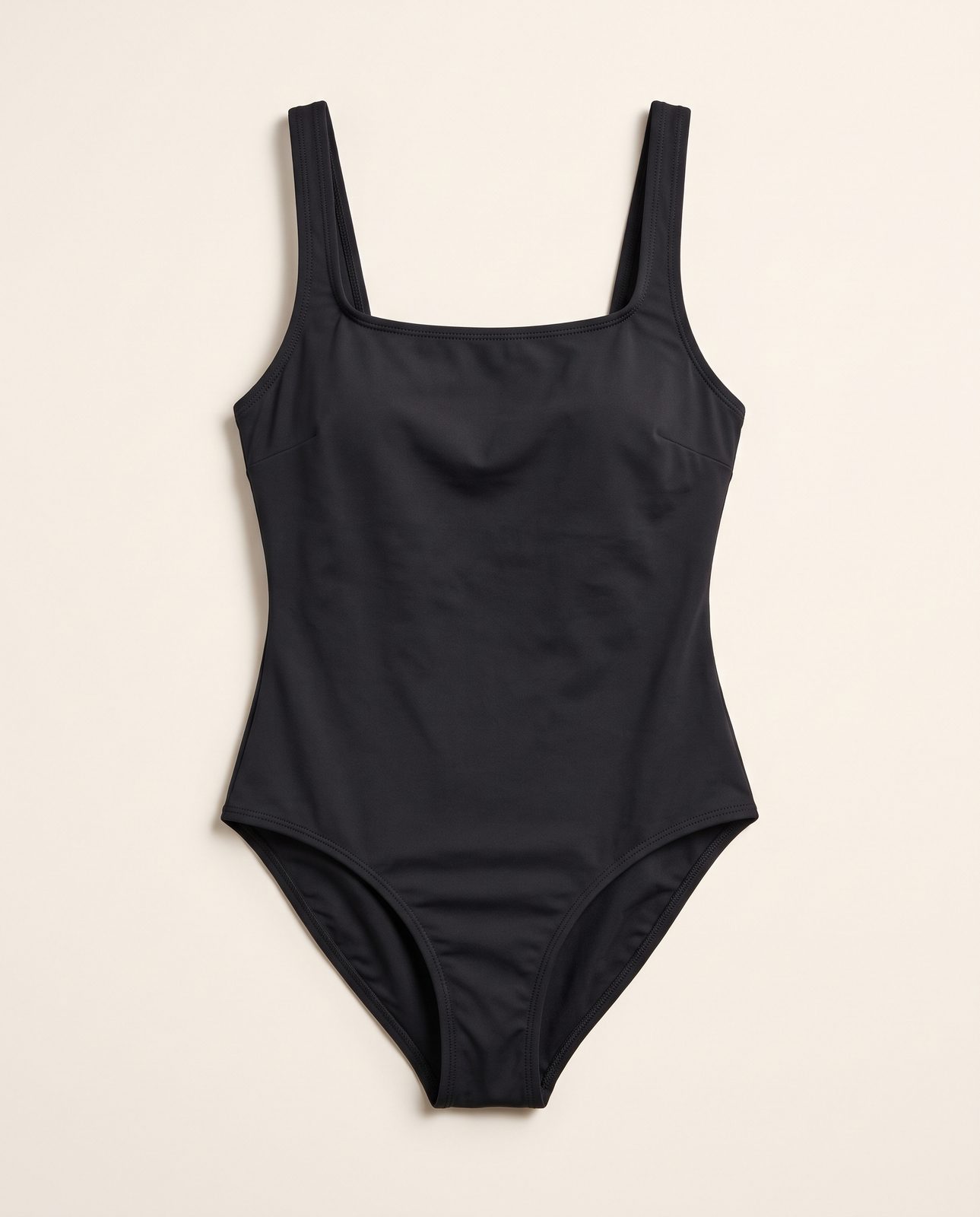
Keep oxygen soaks for white fabric only, and do not leave them overnight. Our black square-neck one-piece should never see either bleach; a cool wash and a thorough rinse are all it needs to stay black.
Dry flat, or the rinse was wasted
Chlorine damage continues while the fabric is damp and warm, so drying is part of removal. Lay the suit flat in the shade, reshape the cups and straps, and let it dry completely before it goes into a drawer or a suitcase.
If the suit still smells when you wet it again, the residue is in the padding or the double lining. Soak once more in neutraliser, rinse twice and dry it flat with the cups opened out.
The travel and gym routine
A 100 ml bottle of detergent and a small wet bag are enough to keep the routine going anywhere. The rule that matters is the same in a gym in Manchester and a resort in Menorca: the suit should never spend the night damp and warm.
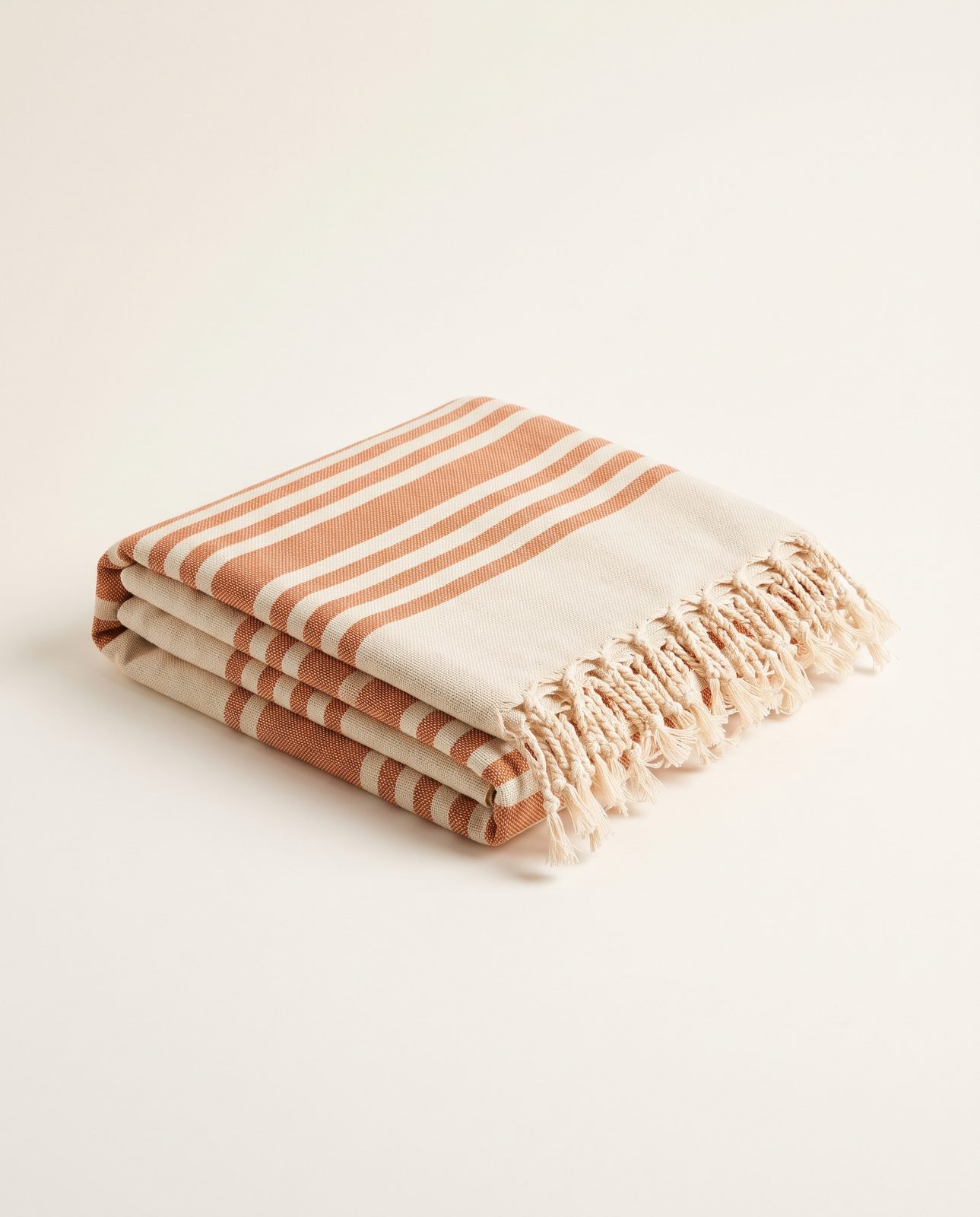
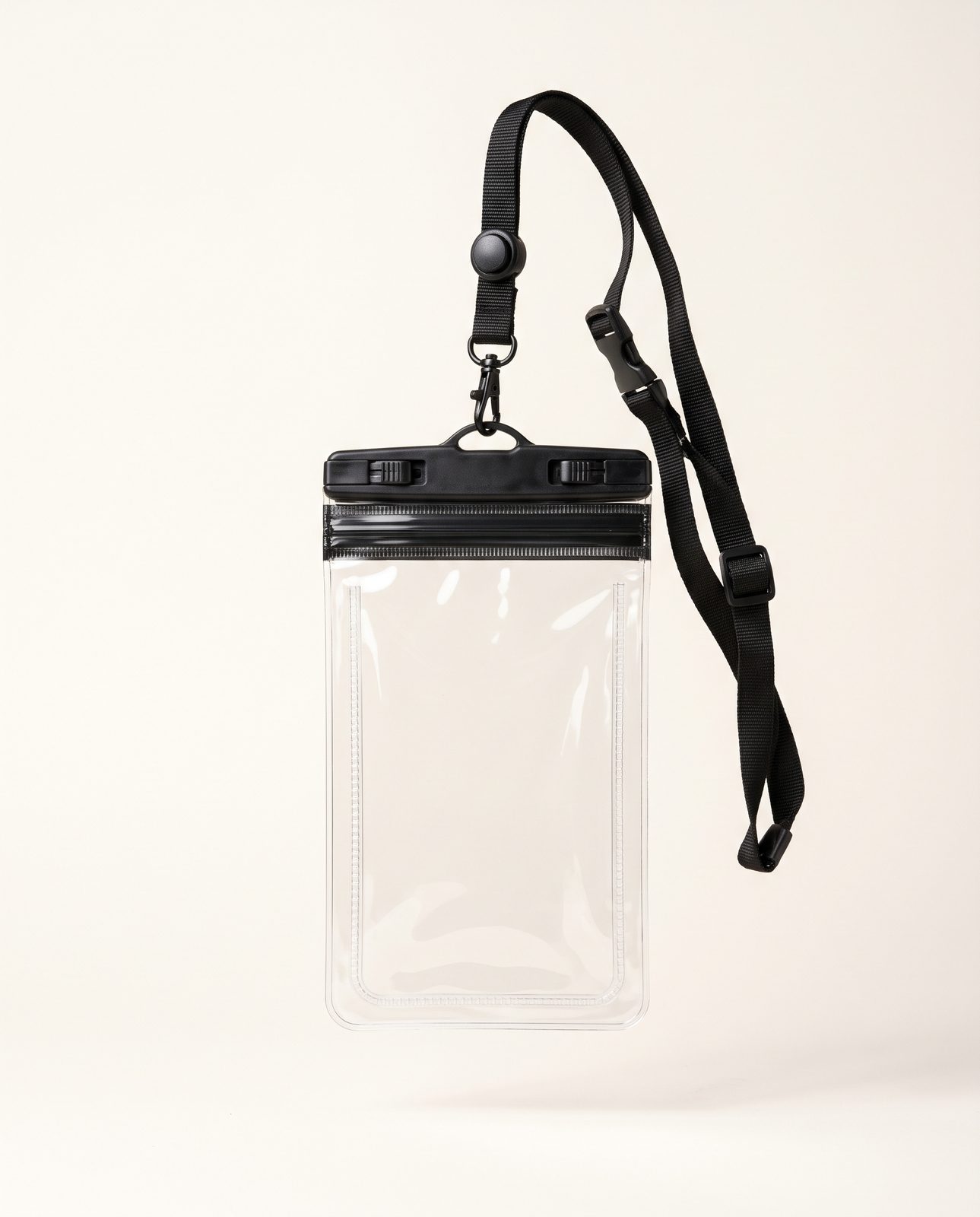
Our striped beach towel rolls the water out well without the roughness of a hotel bath towel, and a waterproof phone pouch keeps a wet suit away from everything else in the bag on the walk back.
- Rinse in the gym shower before you change, not when you get home
- Never leave a damp suit in a gym bag overnight
- Use the hotel sink with 2 ml of detergent for a quick wash
- Roll in a towel and dry flat, never over the shower rail by its straps
Frequently asked questions
Does vinegar remove chlorine from swimwear?
Vinegar helps with hard-water film and general odour, but it does not neutralise chlorine. It can also set some sunscreen stains, so keep it for mineral marks and use a proper neutraliser after pool swims.
How long does chlorine stay in a swimsuit?
It keeps reacting while the fabric is damp and warm, which is why a suit left in a bag can smell for days. Rinse within 30 minutes and one cool wash removes almost all of the residue.
Can I use shampoo instead of detergent?
A sulphate-free shampoo works in an emergency, but it is formulated for hair and can leave a film on the lining. Rinse thoroughly and wash properly when you get home.
Why does my swimsuit still smell after washing?
Usually chlorine trapped in padding, a double lining or thick straps, or detergent residue left after a single rinse. Soak in neutraliser for ten minutes, rinse twice and dry flat with the cups opened out.
Is salt water or chlorine worse for swimwear?
Chlorine is harder on elastane and colour; salt is harder on stitching if it dries in. Both need the same 60-second rinse, so the habit does not change.