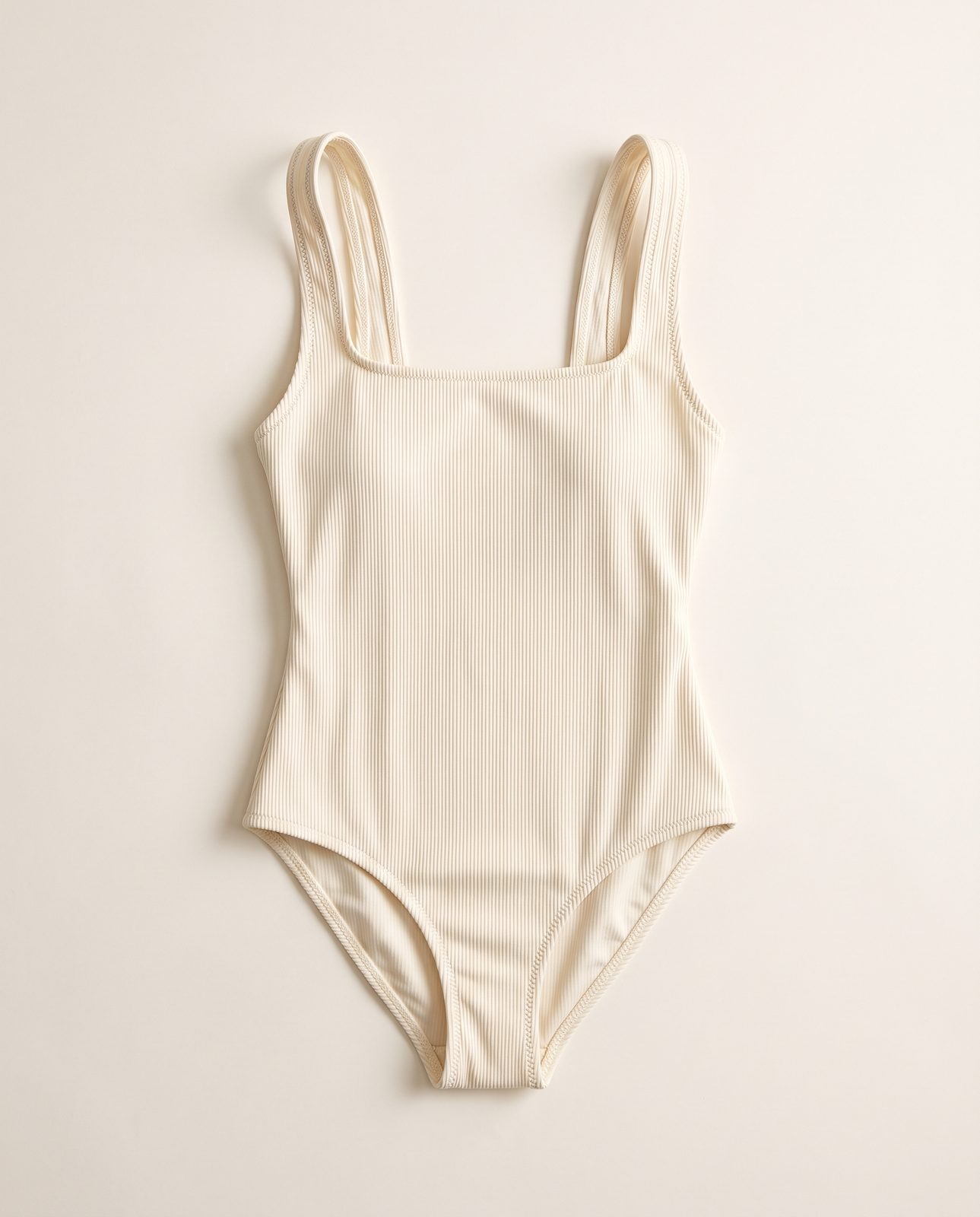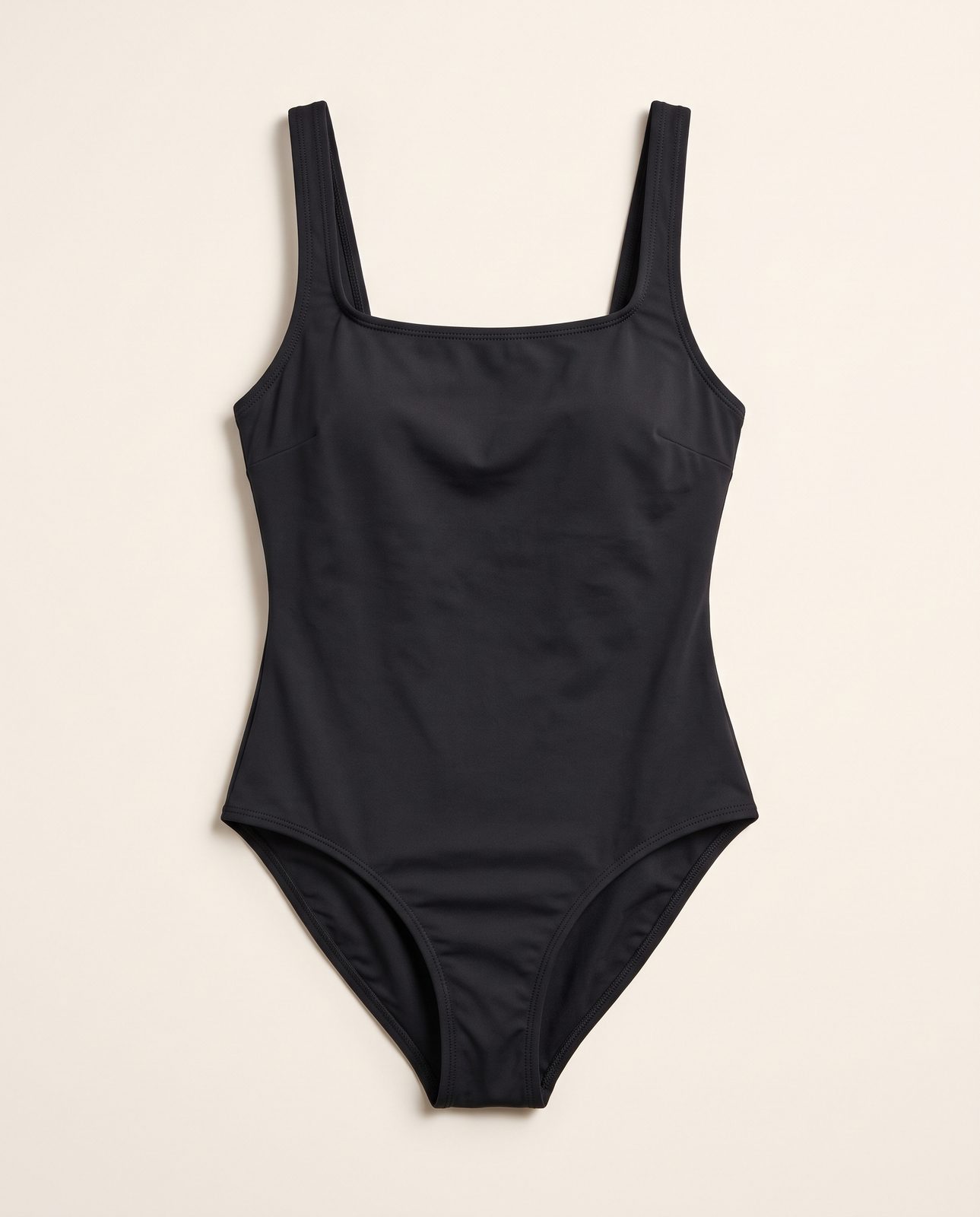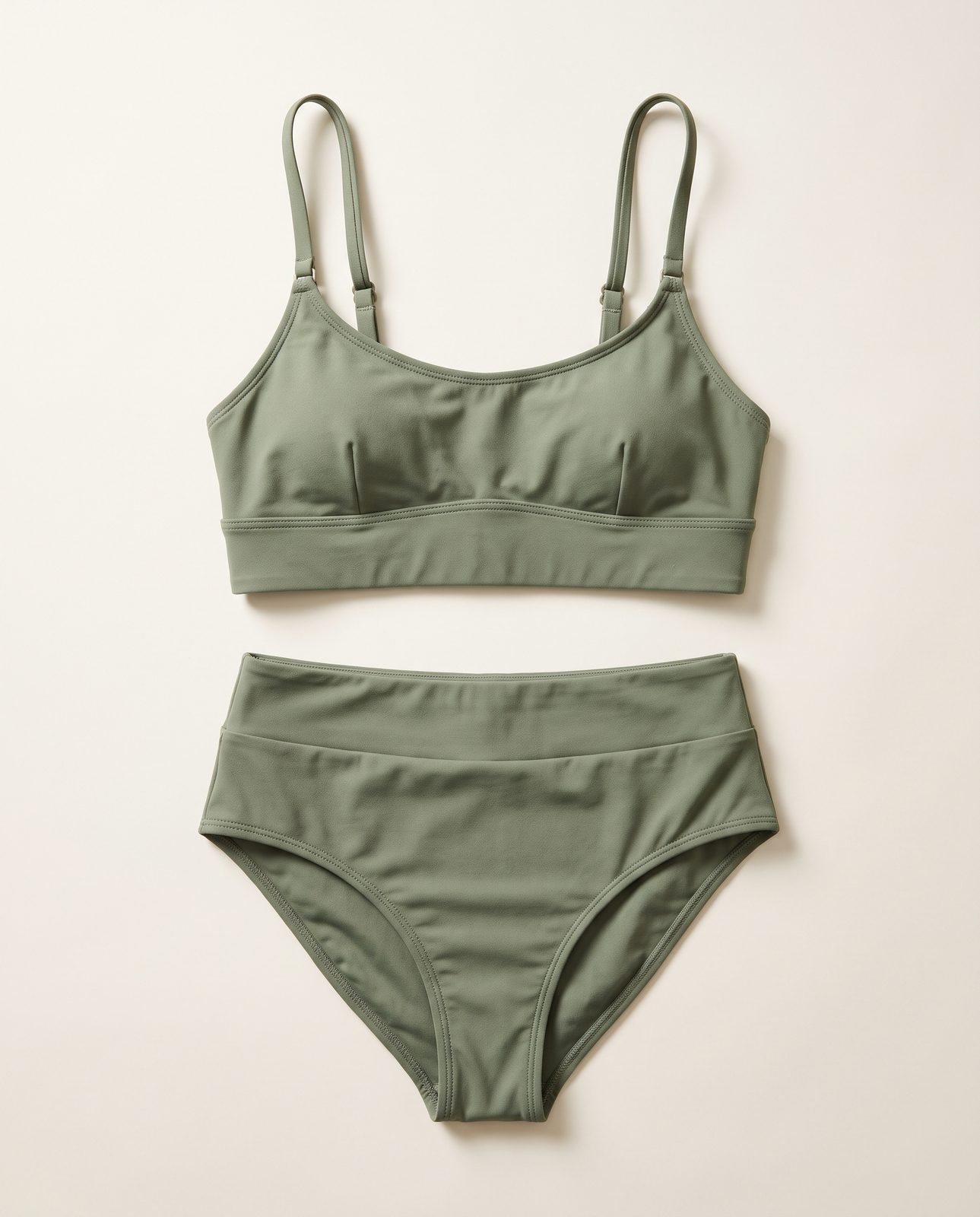
Learning how to fix swimsuit elastic starts with identifying which elastic has failed, because a swimsuit contains three different ones. There is the narrow 6 mm elastic inside a strap or leg opening, the wider 10 mm elastic in a waistband or underbust, and the elastane knitted into the fabric itself. The first two can be replaced at home for under €10. The third cannot be repaired at all.
Most suits reach this point after 12–18 months: straps that curl at the shoulder, a waistband that rolls down, a leg opening that gapes when you sit. A tailor charges €15–25 for the same job, so it is worth ten minutes of diagnosis to decide whether you want to do it yourself or hand it over.
How to fix swimsuit elastic: diagnose it first
Pinch the strap between thumb and forefinger and stretch it to about 10% beyond its resting length, then release. If the elastic inside snaps back and the seam lies flat, that elastic is fine and the looseness is coming from the fabric or the fit. If it returns slowly, feels limp, or stays slightly rippled, the elastic has gone and replacement is the only fix.
Do the same along the leg opening and the back waistband. A rolled waistband usually means stretched elastic rather than a shrunken tunnel, and a leg that gapes only at the back points to tired 6 mm elastic, not a sizing problem.
- Check both straps, both legs and the whole back waistband, not just the side that bothers you
- Listen for a faint crackle when you stretch: that is the elastic core breaking down
- Compare with the opposite side, which often fails later and shows you the original length
- Look for a shine on the fabric as well — that is elastane damage, not elastic damage
The €10 kit that makes the job possible
You need 1 metre of 6 mm and 1 metre of 10 mm polyester-encased swimwear elastic, a spool of 100% polyester thread, a jersey or stretch needle (75/11), a seam ripper and a handful of small clips. Cotton thread is the one thing to avoid: it rots in chlorine and salt water and will fail again within a season.
A sewing machine is quicker but not essential. A narrow zigzag stitch, 2.5 mm wide and 2.5 mm long, by hand or machine, gives the seam enough stretch to survive being pulled over a hip 200 times. Straight stitching on swimwear pops the first time it is stretched.
Replacing strap elastic in four steps
Turn the suit inside out and find where the strap meets the front or back panel. Unpick 4–5 cm of that seam with the seam ripper, just enough to expose the end of the old elastic, and pull it out with your fingers or a pair of tweezers. Do not cut the strap fabric itself — the tunnel is only 6–8 mm wide.
Cut the new elastic to 90% of the old strap's stretched length, thread it through with a safety pin and stitch both ends into the seam allowances with a narrow zigzag. Try the suit on before closing the last seam — 90% is an estimate, and 1 cm short will dig all afternoon.
- Unpick 4–5 cm at the shoulder, not the whole strap
- Cut new elastic to 90–95% of the old length
- Thread with a safety pin, keeping the elastic flat, not twisted
- Stitch with a 2.5 mm zigzag and backstitch at both ends
- Wear it once before trimming the surplus elastic
Fixing a rolled waistband or a gaping leg
Both are the same repair in a longer tunnel. Open about 6 cm of the casing at a side seam, grip the old elastic and pull it out, then measure the new piece against the tunnel at 90% of its relaxed length. Anchor one end with a few stitches before you thread the rest through, or the elastic will disappear inside the casing.
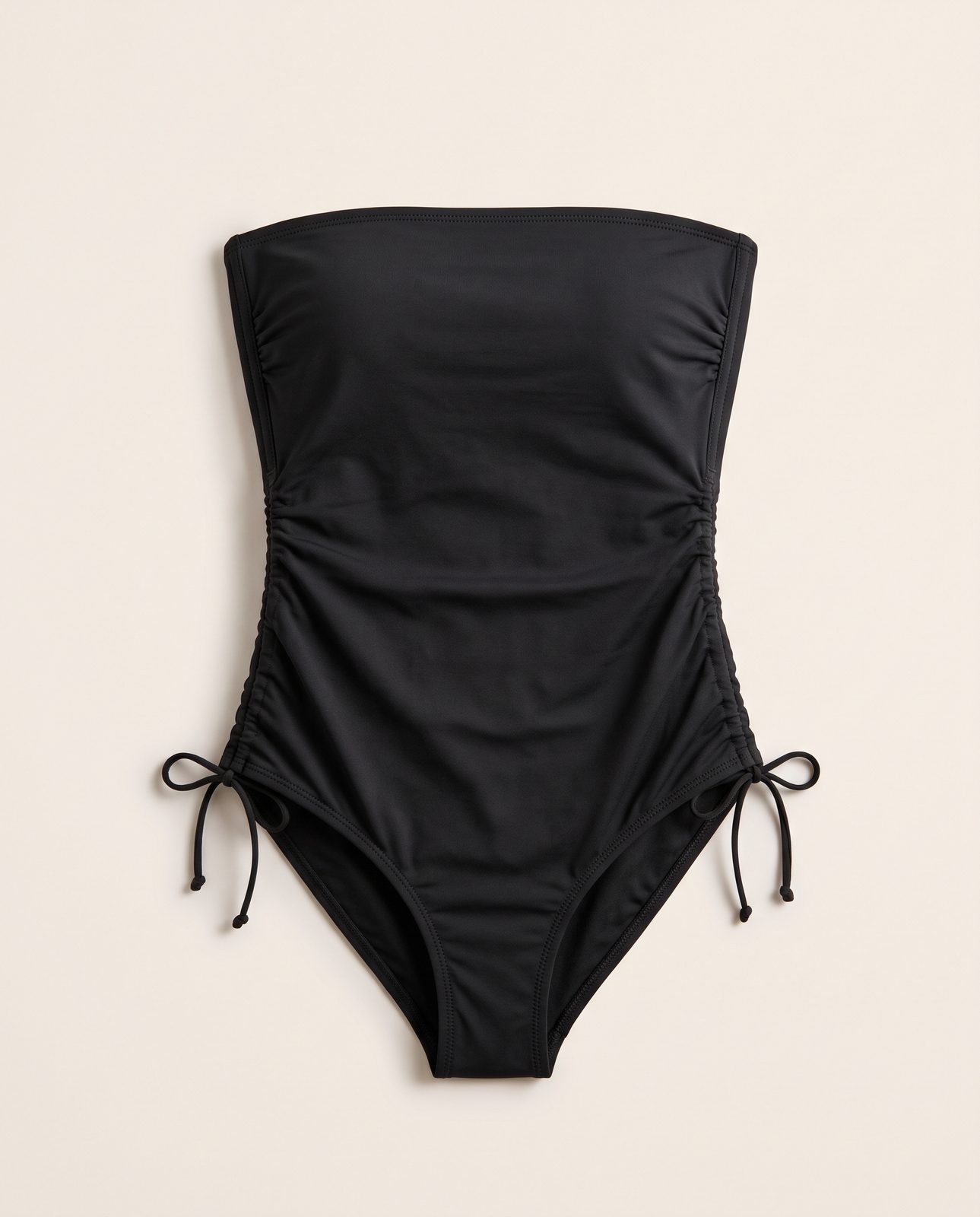
On a bandeau or ruched style, work from the side seam rather than the centre back, where the tunnel is often narrower and the seam allowance is bulkier. Close the opening with a zigzag that matches the original, then press the seam flat with your fingers rather than an iron — a hot iron will mark the elastane permanently.
When the fabric itself has gone, stop sewing
There is no home fix for elastane that has lost its recovery. The signs are consistent: the seat stays baggy 30 minutes after washing, the fabric looks shiny under a light, the lining shows through the outer layer when stretched, and the suit feels slick rather than firm. Sewing a tighter strap onto that fabric just moves the strain somewhere else.
If the suit is white or ivory, check for greying at the seat and under the arms. That discolouration is fibre damage that oxygen bleach will not shift, so put the €10 towards a new suit instead.

What to ask a tailor to do
If you would rather not sew, a local tailor can do the job in two or three days. Ask for swimwear elastic, polyester thread and a stretch stitch, and show them the panel rather than describing it. Both straps plus a waistband usually costs €15–25.
Bring the suit clean and dry, and point out any hardware near the seam. Most tailors will also shorten straps by 1–2 cm without replacing the elastic — cheaper when the elastic is still springy but the strap has simply stretched.
- Ask for 6 mm or 10 mm swimwear elastic, not dressmaking elastic
- Request 100% polyester thread and a zigzag or stretch stitch
- Pinpoint the exact seam; “make it tighter” is not a brief
- Expect €15–25 and 2–3 days for straps plus waistband
Frequently asked questions
Can you replace the elastic in a swimsuit?
Yes, in straps, waistbands and leg casings, because the elastic sits in a sewn tunnel and can be unpicked and rethreaded. The elastane knitted into the fabric cannot be replaced, so a suit that has lost recovery overall is beyond repair.
How much elastic do I need for one swimsuit?
About 1 metre of 6 mm for two straps and the leg openings, plus 0.5 metre of 10 mm for a waistband. Buying a metre of each costs around €4 and leaves enough spare for a second repair.
Can I use a normal sewing machine on swimwear?
Yes, with a stretch or jersey needle and a narrow zigzag stitch. Use polyester thread, keep the presser foot light and avoid stretching the fabric as you sew, or the seam will pucker.
Why does my swimsuit elastic keep curling?
Usually because the elastic has stretched while the fabric casing has not, so the strap rolls into the shortest path. Replacing the elastic at 90% of the original length solves it; ironing the strap flat only hides it until the next wash.
Is it worth repairing a €90 swimsuit?
Yes, if the fabric is still firm and only the straps or waistband have gone. A €10 repair buys another 6–12 months, whereas replacing the suit every time a strap curls gets expensive quickly.