Board shorts vs swim shorts comes down to three things: length, fabric weight and lining. Board shorts are longer, denser and built to stay on in surf; swim shorts are lighter, shorter and cut for a holiday. If you will be in the sea for an hour and then at a table, swim shorts win. If you paddle, surf or sit on a board, board shorts are the only pair that behaves.
Most men end up with the wrong one because both are sold as “beach shorts”. The differences that matter are the inseam, the fabric weight and whether there is a liner — three things you can check in a shop in under a minute.
Board shorts vs swim shorts: the quick version
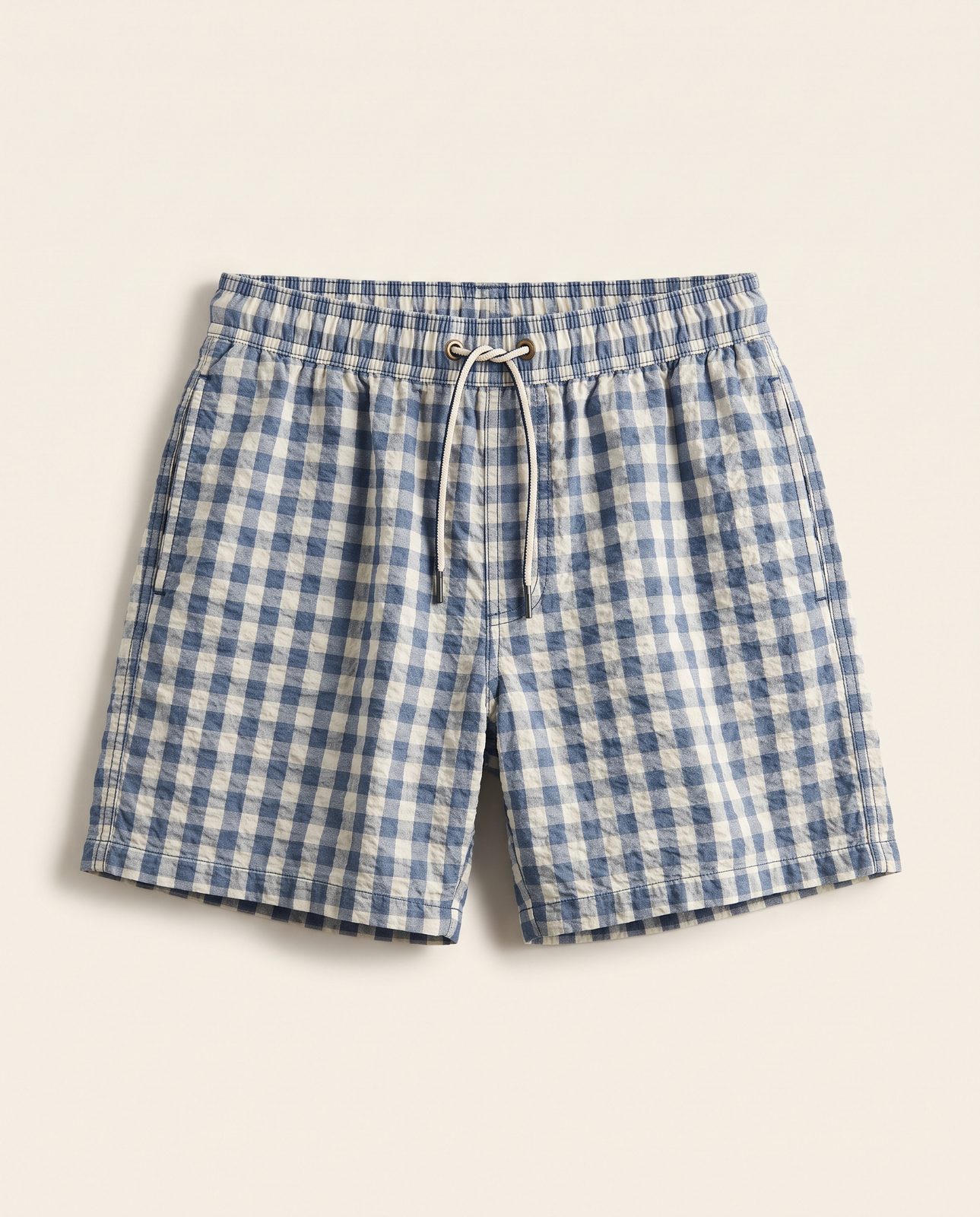
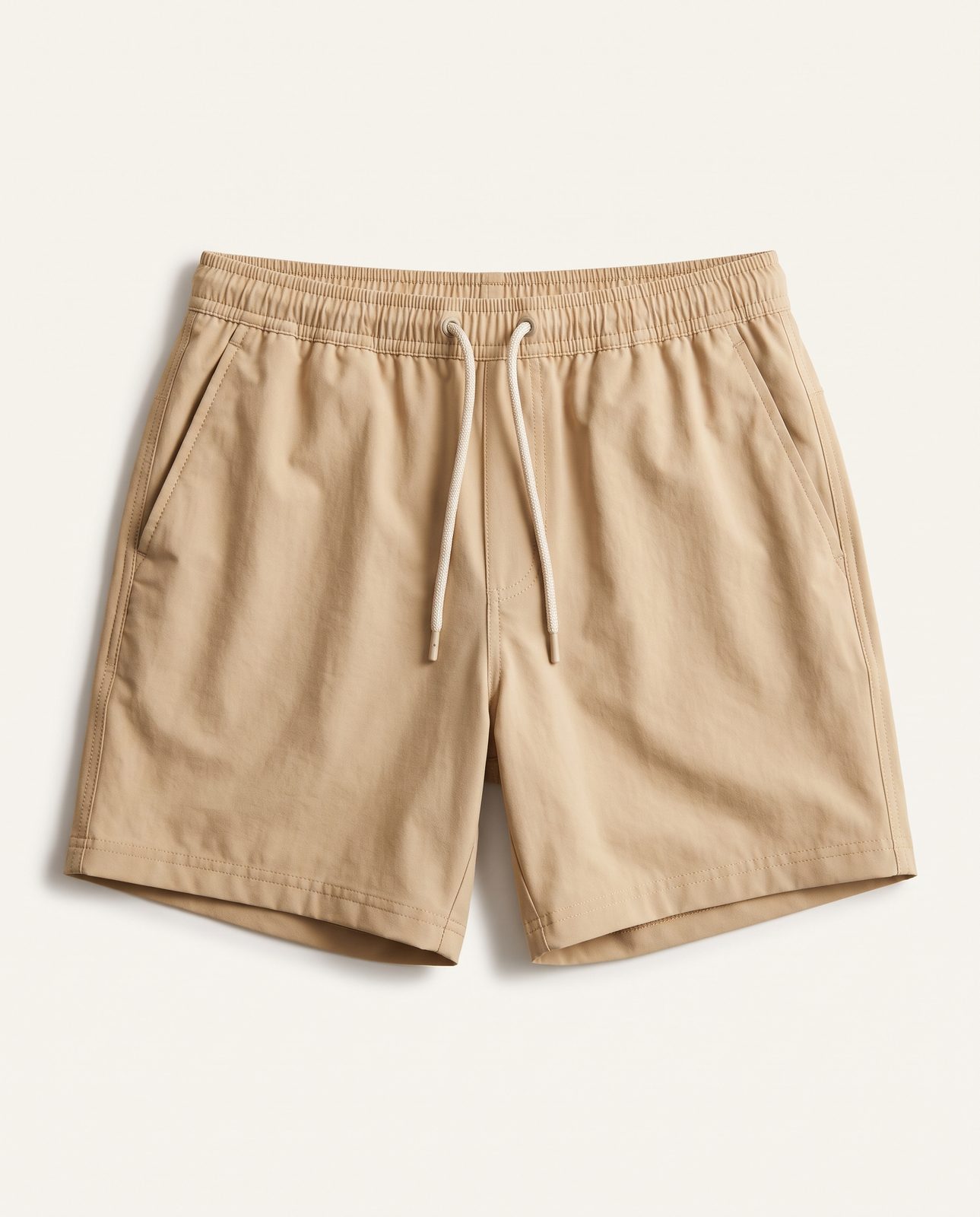
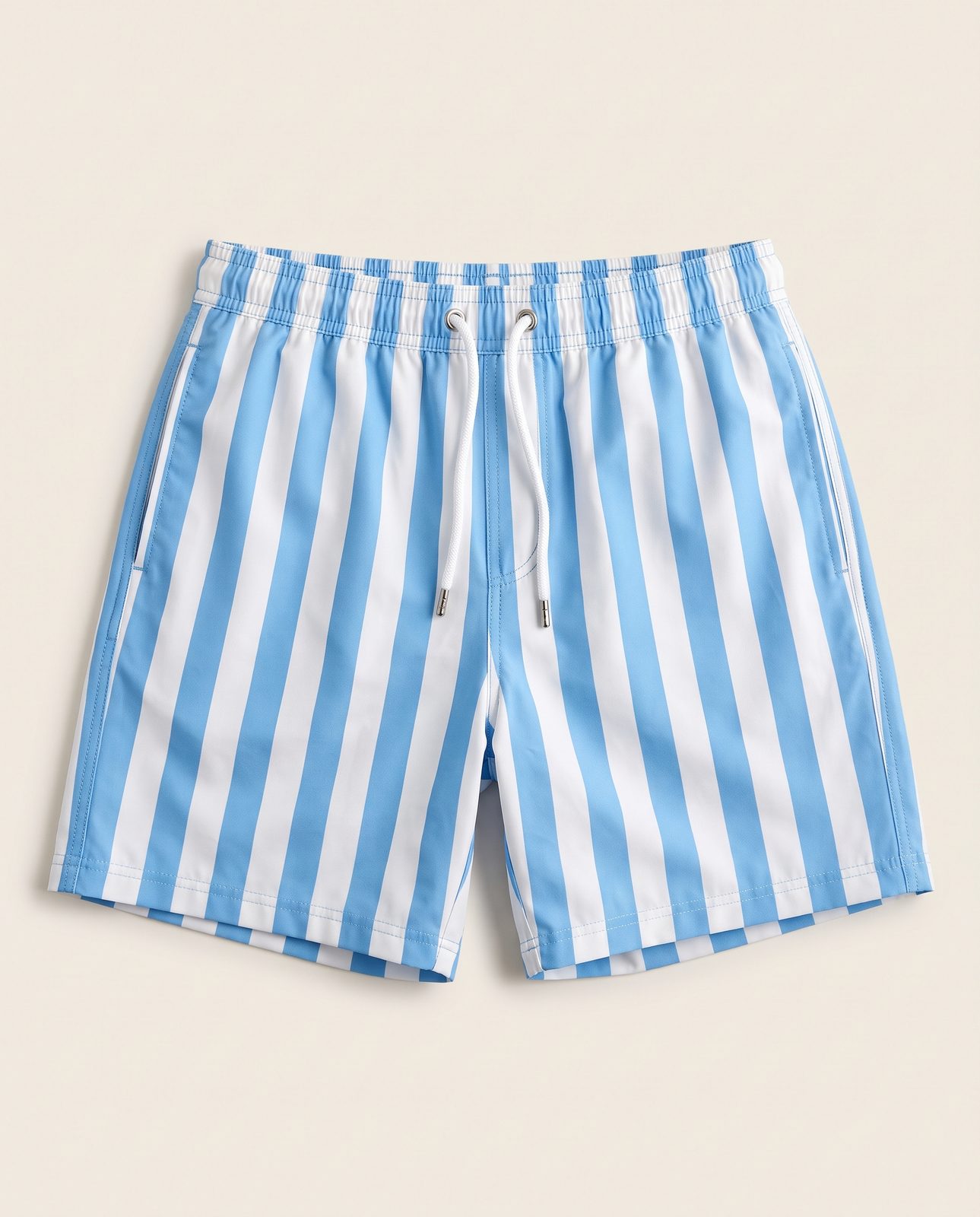
A swim short is a lightweight short with a swim lining or a mesh brief inside: 12–18 cm inseam, a shell around 110–150 gsm, an elastic or part-elastic waist, and a fabric that stops feeling wet quickly.
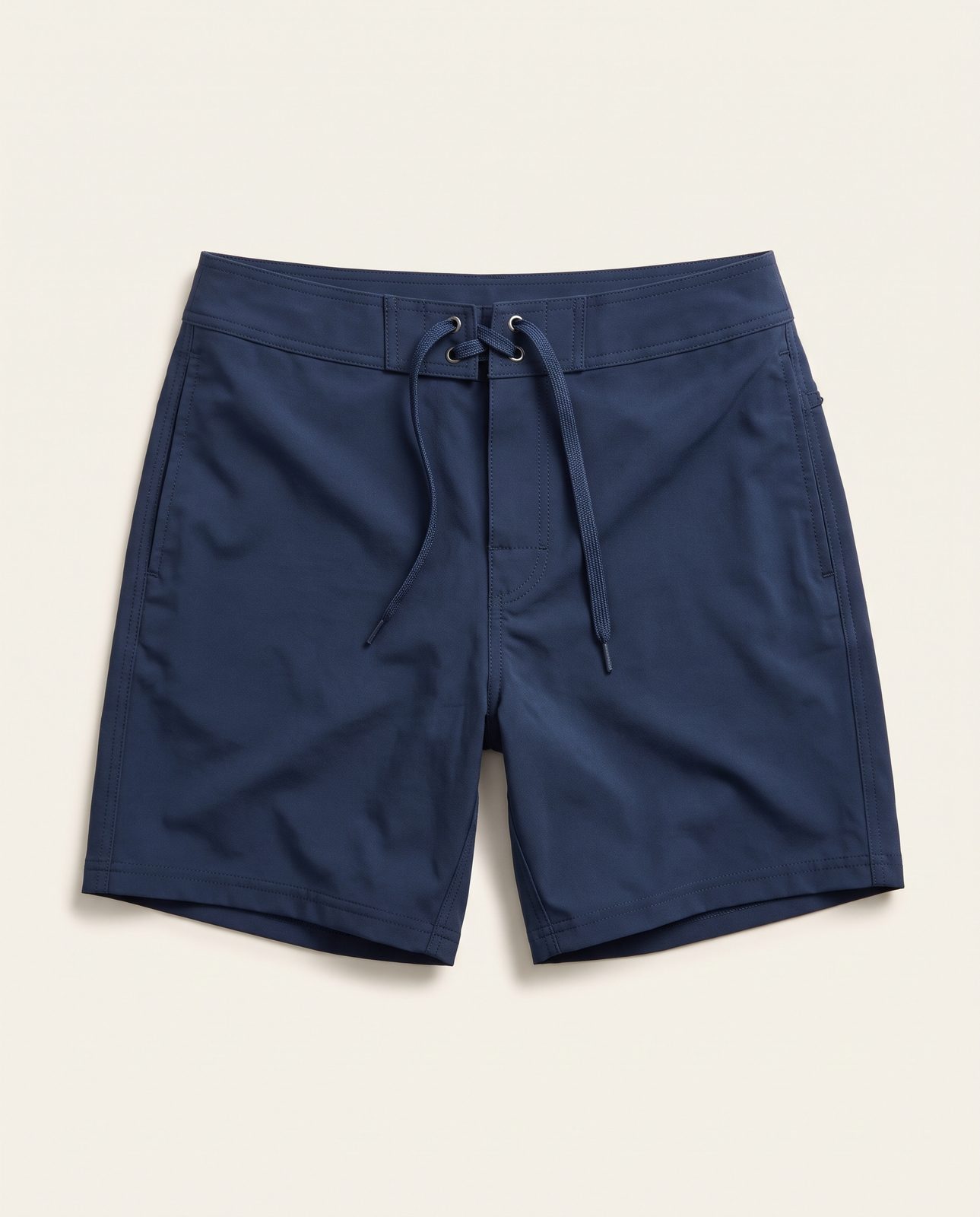
A board short comes from surf: 18–23 cm inseam, a 200–280 gsm shell, a fixed waist with a lace or velcro fly, drainage pockets, and often no liner because it is worn over swim briefs. It is designed for a wipeout, not for lunch.
- Swim short: 5–7 inch (13–18 cm) inseam, 110–150 gsm, usually lined.
- Board short: 8–9 inch (20–23 cm) inseam, 200–280 gsm, usually unlined.
- Long board short: 20–21 cm, still above the knee on a 180 cm frame.
Inseam: where the hem lands
On a man of 180 cm, a 5 inch (12.7 cm) short ends about 15 cm above the knee, a 7 inch (17.8 cm) ends 8 cm above, and a 9 inch (23 cm) sits at the knee. Each step down the leg adds roughly 15 g of wet fabric to carry when you walk out of the water.
The practical rule: mid-thigh for swimming and city wear, knee for surf. A hem below the knee catches the calf with every step and looks like a skirt with the wrong shoes.
Fabric, weight and what water does to it
Both are usually recycled polyester or polyamide with 8–14% elastane, but the weave differs. A 130 gsm swim short gains about 150 g when soaked and stops dripping within a minute; a 240 gsm board short gains 350–400 g and holds a film of water against the thigh.
Board shorts often carry a water-repellent finish, which beads spray at the surface and helps in the surf but slows drying in still air. Swim shorts rely on a thin open weave instead. Neither fabric likes chlorine for long: rinse both in cold water and the elastane will last more than a season.
Waistbands, pockets and sand
An elastic waist with a drawcord forgives a long flight and a large lunch. A fixed waist with a lace closure does not move when a wave hits, which is the point. If you are between sizes, a board short should fit snug on the hip, because a loose pair fills with water.
Pockets are the tell. A board short has a back pocket with a drainage eyelet and a key loop; without the eyelet, that pocket holds around 200 ml of water and drips down your leg for the walk back. Swim shorts keep pockets small or omit them, so they do not balloon underwater.
Drying time and packing space
In sun at 28 °C, a swim short dries in 25–30 minutes; in a shaded bathroom, around two hours. A board short needs 90 minutes to three hours outside and can still be damp the next morning indoors. Two swim shorts take the space of one board short in a carry-on.
For a two-week trip with hand luggage, that is the difference between three pairs and one. If you surf daily, pack one board short and plan to hang it on a rail overnight rather than over a chair.
Sizing: when to go up or down
Swim shorts sit closer to the body than the shorts you wear on land, so start with your usual waist and check the thigh: the hem should clear the leg by 2–3 cm when you stand. If the fabric pulls across the front of the thigh, go one size up rather than accepting a tighter leg.
Board shorts should be snug at the hip, because the waist carries the water weight — around 400 g when soaked. A belt will not fix a loose pair: the lace cannot cinch enough, and the short sits lower with every wave.
How to wear them off the beach
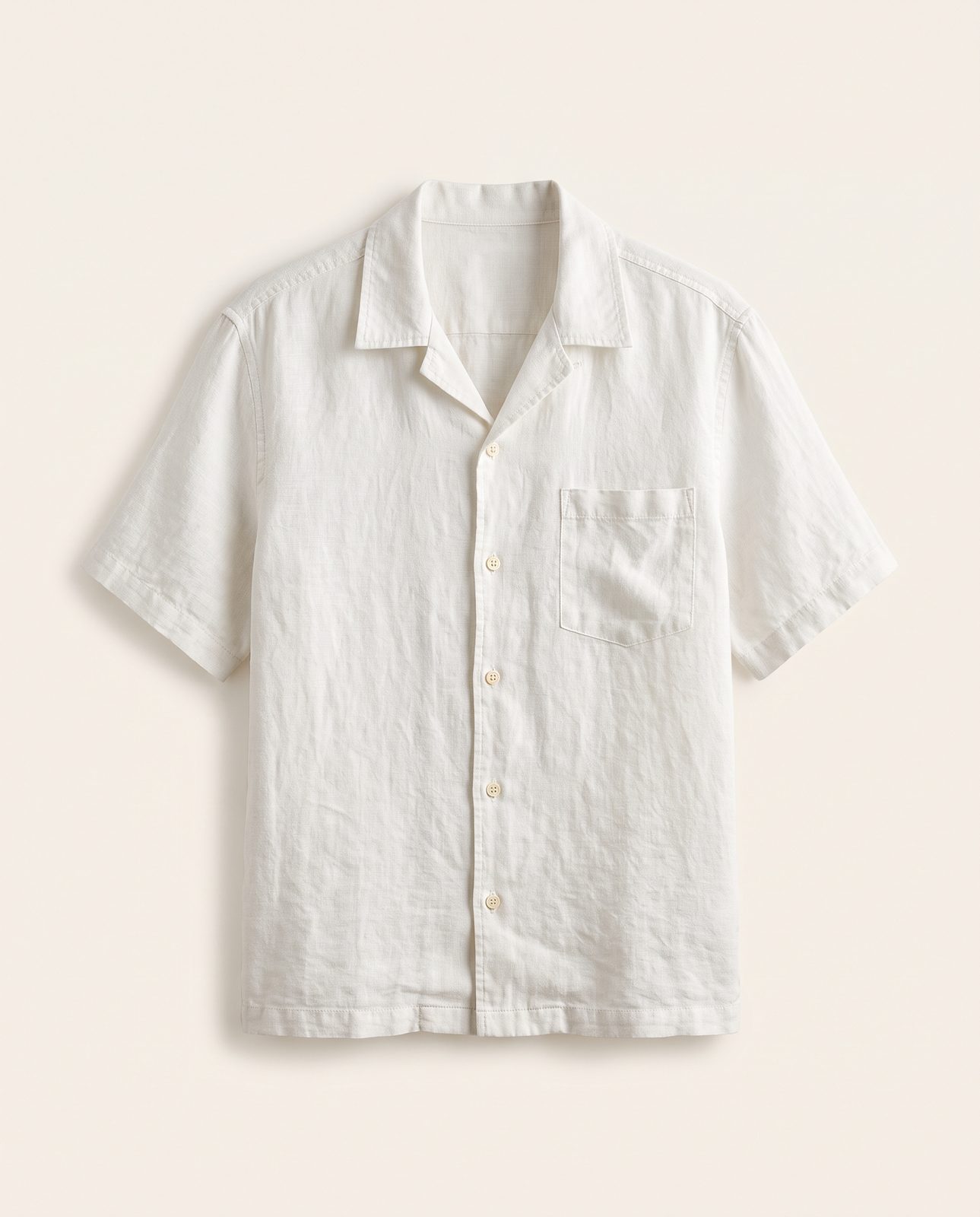
Swim shorts work with a linen camp shirt and leather flip-flops for lunch; the shorter leg keeps the proportion right when the shirt is untucked. Board shorts read as surf wear and look better with a plain tee — a linen shirt over a knee-length short is a lot of fabric at 30 °C.
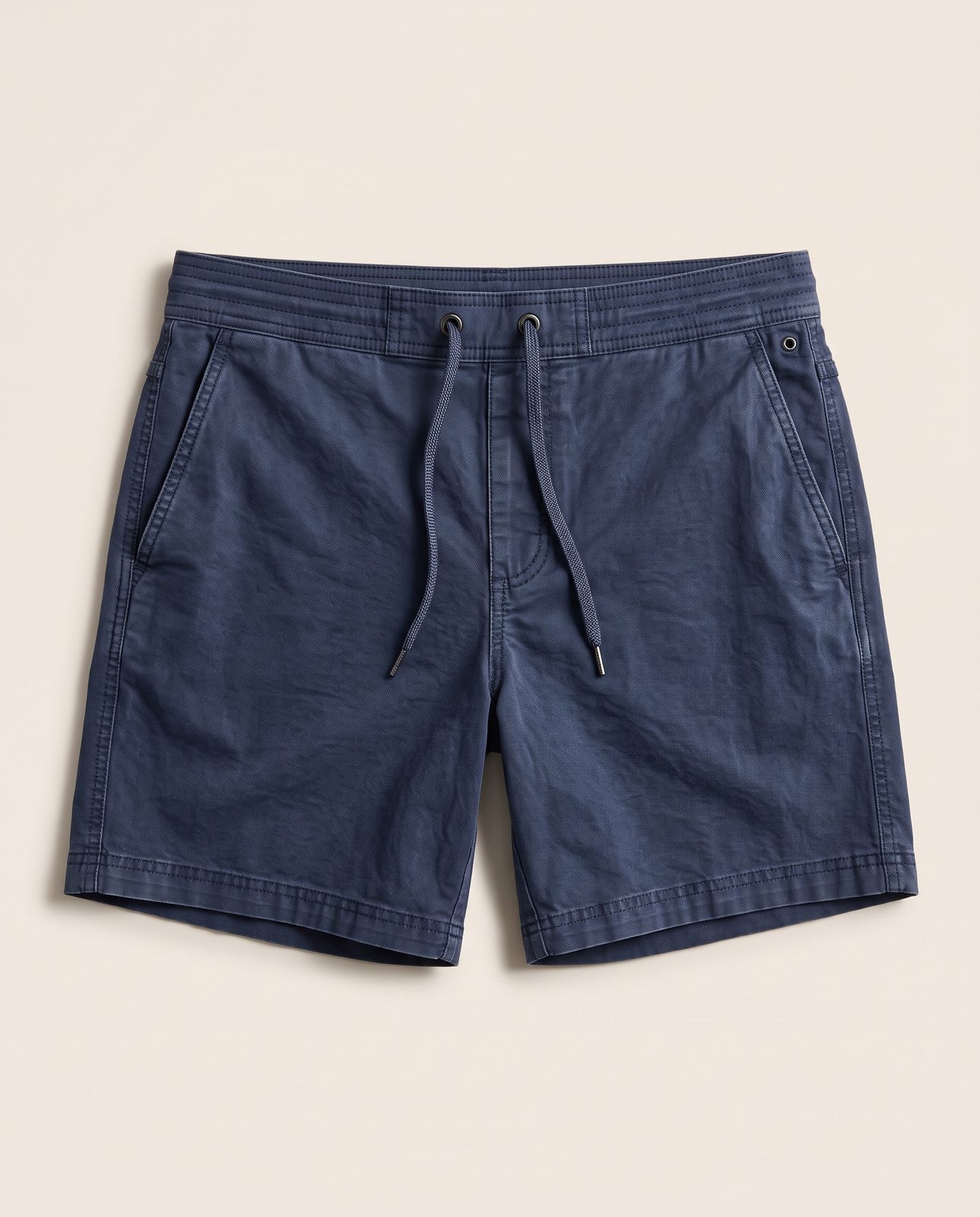
One pair in navy, olive or stone will cover a week. Our own shorts are cut as swim shorts between 5 and 8 inches, including the board-short-long at 20 cm, which is the longest we make; beyond that the hem starts to interfere with walking.
Frequently asked questions
Can you wear board shorts as normal shorts?
Yes, they read as casual shorts with a T-shirt, though the drainage pocket and lace fly give them away. The heavier fabric is less comfortable at 30 °C than a linen short.
Do board shorts have a liner?
Most do not, because they are worn over swim briefs. Some hybrid pairs include a compression liner, so check before you travel rather than discovering it at the water's edge.
Are swim shorts or board shorts better for swimming laps?
Swim shorts, and neither is ideal. A short, light trunk creates less drag, while a knee-length board short adds weight and resistance on every turn.
What length board shorts should I buy?
20–21 cm if you surf, which sits just above the knee on most men. Shorter than 18 cm stops being a board short, and longer than 23 cm catches the calf as you walk.