The best swimwear for water parks is the suit you never think about between rides: wide straps, no metal, a fabric that resists chlorine for a full day. Slides and wave pools are hard on swimwear in ways a beach never is — water pushes at 30–40 km/h, chlorinated water sits at 1–3 mg per litre, and you spend six hours in direct sun.
We sell swimwear in Spain to people who spend their summers in municipal pools and coastal parks, so this guide is built around what actually fails: straps that roll, clasps that heat up, and elastane that gives up by August.
What a water park does to a swimsuit
Three things happen at once. Chlorine oxidises elastane, so a suit with 20% elastane loses stretch faster in a park than in the sea. Water pressure on a slide pulls at every seam and strap, which is why tie-side bikinis and halter necks are the first to move. And sun at 30°C fades dye, especially coral and red, within a handful of visits.
A suit that handles all three is not the same suit you would choose for a sunbed. It needs denser fabric, wider straps and fewer points of adjustment — not more.
Straps, clasps and the points that fail
Look for straps of at least 3 cm, ideally 4 cm, and a racerback or crossed back that cannot slide off a shoulder when you raise your arms on a raft. Thin spaghetti straps roll under pressure, and a strap that rolls becomes a strap that cuts by mid-afternoon.
Avoid metal rings, buckles and rivets entirely. They heat up on deck, they scratch slide surfaces, and many parks ask you to remove jewellery for the same reason. Plastic clasps are acceptable if they sit flat; ties are not, because a knot that comes undone in a wave pool is a genuine problem.
Fabric: why polyester wins at a water park
For chlorine exposure, a 100% polyester or PBT suit outlasts a nylon-elastane blend by a wide margin; it keeps its shape after 40 or 50 pool days where elastane blends start to bag after 15. The trade-off is hand-feel: polyester is firmer and less soft against the skin, which matters less when you are in water most of the day.
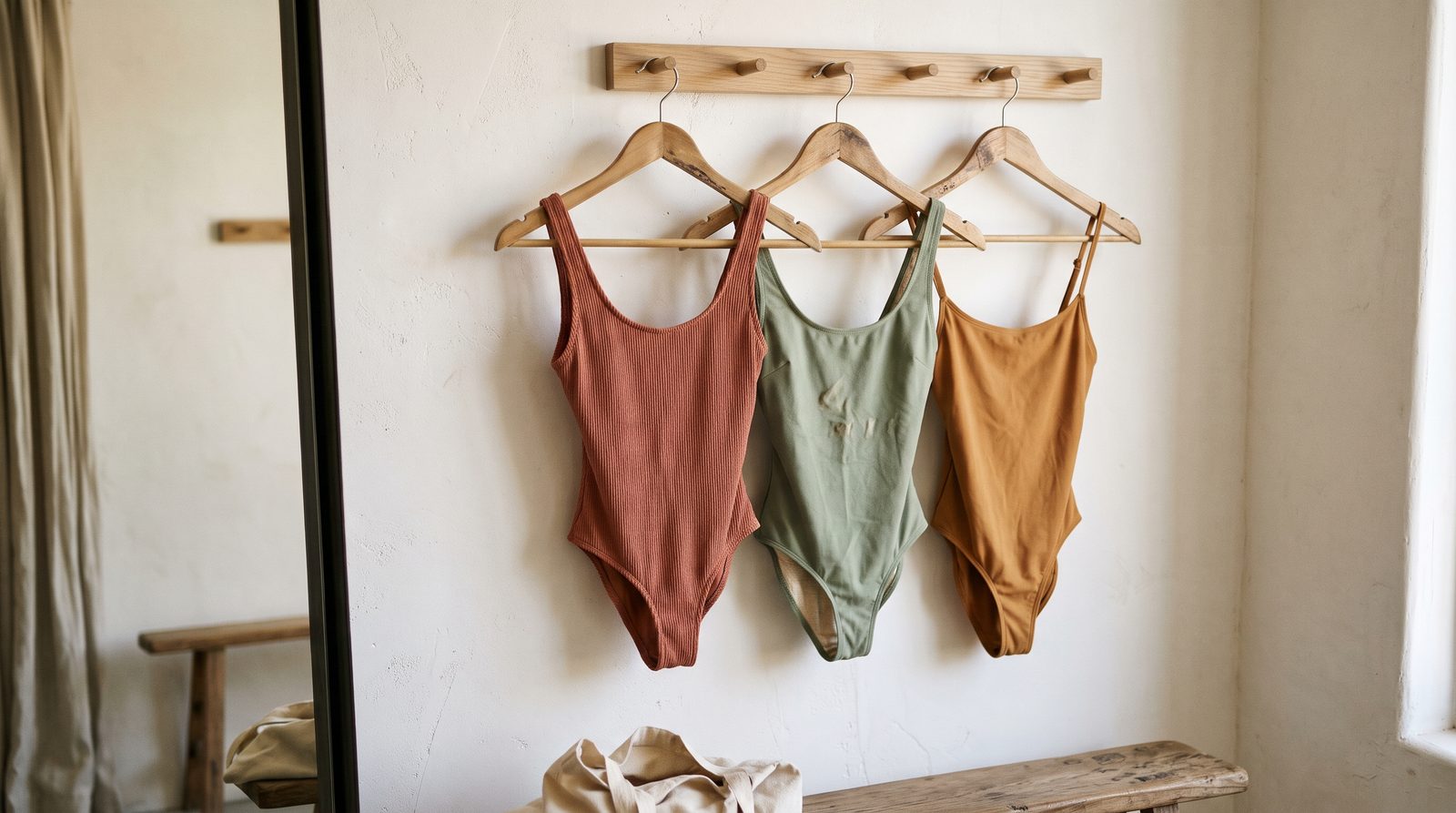
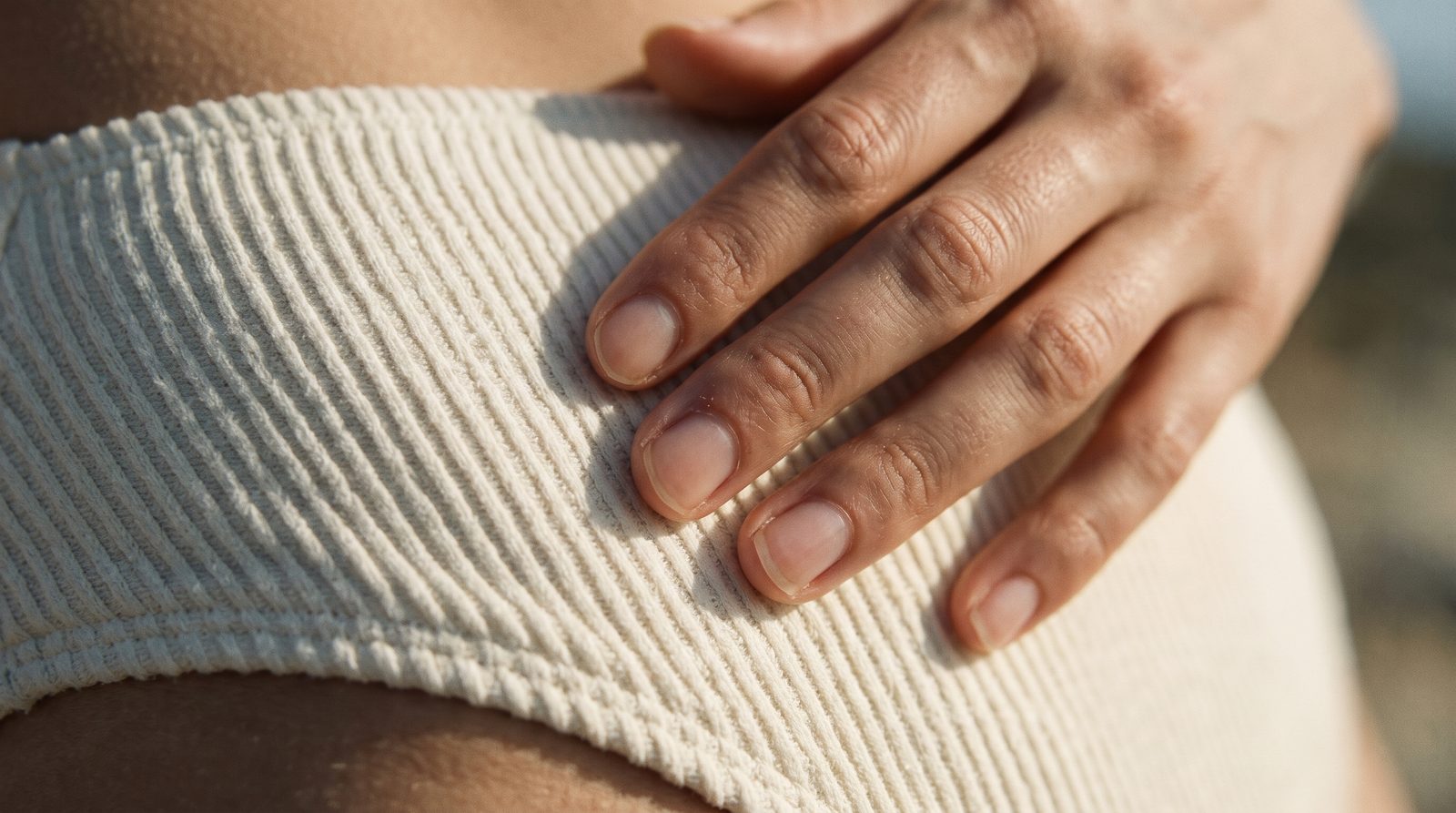
If you prefer the softer feel of a nylon-elastane suit, treat it as a two-season item and rinse it the same day. Ribbed fabric at around 190 gsm is a good compromise — dense enough to resist abrasion on slides, still comfortable for six hours.
One-piece, bikini or swim skirt?
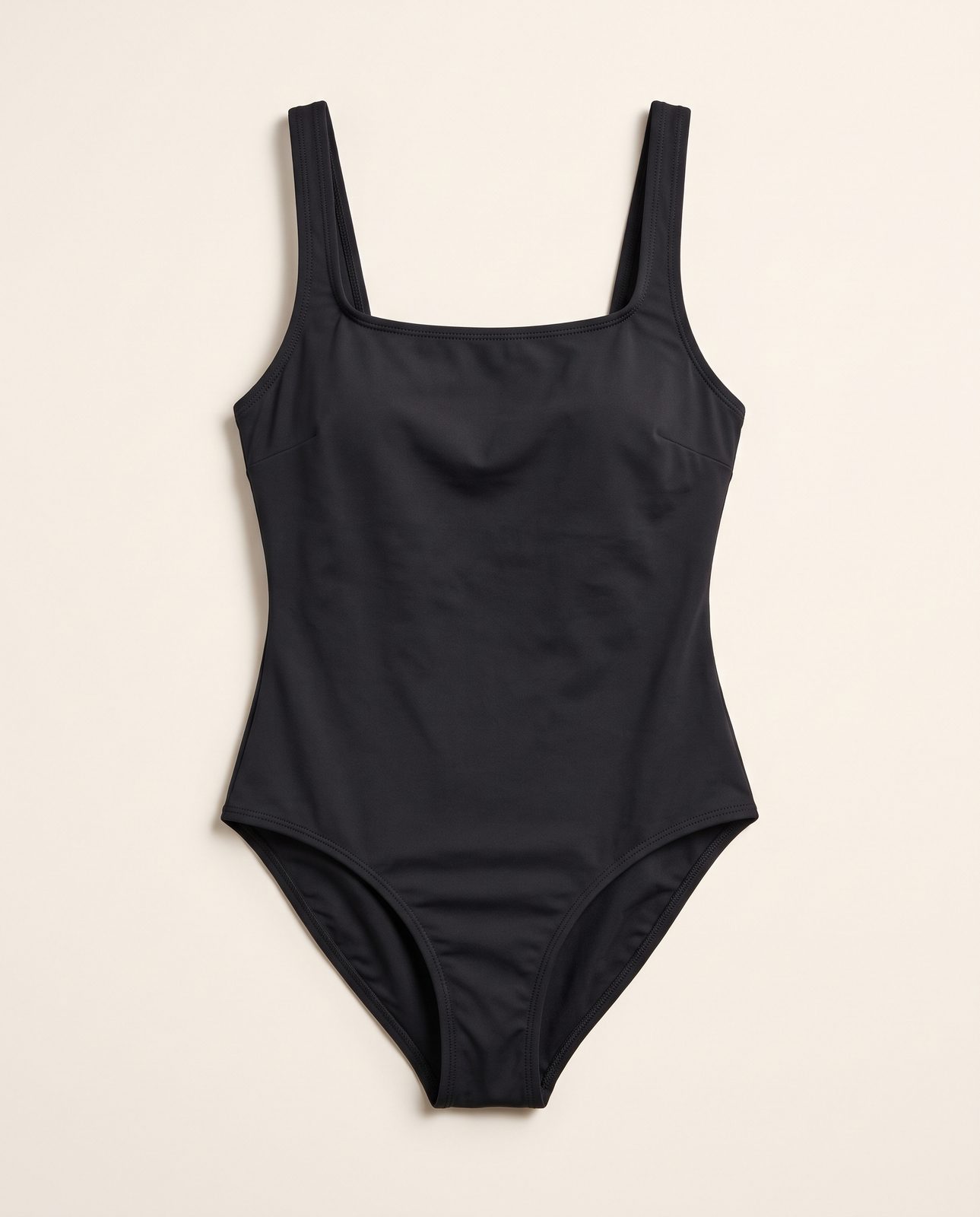
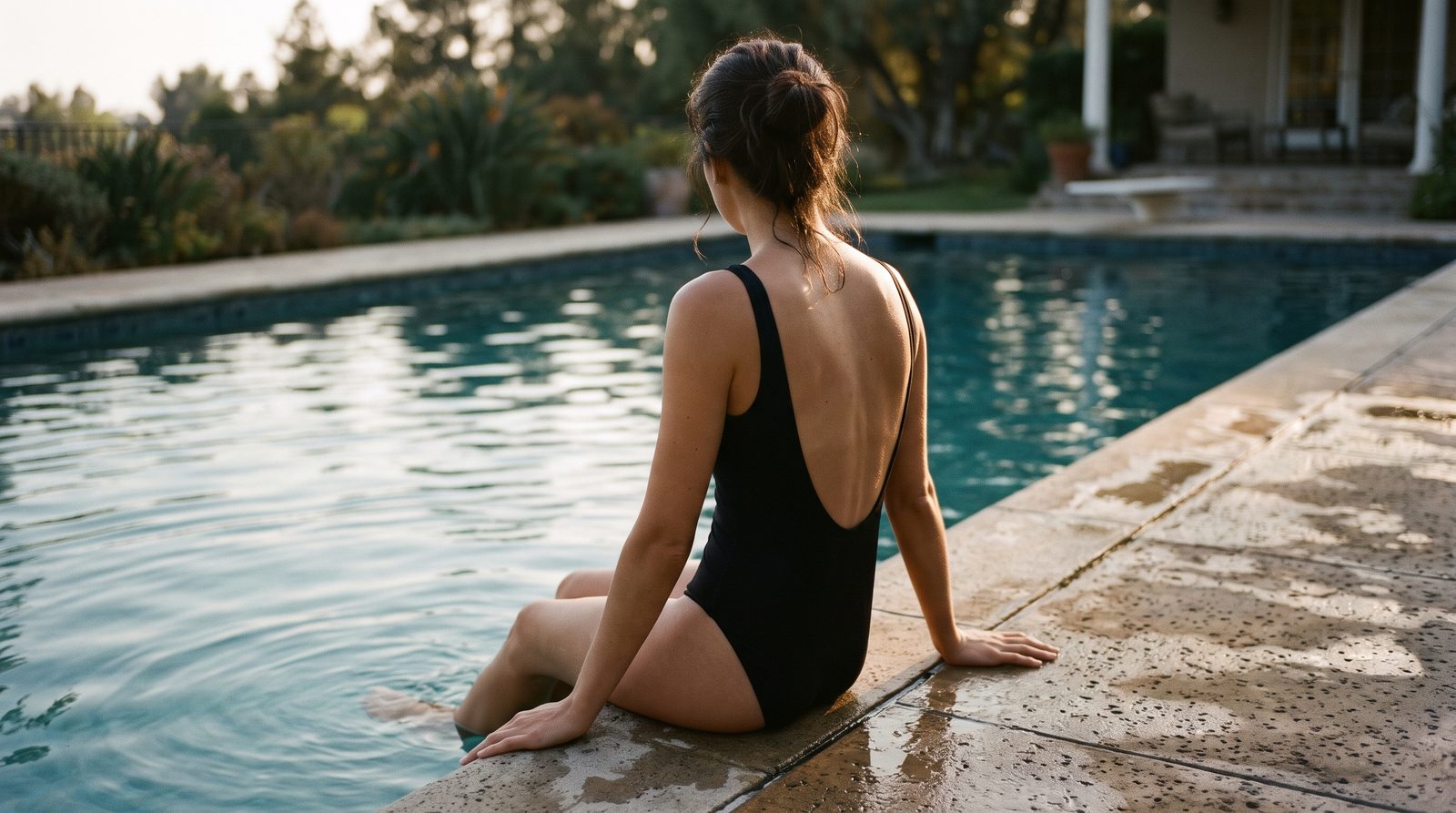
For slides, a one-piece with a high neck or a square neck is the simplest answer: nothing to adjust at the top of a queue, no gap at the back. The black square neck onepiece (€85–99) is the shape we recommend most often, because the straps are wide enough to stay put and the leg line is high enough not to drag.
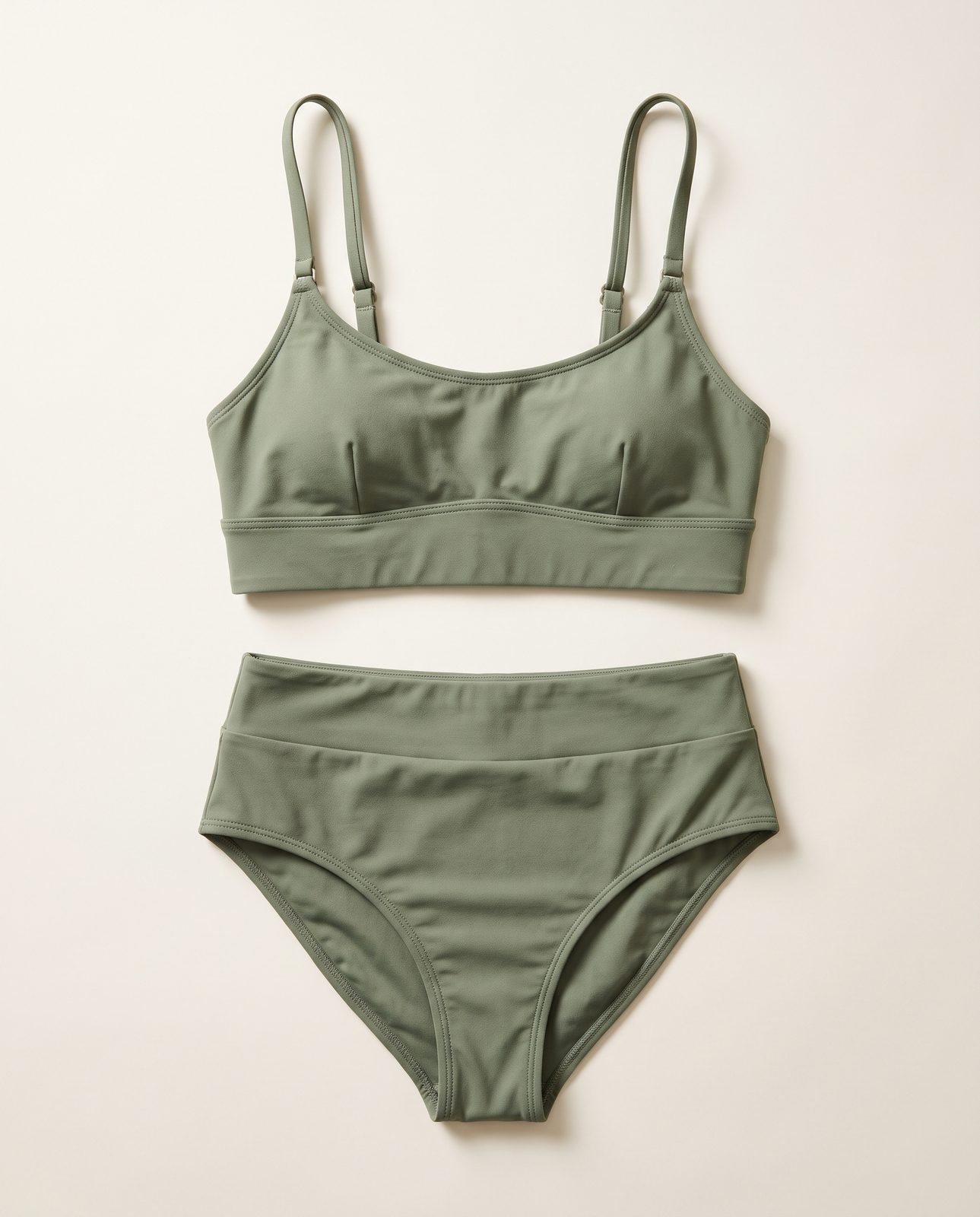
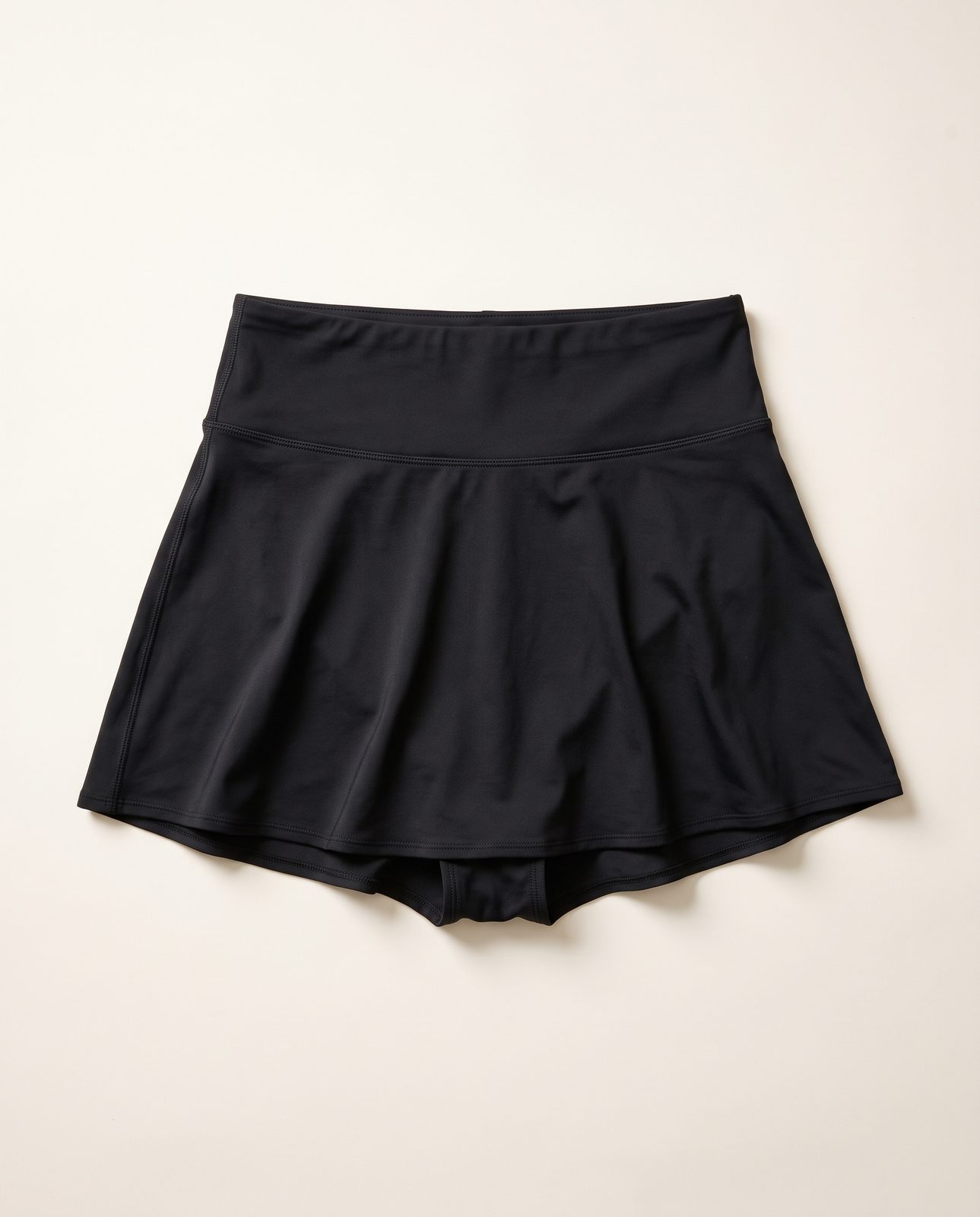
A high-waist bikini works if the top is a secure crop rather than a triangle. The sage high-waist bikini (€92–95) covers the stomach and stays in place in a wave pool, and the two pieces dry faster between rides. A swim skirt is the better choice for anyone who wants more coverage walking between attractions; the swim skirt bottoms (€45–55) dry in about 25 minutes in sun.
What to wear on the walk between rides
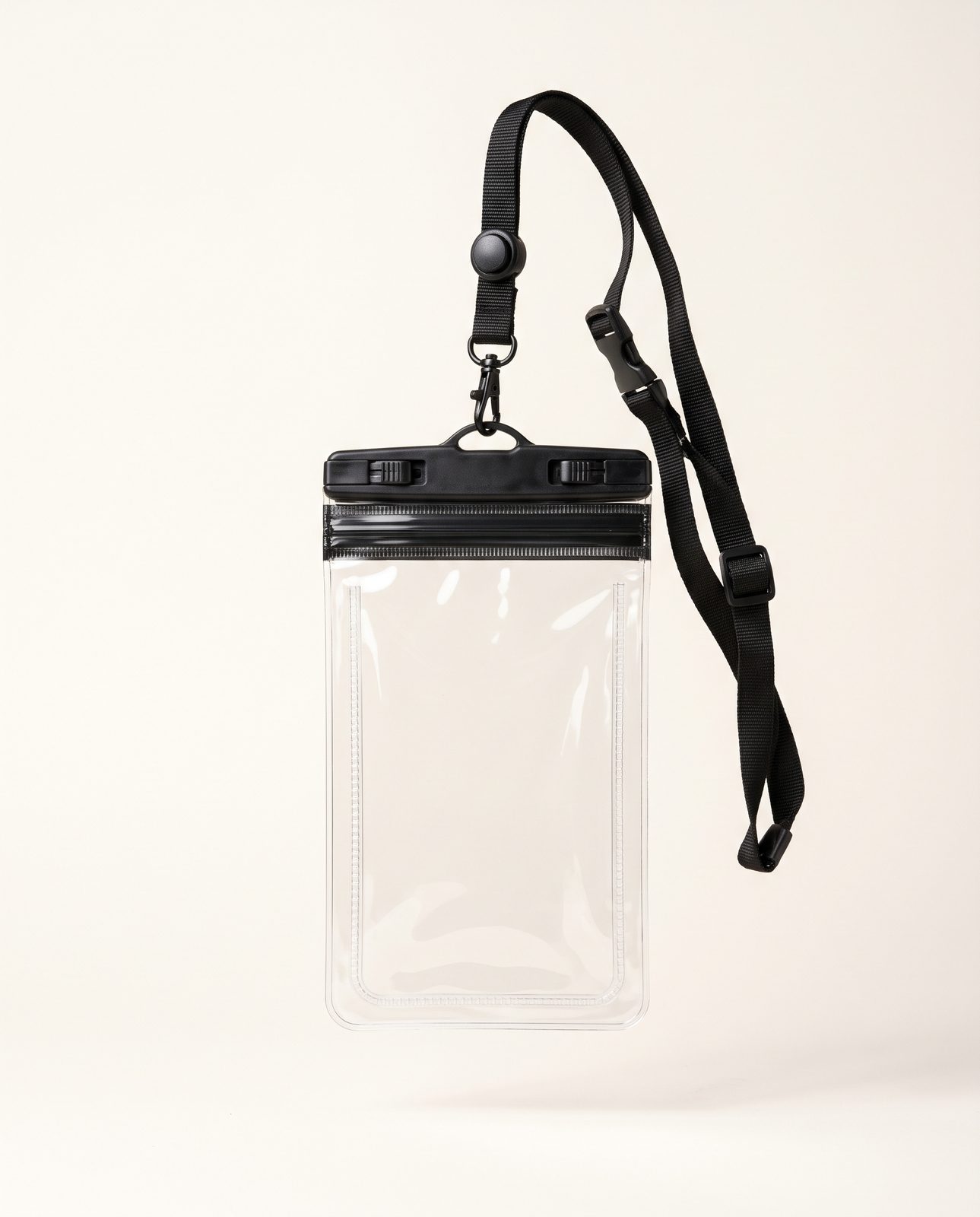
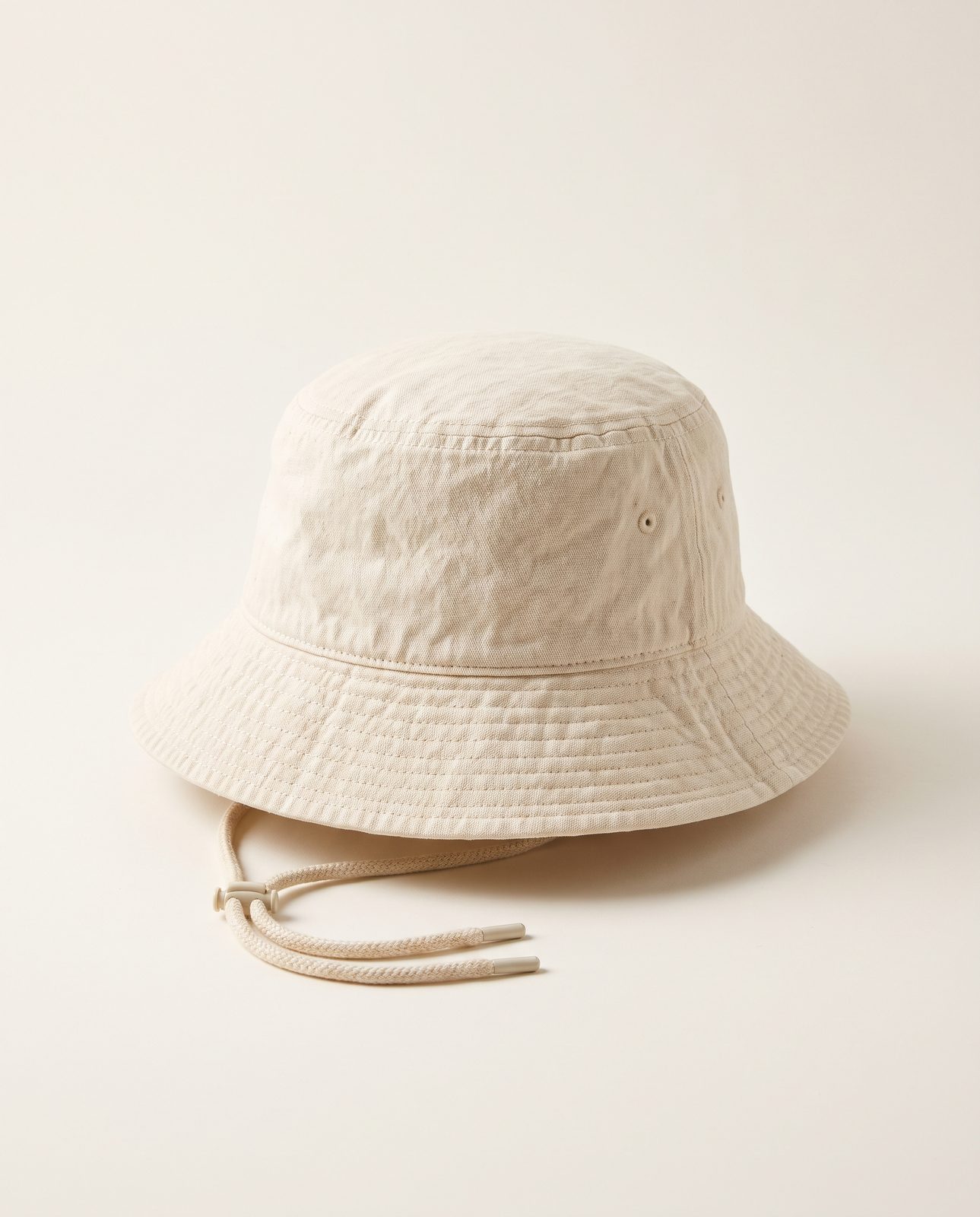
A wet cotton T-shirt is the worst option: it holds water, chafes under a life jacket and stays damp for two hours. Take a quick-dry cover-up instead, plus rubber-soled sandals for hot concrete, which reaches 55°C by early afternoon in July and August. A bucket hat with a 10 cm brim and a waterproof phone pouch (€19–29) complete the kit.
Lockers are usually €5–8 for the day plus a deposit, so carry as little as possible: one card, one phone, one towel.
Rinse within the hour: care that doubles the life
Chlorine keeps working on fabric after you leave the water. Rinse the suit in cold fresh water within an hour of getting out, then dry it flat in shade rather than on a hot rail. Never wring it — twisting stretches the elastane and leaves the suit out of shape at the hips.
A 30°C hand wash with a teaspoon of mild detergent every third visit removes the chlorine smell that builds in the lining. Sunscreen and fake tan are the other stains to watch: both leave yellow marks on white and pale suits, and both come out more easily if rinsed before they dry.
A water park packing list
Everything here fits in a 20-litre bag and weighs under 1.2 kg.
- One secure one-piece, or a high-waist bikini with a crop top.
- A quick-dry cover-up and rubber-soled sandals.
- A microfibre towel, which dries in 15 minutes and packs to 200 g.
- A 100 ml sunscreen, reapplied every 90 minutes.
- A waterproof pouch for the phone and a €10 note for the locker.
- A dry bag for the wet suit on the journey home.
Frequently asked questions
Is a bikini okay for water parks?
Yes if the top is a secure crop or high-neck style and the bottoms are high-waist rather than tie-side. Triangle bikinis and halter necks move under slide pressure and are the most common thing to go wrong.
What should I avoid wearing on water slides?
Metal rings, buckles, rivets, loose jewellery and anything with ties or long cords. Cotton T-shirts are also a poor choice because they hold water and chafe under a life jacket.
How do I stop swimwear fading in chlorine?
Choose polyester or PBT for regular pool visits, rinse in cold water within an hour, and dry in shade rather than direct sun. Avoid leaving a damp suit in a plastic bag, which concentrates the chlorine.
Do water parks allow swim skirts and rash guards?
Most allow both, though some ask that loose clothing be fitted so it cannot catch on a slide. A swim skirt with attached briefs and a fitted rash vest are the safest versions to wear.