The best beach towels are not the thickest ones on the shelf. For sand, salt and a shared bathroom, a 450–500 GSM cotton towel at 100 × 180 cm dries in about three hours, wraps an adult and still folds into a quarter of a day bag. A 600 GSM bath towel feels better in the shop and then stays damp in a suitcase for two days.
Below is how GSM, ply, weave and size actually behave on a beach, plus the washing rules that keep a towel absorbent past its second summer. We sell two towels and turn away more samples than we accept, so most of this is the reasoning behind that.
What GSM actually tells you
GSM is grams per square metre, the weight of the fabric rather than its quality. A 350–400 GSM towel is light, dries in roughly two hours in sun and feels thin on a lounger. At 450–500 GSM you get enough pile to absorb properly and a drying time of about three hours. Above 600 GSM the loops are dense enough to hold water for six hours or more in still air, which is why hotel towels feel luxurious and smell of damp by evening.
Weight follows directly: a 70 × 140 cm towel at 450 GSM weighs about 440 g, a 100 × 180 cm towel at the same GSM roughly 810 g. That difference is most of a day bag's comfortable load, and on a hand-luggage trip the smaller size is not a compromise but the sensible choice.
Cotton, Turkish cotton, waffle and microfibre
Long-staple Turkish cotton spins into a smoother yarn, so the loops stay intact for more washes and the towel feels softer after ten cycles rather than matting. Standard cotton is perfectly serviceable and cheaper; the difference shows at around the two-year mark, not on day one. Look for a two-ply yarn, which resists flattening better than single-ply at the same GSM.
Waffle weave at 300–350 GSM is the fastest-drying cotton option at about 90 minutes, because the honeycomb structure exposes more surface. It is less soft and holds less water, so it suits a second towel rather than a full-body wrap. Microfibre at 200 g dries in 30 minutes and packs to the size of a paperback, but it does not wrap, slides off a plastic lounger and feels clammy once saturated.
- 450–500 GSM: the beach sweet spot for absorbency and drying
- Two-ply long-staple cotton: survives 50+ washes without matting
- Waffle at 300–350 GSM: fastest cotton dry, least soft
- Microfibre: smallest pack size, weakest wrap
Size: 70 × 140 or 100 × 180 cm
A 70 × 140 cm towel covers a sun lounger from the knee to the shoulders and works as a hair towel, a picnic blanket for two or a changing screen if you hold it with a friend. A 100 × 180 cm towel covers the whole lounger and wraps an adult from shoulders to mid-calf, which is what most people actually want on the sand.
The trade-off is volume, not weight alone. A large towel at 450 GSM takes up about 4 litres of a 25-litre day bag rolled loosely, closer to 2.5 litres rolled tight around a water bottle. Two large towels plus a change of clothes fill a 20-litre tote completely, so for a family of four, two large and two small towels beats four large ones.
Sand, salt and the shake test
Sand sticks to terry loops, and the deeper the pile the harder it is to shift. A flat-weave or low-pile towel releases sand with one sharp flick; a 600 GSM towel needs two hands and a walk to the bin. Fringes trap sand permanently unless you rinse them.
Salt is the slower problem: it dries into crystals that abrade the loops, and it holds moisture against the fibre overnight. Rinse in fresh water at the end of the day, wring gently and hang in moving air. A towel left damp and bundled for 48 hours develops a sour smell that washing will not fully remove.
Washing without wrecking absorbency
Wash at 40°C with a normal dose of powder or liquid and skip fabric softener entirely. Softener coats the loops with silicone, which feels smooth for two washes and then stops the towel absorbing at all; the same applies to dryer sheets. If a towel has already been softened, one hot wash at 60°C with half a cup of white vinegar strips most of the coating.
Tumble dry on low or line dry in shade; high heat shrinks cotton by 3–5% on the first wash and hardens the loops. Microfibre should never see heat above 40°C. Wash beach towels separately from swimwear so sand does not abrade swim fabric in the drum.
Best beach towels: what we stock and why
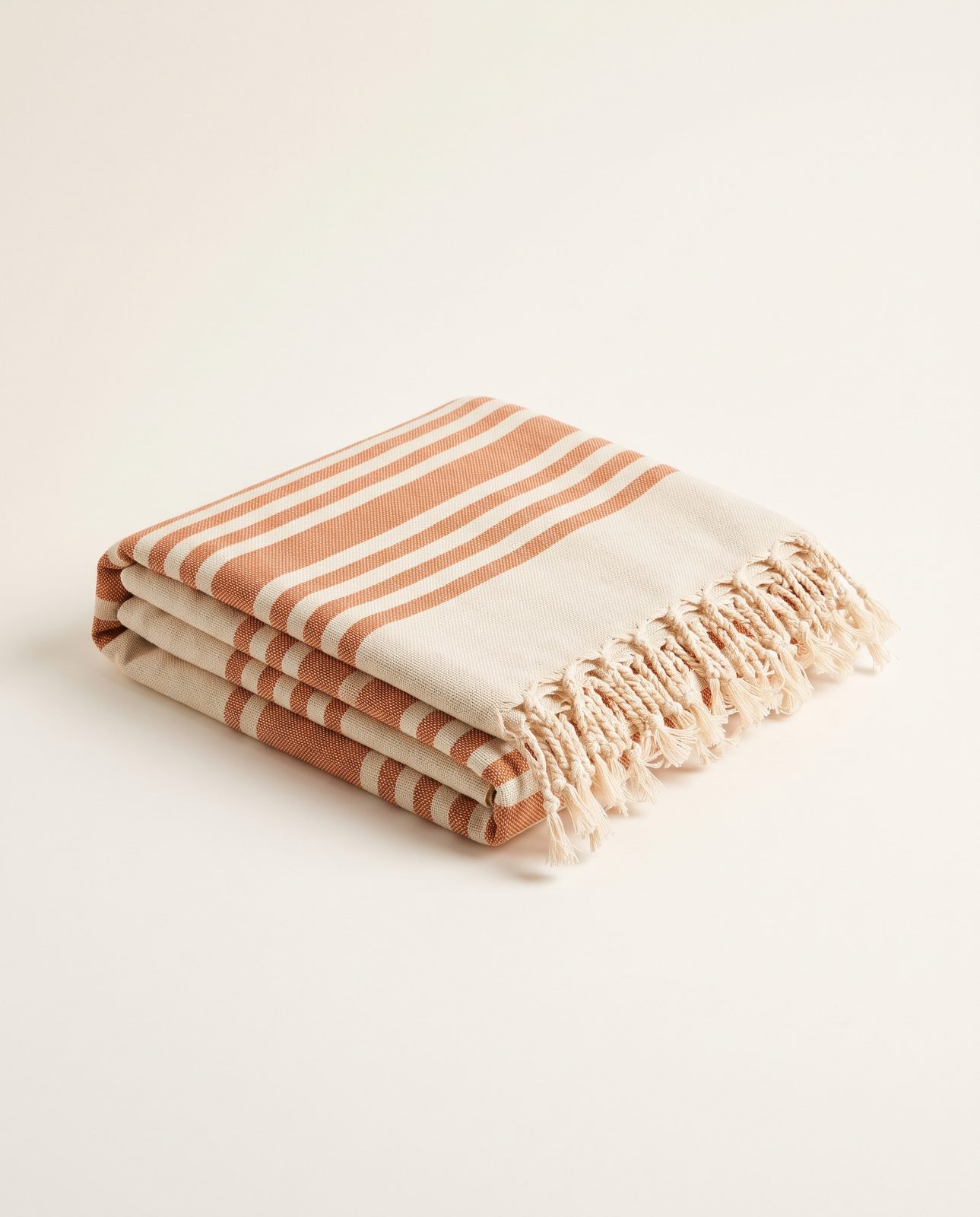
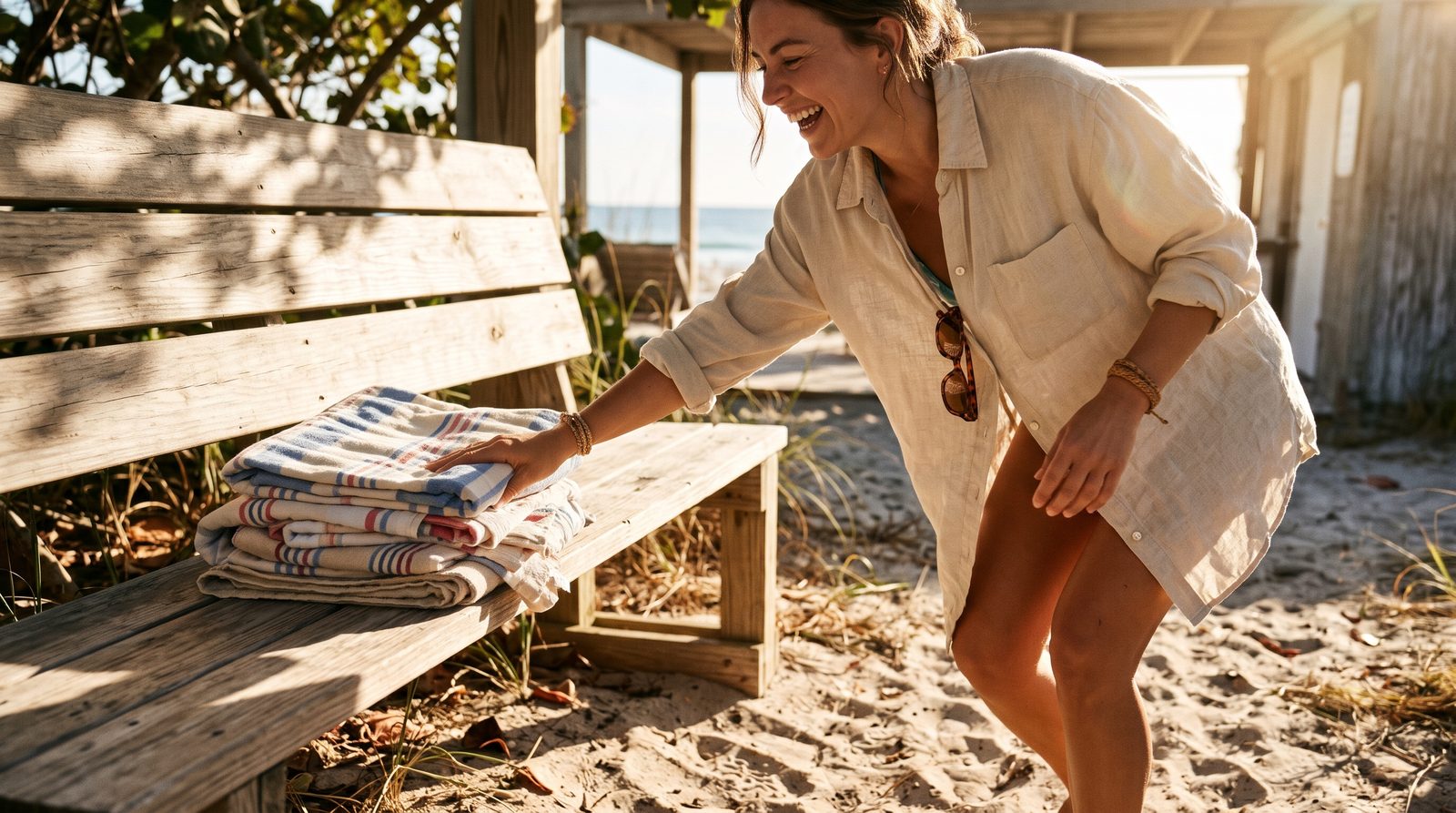
Our striped beach towel is a 100 × 180 cm flat-weave cotton at roughly 420 GSM, which is lighter than the number suggests because the weave is tight rather than piled. It dries in about two and a half hours in Mediterranean sun, shakes clean in one movement and rolls to the size of a 1.5-litre bottle. Cream and terracotta stripes hide the faint sunscreen marks that show immediately on white.
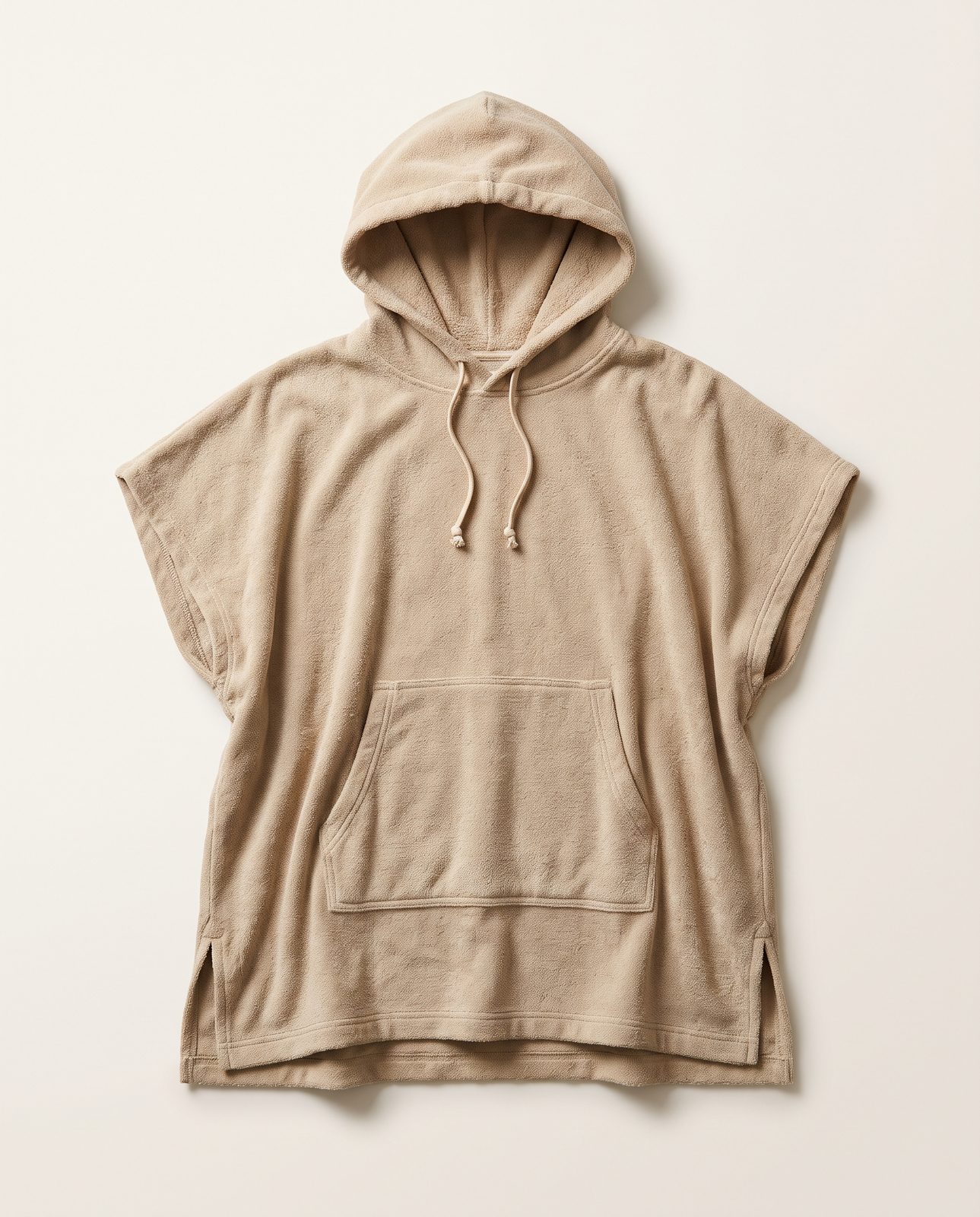
The hooded towel poncho is the other useful shape: 340 GSM cotton terry, a hood and a 60 cm opening, worn like a robe for changing on an open beach. It dries in about three hours and replaces both a towel and a cover-up in the bag.
- Beach towel: 100 × 180 cm, flat weave, fastest dry
- Towel poncho: hands-free changing, doubles as a cover-up
- One large plus one small per person is the useful ratio
- Rinse after salt water, dry fully before packing
- No softener, ever
Frequently asked questions
What is the best GSM for a beach towel?
Between 400 and 500 GSM. That range absorbs a full body of water, dries in about three hours in sun and still shakes sand off. Towels above 600 GSM stay damp for hours in a bag, and below 350 GSM they feel thin and soak through quickly.
Are Turkish towels better for the beach?
They are lighter and dry faster because they are flat-woven rather than piled, usually 300–400 GSM. They absorb well for the first few minutes but feel wet sooner than terry. Long-staple Turkish cotton in a terry weave is the more durable compromise.
How do I stop beach towels smelling damp?
Rinse out salt water, wring gently and hang the towel unfolded in moving air within an hour of leaving the beach. A towel bundled damp for 48 hours grows the bacteria that cause the sour smell. A 60°C wash with half a cup of white vinegar resets a towel that already smells.
Can I wash beach towels with swimwear?
Better to wash them separately. Sand trapped in towel loops abrades elastane in the drum, and towels shed lint into swim fabric. If you must combine them, rinse the towel first and use a mesh bag for the swimwear.