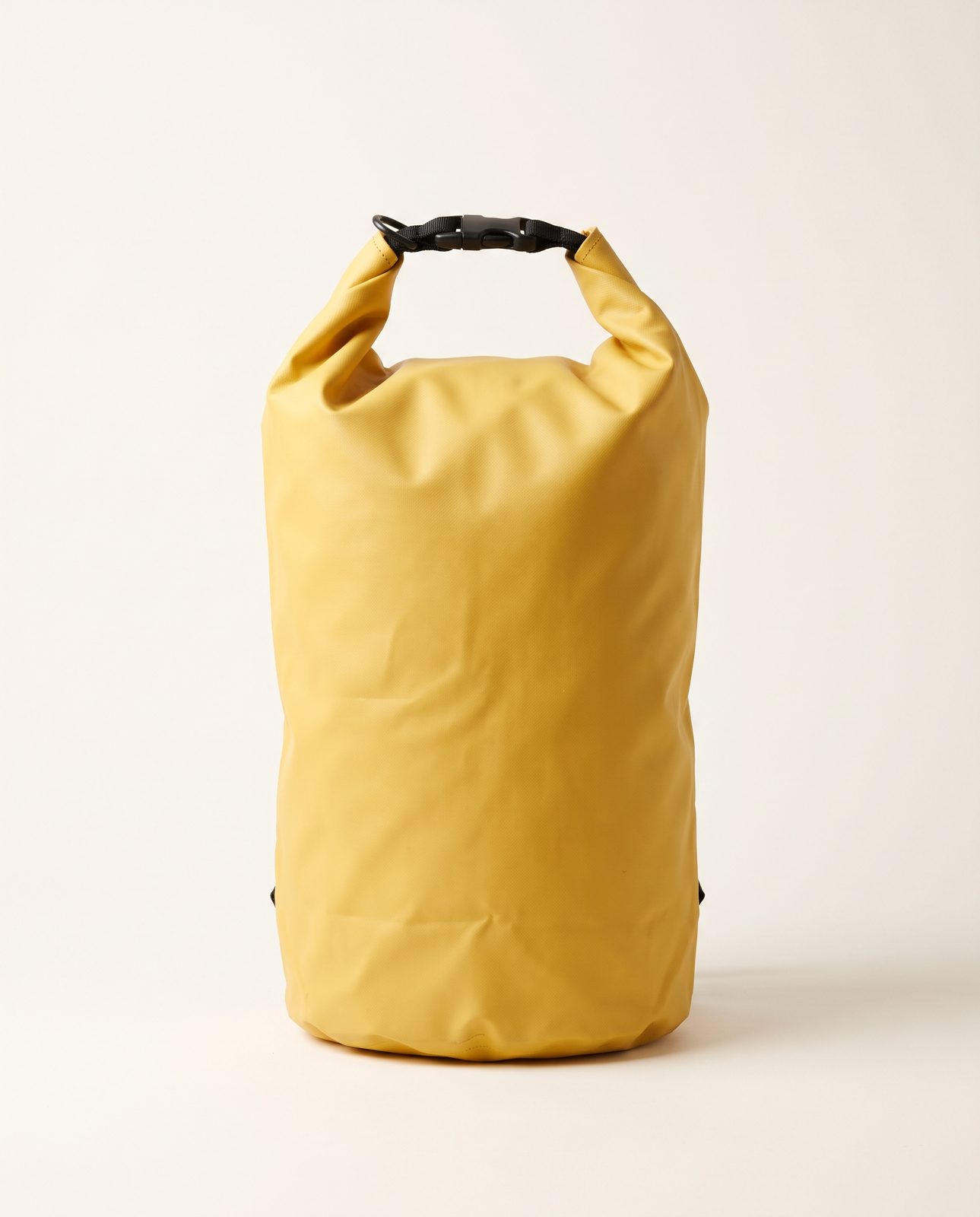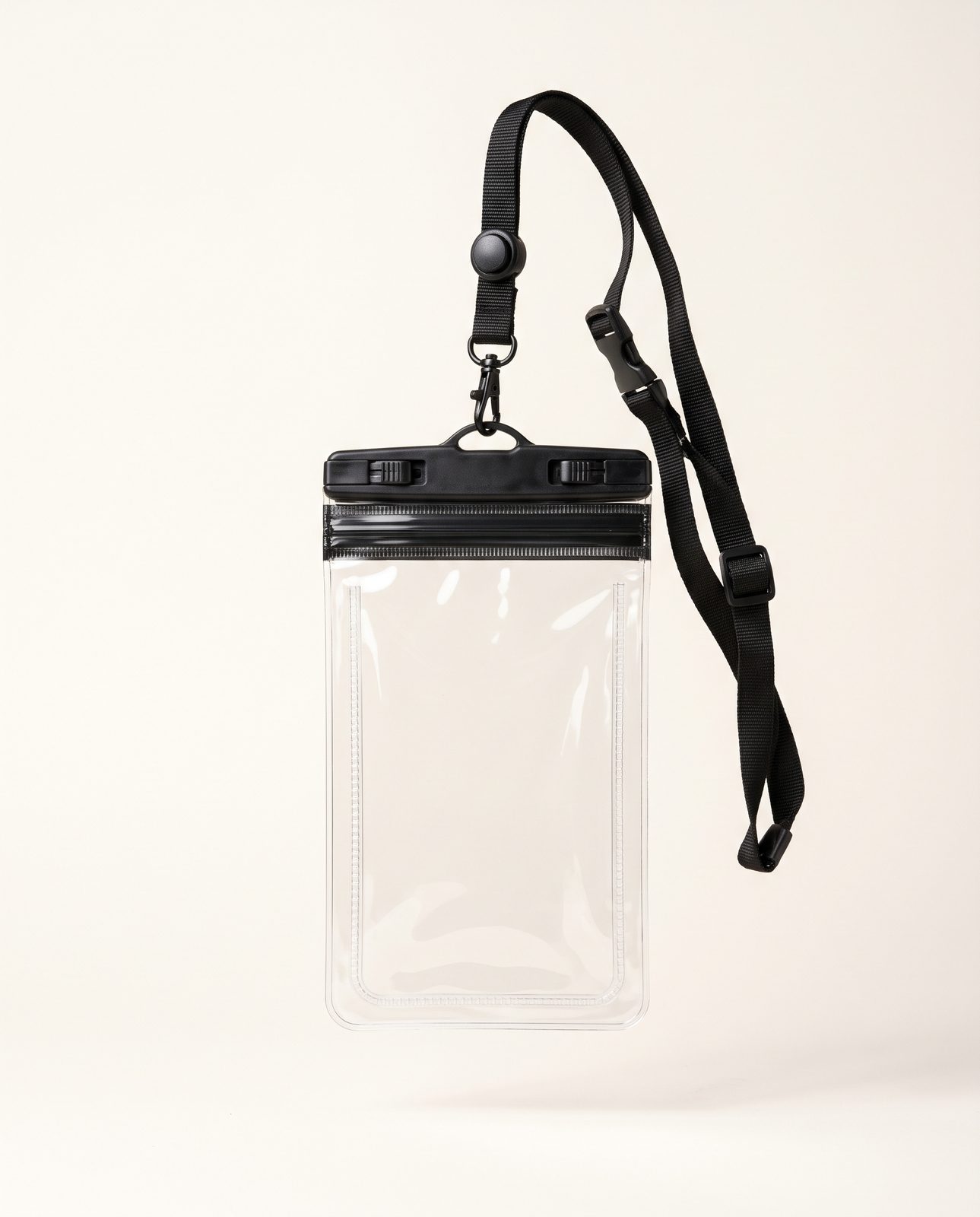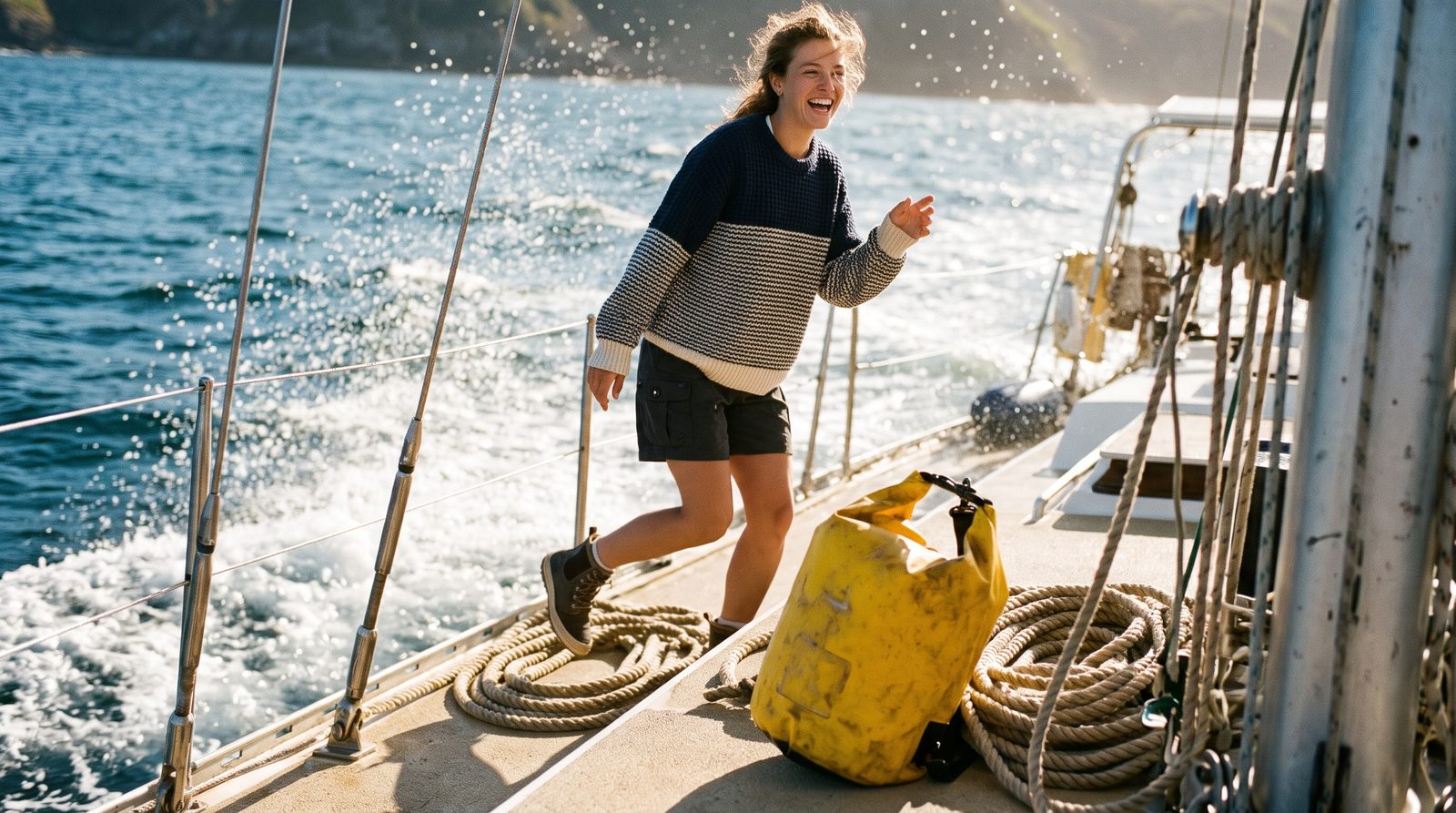
A waterproof dry bag keeps a towel, a phone and a change of clothes dry on a boat, a kayak or a wet ferry crossing — but only if you buy the right volume and close it properly. The three sizes that matter are 5, 10 and 20 litres, and the closure needs three rolls before the clip goes on. A bag rolled twice will keep out spray and fail in a bilge.
Dry bags are also the most misunderstood piece of beach kit we sell. They are not submersible rucksacks, they do not breathe, and a 20-litre bag does not hold 20 litres of soft clothes. Below is what the numbers mean in practice, and how to pack one so the seal is not fighting a trapped air pocket.
What a dry bag does, and what it does not
A roll-top dry bag is designed for splash, spray and short immersion — a wave over the bow, a bag dropped in ankle-deep water, rain on a scooter. It is not a diving bag. Unless the maker states a depth and duration, assume it will not survive being dragged under for a minute: nothing about a roll-top closure is rated for pressure, and pressure is what forces water past a fold.
The fabric matters as much as the closure. Most bags use a laminate with a hydrostatic head of 5,000–10,000 mm, meaning a column of water that high will not pass through. That is plenty for rain and spray. Seams are the weak point: welded seams hold, stitched-and-taped seams come second, and plain stitched seams wick water along the thread.
Waterproof dry bag sizes: what 5, 10 and 20 litres hold
A 5-litre bag holds a phone, a wallet, sunscreen, a paperback and a light shirt — a walk-to-the-beach bag, not a swim bag. A 10-litre bag takes a 100 × 180 cm towel, a change of clothes and a phone pouch, which covers a boat day for one person. A 20-litre bag takes two towels, two changes of clothes and a small camera, or one person's gear for a full day with lunch.
The catch is that soft items compress and trapped air does not. A 20-litre bag packed with a rolled towel closes easily; the same bag packed to the brim with clothes will not roll three times because there is no fabric left to fold. Leave about a fifth of the volume empty.
- 5 L: phone, wallet, sunscreen, shirt — 250 g empty
- 10 L: one towel, one change of clothes, phone pouch
- 20 L: two towels plus two changes of clothes
- Leave 20% headroom so the top can roll three times
- Pack soft items first, hard items away from the seams
The roll-top closure, done properly
Load the bag, then press the top flat against your chest to push out the bulk of the air before folding. Fold the top over a straight edge — a table, a bag of towels — rather than in mid-air, so the first fold is 4–5 cm deep and even. Roll down three times, pressing each fold flat, then clip the buckle and pull it snug.
Three rolls is the minimum because each fold creates a channel of trapped air that resists water. Two rolls leaves a single fold that opens under pressure, and four rolls on a stiff 500D bag is hard on the fabric.
Fabric: 210D TPU against 500D PVC
Denier (D) is yarn thickness, not waterproofness. A 210D TPU bag weighs about 250 g in the 10-litre size and folds into a pocket; it is fine for beach and boat use but will scuff on rock. A 500D PVC bag weighs closer to 500 g, shrugs off abrasion and stays flexible in cold, but PVC stiffens with UV and is harder to recycle.
For most holidays the lighter TPU bag wins because you will actually carry it. If the bag lives on a fishing boat or gets dragged over rocks, pay the weight penalty for 500D. Avoid a clear window on the body either way: the welded edge is the first place a laminate delaminates.
Packing a dry bag for a boat day
Put the heaviest items at the bottom and against the side that will rest on the deck, so the bag stands up rather than flopping. Wrap sunscreen in a cloth — a 200 ml bottle leaking inside a sealed bag soaks everything. Keep the phone pouch in the top third so you can reach it without unpacking.
Clip the bag to something solid rather than trusting the shoulder strap. On a moving boat a 20-litre bag swings, and the strap eyelet is the first thing to tear. A 60 cm leash to a cleat or rail is safer, and it means the bag cannot go over the side.
- Heavy items at the base, phone pouch last in
- Sunscreen bottle inside a cloth bag, always
- Clip to a rail, not to your wrist
- One bag per person, not one shared 40-litre bag
- Keep a small towel outside the bag for hands
Care between trips
Rinse the bag inside and out with fresh water after saltwater use, then dry it open and upside down in shade. Salt left in the fold line abrades the laminate every time you roll it, and a bag stored sealed with damp air inside grows mildew within a week. Never store it compressed; hang it or leave it open.
UV is the slow killer. A bag left on a balcony for a month will chalk at the surface and crack at the fold. Store it in a cupboard and expect three or four seasons of regular use before the fold line softens — at which point it becomes a beach bag for towels and keys, not for a phone.
Frequently asked questions
What size dry bag do I need for a beach day?
Ten litres is the useful size for one person: a full-size towel, a change of clothes, sunscreen and a phone pouch fit with room to roll the top three times. Five litres is a valuables bag; 20 litres suits two people or a full day with lunch.
Are dry bags fully waterproof?
Watertight for splash and short immersion, not for diving. Unless the maker states a depth and time, assume the bag will not survive being held underwater. Test a new bag in the bath with a tissue inside.
How many times should you roll a dry bag?
Three times, with each fold pressed flat and the buckle snug. Two rolls leaves a channel that can open under pressure, and four is hard on stiff fabric. Push the air out before the first fold so there is room to close.
Can a dry bag be used as hand luggage?
As a beach or boat bag, yes, but not as a cabin bag on a flight. It has no structure, no lock and no protection for a laptop, and a sealed bag compresses clothes into creases. Use it inside a suitcase or as a wet-gear bag in the hold.