Choosing a swimsuit by body type works best when you start with proportion rather than a list of things to hide. Two women can wear the same size and need completely different cuts because their shoulder-to-hip balance, torso length and bust differ. This is how we match shapes to swimwear on the shop floor, using a tape measure and no rules about what you are allowed to wear.
Nothing below is a requirement. If you love a cut that is supposedly wrong for your shape, wear it, because comfort shows from across the beach. Use these notes to narrow a rail of 40 suits down to five worth trying on.
Choose swimwear by body type: measure first
You need three numbers: shoulder width, waist and hip. Measure shoulders across the back from the bony point of one shoulder to the other, waist at the narrowest point, and hips 20 cm below it at the fullest part. Compare shoulder and hip: a difference under 4 cm reads as a straight shape, while 6 cm or more tells you which half to balance.
Torso length is the second number worth knowing. Under 58 cm is short, over 64 cm is long, and it explains most one-piece problems. Bust size comes third, since it decides whether you need a cup, a shelf or nothing at all.
- Shoulders within 4 cm of hips: straight or athletic shape
- Hips 6 cm or more wider than shoulders: pear shape
- Shoulders 6 cm or more wider than hips: inverted triangle
- Waist 20 cm or more smaller than hips: hourglass
Pear shape: balance the shoulder line
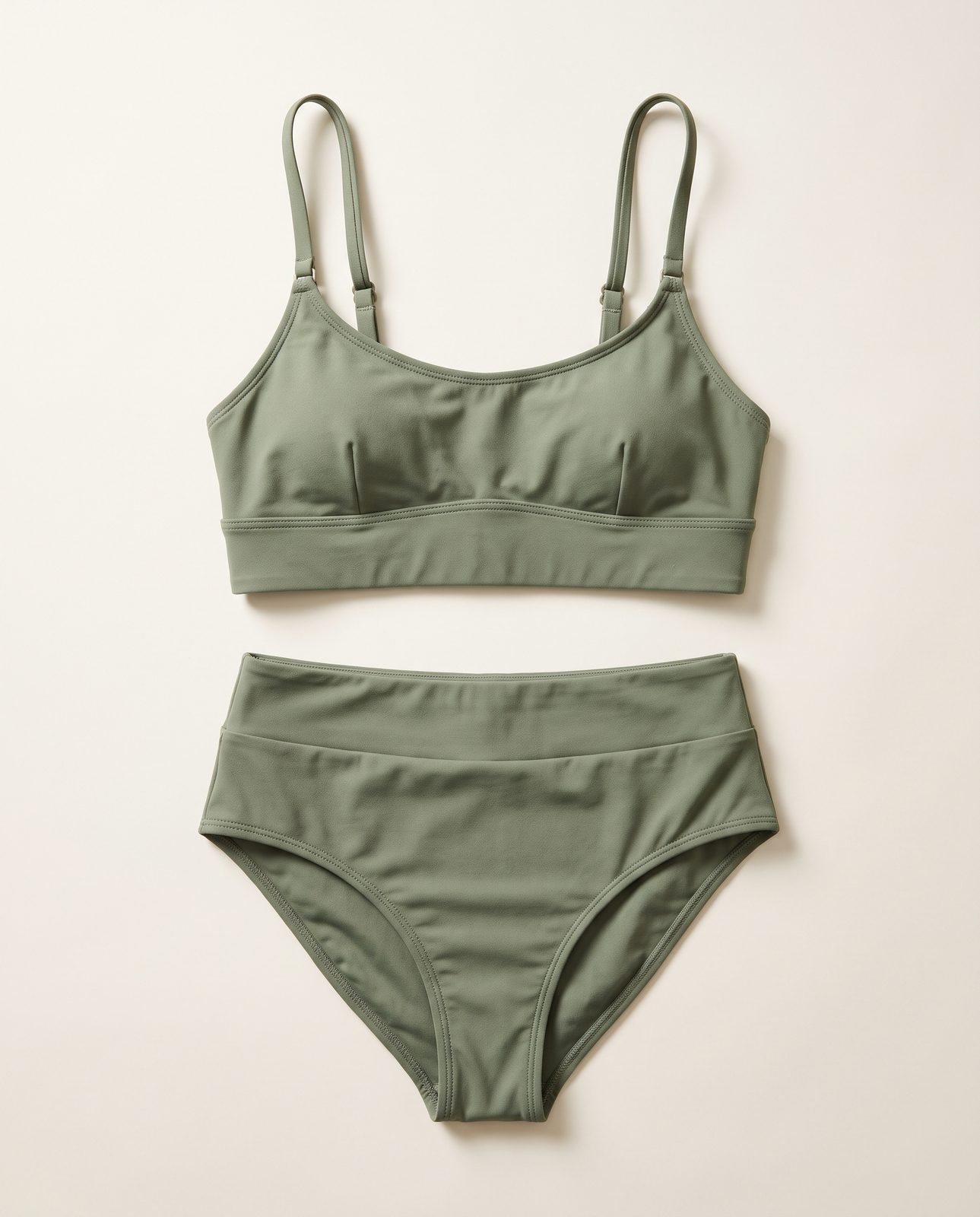
When hips are noticeably wider than shoulders, the eye reads the hip first. A halter neck or a wide square neck adds width up top, while a high-waist bottom in a dark colour keeps the hip line calm. Our sage high-waist bikini sits 11 cm up from the waist, which covers the widest part of the hip without adding bulk.
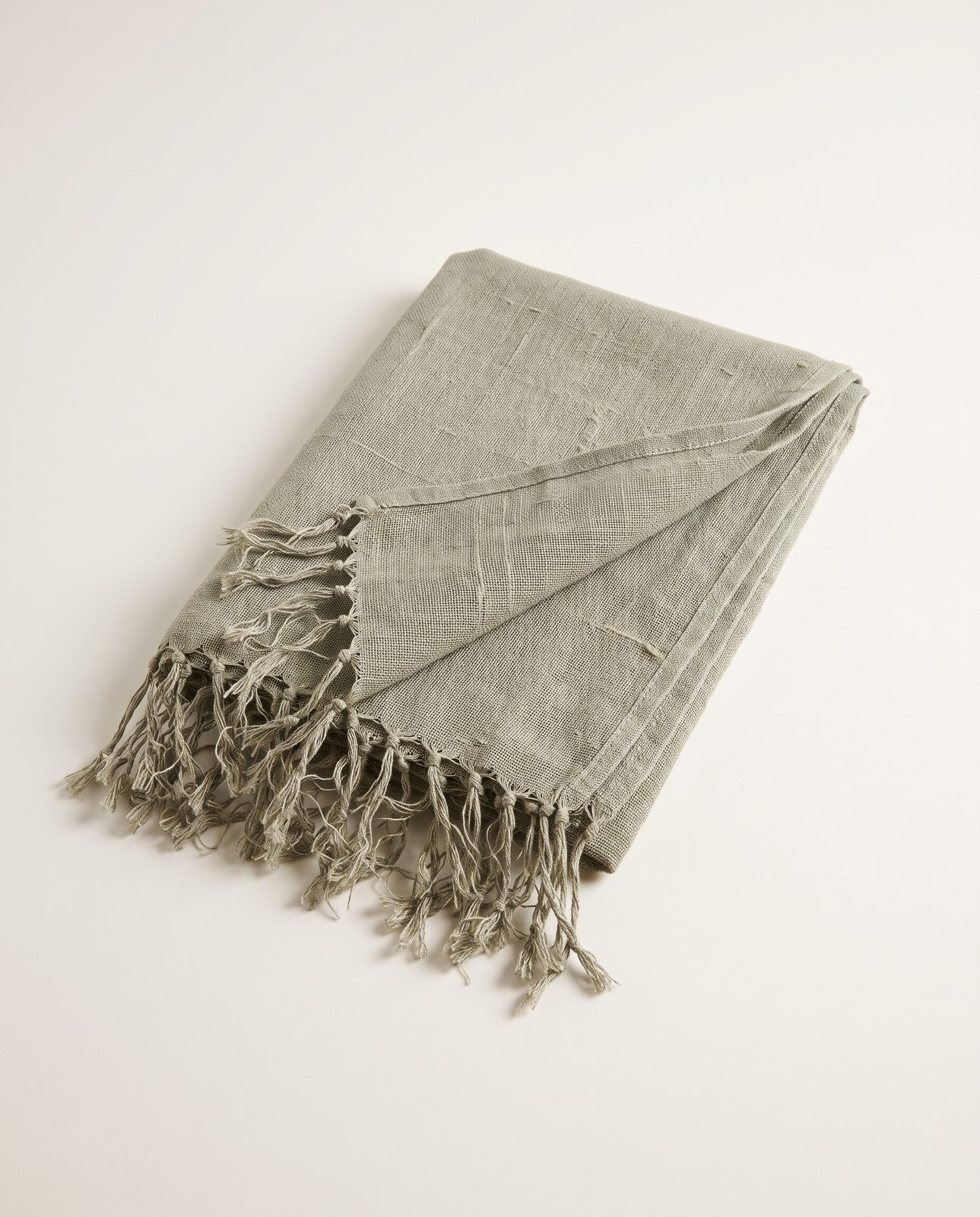
Avoid a brief that cuts across the hip at its widest point, and avoid a busy print on the bottom half only. If you want a one-piece, look for a style with a seam under the bust and a plain lower panel, or tie a seagrass sarong low on the hips so the knot sits at the side rather than the front.
Apple or round middle: length through the torso
A rounder middle usually pairs with a shorter waist and a fuller bust. The goal is a continuous line from bust to hip rather than a horizontal band across the widest part. A V-neck or a square neck with a seam under the bust does that; a wide waistband, a belt or a horizontal stripe at navel height does the opposite.
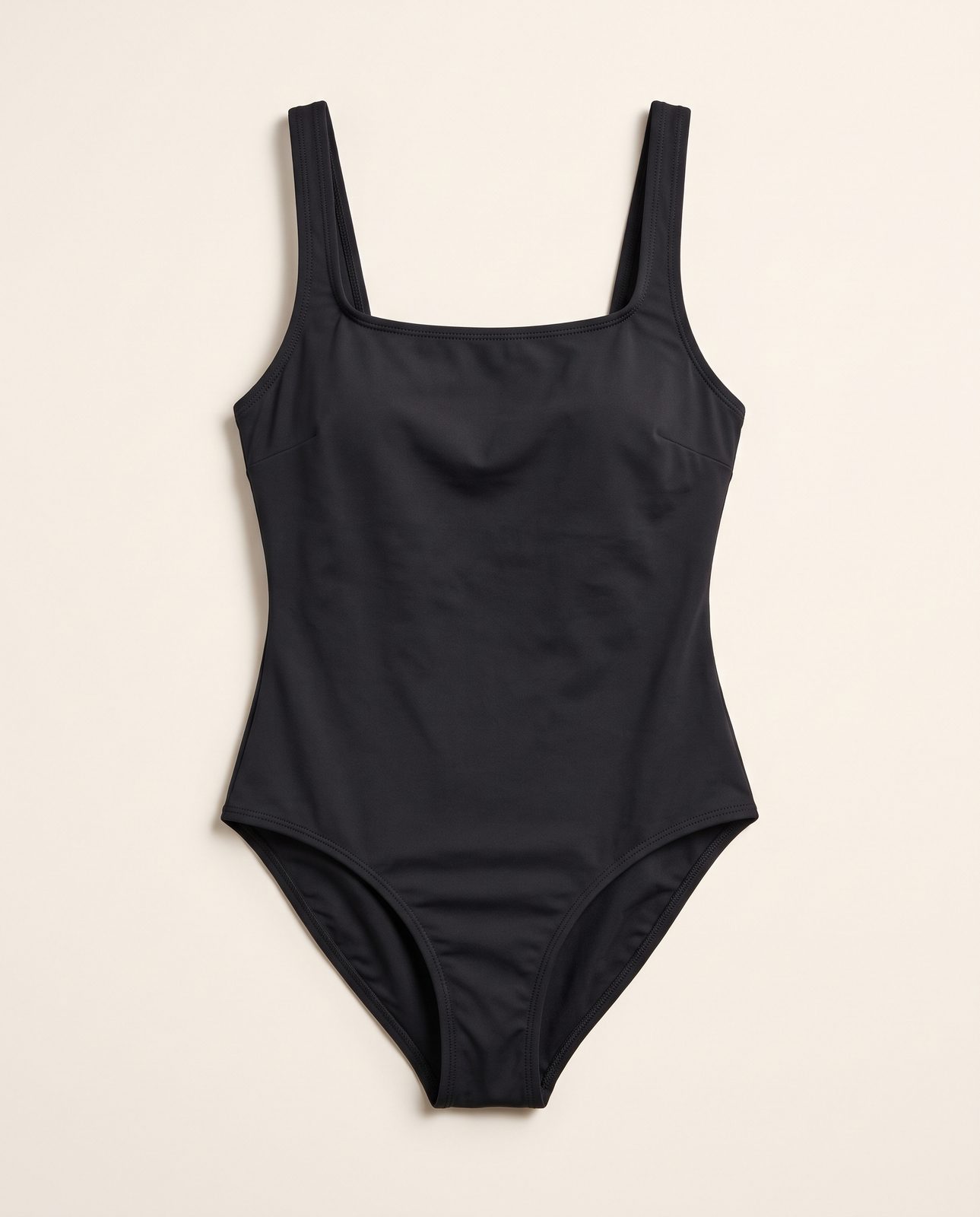
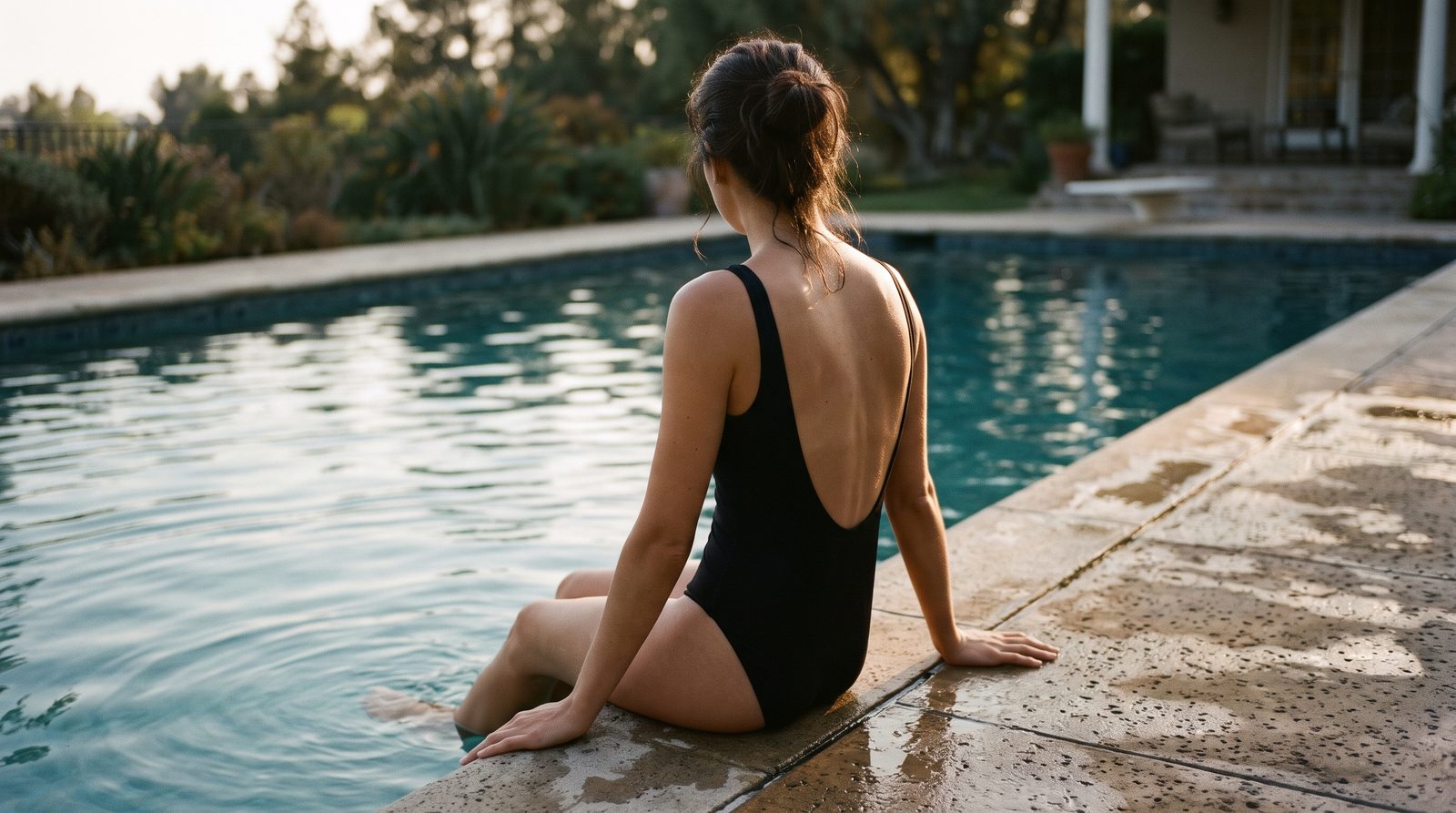
A black square-neck one-piece with side ruching works because the gathers run diagonally, which breaks the width. If you prefer separates, a high-waist bottom that reaches the ribs and a top that skims rather than grips will look more deliberate than a low-rise bikini.
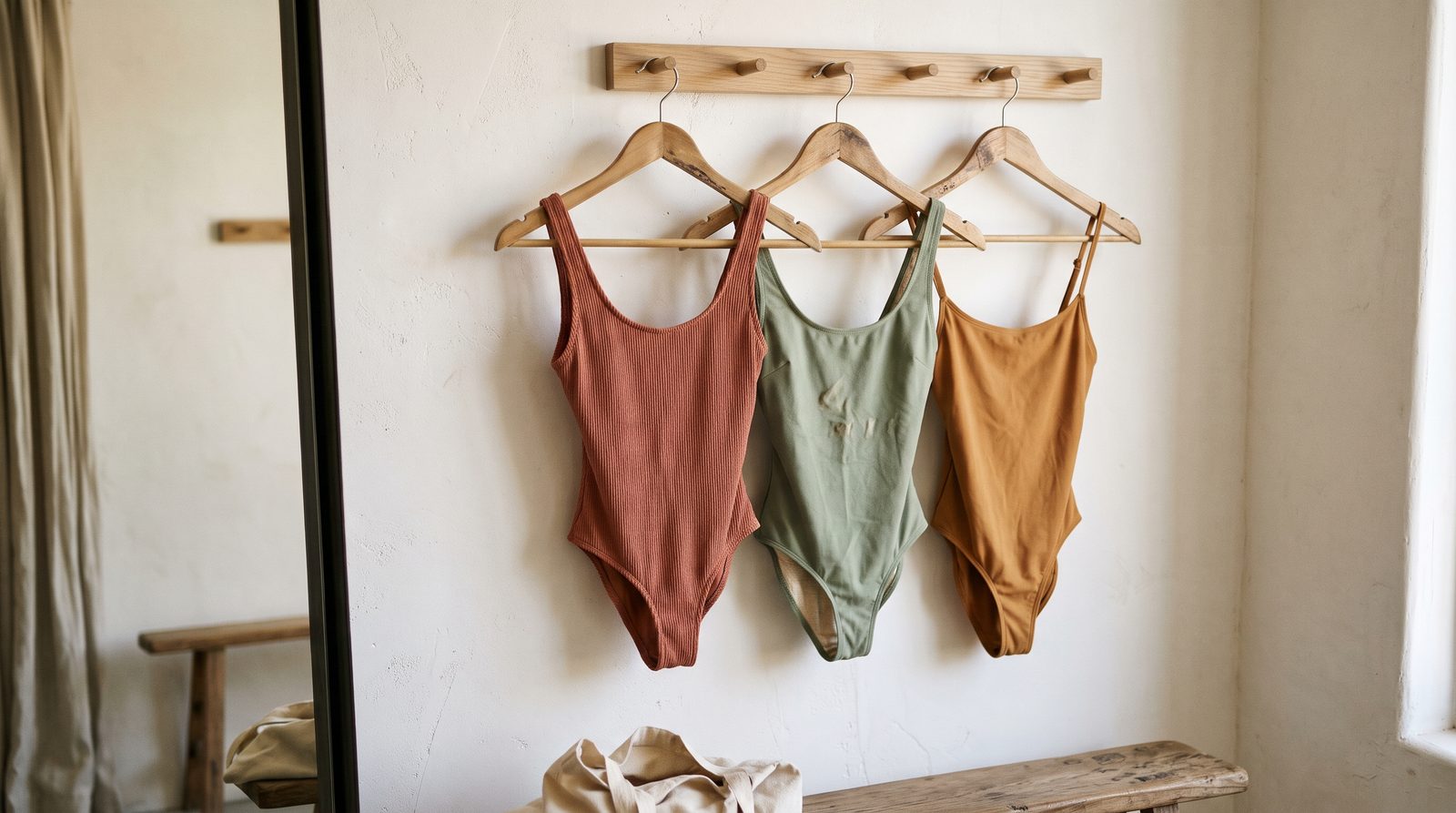
Athletic or straight shapes: build a line
A straight shape has little difference between shoulder, waist and hip, which is why some suits look like they are hanging rather than fitting. You can either work with the line, as swimmers do in a clean square-neck suit, or create a waist with a cutout, a tie belt or colour blocking at the side.
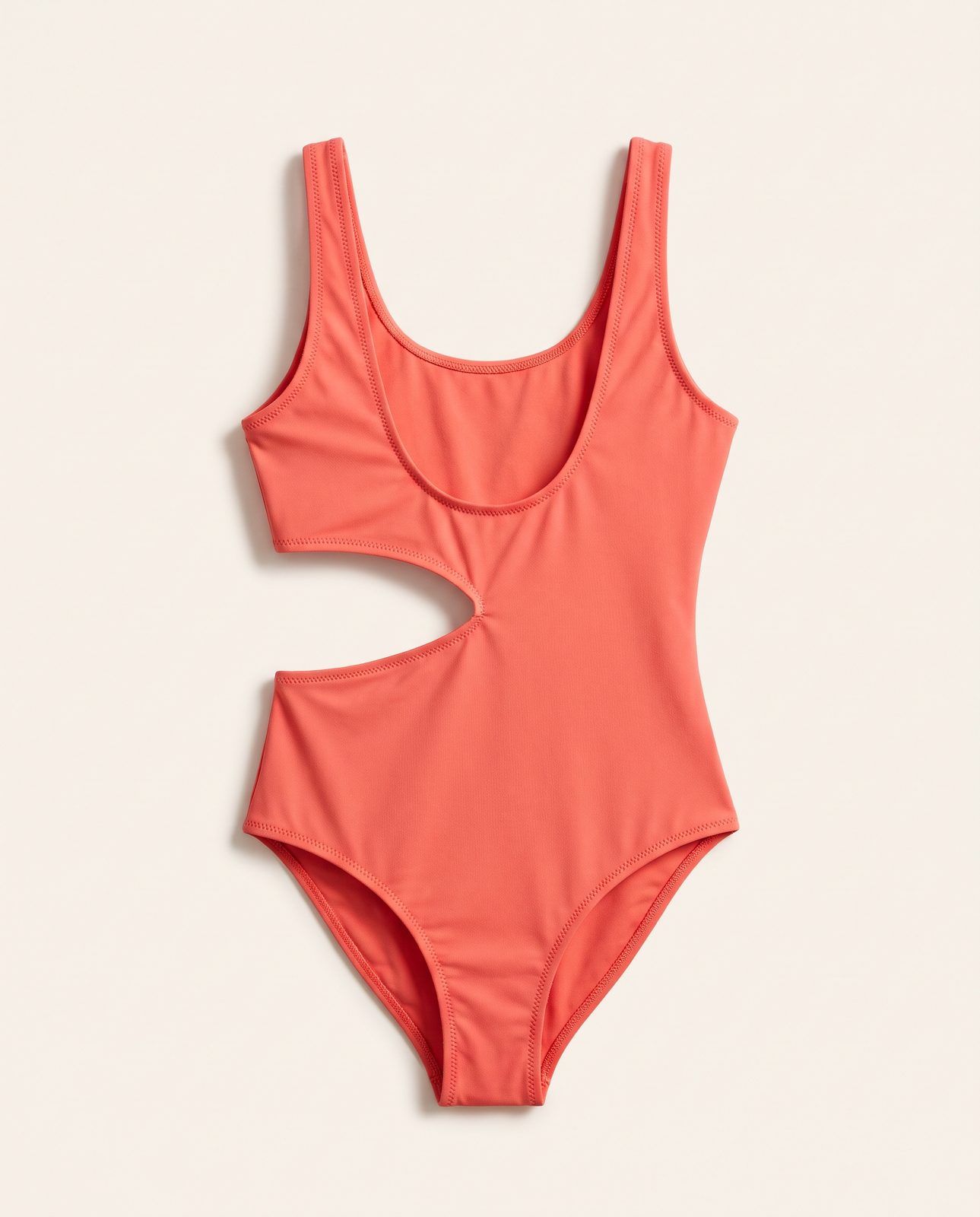
The coral cutout one-piece uses two side openings at waist height, which gives the illusion of a curve without padding. Ribbed fabric also helps here: the vertical texture reads as shape in photographs and in low evening light, where flat jersey can look like a swim team uniform.
Hourglass: keep the waist visible
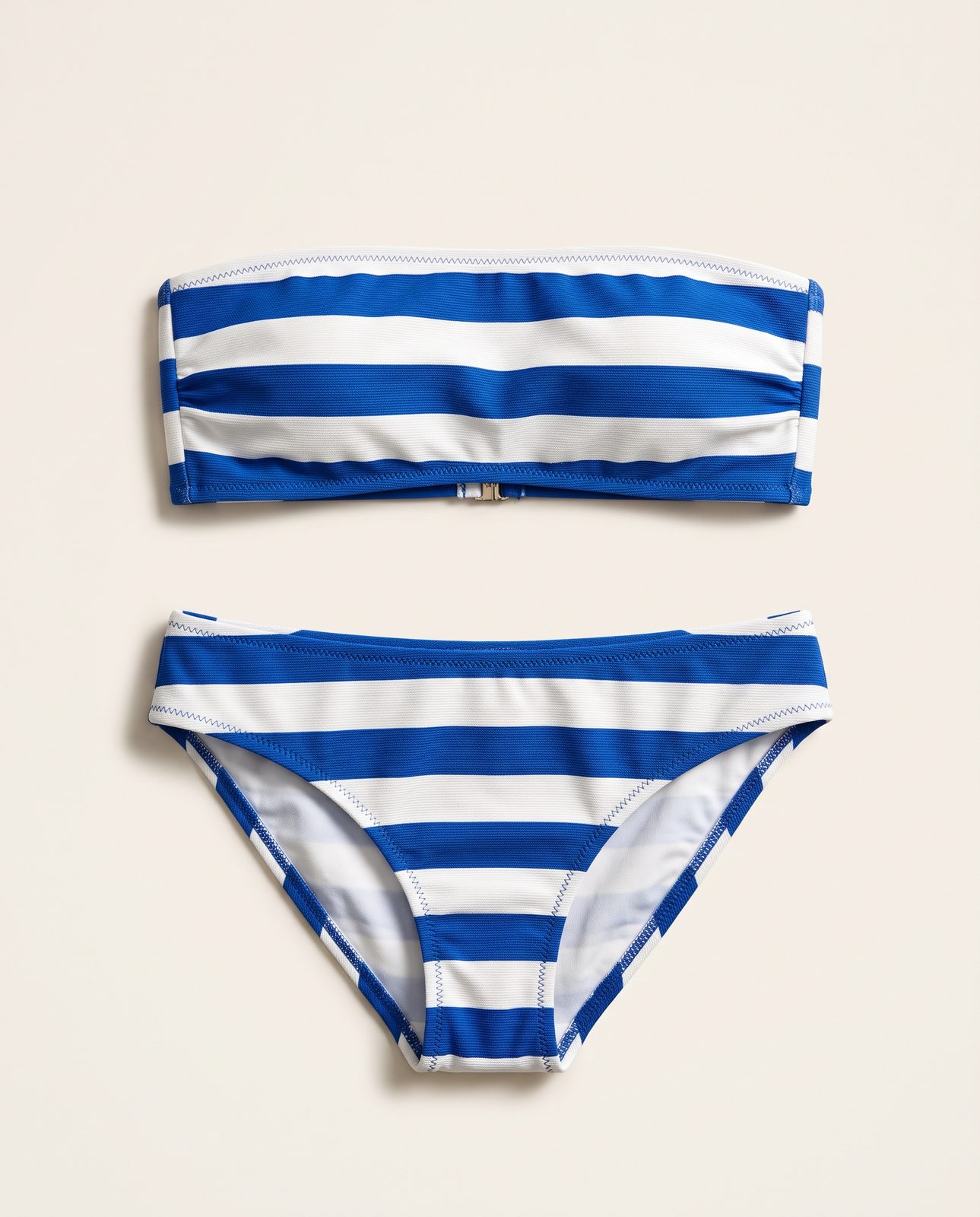
An hourglass shape already has the balance, so the only risk is hiding it. A bandeau or a straight-cut tank can turn a defined waist into a rectangle. Look for a seam at the waist, a wrap front, or a high-waist bottom with a top that ends 2–3 cm above it, leaving a strip of skin at the narrowest point.
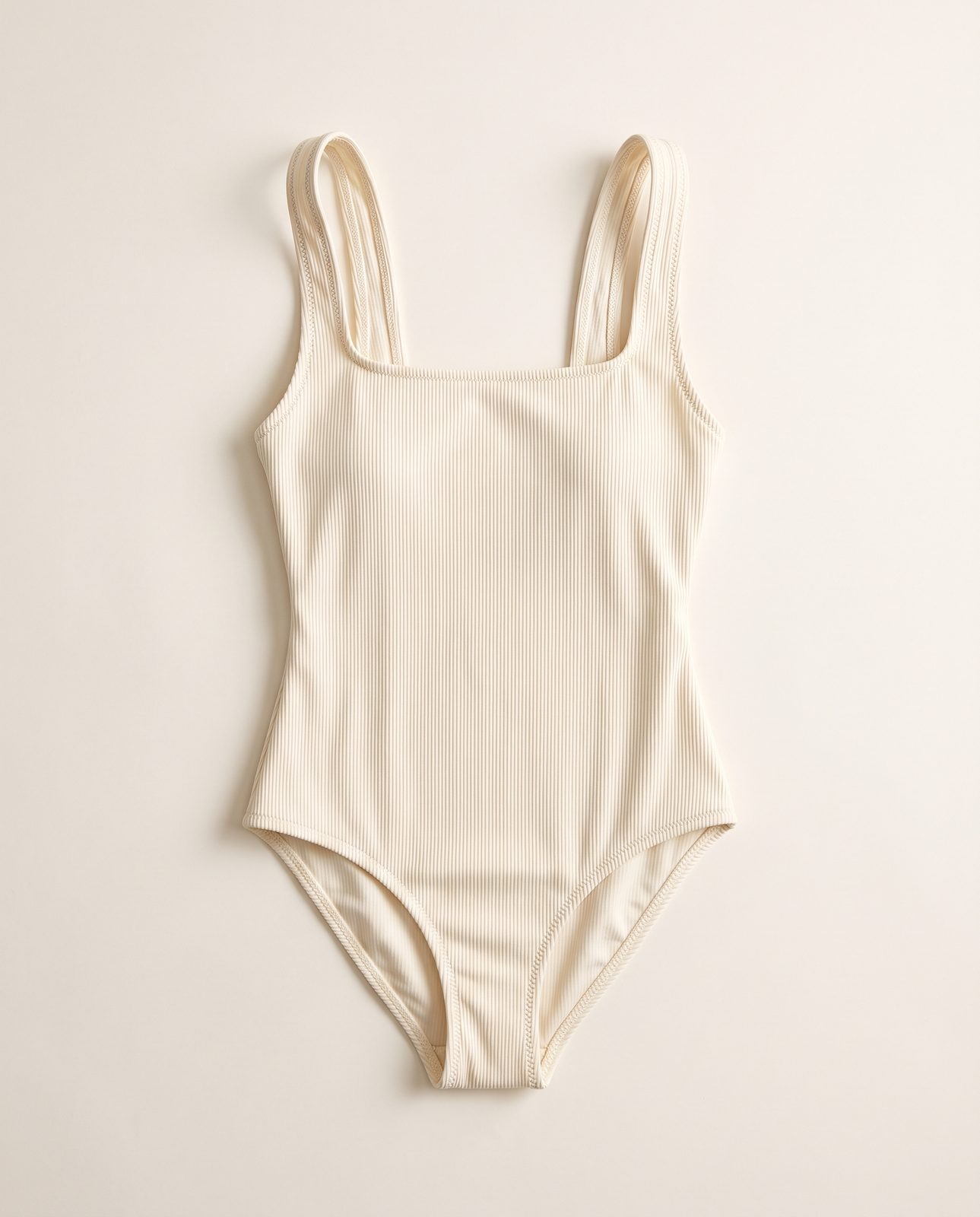
If you want full coverage for swimming, a belted one-piece or a cross-back style with a shaped side seam does the same job. Our ivory ribbed one-piece has a seam under the bust and a scooped back, so it holds shape without compressing the waist.
Try three sizes before you judge a style
The most common mistake is rejecting a cut because it was tried in the wrong size. Take your usual size plus one above and one below, and give each 30 seconds of movement: arms overhead, a squat, a twist. A suit that rides up or digs in is a sizing problem more often than a shape problem.
Fabric matters as much as cut. A 210 gsm knit with 22% elastane recovers faster and holds a seam where it was sewn, while a lighter 170 gsm fabric will cling and show every ridge after 20 minutes in the water. If two suits look identical on the hanger, choose the heavier one.
Frequently asked questions
Do I have to dress for my body type?
No. Body type guides are a shortcut for narrowing choices, not a rulebook. If a cut you love is comfortable and stays put when you swim, it is the right cut for you.
Which swimsuit is most flattering for a pear shape?
A halter or wide square neck with a high-waist bottom is the easiest combination, because it adds width at the shoulder and smooths the hip. A one-piece with a seam under the bust and a plain lower half does the same in one piece.
What swimsuit suits a short torso?
A scoop back with adjustable straps, or a low-leg one-piece, stops the suit pulling at the shoulders. Avoid high necks with fixed straps, which assume a longer torso and will dig in after 15 minutes.
Can I wear a bikini if I am not a certain size?
Yes, and the fit matters more than the number on the tag. Check that the top band stays level when you lift your arms and that the bottom does not gape at the leg, then wear it.