A sarong fails for one of two reasons: it is too small to wrap twice, or the knot is a single bow that loosens the moment you move. Fix both and one piece of fabric weighing about 200 g becomes a dress, a skirt, a scarf and a bag cover.
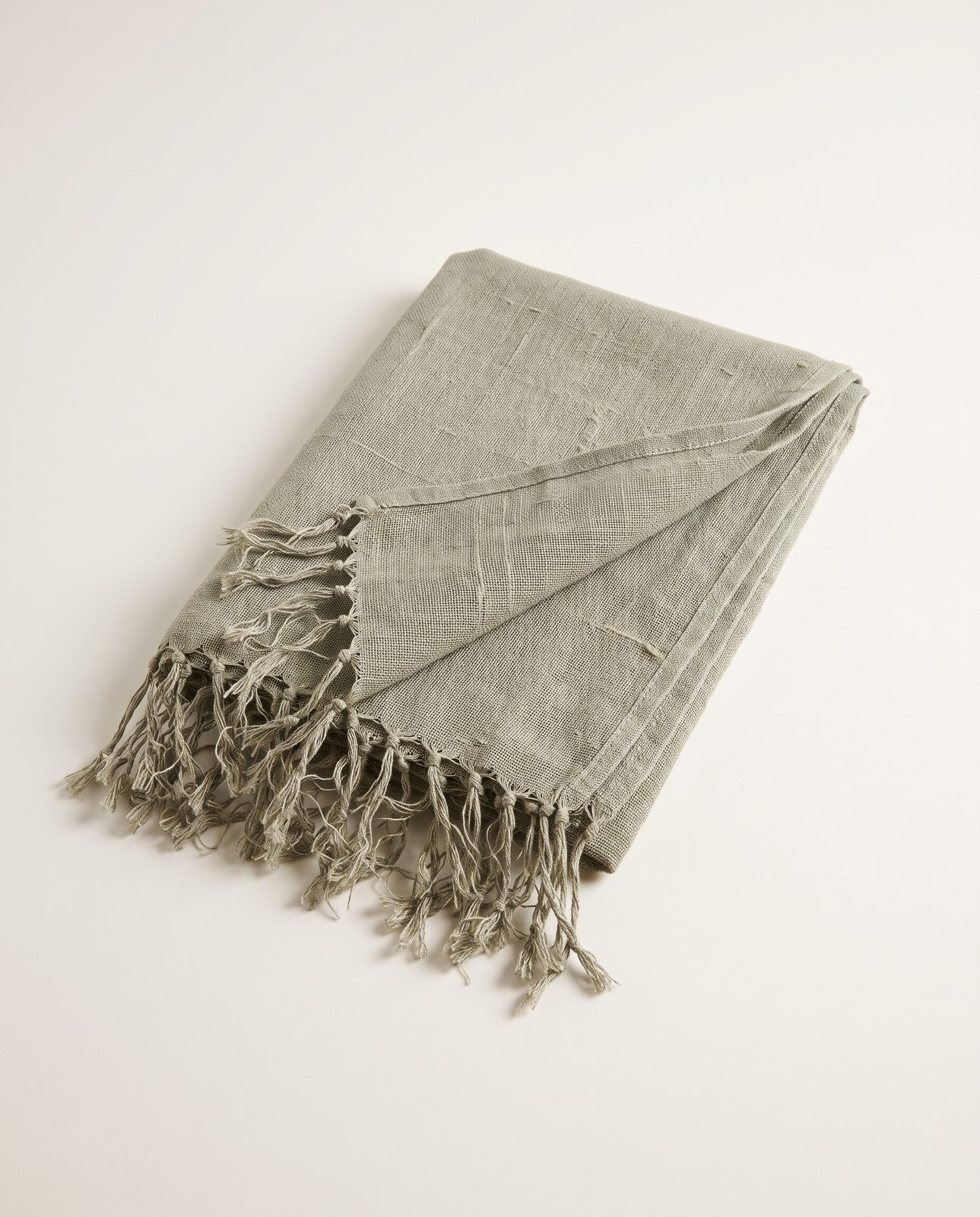
Our seagrass sarong (€45) is 110 × 180 cm in a cotton crepe. Here are the six ties we actually use, in order of how often we reach for them, plus the size and fabric notes that make the difference between a knot that holds and one that does not.
Start with the right sarong size and fabric
180 cm of length is the practical minimum for a dress. Below 160 cm you can tie a skirt but not a halter neck with enough tail left to knot twice. Width matters for coverage: 110 cm wraps most adults with a 20 cm overlap at the hip, which is what stops gaps appearing when you sit down.
A sarong also needs to be thin enough to knot flat. Anything heavier than 150 g/m² makes a bulky lump at the hip that shows through a fitted dress; anything lighter than 80 g/m² goes transparent in sun. The 100–120 g/m² range is the sweet spot, and it dries in about 15 minutes on a hot railing.
Cotton crepe at around 110 g/m² grips itself when tied, so knots hold without pins. Slippery viscose and polyester satin look lovely and undo themselves; if you already own one, double-knot and tuck the ends. Damp fabric also grips better than dry, which is worth knowing on a windy beach.
The halter dress: the tie that never slips
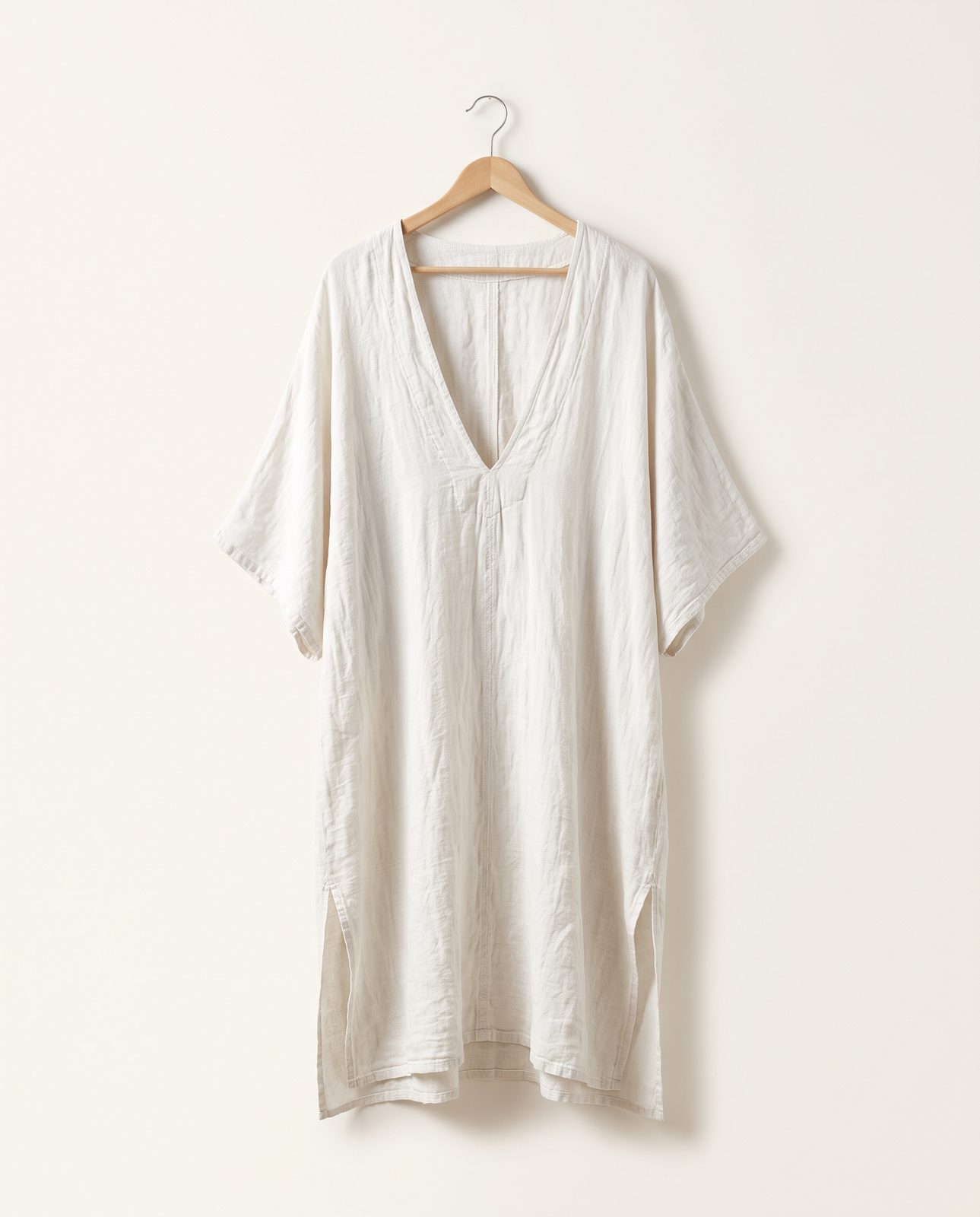
Hold the sarong behind your back at chest height and bring the two top corners forward over your shoulders. Cross them at the front, take them behind your neck and tie a double knot. Then step into the fabric, wrap the two bottom corners around your waist and knot them at the front or side.
Two knots, not one: the neck knot carries the weight and the waist knot stops the whole thing opening like a curtain. Test it by raising both arms above your head before you leave the room, then bend forward once.
- Hold the long edge behind your back at chest height
- Cross the top corners at the front, then double-knot behind the neck
- Wrap the bottom corners at the waist and double-knot
- Test with arms raised — the neck knot should not move
The side-tie skirt: the one to wear to lunch
Fold the sarong in half into a triangle and hold it at your hip with the point hanging down one side. Wrap the two ends around your waist, bring them to the opposite hip and tie a double knot. Let the point fall where it wants; a sarong skirt looks better slightly uneven than perfectly squared.
For a shorter skirt, fold the long edge down 20 cm before wrapping. For a maxi, wrap at the waist and let the point hang to mid-calf. This is the tie to use over a swimsuit at lunch, because it comes off in one pull.
The bandeau dress: strapless, with a reality check
Wrap the sarong around your body under the arms, with the top edge level across the bust, and tie the two top corners in a double knot at the centre front. This gives a strapless dress that works over a bikini and keeps the shoulders out of the sun.
It is the least secure of the six. Sit down before you commit: if the top edge gaps, you need more width or a tighter knot. Keep it for the walk to the bar, not for swimming or a windy boat trip.
Scarf, bag cover and shoulder shade
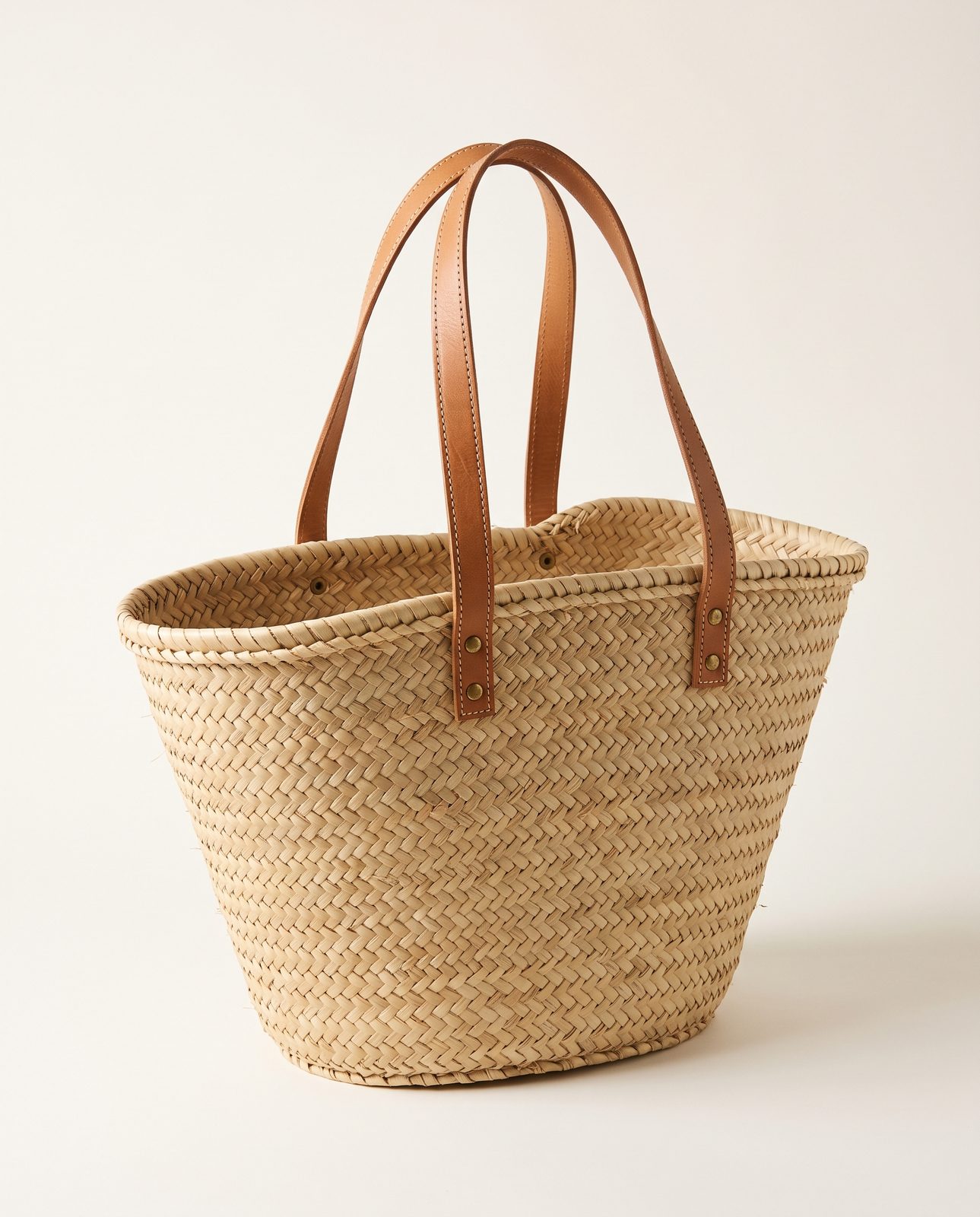
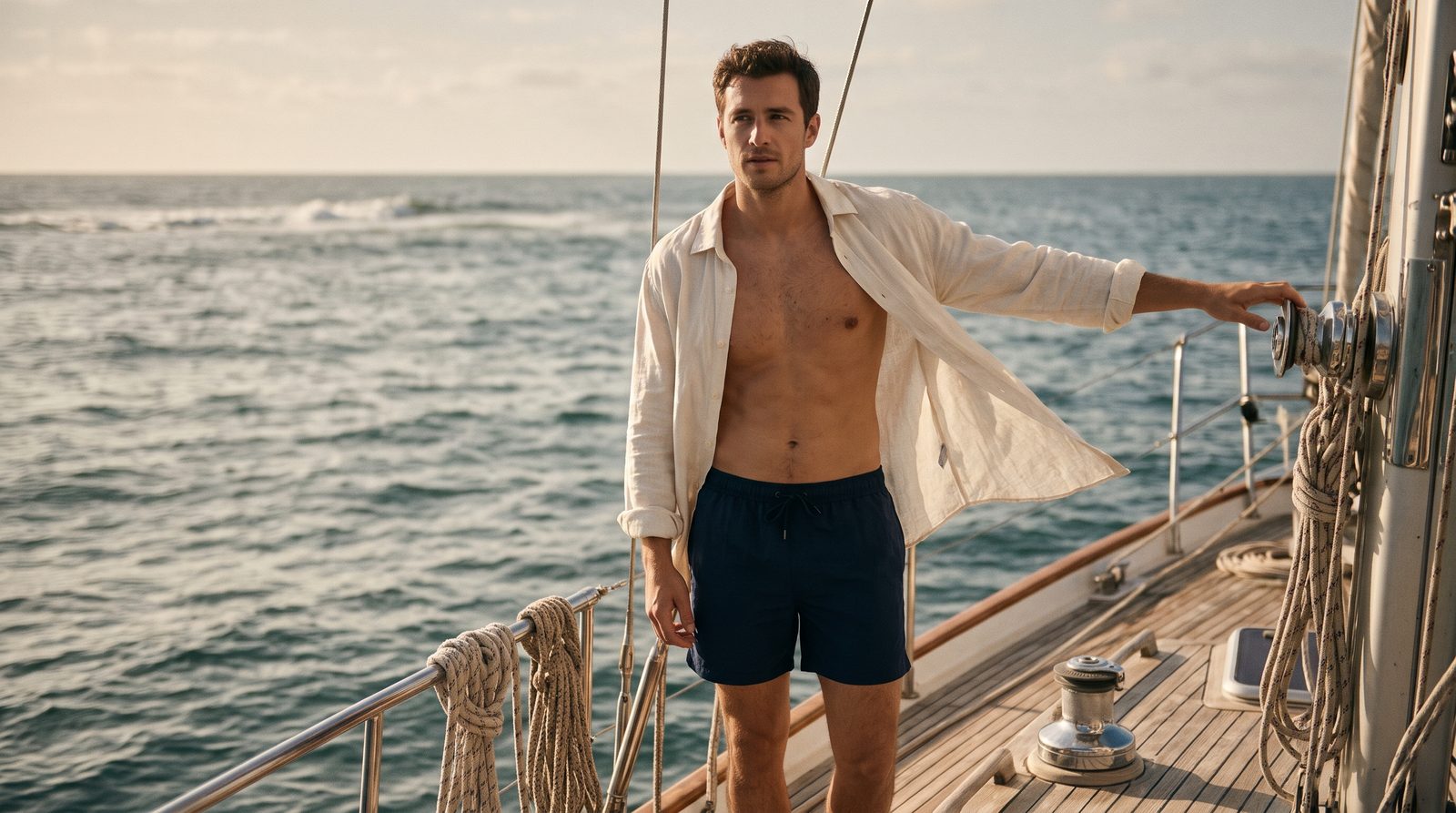
Fold the sarong into a triangle and tie it around your head with the point at the back for sun protection on a boat. Or knot two corners around the handle of the straw beach tote so the fabric covers the opening — useful when the wind is lifting sand across the beach.
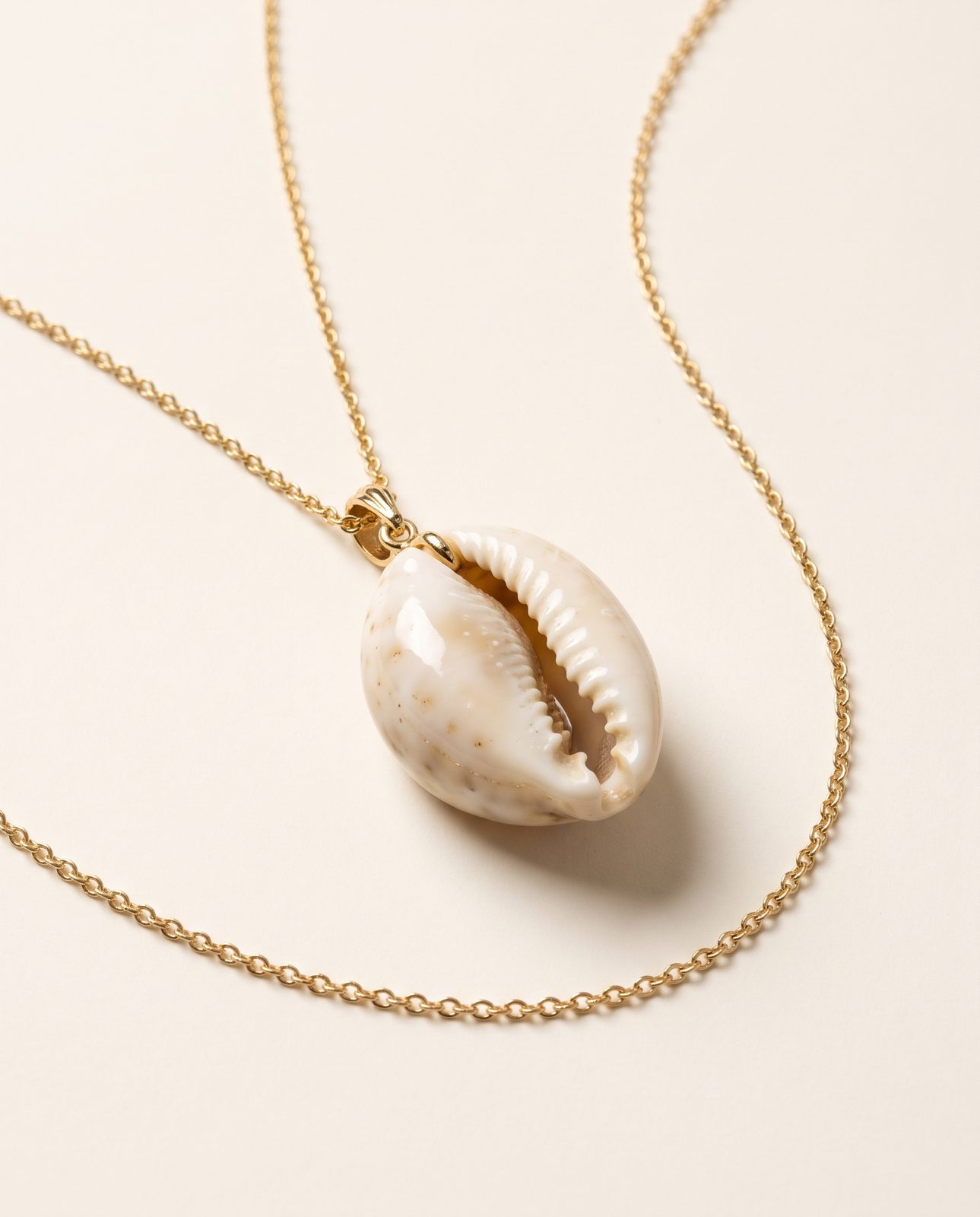
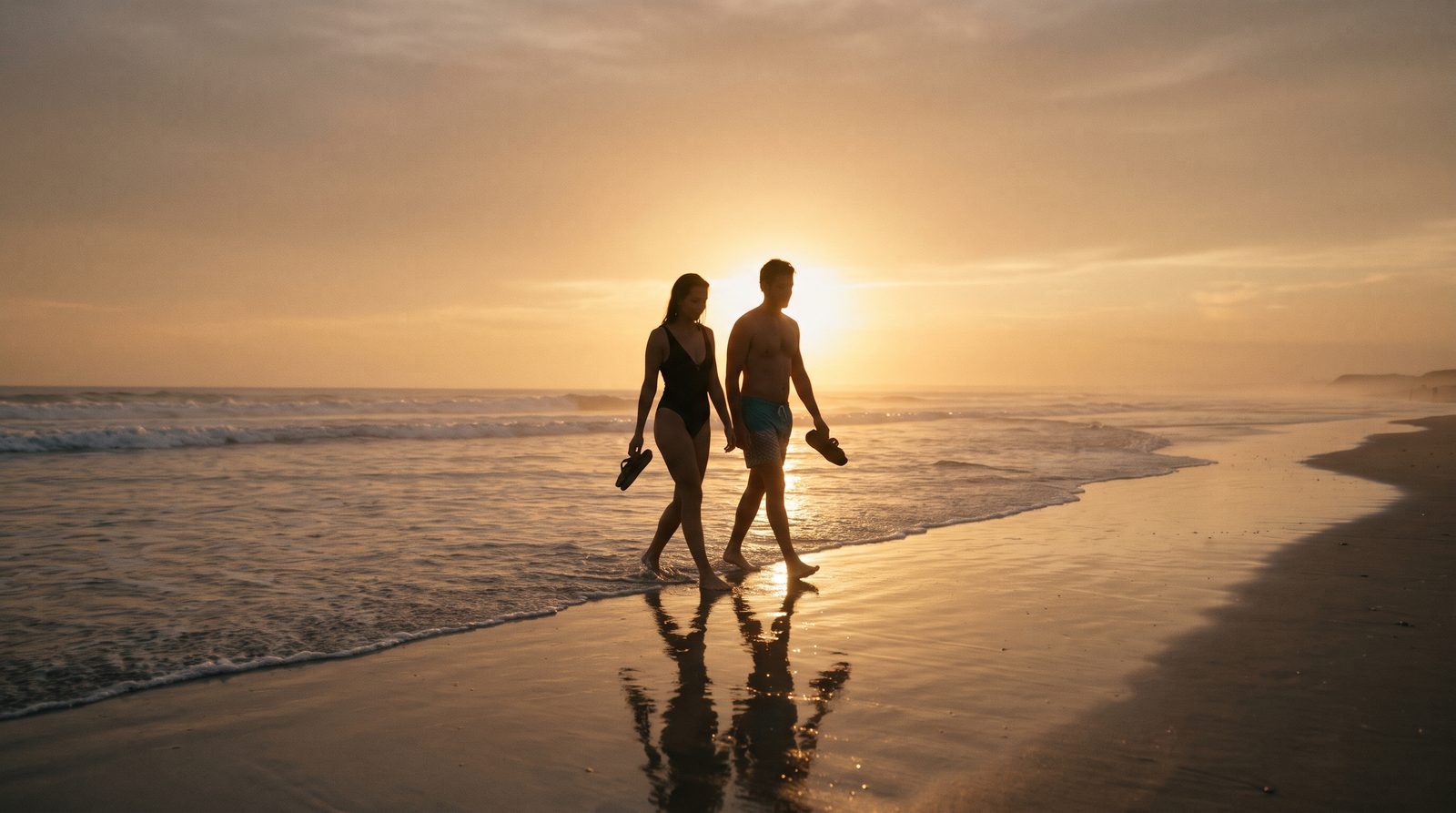
Draped over both shoulders with a single knot at the chest, it becomes a light layer for the walk back when the temperature drops to 22°C at dusk. Wear the cowrie shell necklace over the knot rather than underneath it, so nothing tangles.
When the knot will not hold
If your sarong keeps undoing, the fabric is usually the problem rather than the knot. Slippery weaves need a double knot with the ends tucked under the wrap, and any sarong holds better tied over swimwear than over bare skin.
Wind is the other factor. Tie lower on the hip than feels natural, keep the tails short so they cannot whip, and skip the halter dress on a day with gusts above 30 km/h — take the side-tie skirt instead.
Frequently asked questions
What size sarong do I need?
Look for at least 160 × 100 cm, and 180 × 110 cm if you want to tie a halter dress. Anything smaller works as a scarf or a short skirt but runs out of fabric at the neck.
How do you keep a sarong from falling down?
Use a double knot, tuck the ends under the wrap, and tie it over swimwear rather than skin. Cotton crepe holds far better than satin or viscose.
Can you swim in a sarong?
It is not swimwear, and wet cotton becomes heavy and slow to dry. Wear it to the water and take it off before you swim.
How do you tie a sarong as a dress with no straps?
Wrap it under the arms and double-knot the top corners at the centre of the chest. Check the top edge by sitting down and raising your arms before you go out.