Terry cloth has moved from the poolside lounger to the rest of the day. The reason is practical: a 400 gsm cotton loop pile absorbs water instead of pushing it around, feels dry against skin after a swim, and holds colour well after repeated washing. The catch is weight and drying time, and both are manageable once you know what you are buying.
This guide covers what terry actually is, how to wear a terry polo without looking like you borrowed a hotel bathrobe, and the two care rules that keep the loops from flattening.
What terry cloth actually is
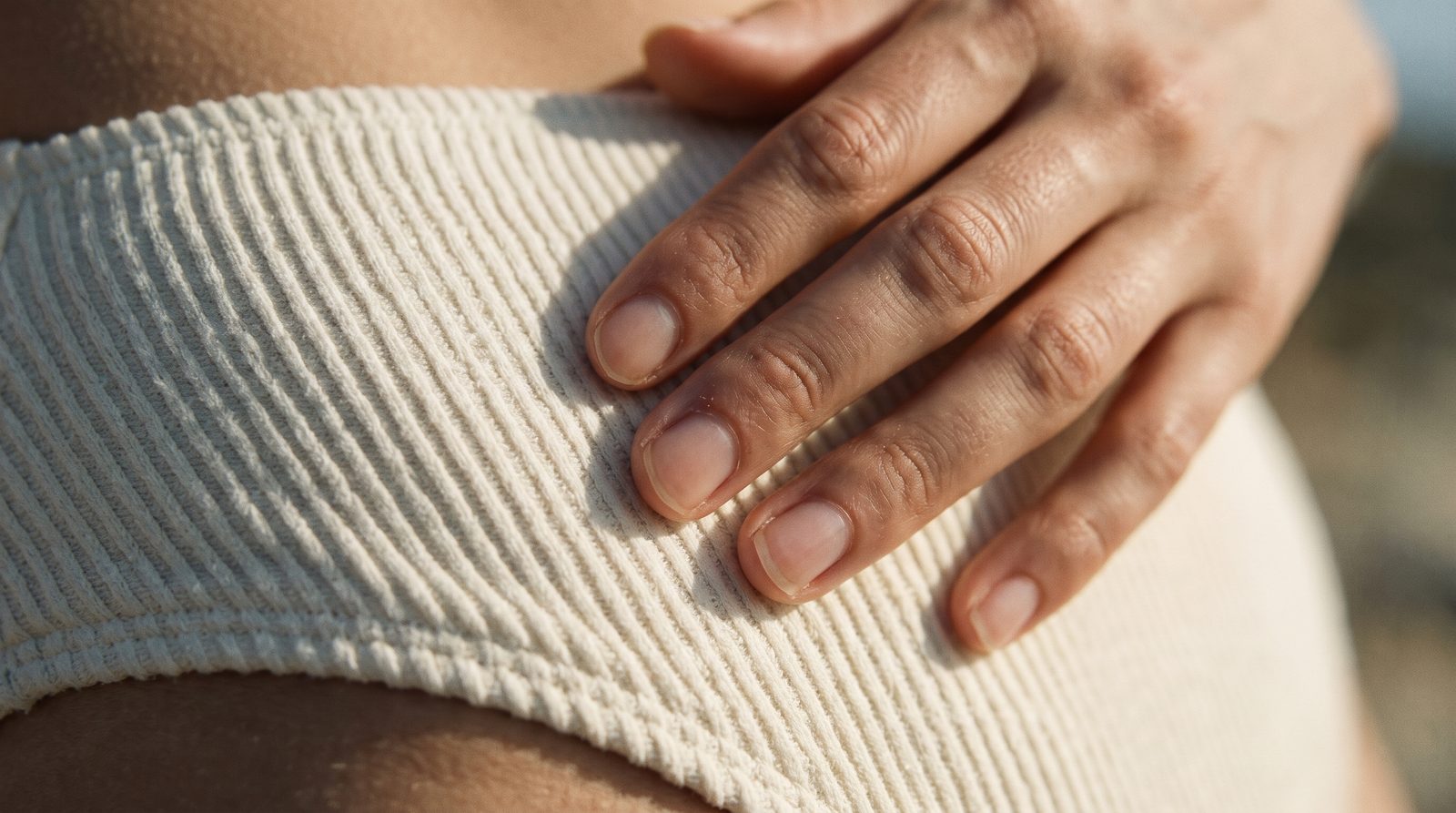
Terry is a woven cotton with uncut loops on one or both faces. Those loops are the whole point: they give the fabric surface area to hold water, which is why a 450 gsm towel dries you in one pass while a flat-weave cotton towel needs two. The same structure makes terry warm, so it works best as a layer you put on wet rather than something to wear in 35°C heat.
Weight tells you most of what you need. At 380–420 gsm, a terry polo or short has enough structure to hold a shape and still dries in about two hours on a line. Above 500 gsm you are into bathrobe territory: lovely to wrap in, heavy in a suitcase and slow to dry overnight.
Why the terry cloth trend has stuck
Resort wear has been borrowing from the 1970s for several summers, and terry is the piece that survived the trend cycle because it does a job. A terry polo covers the shoulders after a swim, does not show wet patches the way jersey does, and can go straight from the sand to a beach bar without a change.
The colours have shifted too. Instead of white and pool blue, we are seeing sun-faded coral, sage and ecru, which hide salt and sunscreen marks better than brights. Texture is doing the work that logos used to do, which suits a small wardrobe and a long holiday.
The terry polo: fit and styling
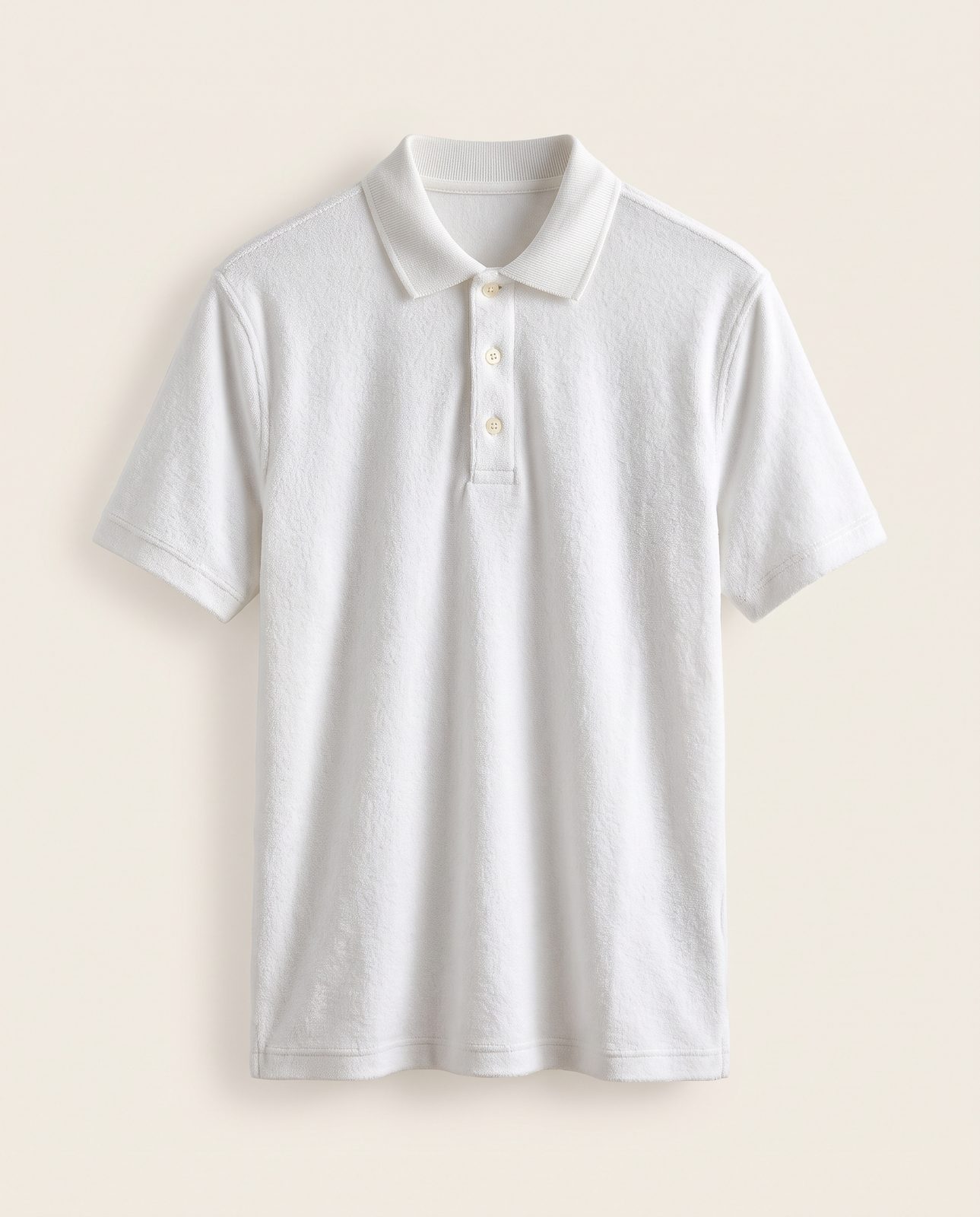
Our terry polo (€75) is cut with a straight body and a three-button placket. Wear it true to size: terry has no stretch in the weave, so sizing up gives you a boxy shape that traps heat. The sleeve should finish mid-bicep — any longer and you get a visible wet line where the fabric sits.
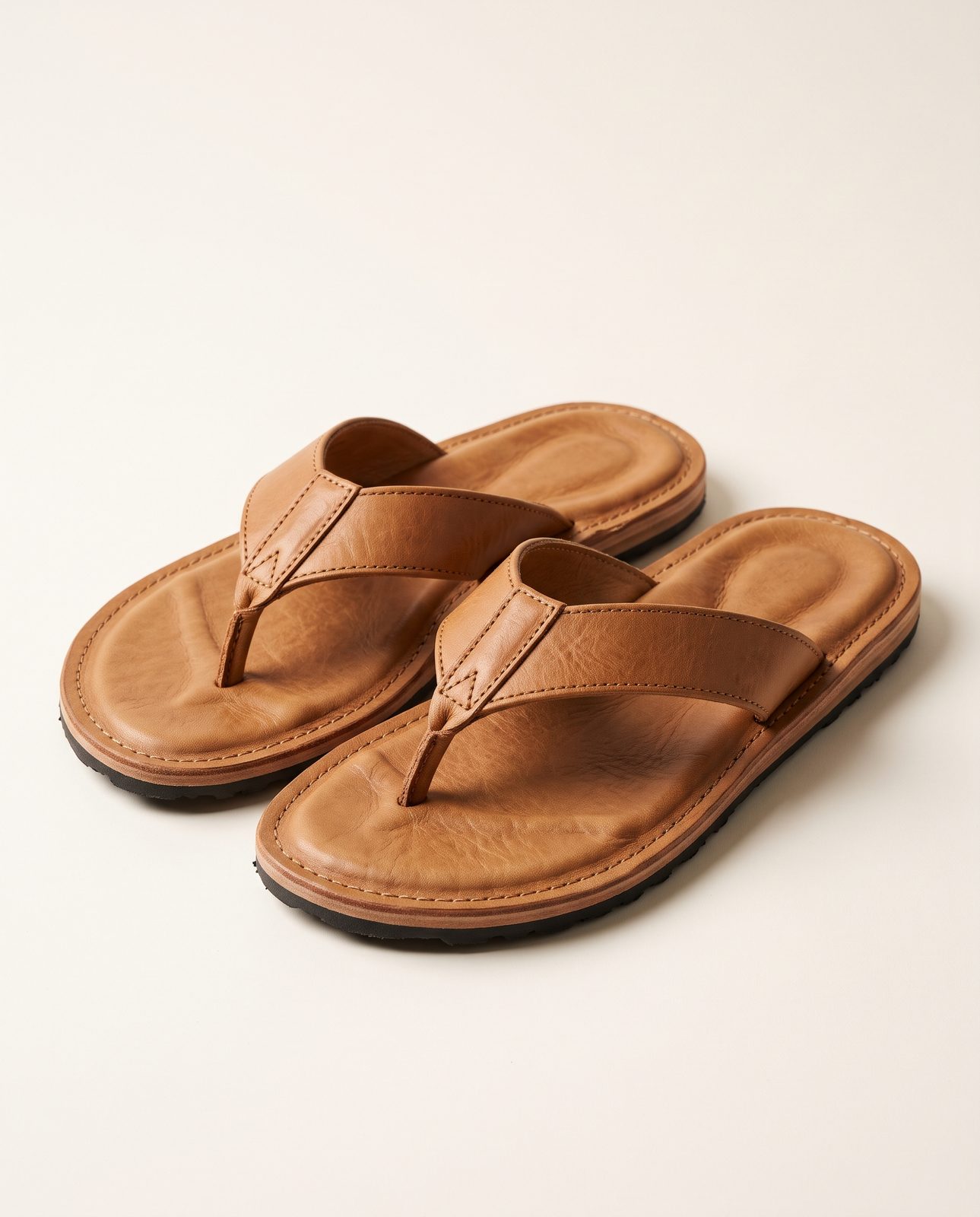
Pair it with swim shorts rather than linen trousers; both textures are heavy and they fight each other. A solid short in navy or sand, leather flip-flops and nothing else is the whole outfit. Leave the placket open two buttons so the collar sits flat instead of standing away from the neck.
Terry accessories: towels, hats and bags
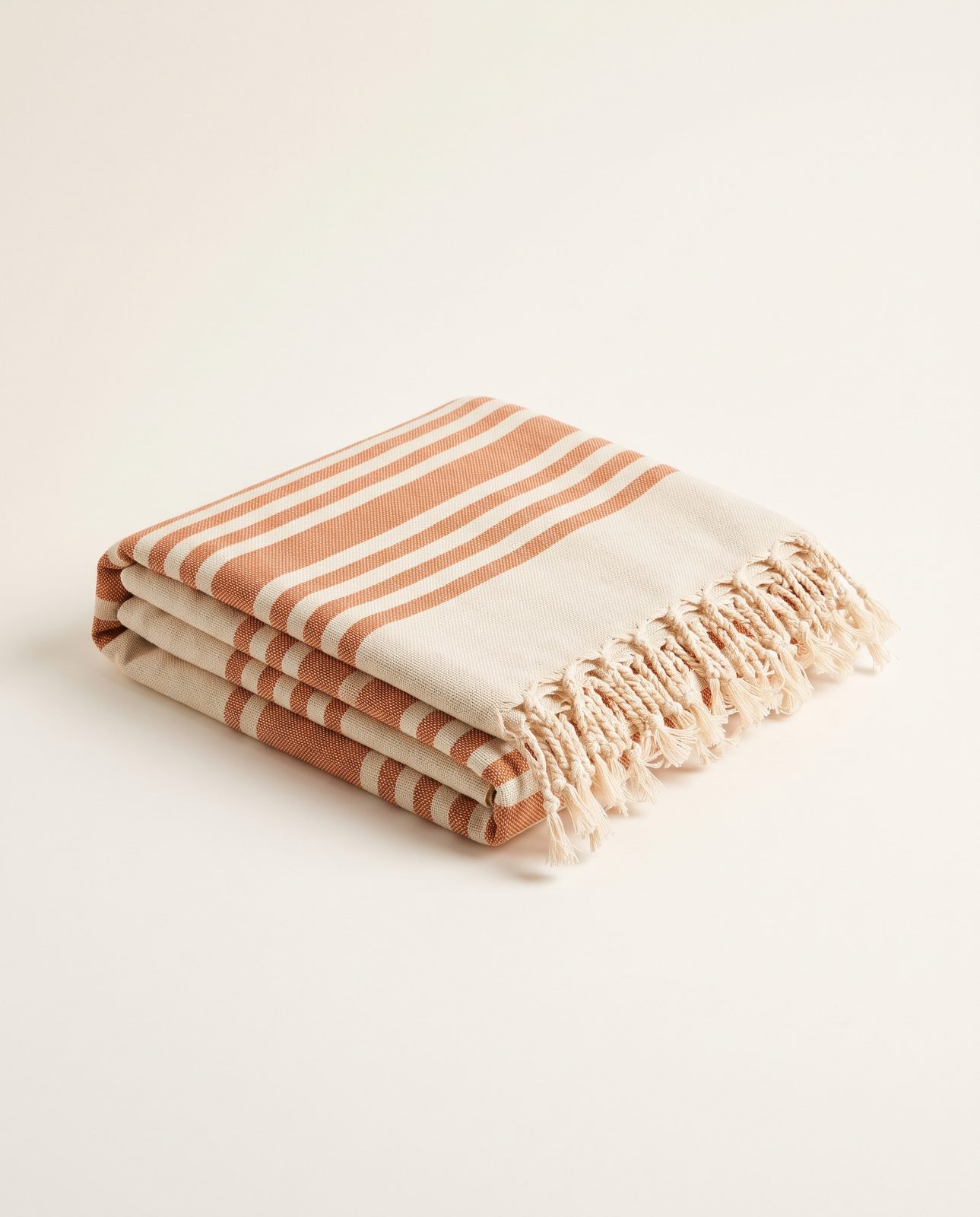
A 400 gsm striped beach towel at 90 × 170 cm weighs around 600 g and takes about two and a half hours to dry in sun and wind. That is the trade: heavier in the bag, far more pleasant on the sand than a microfibre sheet that skids off your shoulders.
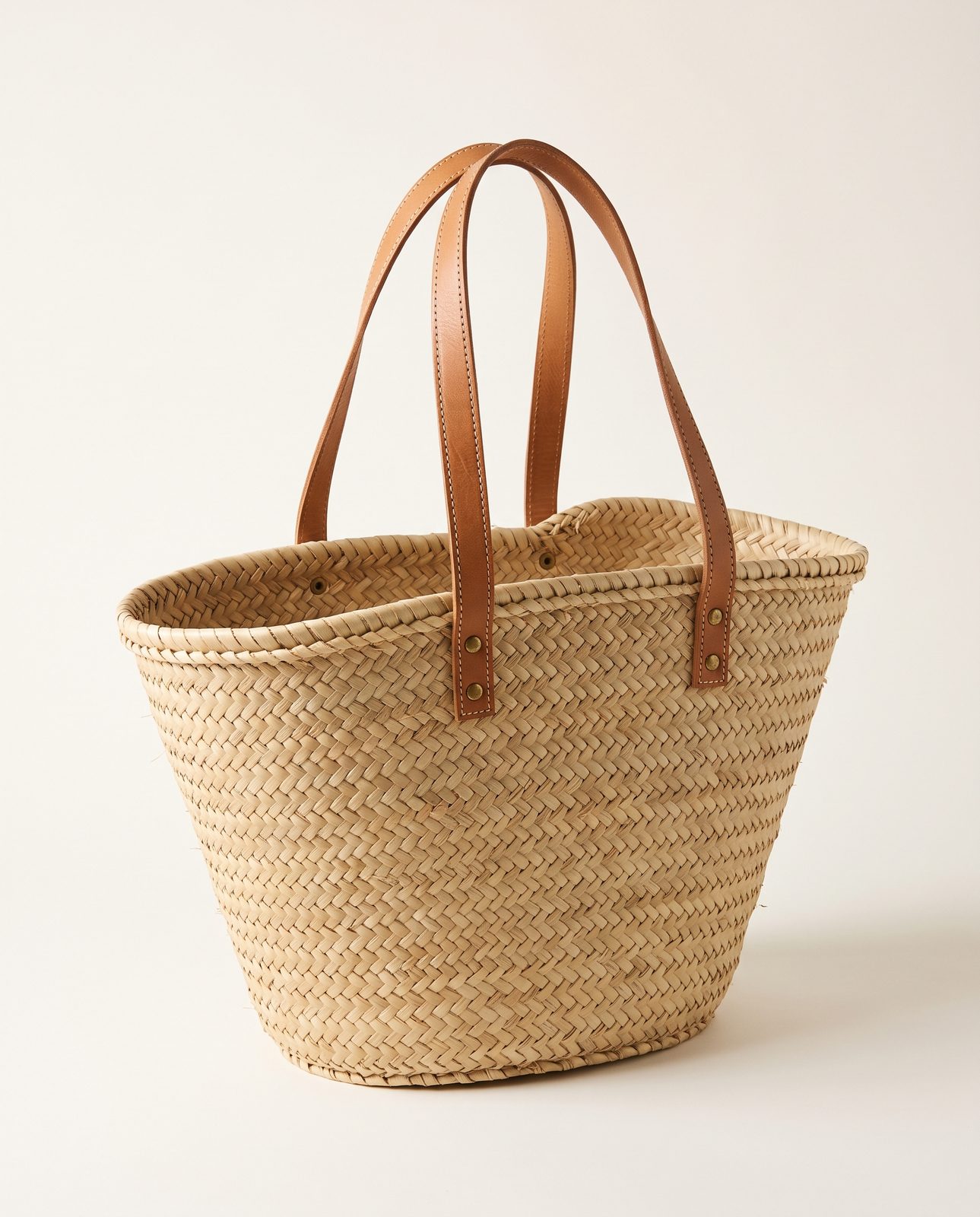
Terry bucket hats exist but are a hard sell in heat; our cotton bucket hat in a flat weave is cooler and lighter. A terry tote is more useful than it sounds, because it holds wet swimwear without soaking through the shirt you are carrying.

Care: keep the loops standing
Wash terry at 30°C with a normal dose of detergent and no fabric softener. Softener coats the loops and reduces absorbency, which is the one thing you bought the fabric for. Skip the dryer or use low heat; high heat compacts the pile and leaves it flat and scratchy against the skin.
Never wring terry. Press it between your palms or roll it in a dry towel, then hang it full length. A 400 gsm piece that is wrung and draped over a chair back dries in a stiff shape that takes another wash to relax.
Is terry worth the suitcase weight?
For a week at the beach, one terry piece is enough: a polo for men or a towel that doubles as a picnic blanket. Weigh it before you pack. Our rule is that no single beach item should take more than 700 g of a carry-on.
Think about where it will dry, too. A 400 gsm towel needs a rail with air on both sides; draped over a plastic chair back it stays damp in the middle for six hours and starts to smell of the sea. A balcony with wind is worth more than any fabric technology here.
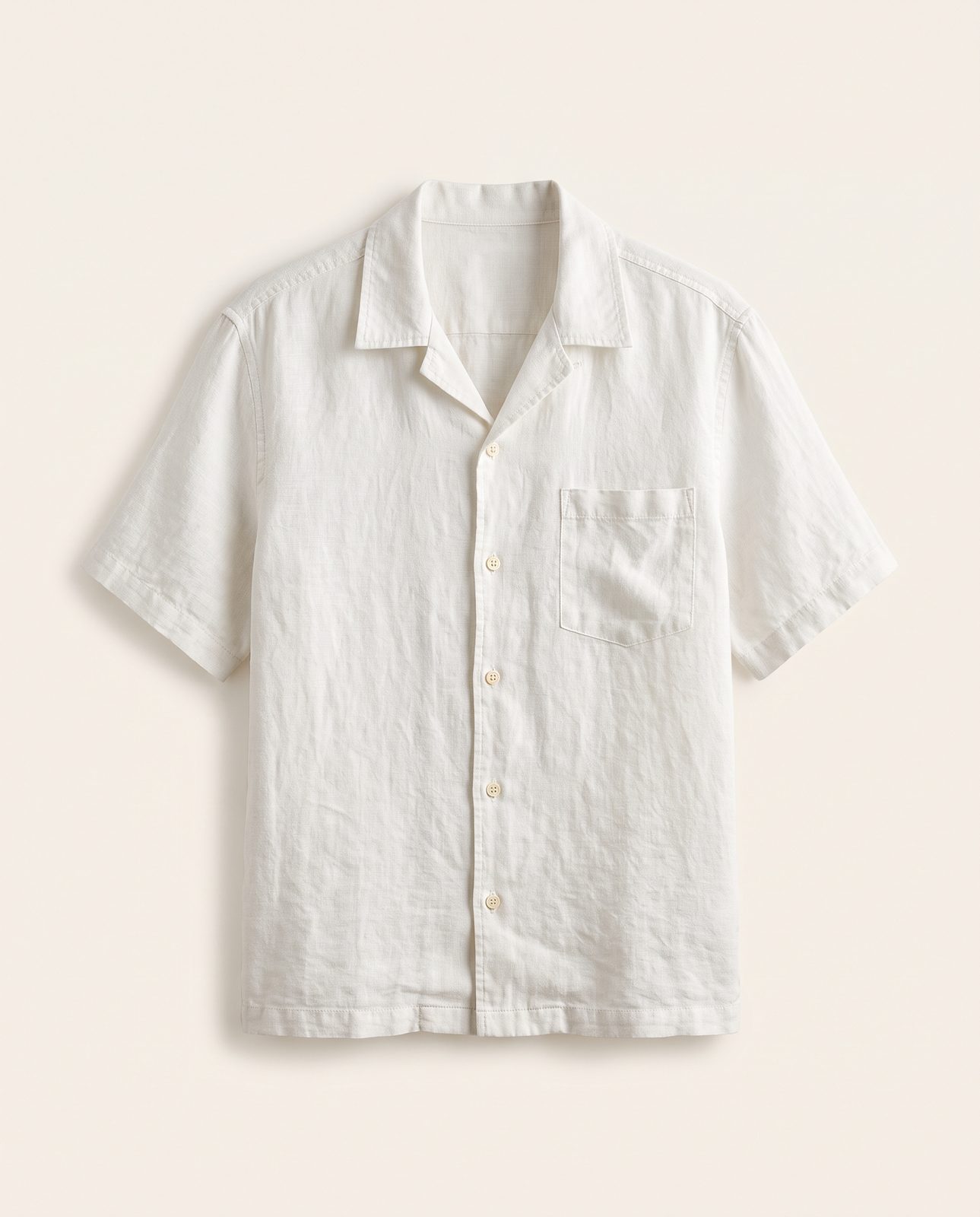
If you are flying with hand luggage only and showering at the airport, a lighter flat-weave towel plus a linen shirt will serve you better. Terry rewards people who have a drying line and time; it punishes anyone living out of a bag.
Frequently asked questions
Does terry cloth shrink in the wash?
Cotton terry can shrink 3–5% on the first wash, which is why our polos are cut with a little extra length. Wash cold and line dry to keep shrinkage at the lower end.
Is terry cloth too hot for summer?
It is warm, but it works as a wet layer rather than a dry one. Put it on straight after a swim at 25–30°C and it feels cool; wear it dry in 35°C and you will overheat.
How do you get sand out of terry cloth?
Shake it out and let it dry completely, then brush the loops with a stiff brush. Sand trapped in damp loops works its way into the weave and is much harder to remove later.
Can you wear terry cloth in the evening?
A terry polo with linen trousers works in resort towns where the dress code is relaxed. Keep everything else simple, and skip it anywhere with air conditioning and a written dress code.