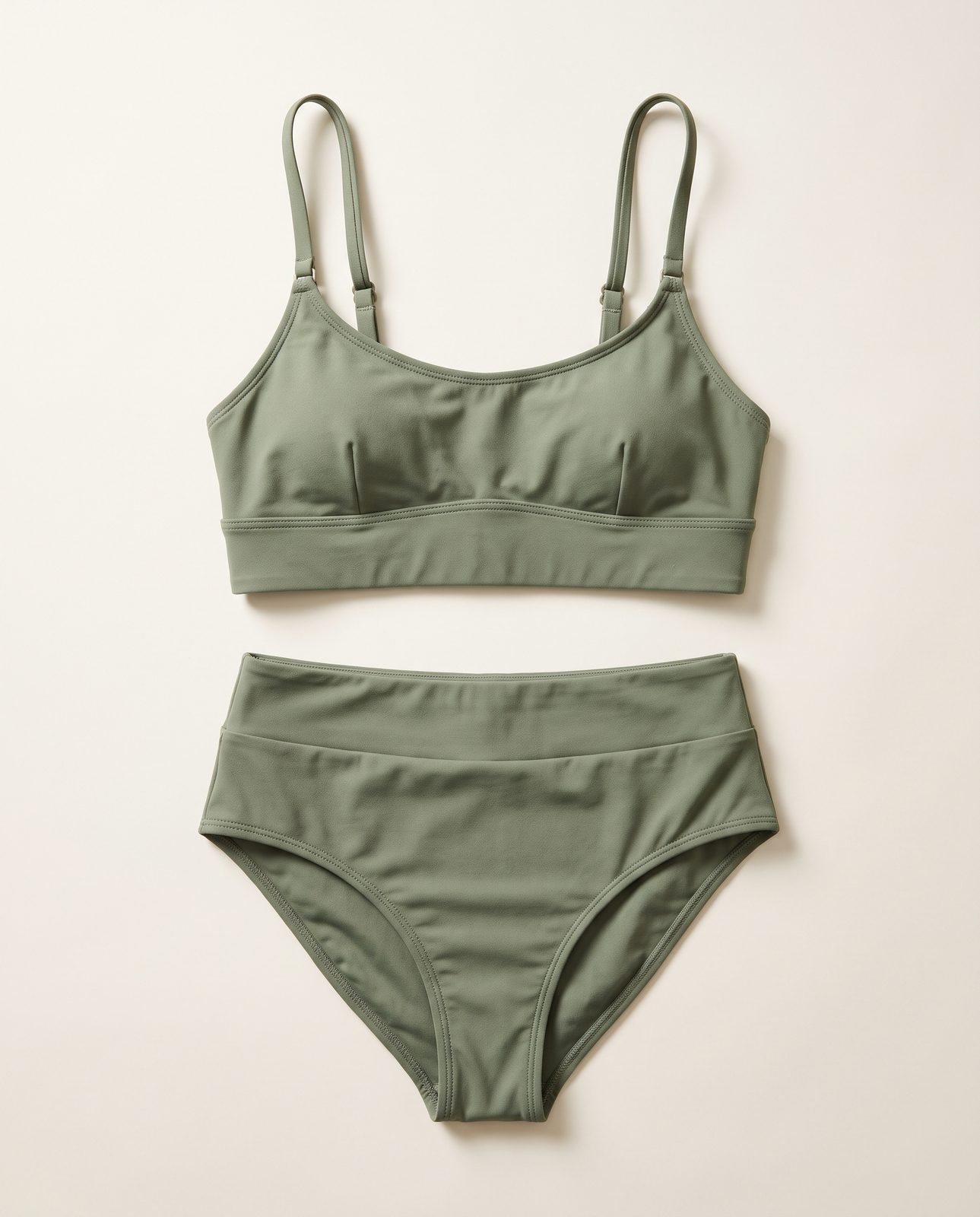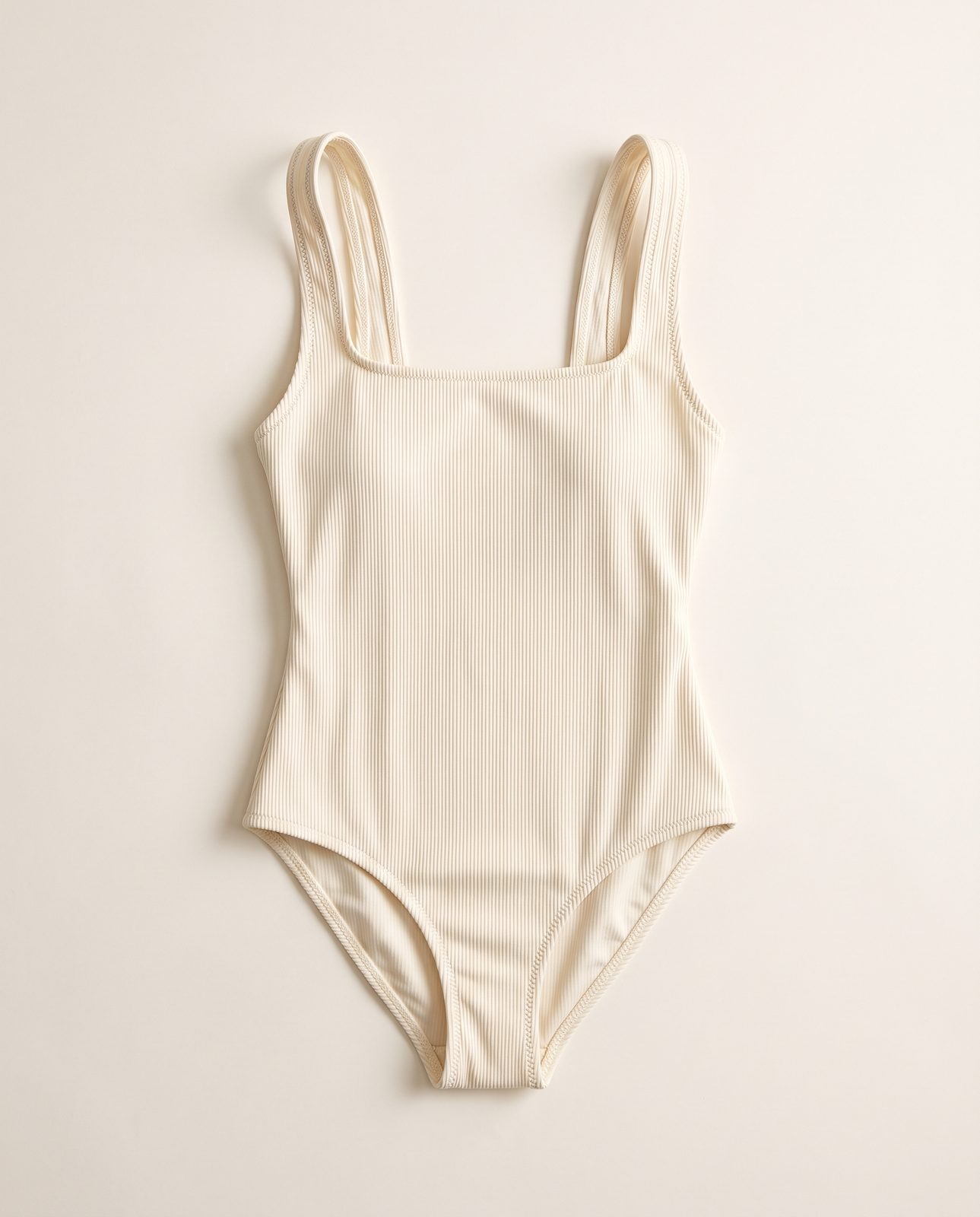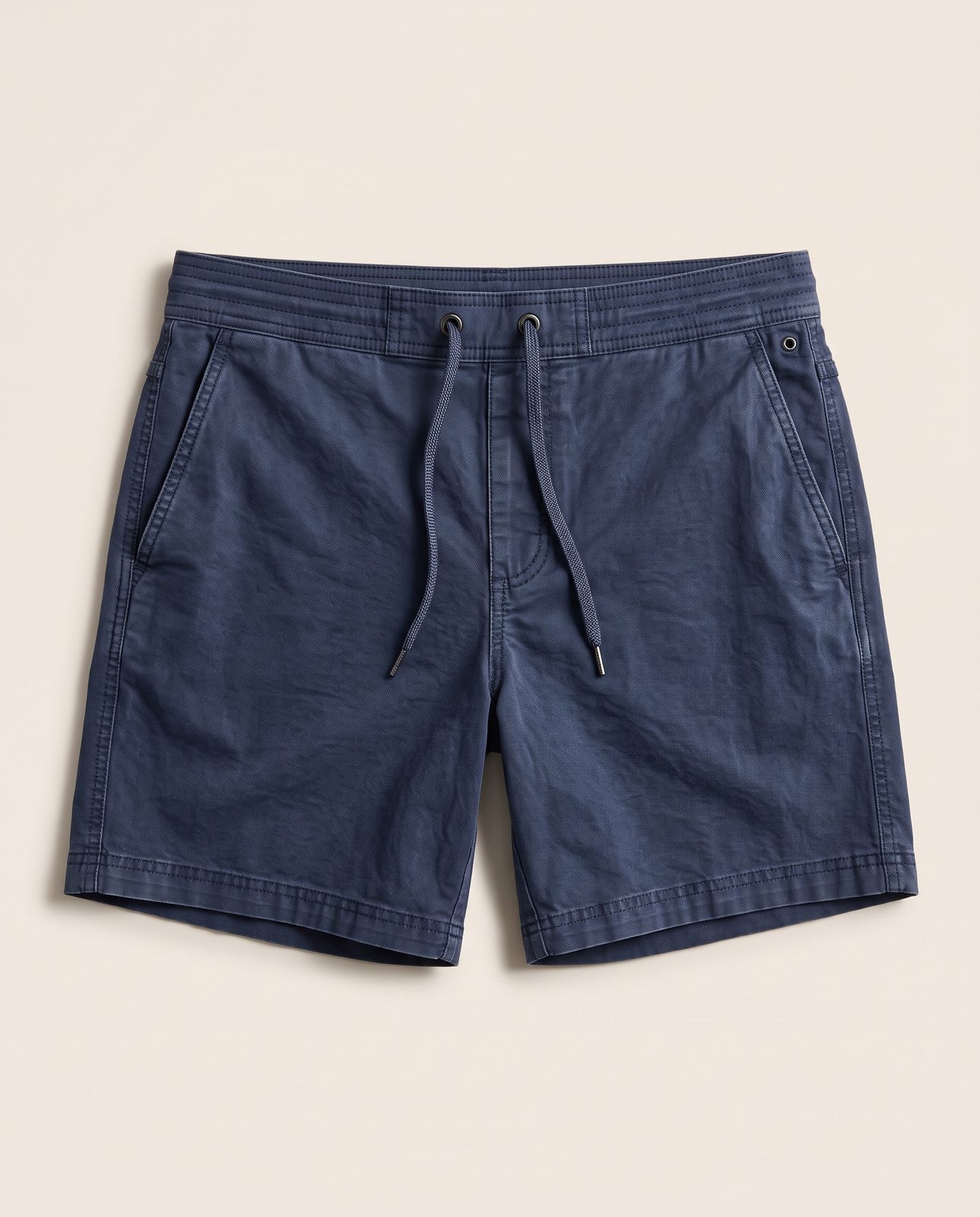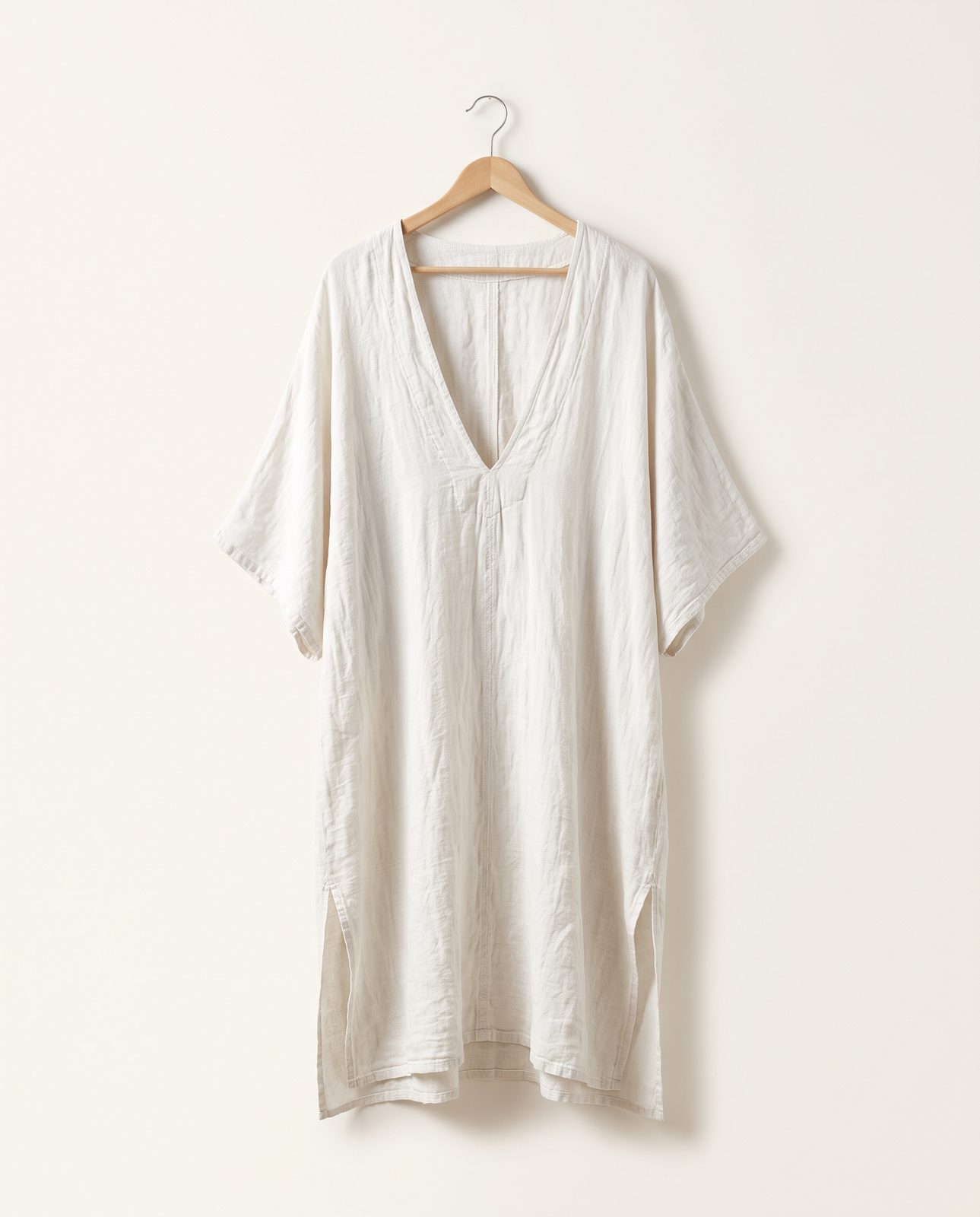
Nearly all swimwear is a blend of a main fibre and elastane, and that blend is the central fact of sustainable swimwear materials. A suit might be 78% recycled polyamide and 22% elastane, which means the recycled content is real but the garment still cannot be easily recycled at the end of its life. Understanding that trade-off is more useful than any single 'eco' label.
We are a small shop, not a mill, so we write this from the buyer's side of the counter. Here is what each common material actually is, what it costs in energy and waste, and the claims worth asking about before you pay €85–95 for a bikini.
Sustainable swimwear begins with nylon, polyester and elastane
Swim fabric needs three things: strength when wet, resistance to chlorine and salt, and recovery after stretching. Polyamide (nylon) gives a soft hand and good colour depth; polyester is cheaper, stronger in chlorine and dries slightly faster. Both are paired with 18–22% elastane, which is what snaps the suit back after you move.
The environmental cost sits in that mix. Virgin nylon production is energy-intensive, elastane is difficult to recycle, and the two cannot be separated at scale once spun together. A swimsuit is therefore a durable product made from a hard-to-recycle blend. The most effective sustainable choice is usually to keep one good suit in use for years rather than to buy three made from a newer fibre.
Regenerated nylon, sold as ECONYL
ECONYL is a branded regenerated nylon made by depolymerising waste — fishing nets, carpet fluff, industrial plastic — back into caprolactam, the building block of nylon. The result performs like virgin nylon: same strength, same drape, same colour uptake, and it can in principle be regenerated again rather than downcycled.
Two caveats are worth knowing. The process still needs energy, so 'regenerated' is not 'zero impact'. And the waste stream is global, which means transport sits inside the footprint. It is a genuine improvement over virgin nylon in material terms, not a magic fix. If a product says ECONYL, ask for the percentage: 78% of the fabric is meaningful, 8% is a token.
- Best for: one-pieces and bikinis where softness and colour matter.
- Ask for: the percentage of regenerated content and the certification behind it.
- Watch for: 'ECONYL-like' or 'regenerated yarn' with no named supplier.
Recycled polyester and the bottle question
Recycled polyester, usually called rPET, is made from used PET bottles. It is typically 10–20% cheaper than recycled nylon, holds colour well and is more chlorine-resistant, which makes it a sensible choice for swim shorts and pool suits that get heavy use.
The awkward part is the supply chain. A bottle collected for recycling is a bottle that is not being made into another bottle, and most rPET swimwear is a one-way trip: the garment will not become a new garment. That does not make it bad — it diverts waste and uses less energy than virgin polyester — but it is downcycling, not a closed loop. Treat 'made from 12 bottles' as a diversion claim, not a circularity claim.

Bio-based elastane and the 20% problem
A small number of mills now make elastane partly from castor oil or other plant feedstock, cutting the fossil share of that 18–22%. It behaves like conventional elastane in a suit and is a real improvement, but it does not solve the end-of-life issue: the elastane is still bonded into the knit and still prevents easy recycling.
There is no widely available swimwear that is both high-stretch and mono-material. If you see a claim of a fully recyclable swimsuit, ask how the elastane is separated. The honest answers tend to involve a take-back scheme or an industrial process, not a kerbside bin.
Where natural fibres fit — and where they do not
Linen and cotton are excellent for cover-ups, shirts and sarongs and poor for swimming. Cotton absorbs roughly 25 times its weight in water, dries slowly and drags at the shoulders; linen is stronger wet but creases and loses shape. A 150 gsm linen shirt is a good sun layer over a swimsuit and a bad swimsuit.
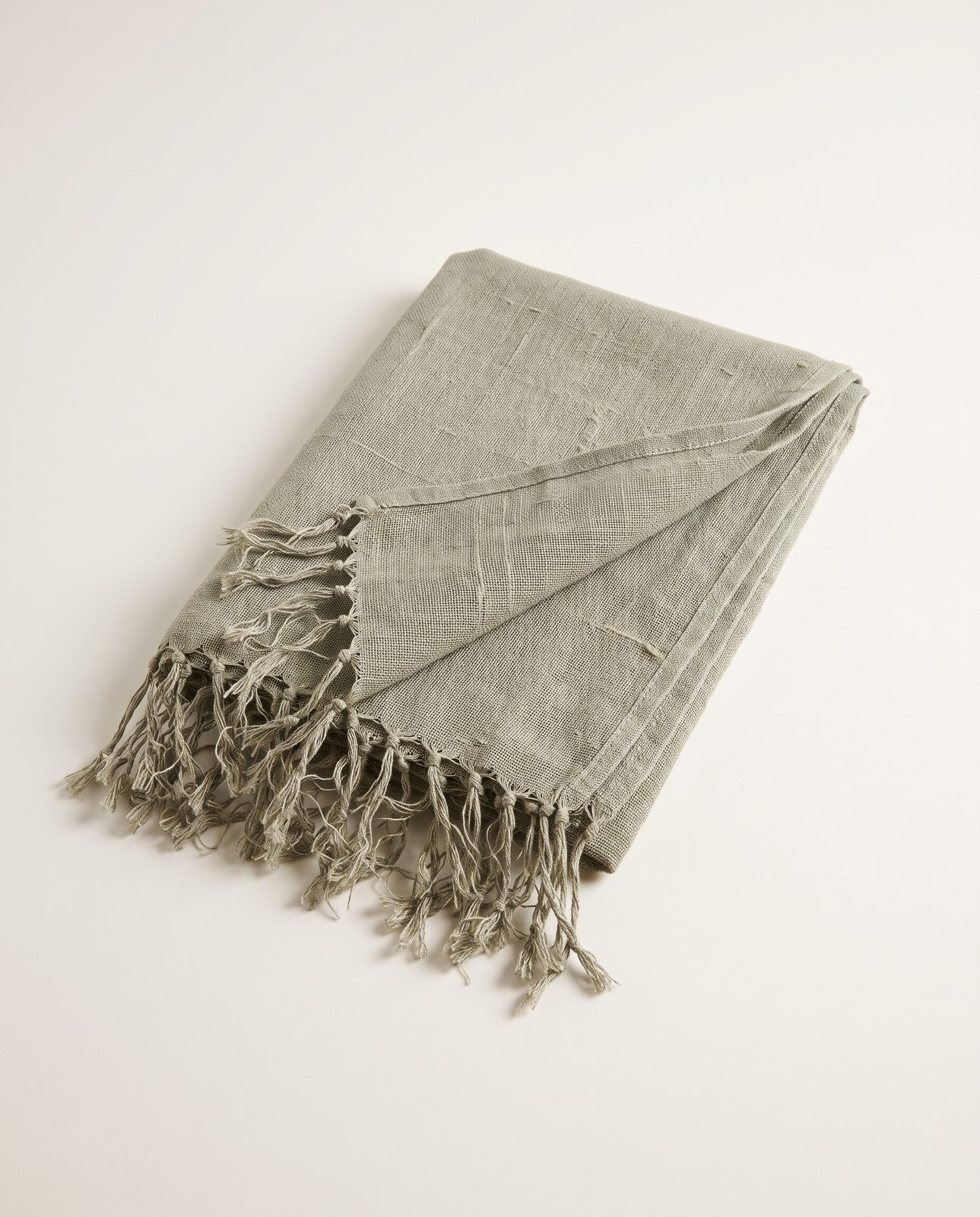
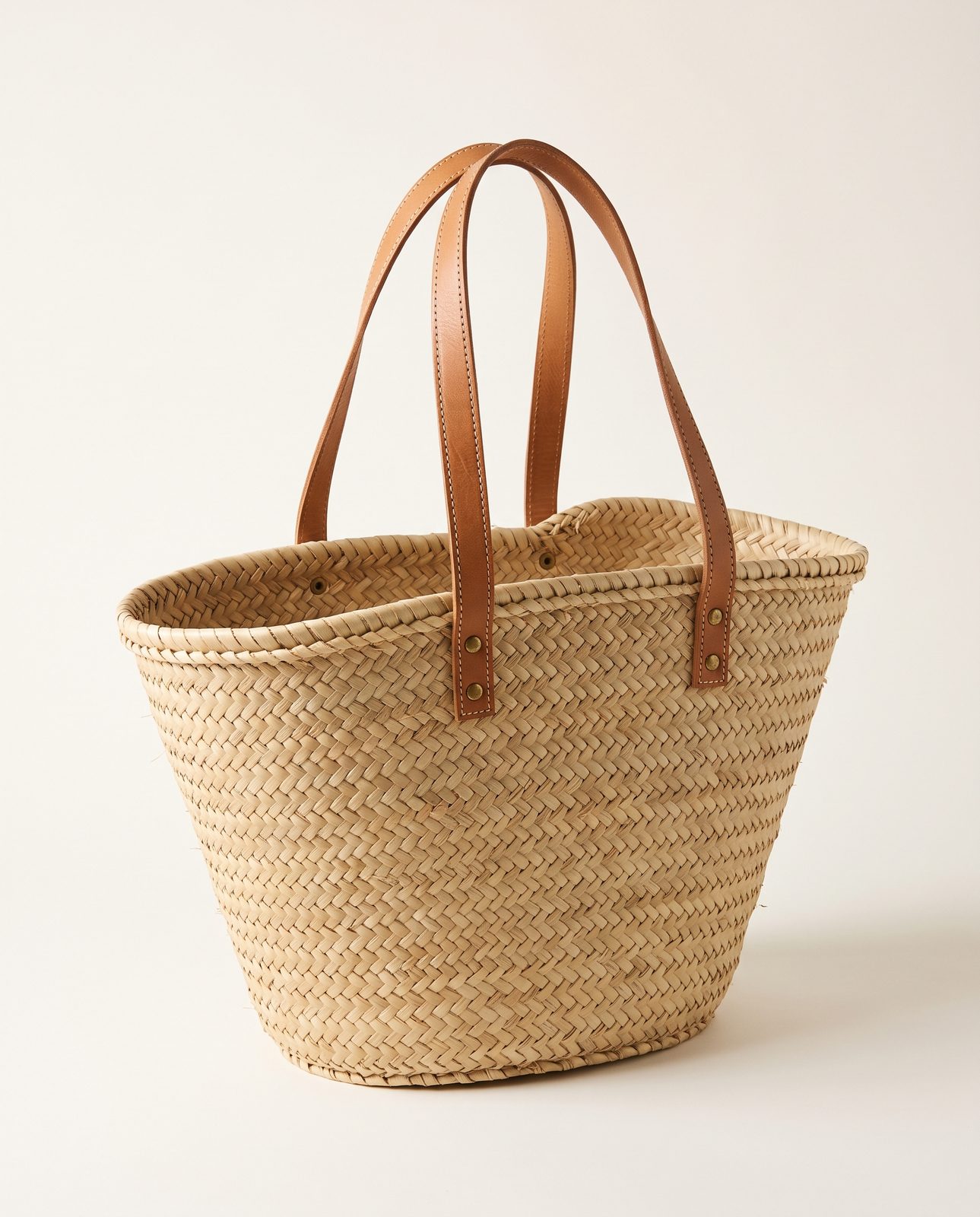
Natural fibres do have a place in the broader kit: a cotton canvas tote, a linen cover-up, a straw hat. These are the pieces where a plant fibre outperforms synthetics on comfort and end-of-life, and where buying less often is realistic because they do not stretch or chlorine-age the way a suit does.
How to read a sustainability claim in ten seconds
Look for a number, a fibre name and a certification. 'Recycled' without a percentage is marketing; '78% recycled polyamide, GRS certified' is checkable. GRS (Global Recycled Standard) covers recycled content and chain of custody; RCS is a lighter version; OEKO-TEX Standard 100 tests for harmful substances but says nothing about recyclability; bluesign looks at mill-level resource use.
Then ask what the claim is about. A recycled fibre does not address microfibre shedding in the wash, water use in dyeing or the working conditions in a factory. Those need separate evidence. The most credible product pages we see list the composition, the certification number and the country of manufacture in one place.
- A percentage, not an adjective.
- A named certification with a number you can check.
- Care instructions that extend life — that is a sustainability feature too.
- Repair or take-back information, if the brand offers it.
Frequently asked questions
Is ECONYL better than recycled polyester?
They solve different problems. ECONYL is regenerated nylon with a genuine recycling loop and a soft hand; rPET diverts bottles but is usually downcycled. For a pool suit, rPET's chlorine resistance is a practical advantage. Neither is a zero-impact choice.
Can a swimsuit be fully recycled?
Rarely through household recycling, because the elastane is bonded into the knit. Some brands run take-back schemes that send suits to industrial processing. Without that route, the realistic end of life is textile recovery or general waste.
Does washing swimwear shed microfibres?
Yes, all synthetic knits shed small amounts, and elastane blends shed more when they are old and thin. Washing less often, using a cooler cycle and a filter bag reduces the amount. Rinsing after a swim is often enough between proper washes.
How long should a sustainable swimsuit last?
A suit worn twice a week and rinsed in cool water after each swim should manage 60–80 outings before the elastane softens. Longevity is the most measurable sustainability claim a swimsuit can make, and the easiest one to verify with your own experience.