Learning how to layer beach jewellery is mostly a question of restraint. Three pieces is enough — usually a short chain, a longer pendant and an anklet — and anything beyond that tangles in a sea breeze before lunch. The other half of the answer is metal: salt water dulls plated jewellery within days, so the pieces that survive a holiday are solid steel, silver or gold, not a thin plate over brass.
Order matters too. Sunscreen first, drying for 15 minutes, then jewellery, then swimsuit and cover-up. The other way round leaves a white film in every clasp and turns a new chain grey by the second afternoon.
Start with metals that tolerate salt
Salt water is mildly corrosive and it sits in the gaps between links after you swim. A 1–2 micron gold plating on brass or copper will wear through in a two-week holiday, and the brass underneath leaves a green mark on skin and on white fabric. Solid 316L stainless steel, 925 sterling silver and solid gold all survive indefinitely with a rinse.
Gold PVD on steel is the middle ground: it looks like gold, costs a fraction, and a 0.5 micron coating usually lasts one or two seasons. Whatever you choose, rinse in fresh water at the end of the day and pat dry with a soft cloth rather than a hotel towel, which leaves lint in the links.
- Solid 316L steel: the most forgiving in salt and chlorine
- 925 silver: fine, but needs polishing every few weeks
- Gold PVD on steel: good value, expect 1–2 seasons of daily wear
- Avoid plated brass, copper and anything marked gold-tone
- Leave pearls and opals at home: chlorine and sun are unkind to them
How to layer beach jewellery at the right lengths
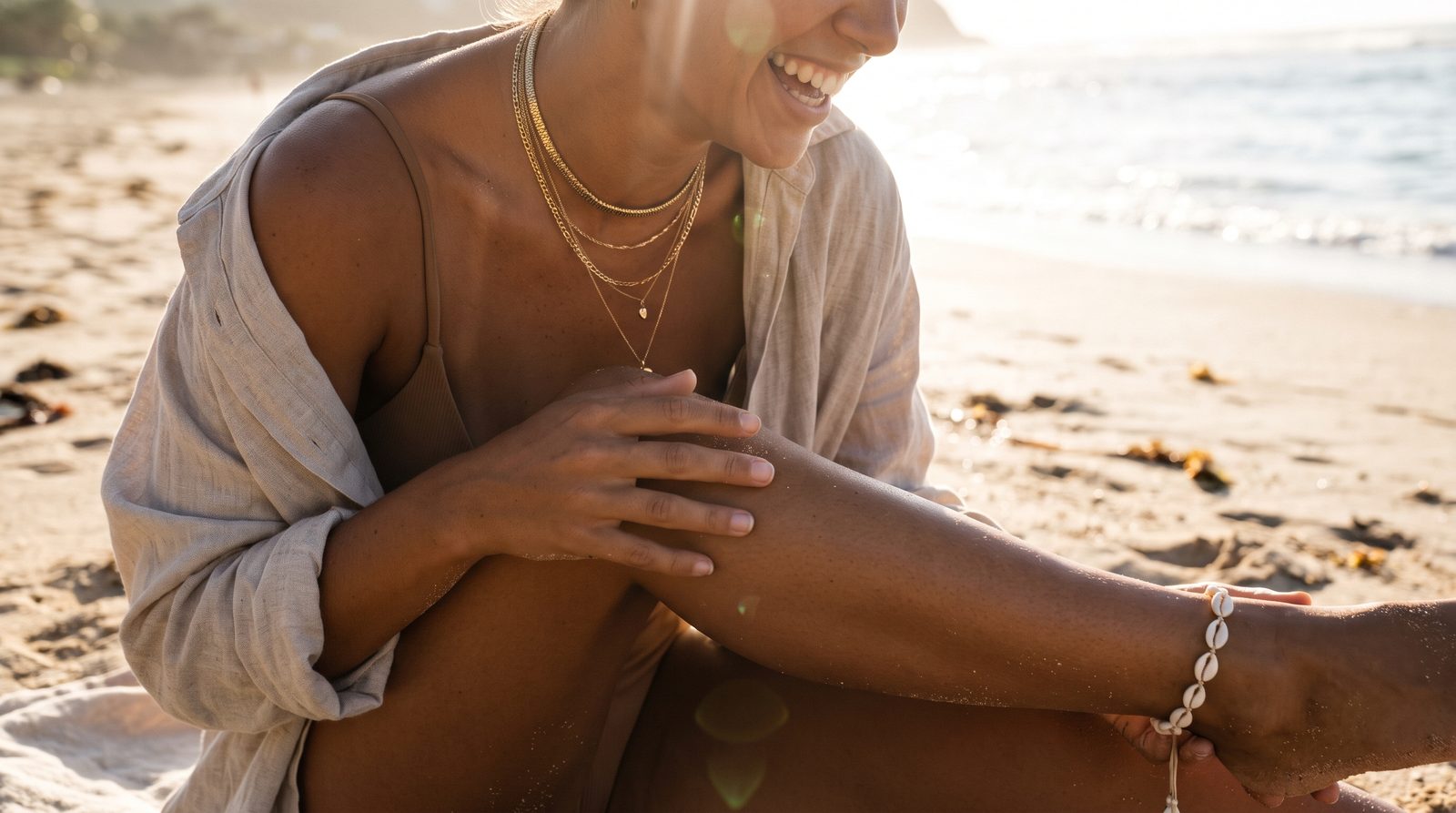
The trick is a 4–5 cm gap between chains. A 40 cm chain sits at the base of the throat, a 45 cm chain falls just below the collarbone, and a 50 cm chain reaches the top of the sternum. Any closer and the two chains will find each other within an hour, especially when you are moving, swimming or lying on a towel.
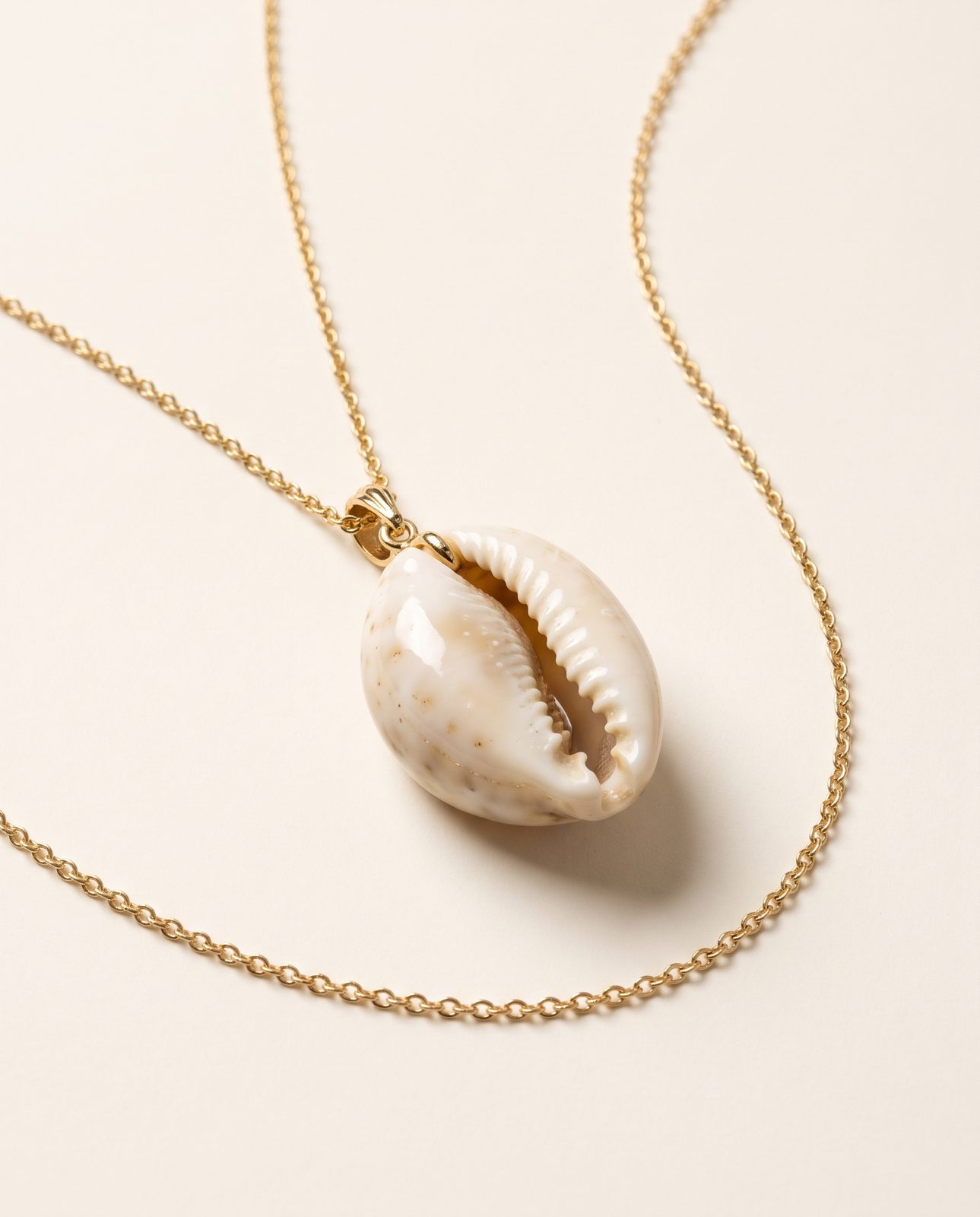
One focal piece per stack is enough. A cowrie shell pendant at 45 cm with a plain 40 cm chain above it reads deliberate; three pendants of similar weight read as clutter and clink when you walk. With an anklet as well, keep the necklaces to two.
Choosing necklines that leave room for jewellery
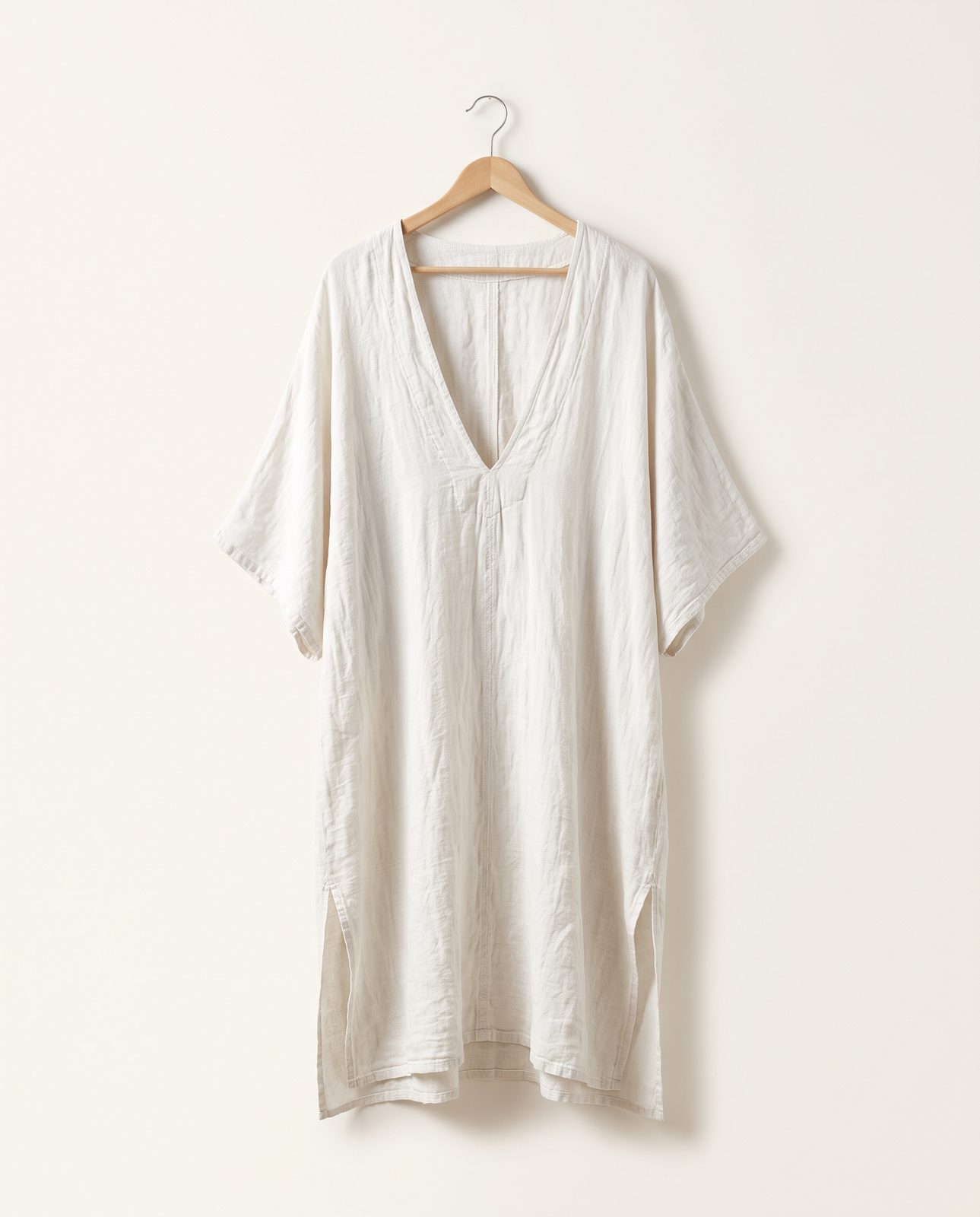
A square-neck one-piece and a V-neck cover-up both leave a clear triangle of skin for a pendant, which is why they work so well with a 45 cm chain. A high halter neck competes with anything short, so keep to a single 50 cm chain or skip the necklace and wear earrings instead. Strapless and bandeau styles leave the whole collarbone free, and that is where a two-chain stack looks best.
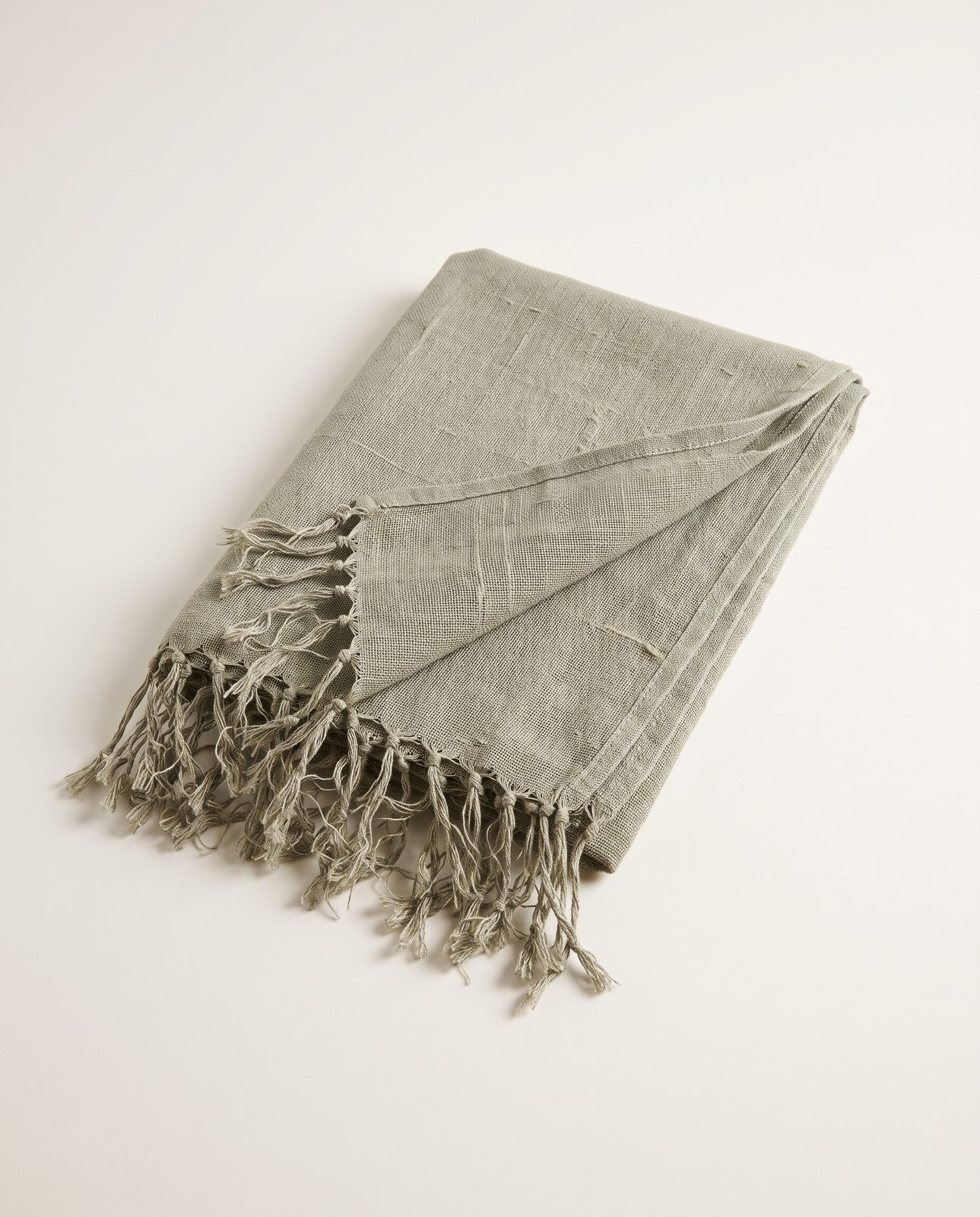
For swimwear with a lot of detail — ruching, cutouts, a printed stripe — choose one piece only. Our seagrass sarong has a busy, textured weave, so a shell necklace over it is enough; adding a chain and an anklet looks like it is trying too hard.
Sunscreen, chlorine and the order of operations
Apply sunscreen 15 minutes before jewellery, and use lotion rather than spray near the neck and wrists. Spray leaves a film that collects sand and is hard to remove without an ultrasonic clean. Reapplying every two hours? Take the necklace off, or accept a duller chain by the end of the week.
Chlorine is tougher on jewellery than salt. It attacks the alloy in silver and strips plating, and it leaves a grey haze on steel that needs a jeweller's cloth to shift. If your hotel has a pool, the simplest rule is to swim without the stack and put it back on once you are dry — a 30-second habit that adds a year to a €40 anklet.
- Sunscreen first, jewellery 15 minutes later
- Lotion, not spray, near the neck and wrists
- Remove before pool swims; rinse after sea swims
- Pat dry, then leave flat — never hang a wet chain
Packing so nothing arrives in a knot
A 5 cm piece of drinking straw threaded through each chain keeps it straight and separate, and costs nothing. Or lay each chain in its own pouch compartment and close the clasp before packing, because an open clasp hooks onto anything nearby.
Pack jewellery last and unpack it first. Airport security, a heavy suitcase and a rushed check-in are when chains disappear; a zip pocket in your hand luggage is the reliable defence. If you travel with one good piece, wear it.

A three-piece formula that works all day
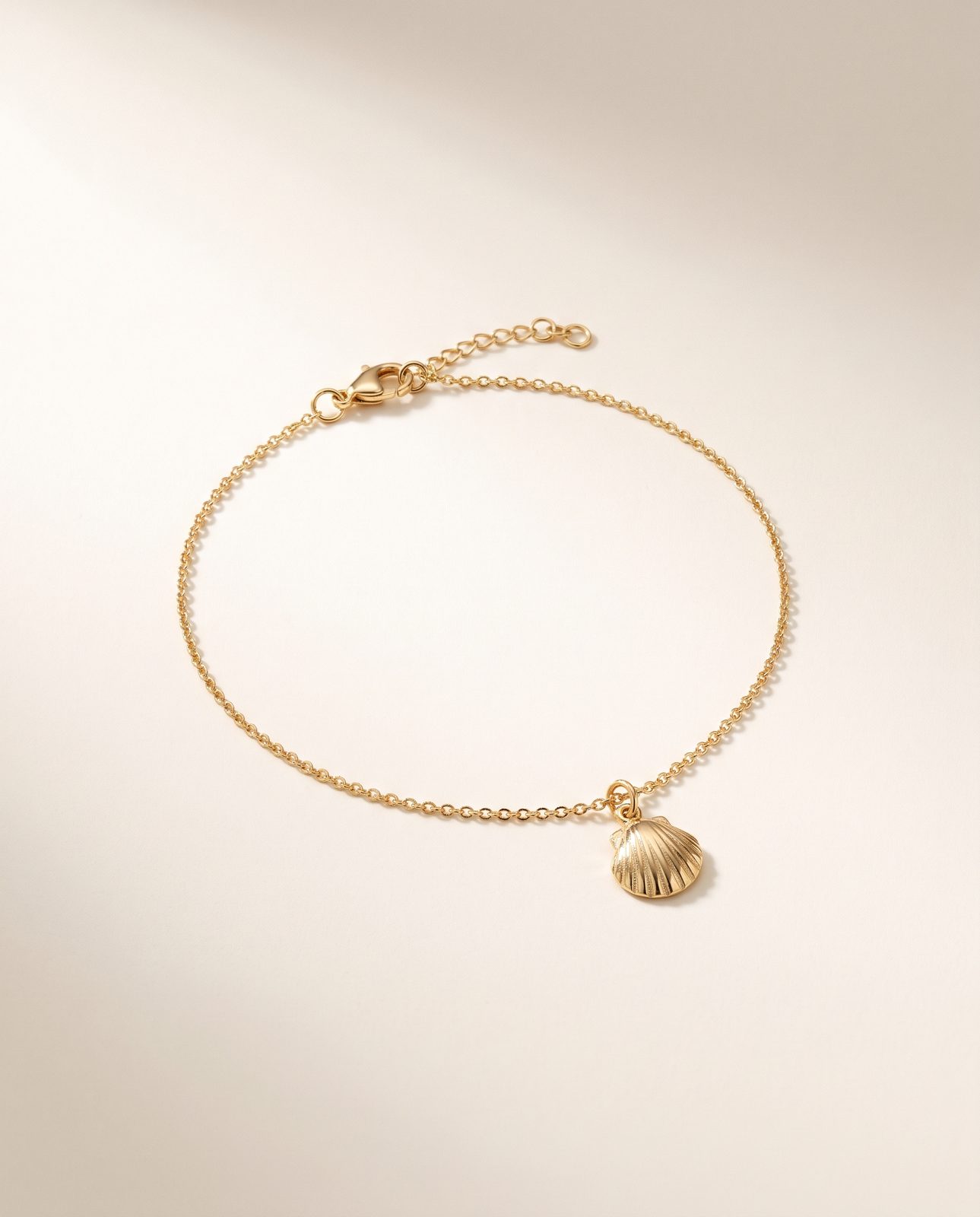
For a beach day: a 40 cm chain, a 45 cm shell pendant and a fine anklet, all in the same metal tone. That combination works over a swimsuit, under a linen shirt and with a cover-up dress at lunch, and it takes ten seconds to put on while the sunscreen dries. Our gold ankle chain sits at 24 cm with a 3 cm extender, which clears most ankles without dangling into the sand.
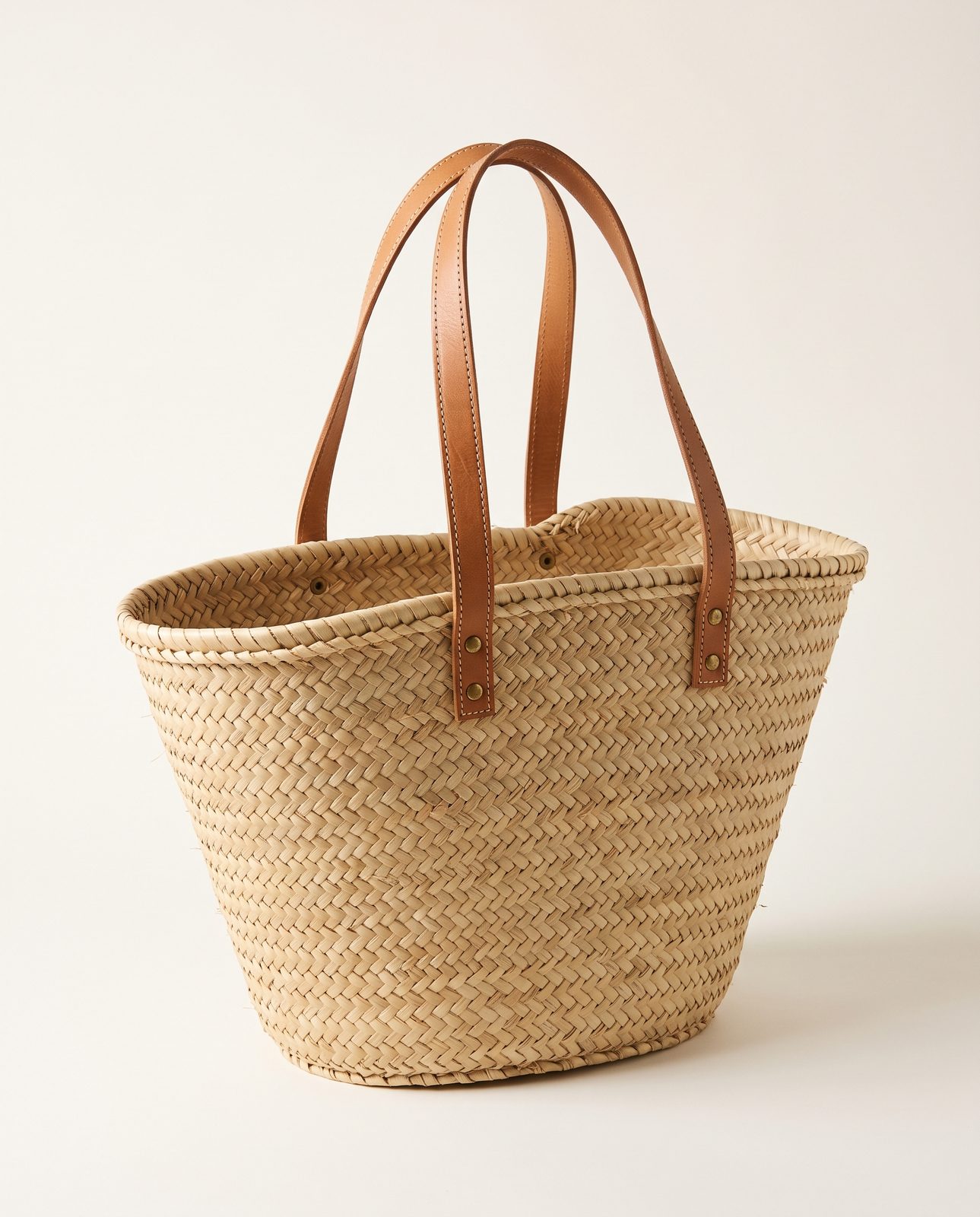
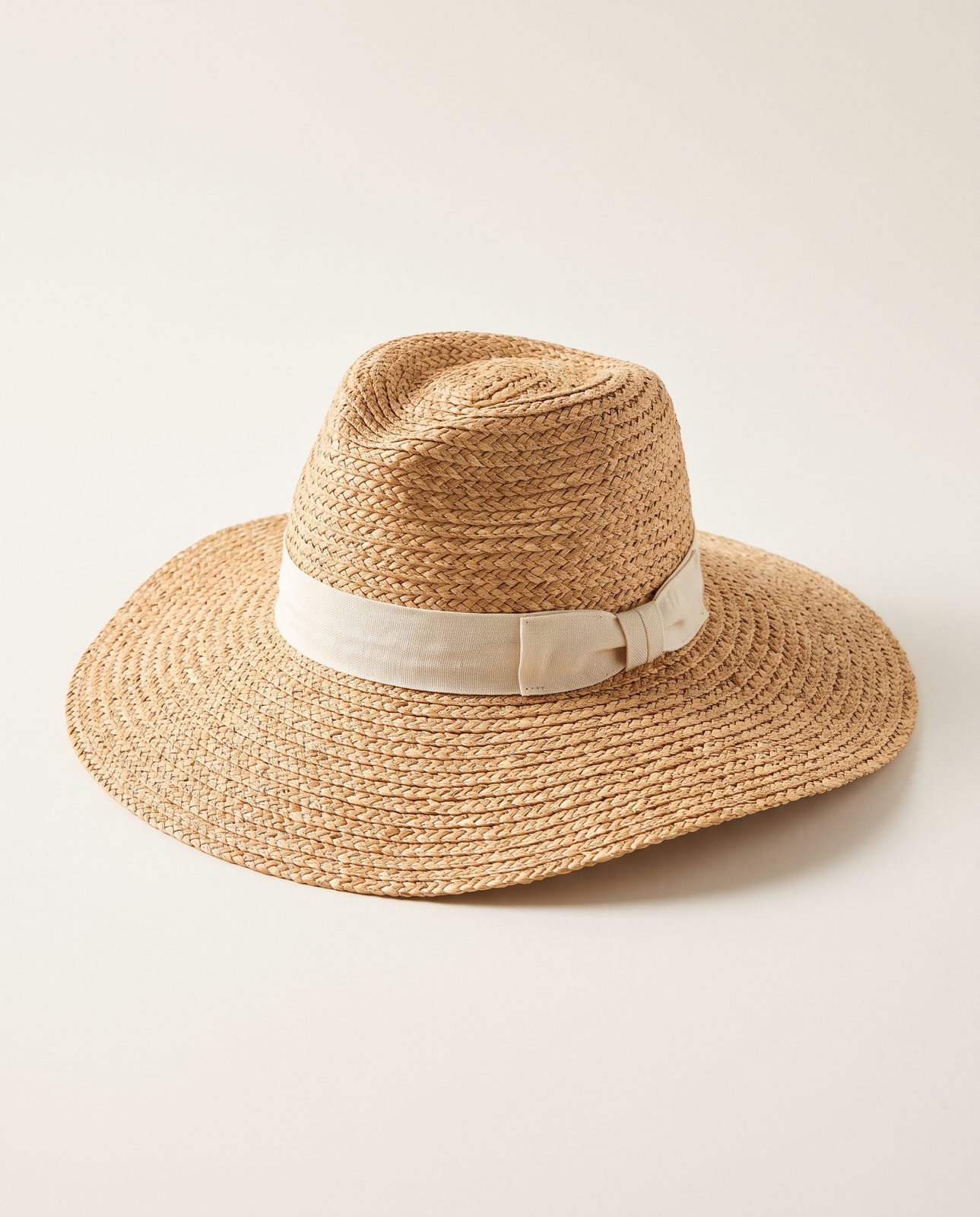
For the evening, swap the anklet for a second chain and add earrings. A wide-brim hat frames the neck and makes a single pendant look intentional, and a straw tote carries whatever you take off when the music starts. Five items for a two-week trip, all of them worn.
- Day: 40 cm chain, 45 cm pendant, anklet
- Evening: 40 cm chain, 45 cm pendant, 50 cm chain, hoops
- One metal tone across the stack, or two at most
- Five pieces maximum for a two-week trip
Frequently asked questions
Can you wear jewellery in the sea?
Solid steel, silver and gold can go in the sea, as long as you rinse them in fresh water afterwards. Plated pieces and anything with pearls or glued settings are better left on the towel, because salt water and sun will loosen or dull them.
How many necklaces should I layer at once?
Two is the comfortable maximum for a beach day, spaced 4–5 cm apart, with a third only if it is much longer or much shorter. Beyond that the chains tangle when you swim or lie down.
Why do my necklaces always tangle?
Usually because the chains are within 2 cm of each other in length and of similar weight, so they settle into the same line. Space them 4–5 cm apart and mix a fine chain with a slightly heavier one to keep them separate.
Does sunscreen damage jewellery?
It leaves a residue that traps sand and dulls plated surfaces, and spray formulas coat chains unevenly. Apply sunscreen first, let it dry for 15 minutes, then put jewellery on and rinse both at the end of the day.
How do I stop a chain knotting in my suitcase?
Thread each chain through a 5 cm piece of drinking straw and close the clasp, then pack them in separate compartments. A knot in a fine chain takes 20 minutes to unpick with a pin, which is 20 minutes of holiday you will not get back.